Meat and poultry processing facilities operate under one of the most rigorous regulatory oversight frameworks in American industry. The United States Department of Agriculture's Food Safety and Inspection Service maintains a continuous, on-site inspection presence in every federally inspected establishment, and the adequacy of your maintenance program is not a background consideration during those inspections. It is a front-line factor that directly determines whether your facility receives a passing mark, a non-compliance record, or a suspension of inspection. This guide delivers a comprehensive breakdown of USDA FSIS maintenance requirements, from sanitary equipment design standards and pre-operational inspection protocols to HACCP prerequisite programs and the documentation practices that keep your operation compliant during FSIS verification activities. Start managing your facility's FSIS compliance tasks in Oxmaint and convert these regulatory requirements into automated, trackable maintenance schedules from day one.
Automate Your FSIS Maintenance Compliance
Oxmaint CMMS helps meat and poultry processing facilities convert every USDA FSIS maintenance requirement into scheduled preventive maintenance work orders, mobile inspections, and audit-ready compliance documentation — all in one platform built for food safety environments.
The Regulatory Framework Behind FSIS Maintenance Obligations
USDA FSIS authority derives primarily from the Federal Meat Inspection Act (FMIA), the Poultry Products Inspection Act (PPIA), and the Egg Products Inspection Act (EPIA). Under these statutes, FSIS establishes performance standards codified in Title 9 of the Code of Federal Regulations. The sections most directly governing maintenance activities are 9 CFR Part 416 (Sanitation), 9 CFR Part 417 (HACCP Systems), and the supporting Sanitation Standard Operating Procedures regulations that require establishments to develop, implement, and maintain written SSOP programs.
What distinguishes FSIS oversight from many other regulatory frameworks is the presence of in-plant inspectors assigned daily to each federally inspected establishment. These inspectors conduct both pre-operational and operational sanitation inspections, verify HACCP system implementation, and document non-compliances as Noncompliance Records (NRs). A pattern of NRs in maintenance-related areas, such as equipment condition, facility integrity, or pest control, can trigger a Notice of Intended Enforcement Action and ultimately result in suspension of the grant of inspection, effectively shutting down production. Understanding what FSIS inspectors are looking for in the maintenance domain is not optional knowledge for plant management; it is core operational intelligence. Use Oxmaint to track every maintenance obligation and stay ahead of inspector findings before they become NRs.
Sanitary Design: The Maintenance Foundation Under 9 CFR 416
Part 416 of Title 9 establishes the baseline construction and maintenance standards that every FSIS-inspected facility must meet. Section 416.2 addresses facility requirements with specificity: floors, walls, and ceilings in food production areas must be constructed of materials impervious to moisture, maintained in good repair, and kept clean. Cracks, spalling, delaminating coatings, failing caulk joints at wall-floor transitions, and deteriorating ceiling tiles are not cosmetic issues during an FSIS inspection. Each represents a potential harborage site for pathogens and a direct violation of the regulation.
Equipment standards under 9 CFR 416.3 require that all equipment and utensils be constructed of materials that are safe, non-toxic, non-absorbent, corrosion-resistant, and capable of withstanding repeated cleaning and sanitizing. Equipment must be installed to allow cleaning of all surfaces, with no inaccessible voids, dead legs in pipework, or hollow legs on stands that can harbor moisture and microbial growth. The practical implication for maintenance is that routine inspections must assess equipment condition not only for operational function but for sanitary integrity — pitted stainless steel surfaces, cracked gaskets, damaged conveyor belting, and corroded framework all constitute potential 416.3 violations. Book a demo to see how Oxmaint helps you schedule and document equipment sanitary design inspections automatically.
Facility and Equipment Maintenance Inspection Tasks by Frequency
- Pre-operational inspection of all food-contact surfaces for physical condition and cleanliness before production begins
- Verify floor drain functionality and absence of pooling water in processing areas
- Inspect overhead structures, pipes, and conduit for condensation drip risk over exposed product
- Confirm pest exclusion barriers (door sweeps, curtains, screens) are intact and functional
- Inspect wall-floor cove base caulk joints for cracking, gaps, or separation
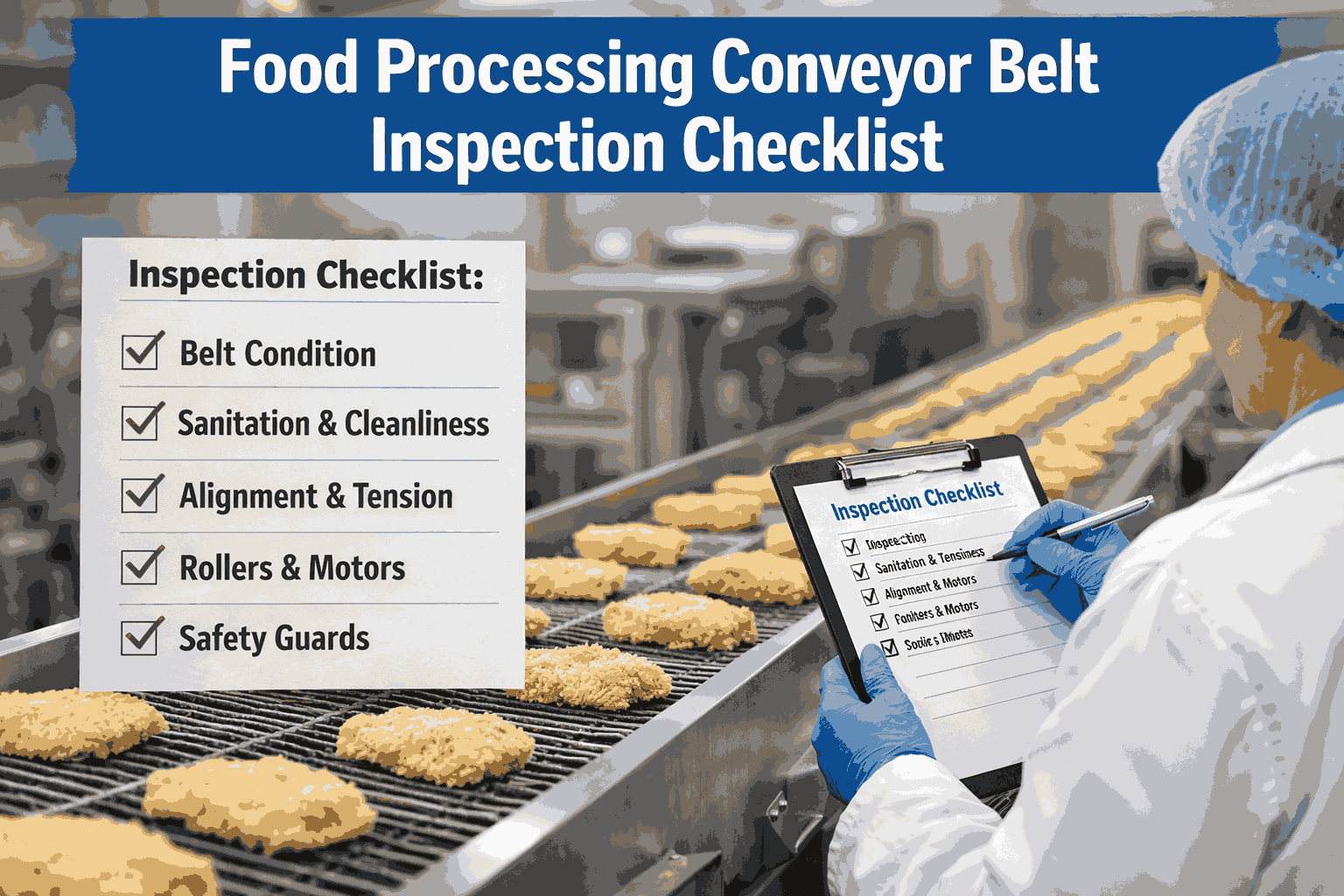
- Check conveyor belt condition for cuts, fraying, and delamination along edges
- Review gasket and seal condition on all refrigeration cooler and freezer doors
- Inspect hollow equipment legs and frames for moisture accumulation or corrosion
- Comprehensive floor surface inspection for cracks, spalling, and coating failures with repair documentation
- Assess ceiling tile condition in all production and storage areas for staining or structural failure
- Inspect all equipment fasteners, welds, and seams for corrosion or sanitary design compromises
- Test and document all handwashing station functionality including water temperature and soap dispenser operation
- Full facility structural assessment with documented findings for wall, floor, and ceiling integrity
- Pest control contractor review of trapping records, activity trends, and exclusion recommendations
- Calibration check of all thermometers and temperature monitoring instruments in critical cold storage areas
- Review compressed air system filters and verify oil-free specification for product contact applications
- Full equipment inventory audit against SSOP and HACCP prerequisite program documentation
- Independent sanitary design review of all equipment installed within the past 12 months
- Complete water system inspection including backflow preventer certification and potability testing
- Lighting intensity measurement in all inspection and processing areas against 9 CFR 416.2(j) requirements
Pre-Operational Inspection: The Daily Compliance Event
Under 9 CFR 416.13, establishments are required to conduct pre-operational sanitation inspections before the start of each production shift. The purpose of this inspection is to verify that all food-contact surfaces and non-food-contact surfaces in the production environment have been adequately cleaned and sanitized following the prior production cycle. For maintenance teams, the pre-operational inspection is a daily intersection between the maintenance function and regulatory compliance. Equipment that failed overnight sanitizing because of a leaking spray nozzle, a malfunctioning CIP system, or a damaged food-contact surface that retained organic residue becomes a direct compliance issue recorded by the FSIS inspector assigned to the shift.
Maintenance's role in pre-operational compliance is preventive: ensuring that all cleaning and sanitizing equipment, including CIP systems, foam application units, high-pressure wash stations, and sanitizer dosing systems, is functional and correctly calibrated before the sanitation crew begins work. A failed chemical dosing pump that delivers subtherapeutic sanitizer concentrations, or a CIP temperature control failure that results in inadequate heat treatment of product contact surfaces, will not be apparent until the microbiological consequences manifest — often long after the inspection window has closed. Sign up free for Oxmaint to build pre-operational inspection checklists your team can complete on mobile before every shift.
FSIS Maintenance Requirements Summary by Regulatory Reference
| Regulatory Citation | Requirement Area | Maintenance Obligation | Inspection Trigger |
|---|---|---|---|
| 9 CFR 416.2(b) | Floors, Walls, Ceilings | Maintained in good repair, impervious surfaces, no cracks or harborage | Daily pre-op and operational FSIS observation |
| 9 CFR 416.3(a) | Equipment Construction | Corrosion-resistant, non-absorbent, cleanable, free of pits and crevices | Pre-op inspection, SSOP verification |
| 9 CFR 416.4(a) | Sanitation of Food Contact Surfaces | Functional CIP/COP systems, verified sanitizer delivery and concentration | Pre-operational sanitation inspection |
| 9 CFR 416.2(d) | Water Supply | Potable water at adequate pressure and temperature, backflow prevention maintained | Water quality testing, annual certification |
| 9 CFR 416.2(h) | Pest Control | Effective pest exclusion through building integrity and documented pest management program | Continuous operational inspection |
| 9 CFR 416.2(j) | Lighting | Minimum foot-candle levels in inspection areas, shatter-resistant fixtures over exposed product | Annual intensity measurement, NR if inadequate |
| 9 CFR 416.2(i) | Ventilation | Adequate ventilation to prevent condensate formation over exposed product areas | Operational observation for drip or condensation |
HACCP Prerequisite Programs and the Maintenance Connection
The HACCP regulation at 9 CFR Part 417 requires establishments to develop and implement a Hazard Analysis and Critical Control Point system for every product category they produce. While HACCP itself focuses on identified critical control points and critical limits, the effectiveness of the entire system depends on a foundation of prerequisite programs — including Sanitation SOPs, pest control, equipment maintenance, and calibration programs — that prevent the conditions under which hazards can emerge or go undetected. FSIS inspectors verify prerequisite program implementation as part of HACCP system verification, and failures in maintenance-driven prerequisites, such as a calibration program with expired records or a preventive maintenance schedule with incomplete completion documentation, become HACCP system findings rather than mere sanitation observations.
Calibration deserves particular attention as a maintenance-owned prerequisite. Every thermometer, pH meter, water activity meter, and process control instrument used as part of a HACCP monitoring procedure must be calibrated at a defined frequency against traceable standards, with results recorded and available for FSIS review. A lethality step that relies on a temperature probe that has not been calibrated in 14 months is a critical control point with compromised monitoring integrity — a direct path to a potential recall situation and an immediate HACCP verification finding. Manage your full calibration program in Oxmaint with automated due-date alerts and traceable digital records.
HACCP Prerequisite Maintenance Program Requirements
Refrigeration and Temperature Control Maintenance
Cold chain integrity is a food safety control measure with direct HACCP implications in most meat and poultry operations. The maintenance of refrigeration systems, including walk-in coolers, blast chillers, freezer tunnels, and product holding rooms, is therefore not ordinary mechanical maintenance. Failures in refrigeration maintenance that result in product temperature exceedances above critical limits defined in the HACCP plan trigger mandatory corrective action procedures under 9 CFR 417.3, which may include product disposition decisions and notification obligations.
Maintenance teams in FSIS-regulated facilities must treat refrigeration PM not as a cost management exercise but as a food safety activity. Evaporator coil cleaning, condenser maintenance, door gasket replacement, defrost cycle verification, and temperature alarm testing all belong in the formal preventive maintenance program with the same documentation rigor as HACCP monitoring records. Refrigeration alarm systems, including high-temperature alarms with defined response procedures, must be tested at documented intervals and the test records retained to demonstrate continuous program implementation. Book a demo to see how Oxmaint automates refrigeration PM scheduling and alarm test documentation for FSIS-regulated facilities.
Refrigeration System Maintenance Schedule for FSIS-Regulated Facilities
| Component | Frequency | Task Description | FSIS Relevance |
|---|---|---|---|
| Evaporator Coils | Monthly inspection, quarterly deep clean | Inspect for ice buildup, organic residue, and airflow restriction; clean with approved detergent | Temperature control, condensate drip prevention |
| Condenser Coils | Quarterly | Clean fins, inspect fan blades, verify condensate drain function | System efficiency and temperature maintenance |
| Door Gaskets and Closers | Monthly inspection, replace on failure | Inspect seal compression, check self-closer function and strip curtain condition | Temperature holding, pest exclusion |
| Temperature Monitoring System | Monthly calibration check | Verify sensor accuracy against calibrated reference, test high-temp alarm activation | HACCP monitoring instrument calibration prerequisite |
| Blast Chiller Process Controls | Quarterly functional test | Verify pull-down rate against HACCP critical limits, document with temperature data logger | Lethality and stabilization HACCP step verification |
| Refrigerant System Integrity | Annual leak detection survey | Electronic leak detection of all joints, valves, and coil connections; log refrigerant additions | EPA Section 608 compliance, system performance |
FSIS Verification Activities and What Inspectors Examine
FSIS inspectors perform two categories of verification activities that directly intersect with the maintenance program. The first is daily sanitation inspection, which assesses the effectiveness of the establishment's SSOP program as executed. The second is HACCP system verification, which examines whether the HACCP plan is being implemented as written, whether monitoring is occurring at the defined frequencies, and whether corrective actions are being taken and documented when deviations occur. In both categories, the quality of maintenance program documentation is a central factor in demonstrating compliance.
When an inspector observes a pitted product contact surface, a leaking overhead pipe creating condensate drip risk, a non-functional handwashing station, or a pest activity indicator in a production area, the resulting Noncompliance Record references the specific regulatory citation and requires a documented corrective action and preventive measure response from the establishment. The establishment's written response must identify the root cause, the immediate corrective action taken, and the preventive measure implemented to preclude recurrence. A well-maintained CMMS system provides the documentation backbone for these responses by showing the inspection history, repair records, and PM schedule for the affected equipment or facility component — transforming a potentially damaging enforcement pattern into a documented, defensible maintenance program. Sign Up Free and start building your defensible compliance record in Oxmaint today.
Compressed Air, Utilities, and Process Water Maintenance
Utilities that contact product or product-contact surfaces are treated as food safety systems under FSIS regulations, not merely as mechanical infrastructure. Compressed air systems that deliver air directly to product or product-contact equipment must supply oil-free air meeting defined purity standards; lubricant carry-over from a poorly maintained compressor or failed separator can constitute adulteration. Process water systems must supply potable water at all points of use, and the water supply itself must be protected from backflow contamination through certified, maintained backflow prevention devices.
Steam used in cooking, pasteurization, or sanitation processes must also be treated as a product-contact utility when direct contact occurs. Boiler chemical treatment programs, steam trap maintenance, and pressure regulation system testing all contribute to the integrity of cooking and lethality processes that serve as critical control points in the HACCP plan. A failed steam trap that allows water hammer and pressure instability in a cooking system, or a boiler chemical carryover event that introduces non-food-grade compounds into a steam cooking step, can both result in product adulteration findings with recall implications.
Turn FSIS Maintenance Requirements Into Automated Compliance
Oxmaint CMMS gives meat and poultry processing facilities the platform to build documented preventive maintenance programs, mobile pre-operational inspection records, calibration tracking, and FSIS-ready compliance reports — all connected to a single maintenance management system designed for food safety environments.
Documentation Standards That Satisfy FSIS Review
FSIS regulations require establishments to maintain records that demonstrate implementation of their SSOP program and HACCP system. Under 9 CFR 416.16, SSOP records must include the identity of the establishment, the date and time of the activity, the identity of the individual performing the activity, observations and findings, and any corrective actions taken. These requirements map directly to the fields that a properly configured maintenance work order system should capture as a routine outcome of task completion. The establishment that can produce organized, complete, and searchable maintenance documentation on demand is at a fundamental compliance advantage over one that relies on handwritten logs, inconsistent paper binders, or undocumented staff knowledge.
Record retention requirements under FSIS regulations are generally a minimum of one year for most SSOP and HACCP records, with many establishments adopting longer retention periods based on product shelf life considerations and potential enforcement timelines. Equipment maintenance histories should be retained for the operational life of the equipment, as they provide the foundational evidence that the establishment has managed product safety risks associated with that equipment throughout its service life. Digital maintenance records in a CMMS like Oxmaint eliminate physical storage constraints and make cross-referenced searches possible when responding to inspector inquiries or investigating potential product safety events.
Building a Maintenance Program That Anticipates FSIS Scrutiny
The most effective approach to FSIS maintenance compliance is structural: build the maintenance program around the regulatory requirements from the outset rather than retrofitting documentation onto an existing informal maintenance culture. This means developing written maintenance procedures that reference the specific regulatory standards they address, assigning qualified personnel to maintenance tasks with clear competency requirements, establishing equipment-specific PM schedules with defined acceptance criteria rather than general descriptions, and integrating the maintenance records system with the corrective action and HACCP documentation frameworks so that maintenance findings flow automatically into the compliance record.
Facilities that operate with a proactive FSIS-aligned maintenance program consistently demonstrate lower NR frequencies, shorter survey preparation times, and greater operational stability than those that respond reactively to inspection findings. The connection between disciplined maintenance management and regulatory compliance in the FSIS environment is direct, quantifiable, and essential to the long-term viability of any federally inspected meat or poultry processing operation. Investing in the systems, personnel, and technology infrastructure that support a documented maintenance program is not a regulatory cost — it is a core food safety investment. Sign up for Oxmaint free and build your FSIS-aligned maintenance program starting today.
Frequently Asked Questions
FSIS inspectors evaluate facility maintenance across several dimensions during daily pre-operational and operational inspections. They assess the physical condition of floors, walls, ceilings, and equipment for harborage sites, damage, and sanitary design failures under 9 CFR 416.2 and 416.3. They verify that cleaning and sanitizing systems are functional, that handwashing infrastructure is operational, that pest exclusion measures are intact, and that lighting meets minimum intensity standards. During HACCP system verification activities, inspectors also review maintenance and calibration records to confirm that prerequisite program requirements are being implemented as documented.
Yes. Under 9 CFR Part 416, all federally inspected establishments, regardless of size, are required to develop, implement, and maintain written Sanitation Standard Operating Procedures. These SSOPs must address both pre-operational and operational sanitation, specify the frequency of sanitation activities, identify the individuals responsible for each procedure, and describe the corrective action process when the SSOP is not implemented as written. Maintenance teams must ensure that the equipment and systems described in the SSOPs function as documented, as equipment failures that prevent SSOP implementation are themselves SSOP compliance failures.
Equipment calibration is a critical prerequisite program requirement under FSIS HACCP regulations because HACCP monitoring at critical control points depends on the accuracy of the instruments performing that monitoring. Under 9 CFR 417.4, FSIS verification activities include reviewing the establishment's system for monitoring the accuracy of monitoring instruments, which encompasses calibration programs. A temperature probe used to verify cooking lethality that has not been calibrated according to the defined schedule creates a documented gap in the HACCP system, constitutes a potential HACCP verification finding, and may require product disposition decisions if the calibration failure cannot be bounded.
FSIS inspectors may request several categories of maintenance-related records during inspection and verification activities. These include pre-operational sanitation inspection records documenting findings and corrective actions, calibration records for all HACCP monitoring instruments, pest control program records including contractor reports and corrective maintenance responses, corrective action records for maintenance-related SSOP or HACCP deviations, and supporting documentation for the equipment maintenance prerequisite program. Records must generally be available for the current day's production and for the prior minimum retention period, which is at least one year for most SSOP and HACCP records under 9 CFR 416.16 and 417.5.
Yes. A CMMS configured for food safety environments is one of the most effective compliance management tools available to FSIS-regulated facilities. It enables the establishment to build equipment-specific PM schedules aligned with regulatory requirements, capture all required documentation fields (date, time, technician identity, findings, corrective actions) automatically through work order completion, maintain searchable calibration histories with traceable reference standards, generate compliance reports on demand for FSIS reviewer requests, and link corrective actions to maintenance records in the same platform. Sign up for Oxmaint free to start building your FSIS-aligned maintenance documentation program today.