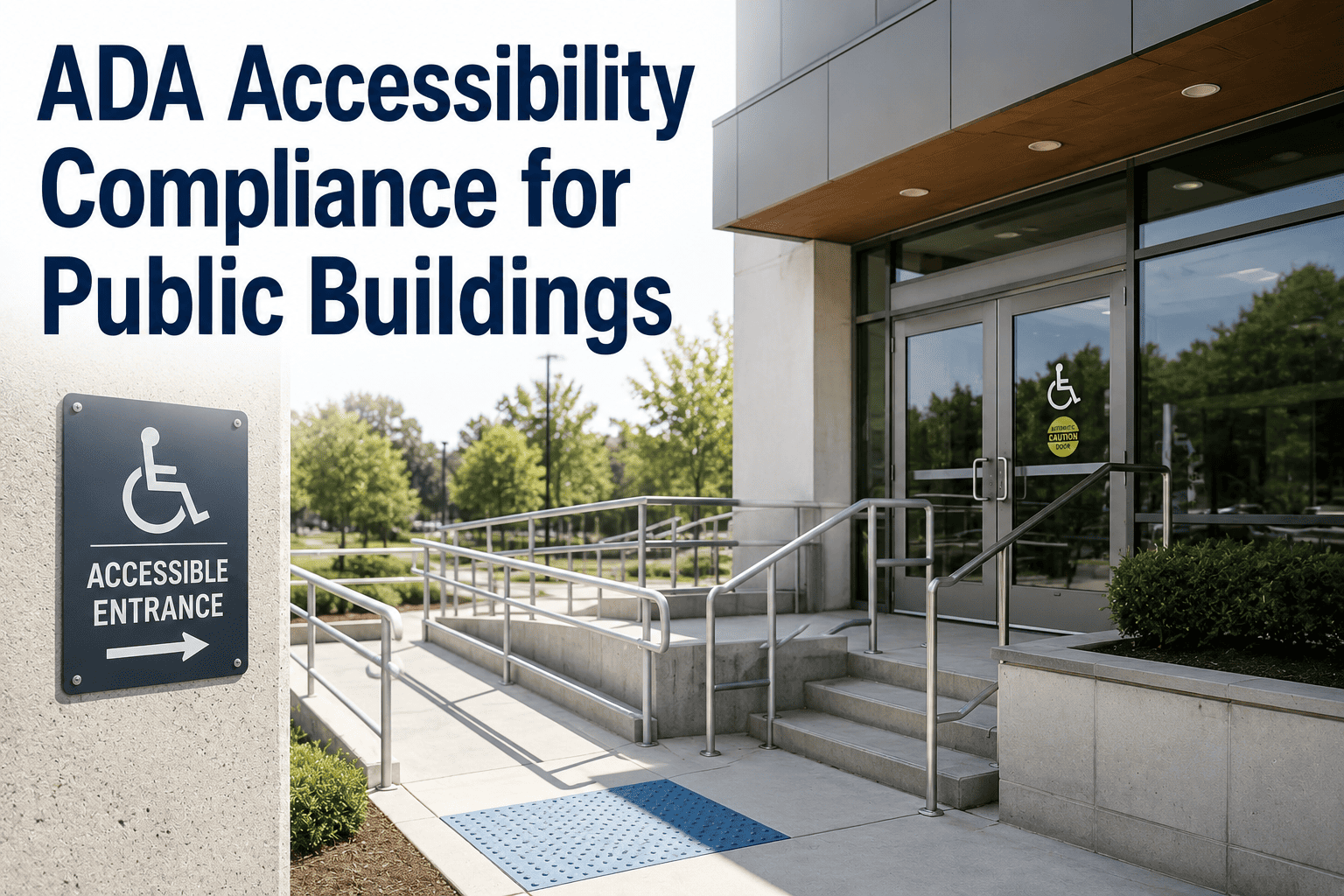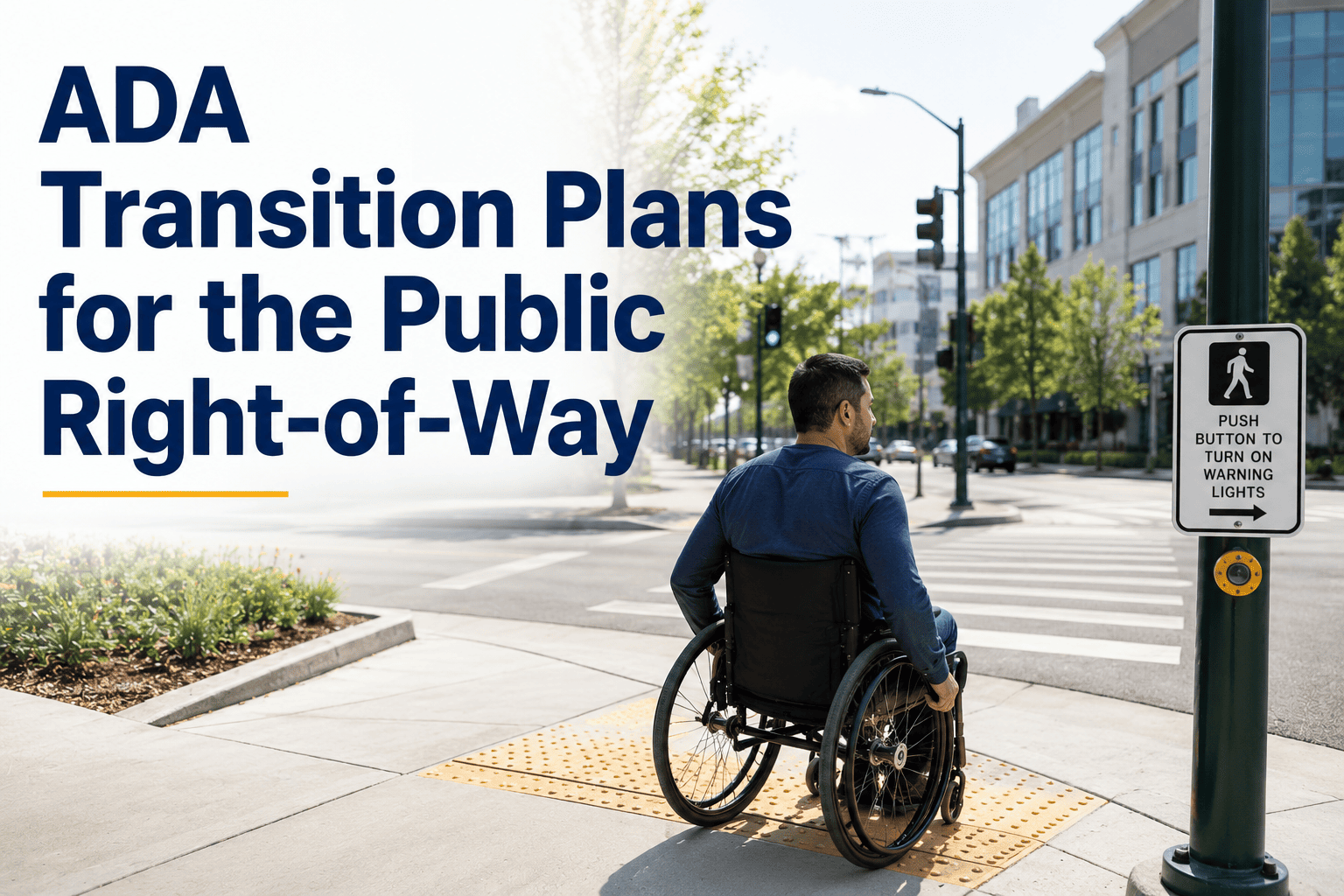
An ADA transition plan for the public right-of-way is a federally mandated document under Title II of the Americans with Disabilities Act (ADA) that requires state and local government agencies to identify and schedule the removal of structural barriers in sidewalks, curb ramps, and crossings. Agencies without a compliant and actively executed accessibility transition plan face escalating legal exposure, costly settlements, and serious safety risks for mobility-impaired residents. Building a defensible ADA sidewalk compliance program requires a thorough self-evaluation, a prioritized remediation schedule, and a centralized tracking system to prove progress to auditors and federal regulators. To see how a modern CMMS can digitize your right-of-way accessibility tracking from day one, you can Start Free Trial of OxMaint today.
Is your agency's ADA transition plan leaving you exposed to federal litigation?
Over 240 municipalities have faced DOJ investigations or class-action lawsuits for non-compliant sidewalks and curb ramps. Without a documented, actively tracked accessibility transition plan, your public works department is one citizen complaint away from a costly federal consent decree.
What makes an ADA transition plan for government agencies legally compliant?
Under 28 CFR §35.150(d), any public entity with 50 or more employees must maintain a transition plan when structural changes to facilities are required to achieve program accessibility. For the public right-of-way, ADA compliance means addressing sidewalks, curb ramps, pedestrian signals, and street crossings.
ADA Self-Evaluation
Conduct a comprehensive self-evaluation of current policies, practices, and pedestrian infrastructure. Identify all physical barriers in the right of way that prevent accessibility.
Barrier Identification
Catalog specific obstacles: missing or non-compliant curb ramps, excessive cross-slopes, narrow sidewalks, and broken pavement. Assign each a severity and remediation cost estimate.
Prioritized Schedule
Document a clear timeline for barrier removal. Prioritize high-traffic corridors, transit stops, and government buildings to demonstrate good-faith compliance to regulators.
Public Participation
Provide an opportunity for individuals with disabilities and disability organizations to review and comment on the transition plan before finalizing.
Designated Official
Name the specific public official responsible for implementing the plan. This ensures accountability and gives federal reviewers a direct point of contact.
Ongoing Tracking
Maintain verifiable records of completed remediations, work orders, and budget allocations. A static PDF plan is insufficient; auditors demand proof of continuous execution.
How to execute ADA sidewalk compliance step by step
A transition plan is only defensible if it is actively executed. Most municipal public works departments operate on a 5-to-7-year remediation cycle, but federal consent decrees often demand faster action for high-priority barriers.
Audit and Asset Inventory
GIS-map every sidewalk segment and curb ramp. Record slope, width, surface condition, and detectable warning presence. A baseline inventory prevents "we didn't know" defenses in court.
Risk Scoring and Prioritization
Rank barriers by proximity to schools, transit, and medical facilities. Calculate a composite risk score combining pedestrian volume, severity of the barrier, and legal exposure.
High-Priority Remediation
Deploy crews to fix the top 15% of high-risk barriers. Use digital work orders to track labor hours, materials, and completion dates. Photograph before/after conditions for legal records.
Continuous Compliance Loop
Integrate ADA inspections into routine preventive maintenance. Trigger automatic work orders when citizens report barriers via 311 systems, closing the loop within 30 days.
Reactive maintenance vs. CMMS-driven ROW ADA programs
When a federal investigator or advocacy group submits a FOIA request for your ADA transition government records, the format and immediacy of your response dictates your legal exposure.
| Compliance Factor | Reactive / Spreadsheet Tracking | OxMaint CMMS-Driven Program |
|---|---|---|
| Barrier Discovery | Citizen complaints; slow 311 response | Proactive GIS-based audits and predictive flagging |
| Work Order Documentation | Paper logs; lost or incomplete records | Digital timestamps, photos, and GPS-verified completion |
| Audit Response Time | Weeks of manual data compilation | Instantly generated compliance reports in seconds |
| Budget Justification | Hard to prove where ADA funds went | Precise cost-per-asset and labor tracking analytics |
| Legal Defensibility | High risk of consent decrees and penalties | Verifiable, timestamped proof of continuous good faith |
"A 2018 federal appeals court ruling confirmed that municipalities can be held liable for failing to maintain a specific, actionable plan. An agency without verifiable execution records is effectively defenseless in court."
Prove your ADA compliance with verifiable maintenance records
Book a 30-minute demo and see how OxMaint maps your pedestrian infrastructure, generates instant audit reports, and automates curb-ramp work orders before they become federal liabilities.
How OxMaint powers public works ADA compliance
OxMaint translates complex accessibility mandates into simple, automated maintenance workflows. By unifying asset tracking, work orders, and compliance analytics, your agency can shift from defending lawsuits to preventing them.
GIS Asset Tracking
Map every sidewalk segment, curb ramp, and crossing as a unique tracked asset. Instantly pull up condition history, risk scores, and remediation status by clicking any map point.
Automated Work Orders
Generate prioritized remediation work orders automatically based on inspection triggers or 311 citizen complaints. Assign crews, track labor hours, and require photo proof of completion.
Compliance Analytics
Generate defensible, timestamped audit reports showing budget allocation, completed fixes, and remaining barriers. Export data instantly for federal regulators or legal counsel.
Predictive Maintenance
Use AI-driven analytics to predict which sidewalk segments and curb ramps are likely to fall out of ADA compliance before they fail. Schedule preventive grinding or replacement proactively.
A municipal public works department avoiding a $1.8M consent decree
Consider a mid-sized city managing 420 miles of sidewalks and 3,800 curb ramps. Plagued by citizen lawsuits and an aging spreadsheet-based ADA transition plan, the agency faced a DOJ investigation and a projected $1.8M settlement.
By migrating to OxMaint, the city mapped all 3,800 curb ramps as tracked assets in 6 weeks. Automated work orders routed directly to field crews via mobile devices, complete with required compliance specs (1:12 slope ratio, 4-foot minimum width). Within 8 months, the city remediated 640 high-priority barriers and generated an instant compliance dashboard for DOJ reviewers. The investigation was closed without a consent decree, and annual maintenance costs dropped by 25% due to proactive routing and eliminated paperwork.
ADA transition plan government FAQs
Who is required to have an ADA transition plan for the public right of way?
All state and local government agencies with 50 or more employees must have an ADA transition plan under Title II of the ADA. This applies to cities, counties, DOTs, and special districts that maintain public sidewalks, curb ramps, and pedestrian crossings. Agencies without a plan are technically in violation of federal civil rights law.
What happens if a municipality does not have an ADA compliant transition plan?
Municipalities without a compliant plan face class-action lawsuits, Department of Justice investigations, and federal consent decrees. These decrees often mandate expensive, court-supervised remediation schedules that can cost millions. You can avoid this by tracking your compliance program in a system like OxMaint; book a demo to see how.
How often should an ADA self-evaluation be updated?
An ADA self-evaluation should be updated whenever significant changes are made to pedestrian infrastructure, policies, or when new construction alters public access. Best practice is to review and update the document at least every 3 to 5 years, while continuously tracking asset conditions in a CMMS to ensure ongoing compliance.
What are the key elements of sidewalk ADA compliance?
Key elements include maintaining a minimum clear width of 36 inches (60 inches passing space every 200 feet), keeping cross-slopes under 2 percent, ensuring surfaces are stable and slip-resistant, and installing detectable warnings at curb ramps. Proper maintenance of these features is just as legally important as their initial installation.
Can a CMMS actually help with right of way accessibility compliance?
Yes. A CMMS like OxMaint maps pedestrian infrastructure as tracked assets, automatically generates remediation work orders based on inspection data, and stores timestamped photo proof of completed repairs. This creates a verifiable, defensible audit trail that proves your agency is actively executing its accessibility transition plan. Start Free Trial to test it on your assets.
Transform your ADA transition plan into a verifiable compliance shield
Stop relying on static PDFs and paper work orders. Centralize your right-of-way accessibility tracking, automate barrier remediation, and generate instant federal audit reports with OxMaint.
Free 14-day trial · No credit card