Digital Twin Technology for Government Infrastructure Planning and Maintenance
By Taylor on February 25, 2026
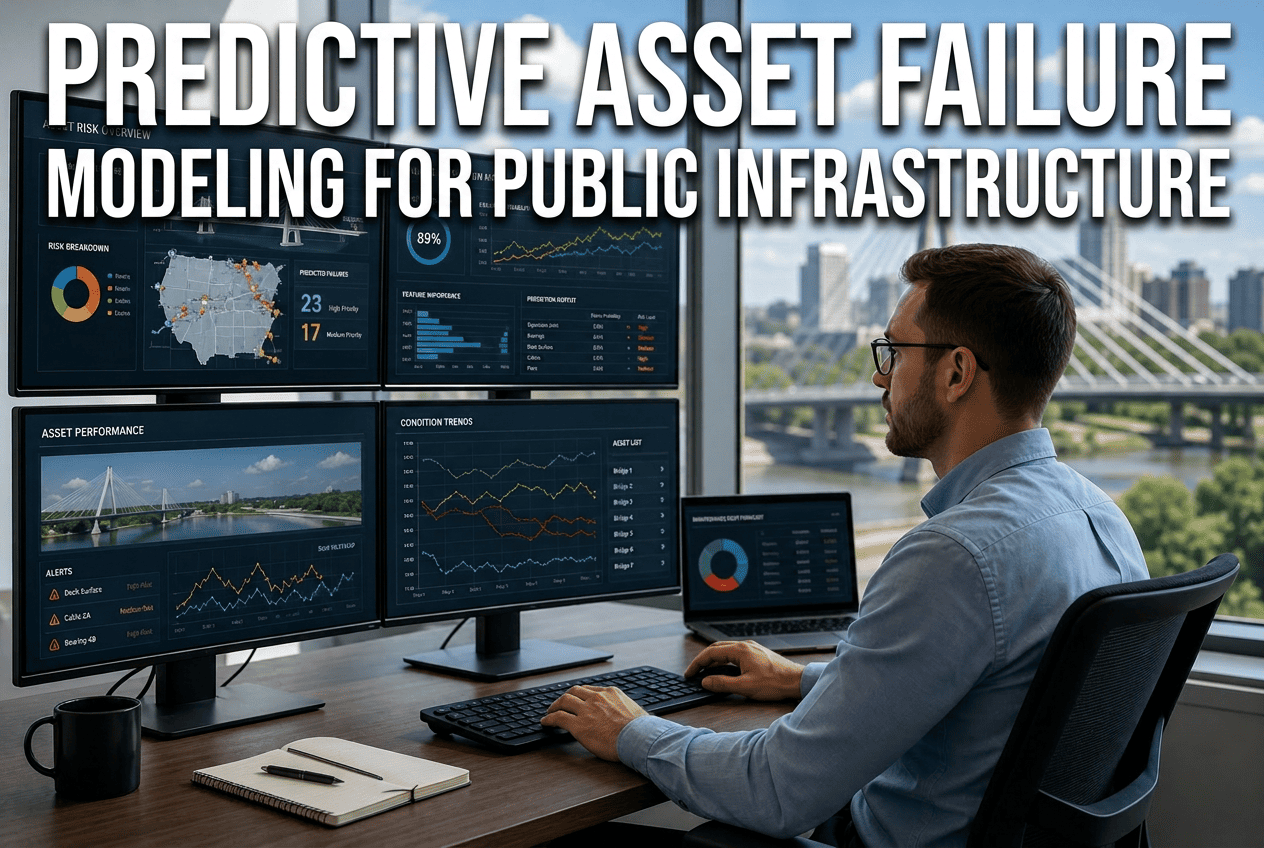
In March 2025, a 40-metre section of elevated highway in a major Southeast Asian capital collapsed during monsoon season, killing three motorists and stranding hundreds. Post-incident analysis revealed that hairline cracks in the support columns had been visible in satellite imagery eighteen months earlier—but the agency responsible for the corridor had no systematic inspection programme. Manual surveys covered less than 12% of the network annually, and the backlog of uninspected structures stretched back four years. This scenario is not isolated: across the ASEAN region, rapid urbanisation has built highway networks faster than maintenance capacity can keep pace. The gap between construction and condition management is where lives and budgets are lost. Schedule a demo to explore how Oxmaint brings AI-powered predictive maintenance to Southeast Asian highway networks.
Government Infrastructure 2026
Digital Twin Technology for Government Infrastructure Planning & Maintenance
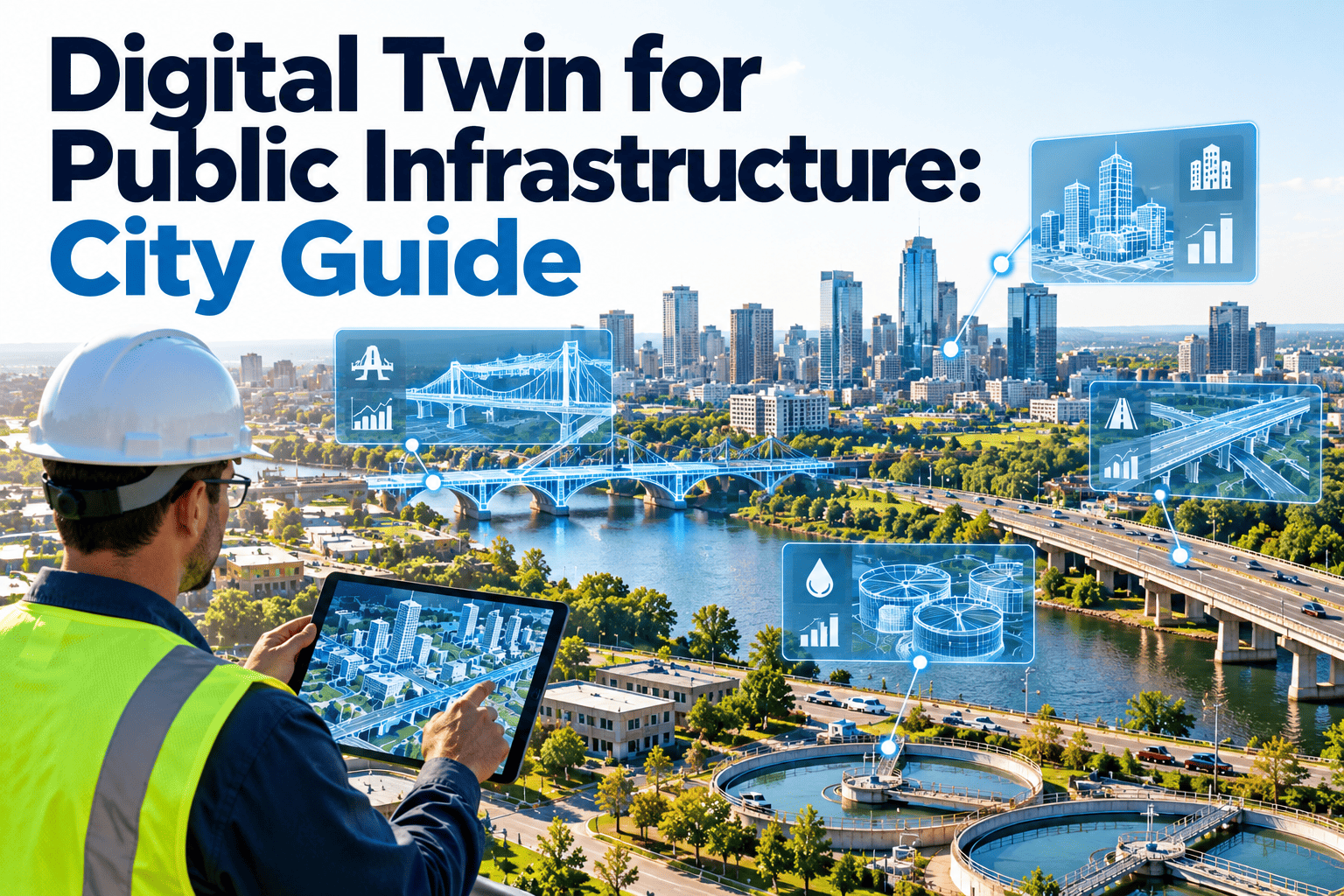
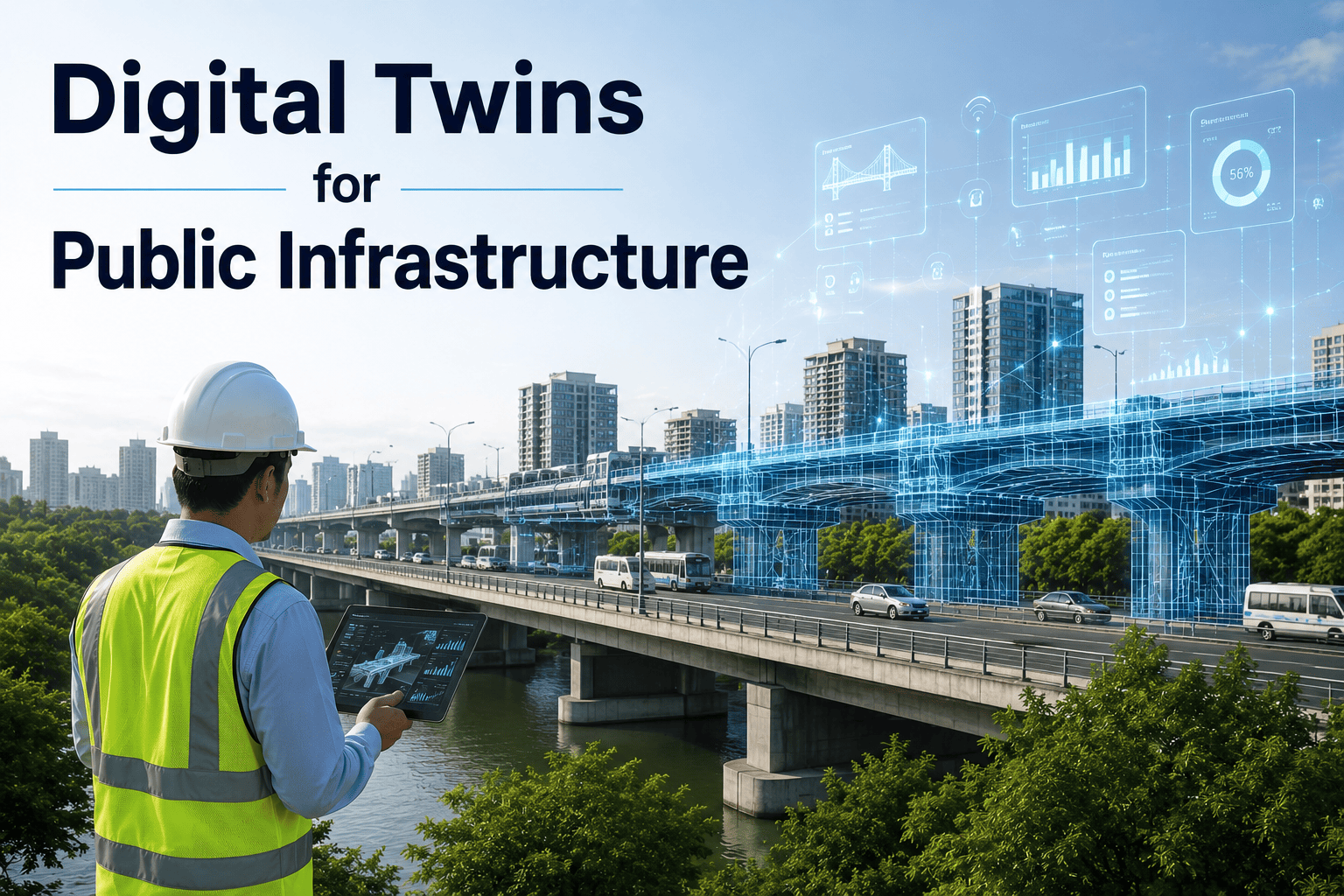
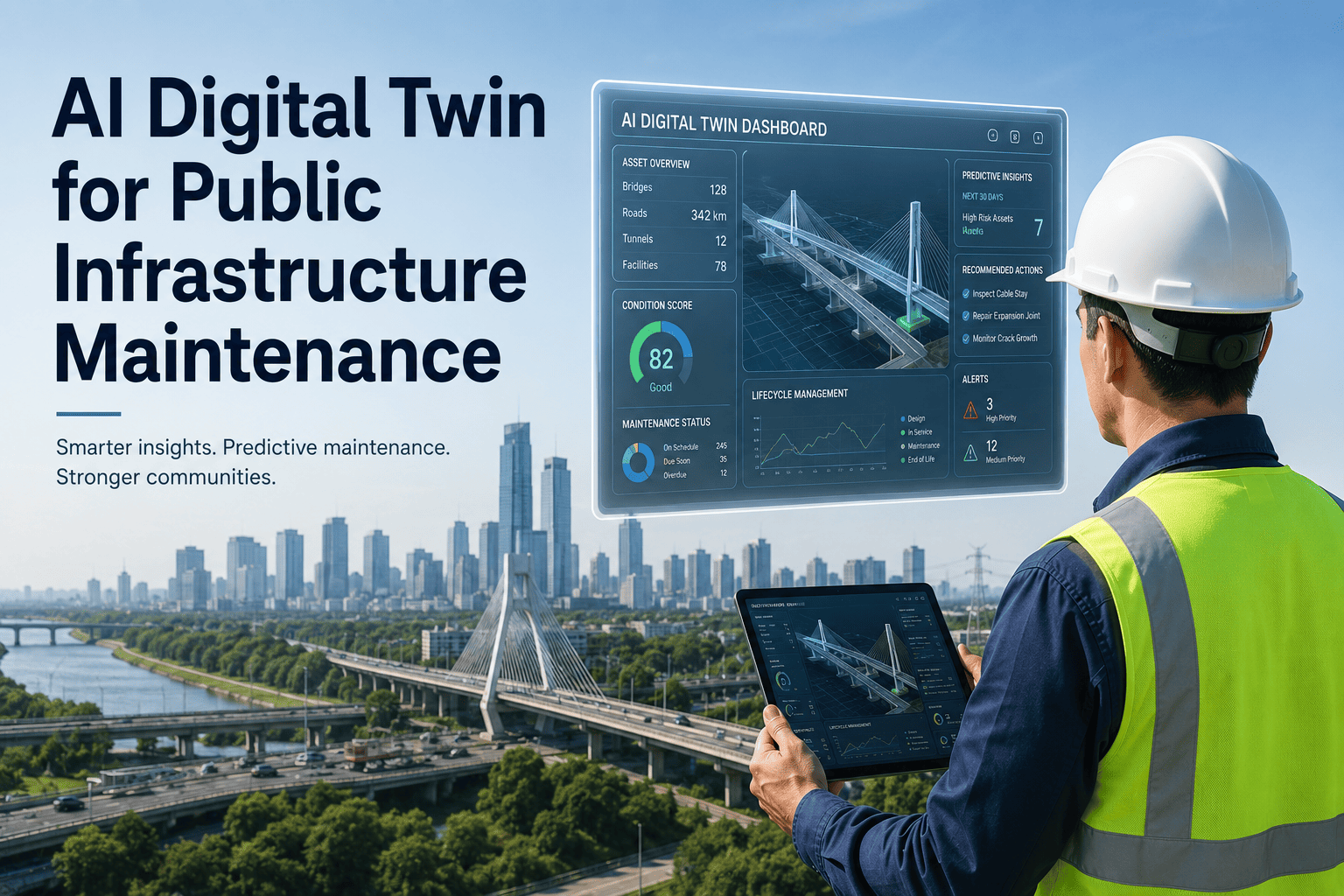
Create virtual replicas of government buildings, bridges, and water systems. Simulate maintenance scenarios, predict failures, and optimize capital improvement planning without disrupting public services.
Why Static Asset Management Fails Public Infrastructure
Government agencies managing vast portfolios—from historic city halls to complex water treatment plants—often rely on static BIM models, paper blueprints, and disconnected spreadsheets. This "snapshot" approach fails to capture the dynamic reality of aging infrastructure. A pipe corrosion rate calculated five years ago doesn't account for recent water chemistry changes; a bridge load rating doesn't reflect last month's freight traffic spike. Digital twins bridge this gap by connecting the physical asset to a live virtual model fed by IoT sensors and maintenance data, allowing agencies to predict issues before they become public crises. Start Free Trial.
Risks of Traditional Government Infrastructure Management
01
Unplanned Outages
High
Critical systems (HVAC, water pumps) fail unexpectedly because maintenance is based on calendar schedules, not actual condition.
02
Capital Inefficiency
20%
Wasted budget on replacing assets too early or repairing assets that should be replaced, due to lack of lifecycle visibility.
03
Knowledge Loss
Rapid
Retiring senior engineers take institutional knowledge with them. Digital twins capture this "tribal knowledge" into the system.
04
Compliance Gaps
Risk
Inability to prove regulatory compliance (water quality, structural safety) due to fragmented or missing historical data.
05
Energy Waste
30%
Public buildings running inefficiently because systems drift from design setpoints without real-time monitoring and adjustment.
06
Disaster Vulnerability
Critical
Inability to simulate emergency scenarios (floods, power loss) leaves infrastructure unprepared for actual resilience events.
The Digital Twin Implementation Lifecycle
Building a government digital twin is not just about 3D modeling; it's about creating a connected data ecosystem. The lifecycle moves from static data ingestion (BIM/CAD) to real-time IoT integration, enabling predictive analytics and, ultimately, autonomous maintenance triggers within the CMMS. This evolution transforms a digital file into an active operational partner.
Government Digital Twin Maturity Model
From static models to autonomous operations
1
Digital Modeling & Data Ingestion
BIM/CADGIS Mapping
Ingest existing architectural drawings, BIM models, and GIS data to create the 3D visual baseline. Map physical assets to digital IDs in the CMMS.
2
IoT Sensor Integration
SCADABuilding IoT
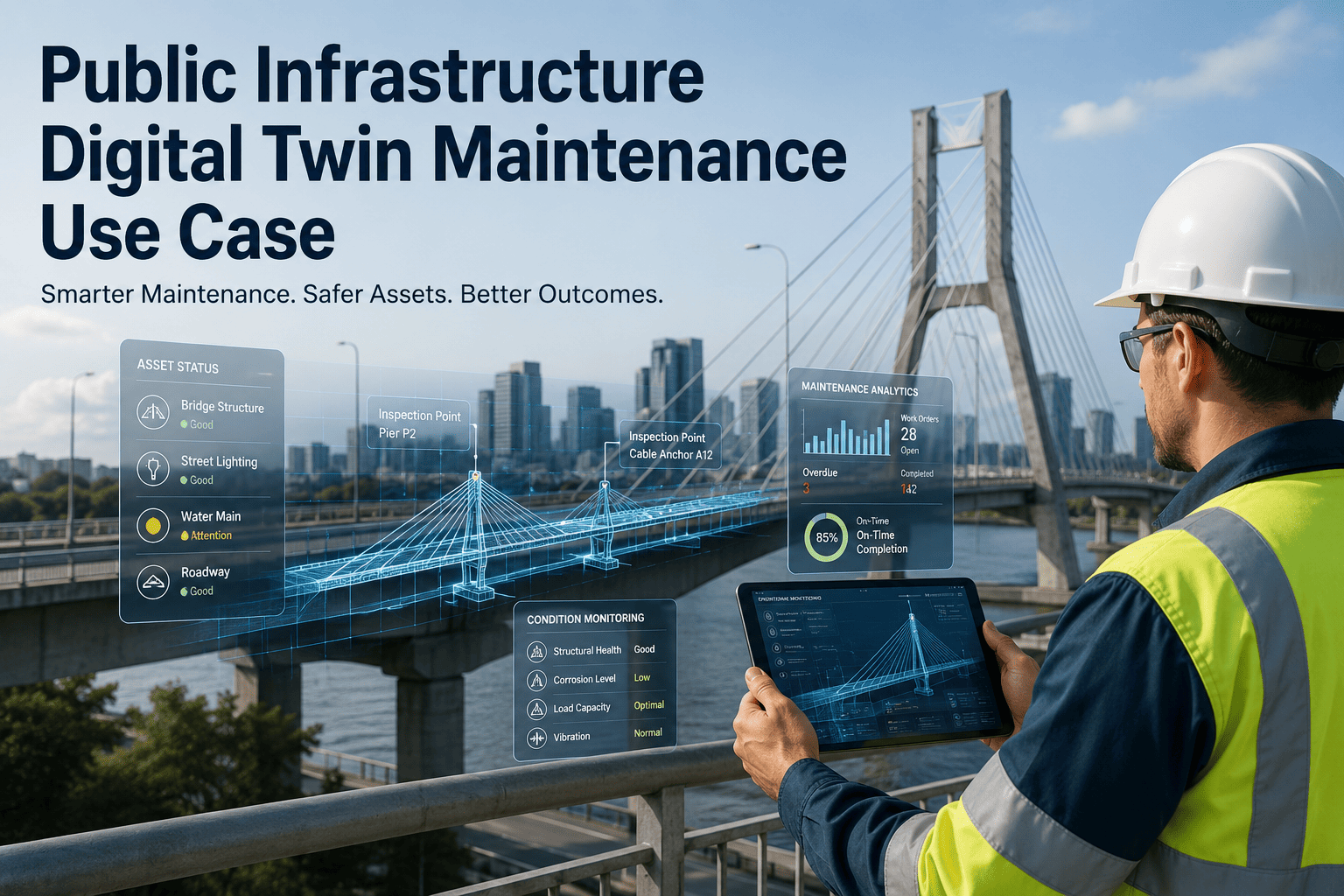
Connect live telemetry streams: vibration sensors on bridges, flow meters in water plants, and energy monitors in public buildings feed real-time data to the twin.
3
Simulation & Scenario Planning
AI/MLStress Tests
Run "what-if" scenarios. Simulate the impact of a 100-year storm on drainage capacity or the effect of deferred maintenance on bridge structural integrity.
4
Predictive Maintenance Triggers
AnalyticsForecasts
AI analyzes trends in the twin to predict component failure. The system identifies a cooling tower vibration anomaly weeks before breakdown.
5
Automated Action & Capital Planning
Auto WOsBudgeting
Predicted failures auto-generate CMMS work orders. aggregated condition data informs long-term Capital Improvement Plans (CIP) with high accuracy.
Visualize Your Infrastructure's Future
See how Oxmaint integrates with digital twin platforms to turn virtual insights into real-world maintenance actions for government agencies.
A functional digital twin relies on the convergence of operational technology (OT) and information technology (IT). Oxmaint serves as the execution layer, translating the insights from the digital twin into assigned tasks for field crews, ensuring that the virtual simulation drives physical results.
3D visualization, physics-based modeling, scenario simulation, anomaly detection
IoT & Sensors
Sensing Layer
SCADA feeds, vibration sensors, thermal cameras, energy meters, environmental monitors
GIS & BIM
Context Layer
Geospatial location, asset geometry, underground utility mapping, land registry data
Seamless data flow ensures that a sensor alert in the Twin becomes a work order in Oxmaint instantly.
Performance Metrics for Public Infrastructure
Digital twin technology transforms how government agencies measure success. Instead of tracking reactive metrics like "potholes filled," agencies can track proactive indicators like "asset health index" and "simulation accuracy." These metrics demonstrate fiscal responsibility and improved service delivery to taxpayers.
Infrastructure Health KPIs
Optimizing for resilience, efficiency, and public service
Asset Availability
99.5%
Target: >99%
Uptime of critical services (water, power, transit)
Capital Planning Accuracy
92%
Target: >90%
Actual vs. budgeted maintenance spend
Energy Efficiency
25%
Target: >20%
Reduction in KWh via optimized HVAC/lighting
Regulatory Compliance
100%
Target: 100%
Audit readiness for safety & environmental standards
Before & After: The Digital Twin Transformation
Implementing a digital twin strategy shifts government operations from a reactive, complaints-based model to a proactive, data-driven powerhouse. The impact is visible in reduced costs, fewer emergencies, and better-planned communities.
Traditional Management vs. Digital Twin Operations
Maintenance Model
Reactive/Break-Fix
→
Predictive/Simulation
Data Source
Static/Siloed
→
Real-time/Integrated
Emergency Response
Slow/Chaotic
→
Pre-planned/Agile
Capital Planning
Estimates
→
Data-Driven
Asset Visibility
Low
→
Total Transparency
Public Trust
Eroding
→
Strengthened
Modernize Your Agency Today
Join forward-thinking government agencies using Oxmaint to integrate digital twins, predict infrastructure failures, and build resilient communities.
Digital twin technology applies differently across the diverse portfolio of government assets. A targeted approach ensures that the right simulation capabilities are applied to the right infrastructure for maximum public value.
Digital Twin Applications by Asset Class
Asset Class
Primary Use Case
Key Data Sources
Outcome
Water Systems
Leak detection, pressure balancing
Flow meters, SCADA, acoustic sensors
Reduced water loss, pipe longevity
Bridges
Structural health monitoring
Strain gauges, accelerometers, drone scans
Prevent collapse, prioritized repair
Public Buildings
Energy optimization, HVAC health
BMS, occupancy sensors, smart meters
Lower carbon footprint, comfort
Emergency Svcs
Resilience simulation
Traffic data, flood models, power grid
Faster response times
Roads
Pavement degradation modeling
Traffic counts, weather, vehicle sensors
Optimized resurfacing schedules
Parks
Irrigation management
Soil moisture, weather forecast
Water conservation, healthy green space
Expert Perspective: From Modeling to Management
"
We had terabytes of BIM data from the construction of our new civic center, but once the building opened, that data sat on a server, unused. The maintenance team was still working off paper checklists. When we implemented a digital twin connected to Oxmaint, we unlocked that data. Now, if a pump vibration sensor triggers in the digital twin, a work order is instantly created in Oxmaint with the exact location, parts list, and 3D repair guide attached. We aren't just looking at a model; we are operating the building through it. We've reduced our reactive maintenance by 75% in the first year alone.
— Chief Infrastructure Officer, Major Metropolitan Municipality
75%
Drop in reactive work
15%
Energy savings
100%
Asset uptime
$2.4M
Avoided capital cost
Agencies that succeed with digital twins understand that the model is only as valuable as its connection to the real world. By integrating simulation data with a CMMS like Oxmaint, governments transform virtual insights into tangible public value. Schedule a demo to build your digital twin strategy.
Build Resilient Government Infrastructure
Oxmaint empowers government agencies to operationalize digital twins, predict critical failures, and generate evidence-based capital plans that protect public services and budgets.
Do we need a full 3D model for every building to start using digital twins?
No. You can start with a "data twin" rather than a visual twin. Connecting key assets (like HVAC chillers or water pumps) to IoT sensors and a CMMS provides immediate value. You can add 3D visual layers later. The core value comes from the data connectivity and predictive analytics, not just the 3D rendering.
How does a digital twin help with capital improvement planning (CIP)?
Digital twins provide an accurate, data-driven view of asset condition and degradation rates. Instead of estimating when a roof needs replacement based on age, the twin uses sensor data and weather history to predict the actual remaining useful life. This allows agencies to prioritize capital projects based on real risk and need, rather than arbitrary schedules, optimizing taxpayer funding.
Is the data secure? How do you handle cybersecurity for government infrastructure?
Security is paramount. Oxmaint and leading digital twin platforms utilize enterprise-grade encryption (AES-256), multi-factor authentication (MFA), and strict role-based access control (RBAC). For critical infrastructure, data can be segmented, and on-premise or government-cloud hybrid deployments are often supported to meet specific compliance requirements (like FedRAMP).
Can this technology integrate with our existing SCADA and BMS systems?
Yes. Digital twins and Oxmaint are designed to be an overlay that pulls data from existing silos. They integrate with Building Management Systems (BMS) via protocols like BACnet and Modbus, and with SCADA systems via OPC-UA or API connections. This unifies data from disparate systems into a single "pane of glass" for maintenance and operations.
What is the typical ROI timeline for a government digital twin project?
While a full twin implementation is a long-term strategy, maintenance ROI is often realized within 6-12 months. Early wins come from energy savings (optimizing setpoints), labor efficiency (eliminating manual inspections), and avoided downtime (catching a failure before it happens). For critical assets like water plants or bridges, preventing a single major failure can pay for the entire program instantly.