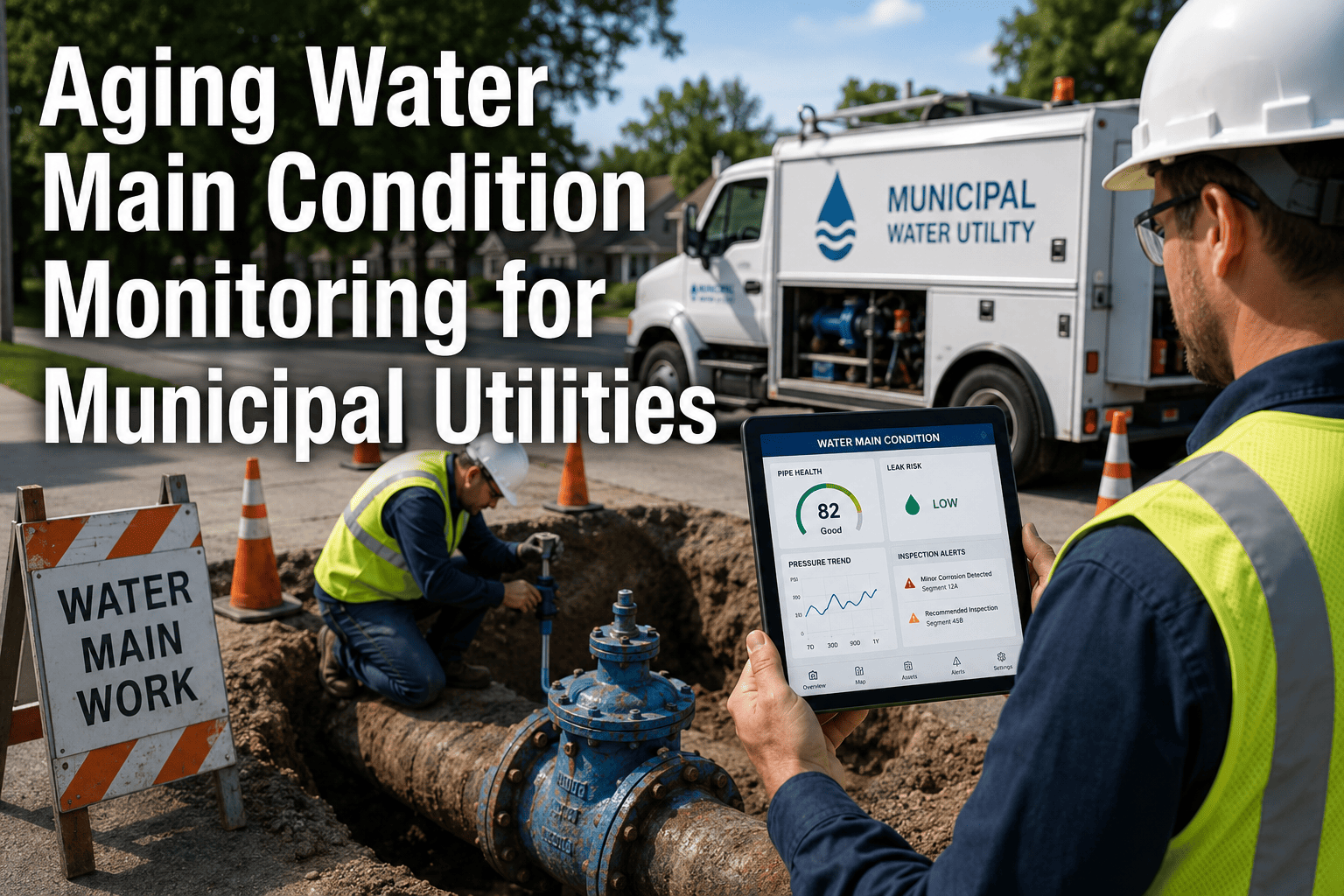
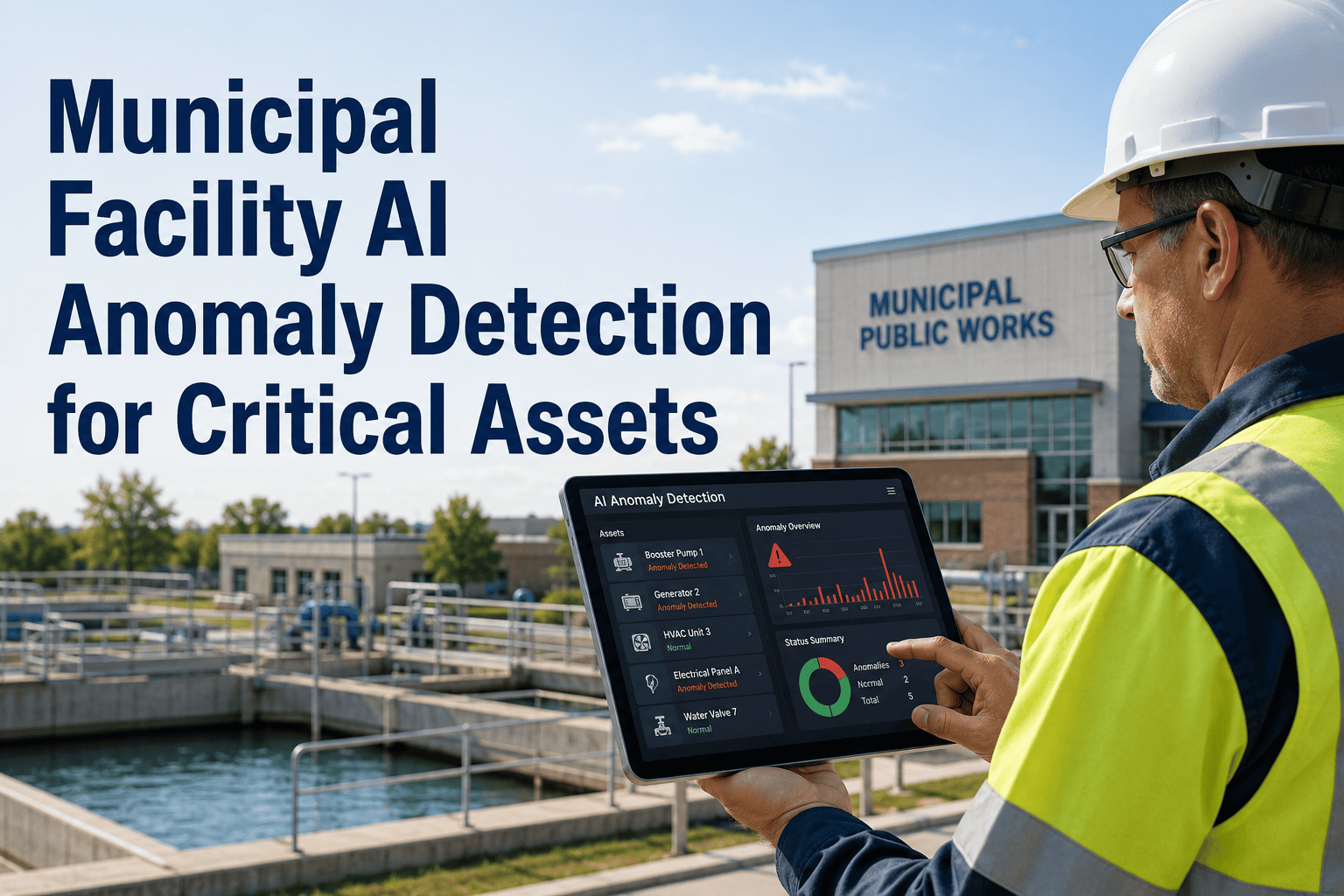
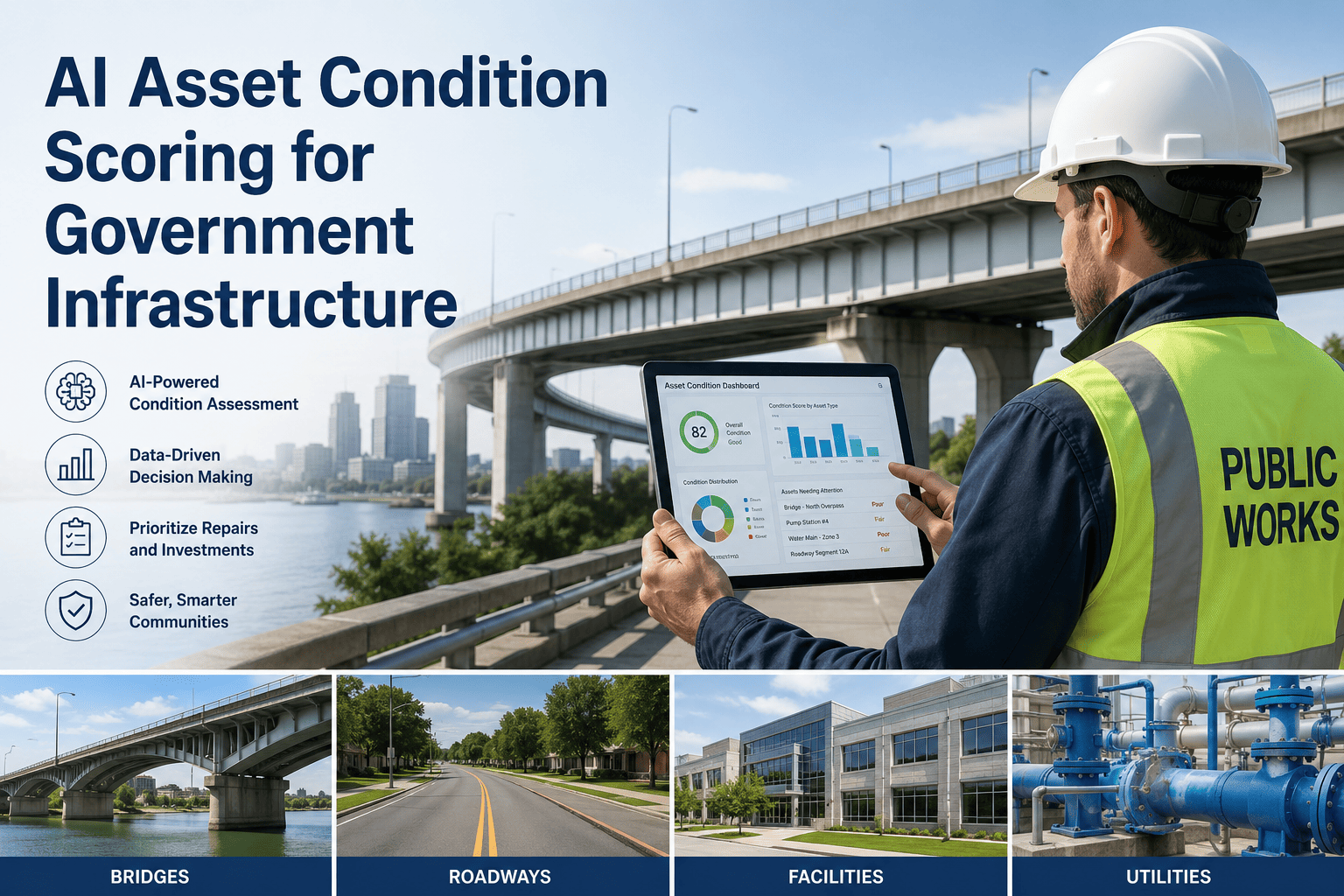
The average water main in a United States municipal distribution system is 45 years old — and in many legacy urban networks, cast iron and unlined steel mains installed before 1960 are still carrying drinking water to millions of households every day. These aging assets fail quietly: a slow corrosion perforation, an incremental joint separation, a micro-crack widened by seasonal ground movement. By the time a failure becomes visible — a sinkhole, a service interruption, a discoloured water complaint — the structural deterioration has typically been developing for years with no maintenance record attached to it. OxMaint's Predictive Maintenance platform integrates real-time IoT sensor data, acoustic monitoring signals, and AI-driven failure probability modelling to give municipal water engineers a ranked, evidence-based intervention list weeks before pipe failures manifest on the street — replacing reactive emergency repair budgets with planned capital maintenance at measurably lower cost. Water main failures across the US cause an estimated 240,000 water main breaks per year, costing municipalities more than $2.6 billion annually in emergency repair, service disruption, and property damage. Book a demo to see how OxMaint transforms your distribution network data into a defensible, prioritised asset intervention programme.
The Aging Pipe Risk Curve — Why Failure Costs Accelerate
Year 0–15
Low risk · Routine inspection
Year 15–30
Moderate risk · PM scheduling begins
Year 30–45
High risk · Condition monitoring critical
Year 45–60+
Critical · Predictive intervention or emergency failure
Planned intervention cost
Emergency failure cost (2.4× higher)
240,000
Water main breaks per year across US municipal networks
45 yrs
Average age of water distribution mains in US municipalities
2.4×
Higher cost of emergency main repair vs. planned predictive intervention
4–8 hrs
Advance warning OxMaint AI delivers before a SDWA water quality threshold is crossed
How Predictive Condition Monitoring Works on Aging Water Mains
01
IoT Sensor Deployment
Pressure transducers, flow meters, acoustic emission sensors, and corrosion probes are installed at key nodes along aging main segments. Data streams continuously to OxMaint via cellular or existing SCADA connectivity — no separate telemetry infrastructure required.
02
AI Anomaly Detection
OxMaint's predictive engine analyses flow rate deviations, pressure transient signatures, and acoustic emission patterns against historical baselines. Machine learning models trained on distribution network data flag developing anomalies before they reach failure thresholds.
03
Failure Probability Scoring
Every pipe segment receives a dynamic risk score combining age, material, soil corrosivity index, pressure zone, previous leak history, and live sensor deviation. Engineers see a ranked intervention list — not a raw data feed — updated automatically as sensor data changes.
04
Automated Work Order Generation
When a segment crosses a configurable risk threshold, OxMaint generates a structured maintenance work order automatically — assigned to the right crew, pre-loaded with the asset's condition score, sensor trend chart, and location data. No manual alarm triage required.
OxMaint · Predictive Maintenance · Water Utilities
Stop budgeting for emergency repairs. OxMaint ranks every aging main in your network by failure probability — and triggers the maintenance work order before the break happens.
Condition Monitoring Parameters — What OxMaint Tracks on Aging Mains
| Parameter |
Sensor Type |
Failure Signal Detected |
Intervention Triggered |
| Pressure transient |
Pressure transducer |
Spike or drop outside normal operating band |
Leak detection WO + field inspection |
| Flow rate deviation |
Electromagnetic flow meter |
Unexplained non-revenue water increase |
Zone isolation check + main inspection |
| Acoustic emission |
Acoustic correlator |
Stress fracture sound signature detected |
Targeted excavation WO — exact location |
| Corrosion current |
Cathodic protection probe |
Electrochemical corrosion rate acceleration |
Lining assessment WO + replacement planning |
| Water quality (turbidity) |
Optical turbidity sensor |
Post-repair sediment disturbance or joint seal failure |
Flushing programme + SDWA documentation |
OxMaint Deployment Outcomes — Municipal Water Utilities
87%
PM completion rate vs. 41% with paper-based maintenance programmes
2.4×
Lower cost per intervention when triggered by predictive data vs. emergency response
Weeks
Advance notice before failure — OxMaint AI detects degradation weeks before visible symptoms
Expert Review
Dr. Priya Venkataraman — Water Infrastructure Asset Management Consultant, 22 years, former AWWA Technical Committee Member
The fundamental problem with aging water main management is that most municipalities are still making capital planning decisions based on pipe age alone — which is about as precise as scheduling knee surgery based on your birth year rather than an MRI. Age matters, but it is just one variable. Soil chemistry, operating pressure history, previous repair frequency, water chemistry, and micro-seismic activity all interact to determine real remaining useful life. OxMaint's multi-parameter condition monitoring approach is exactly what modern asset management requires: continuous, sensor-driven scoring that updates your intervention priority list as conditions change — not once every capital planning cycle. When a utility can show an auditor or a rate case board a ranked asset risk register with live sensor data behind every score, that is when predictive maintenance becomes a governance advantage, not just an operational one.
Frequently Asked Questions
How long does it take to deploy IoT condition monitoring on existing water mains?
OxMaint's sensor integration is designed for rapid deployment on existing infrastructure — pressure and flow sensors at existing tapping points typically go live within days, with acoustic correlators installed without service interruption. Most utilities see their first predictive risk scores within two weeks of sensor activation.
Book a demo to walk through the deployment sequence for your specific distribution network and confirm which sensor types are most appropriate for your main materials and pressure zones.
Can OxMaint prioritise which mains to monitor first given a limited sensor budget?
Yes. OxMaint's asset risk scoring runs on existing maintenance records, GIS data, and operational history before any IoT sensors are deployed — giving you a data-driven prioritisation of which pipe segments carry the highest failure risk and consequence. Sensors are then targeted at the highest-risk segments first, maximising the ROI of your monitoring investment from day one.
Sign in to OxMaint to upload your asset register and generate a pre-sensor risk ranking for your distribution network.
Does OxMaint generate the compliance documentation needed for EPA AWIA reporting?
OxMaint automatically generates asset condition reports, maintenance action logs, and sensor trend summaries in formats suitable for AWIA Risk and Resilience Assessments and state primacy agency submissions. Every predictive alert, inspection, and repair is timestamped and linked to the specific pipe segment — creating a traceable evidence chain from detection to corrective action.
Book a demo to see a sample AWIA compliance report generated from OxMaint operational data and confirm it meets your state's submission requirements.
OxMaint · Predictive Maintenance · Aging Water Infrastructure
Your distribution network is telling you which mains are going to fail — if you have the sensors and AI to listen. OxMaint turns that data into ranked work orders before the break happens.
IoT Sensor Integration · AI Failure Prediction · Automated Work Orders · AWIA Compliance · Capital Planning · Multi-Zone