AI-Powered Predictive Maintenance for Government Infrastructure
By Taylor on February 28, 2026
In March 2025, a municipal water main beneath a four-lane arterial road in a mid-size county seat failed without warning. A 36-inch cast-iron pipe — installed in 1968 and never condition-assessed beyond a visual check of exposed valve stems — developed a circumferential fracture during a cold snap, flooding three city blocks with 2.4 million gallons before crews could isolate the break. The emergency repair took 11 days and cost $3.8 million — road reconstruction, sewer cross-contamination remediation, business interruption claims, and temporary water service for 4,200 residents. The post-incident review found that the pipe had been flagged in a 2019 condition report as "approaching end of useful life," but with 1,400 miles of water mains in the system, the public works department had no way to prioritise which pipes would fail first. An AI predictive model analysing pipe material, age, soil corrosivity, pressure history, break records, and weather patterns would have ranked that segment in the top 3% of failure probability — nine months before it ruptured. Across the county's $2.1 billion infrastructure portfolio — bridges, water mains, HVAC systems, roads, and public buildings — maintenance was entirely reactive. Equipment failed, then crews responded. The technology to predict failures existed; the operational framework to deploy it did not. Schedule a consultation to build an AI-powered predictive maintenance programme for your government infrastructure.
Why AI-Powered Predictive Maintenance Is Transforming Government Infrastructure
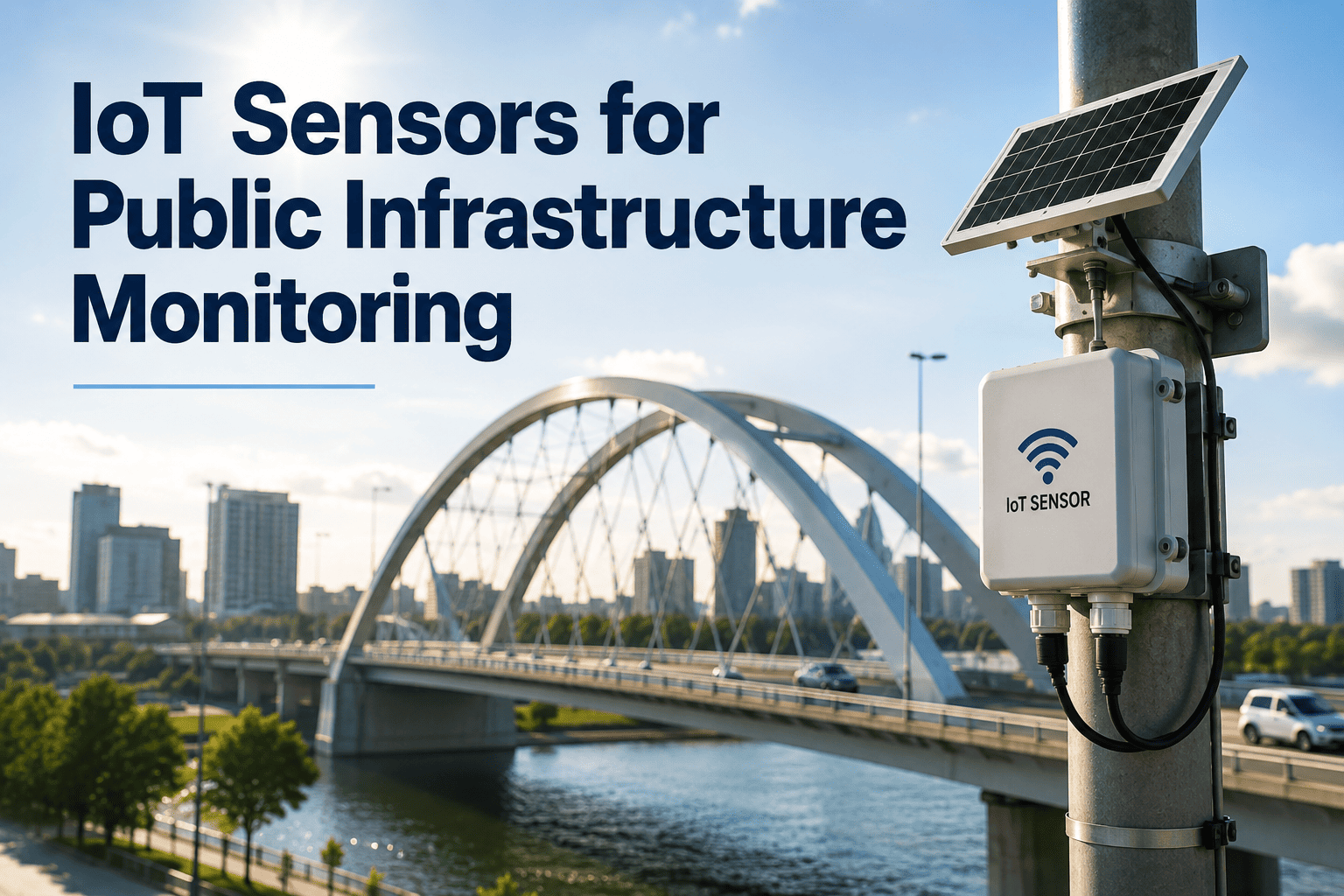
Government infrastructure — bridges, water systems, HVAC plants, electrical grids, roads, and public buildings — represents trillions of dollars in public assets maintained by agencies that overwhelmingly operate in reactive mode. AI predictive maintenance analyses equipment sensor data, maintenance history, weather patterns, material properties, and usage intensity to forecast which assets will fail next — enabling agencies to repair before collapse, prioritise limited budgets by failure risk, and demonstrate data-driven stewardship to the public. But AI predictions only drive maintenance action when they flow into a CMMS that auto-generates prioritised work orders. Oxmaint integrates AI analytics, IoT sensors, and predictive models to automate infrastructure maintenance, reduce emergency spending, and keep citizens safe.
The Government Infrastructure Maintenance Crisis in Numbers
78%
of government maintenance is reactive — repairs occur only after equipment failure disrupts public services, at 3-9x the cost of planned intervention
$3.8M
Average cost of a single critical infrastructure failure — emergency repair, service disruption, liability claims, and public health remediation combined
40%
Reduction in unplanned downtime when AI predictive models replace calendar-based or reactive maintenance — verified across government pilot programmes
91%
Prediction accuracy when AI models combine sensor data, maintenance history, and environmental factors — versus 23% accuracy from scheduled calendar intervals
How prediction-ready is your infrastructure maintenance programme? Oxmaint provides government agencies with AI failure prediction, IoT sensor dashboards, and automated work order generation from predictive analytics.
From Sensor Data to Prevented Failure: The AI Predictive Pipeline
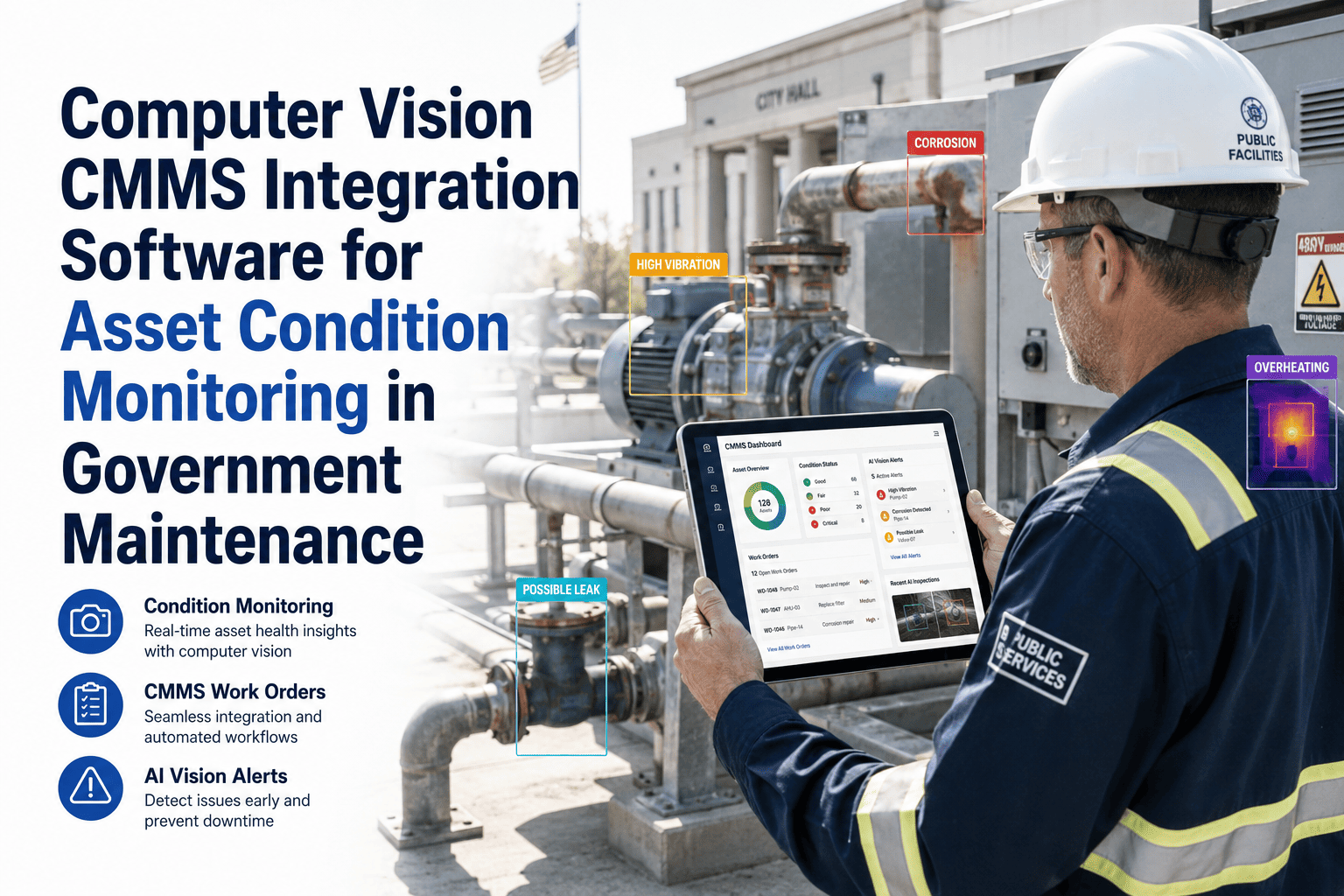
An AI-powered predictive maintenance programme requires a seamless data pipeline — from IoT sensor deployment and historical data ingestion through machine learning model training to CMMS-generated work orders and repair verification. Each stage feeds the next, creating a closed loop where every predicted failure is identified, prioritised, prevented, and documented without waiting for collapse.
CMMS-Orchestrated AI Predictive Maintenance PipelineFrom sensor data through failure prediction to preventive action — fully automated
01
Data Ingestion & Asset Profiling
CMMS registers every infrastructure asset with material specifications, installation date, maintenance history, manufacturer lifecycle data, and environmental exposure profile. IoT sensors stream real-time vibration, temperature, pressure, flow, and strain data into the AI engine continuously.
02
Machine Learning Model Training
AI models train on historical failure data, sensor patterns preceding past breakdowns, weather correlation data, and manufacturer degradation curves. Separate models operate for each asset class — water mains, bridges, HVAC systems, electrical switchgear, elevators, and road surfaces.
03
Failure Probability Scoring & Risk Ranking
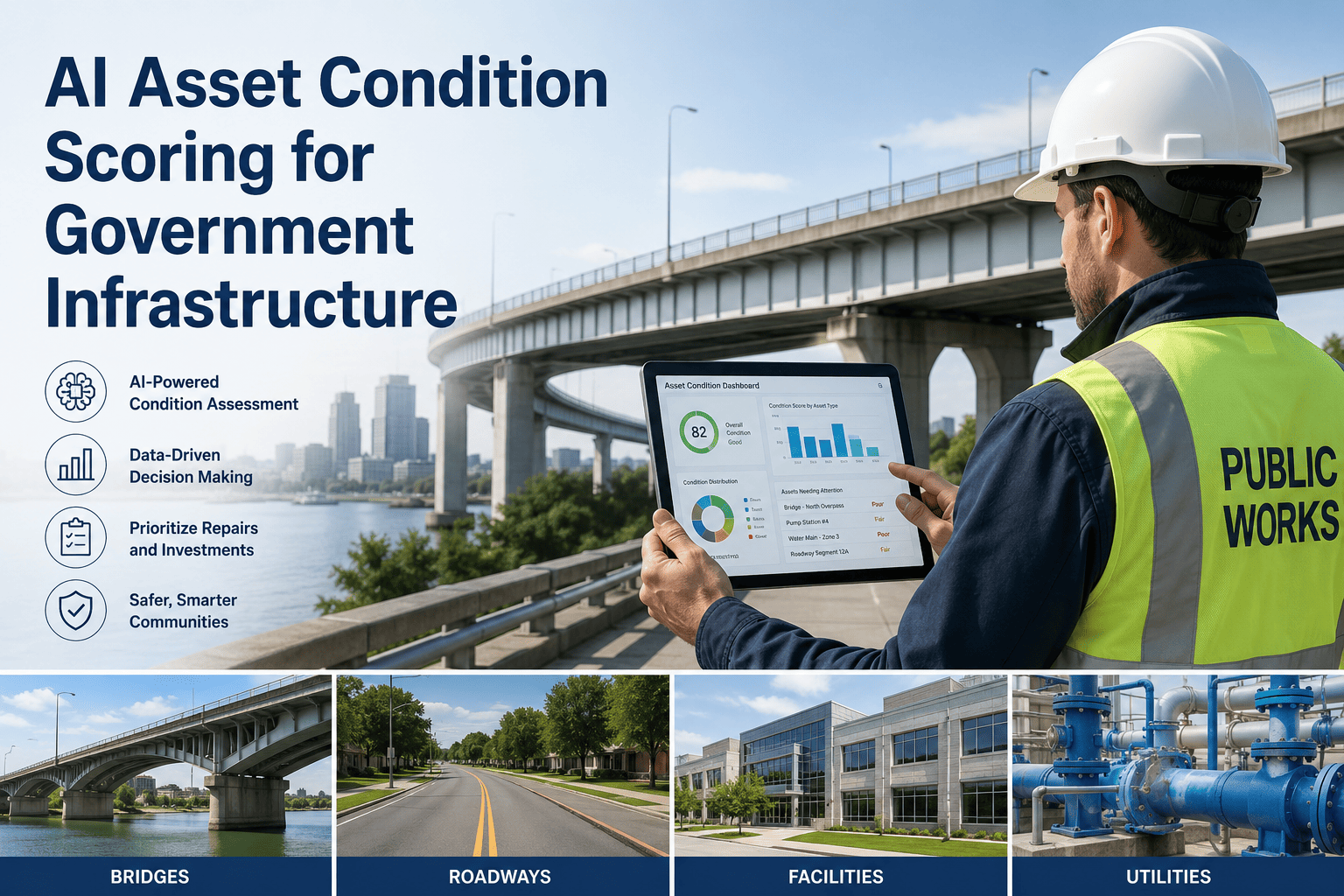
AI assigns each asset a failure probability score updated daily based on sensor readings, weather forecasts, maintenance recency, and operational load. Assets are ranked by combined failure likelihood and consequence severity — directing limited budgets to highest-impact interventions first.
04
CMMS Work Order Auto-Generation
When an asset's failure probability crosses defined thresholds, the CMMS auto-generates a prioritised work order with the predicted failure mode, recommended preventive action, parts requirements, and optimal repair window. High-risk predictions trigger immediate alerts to infrastructure managers and safety officers.
05
Preventive Repair & Model Feedback
Maintenance crews execute preventive repairs from CMMS-dispatched work orders before failure occurs. Repair outcomes feed back into AI models — confirming predictions, calibrating accuracy, and continuously improving forecast precision across the entire infrastructure portfolio. Sign up for Oxmaint to close the loop between AI prediction and preventive infrastructure repair.
Prediction Domains: What AI Monitors Across Government Infrastructure
Government infrastructure spans six primary asset domains — each with unique sensor requirements, failure modes, AI model architectures, and CMMS work order templates. A unified CMMS manages all six domains so infrastructure managers see one consolidated view of failure risk across the entire public asset portfolio.
AI Predictive Maintenance Infrastructure Domains
Bridges & Structural Assets
AI analyses strain gauge data, traffic load patterns, temperature cycling stress, corrosion sensor readings, and inspection history to predict fatigue fractures, bearing failures, and deck deterioration — months before visible distress appears.
Water Mains & Distribution Systems
Machine learning models combine pipe material, age, soil corrosivity, pressure transient data, break history, and weather patterns to rank every pipe segment by failure probability — directing replacement budgets to highest-risk corridors first.
HVAC & Mechanical Systems
Vibration analysis, refrigerant pressure trends, compressor amperage patterns, and filter differential pressure predict bearing failure, refrigerant leaks, and compressor burnout in chillers, boilers, and air handlers across government buildings.
Electrical & Power Distribution
Thermal imaging data, partial discharge sensors, transformer oil analysis trends, and load pattern analytics predict switchgear failures, transformer degradation, and panel overloads before outages affect government operations or public safety.
Roads, Pavements & Stormwater
AI processes pavement condition index data, traffic volume patterns, weather-driven freeze-thaw cycling, and drainage flow data to predict road surface failures, pothole formation zones, and stormwater system blockages before service impacts occur.
Public Buildings & Facility Systems
Elevator vibration signatures, fire suppression system pressure trends, roof membrane moisture readings, and building envelope thermal scans predict equipment failures and envelope breaches in courthouses, libraries, schools, and administrative buildings.
Manage every infrastructure domain from one AI dashboard. Book a demo to see how Oxmaint orchestrates predictive models, IoT sensor feeds, and automated work orders across your entire government asset portfolio.
AI predictive maintenance uses different model architectures, sensor inputs, and prediction horizons for each infrastructure class. Each model is trained on domain-specific failure data and continuously refined as the CMMS tracks prediction accuracy against actual outcomes.
AI Predictive Model Configuration by Asset Domain
Asset Domain
Primary Sensor Inputs
Prediction Horizon
Key Failure Modes
Bridges
Strain gauges, accelerometers, corrosion sensors, temperature
Surface failure, pothole formation, base layer deterioration
Buildings
Elevator vibration, fire system pressure, moisture, thermal scan
1–6 months
Elevator motor failure, sprinkler system breach, roof membrane failure
All AI models include confidence scores. Low-confidence predictions are flagged for engineer review. CMMS tracks prediction accuracy continuously to improve model performance over time.
Reactive Maintenance vs. AI-Powered Predictive Maintenance
The fundamental shift from reactive to predictive infrastructure maintenance isn't just about preventing failures — it's about budget efficiency, service reliability, worker safety, and the ability to demonstrate data-driven stewardship of public assets to citizens and oversight bodies.
Reactive Maintenance vs. CMMS-Integrated AI Prediction
Reactive Maintenance
❌
Equipment runs until failure — then emergency response
3-9x higher repair cost versus planned intervention
Service disruptions impact citizens without warning
Budget spent on emergencies, not strategic priorities
No data to justify infrastructure investment requests
78%of government maintenance is still fully reactive
AI Predictive + CMMS
✔️
AI predicts failures weeks to months in advance
Planned repairs at 1/3 to 1/9 the cost of emergency work
Zero service disruptions — repairs before failure occurs
Budget directed by risk-ranked AI priority scores
Dashboard with ROI data for every budget request
91%prediction accuracy with AI sensor-based models
See AI Predictive Infrastructure Maintenance in Action
Oxmaint CMMS provides government agencies with AI failure prediction, IoT sensor dashboards, risk-ranked work order generation, and infrastructure ROI reporting — turning sensor data into prevented failures and documented cost avoidance.
AI Failure Mode Classification & CMMS Action Matrix
AI models trained on infrastructure-specific sensor data classify predicted failures by type, severity, and urgency — enabling automated work order generation that prioritises safety-critical findings above routine maintenance. Each asset domain has its own failure taxonomy mapped to CMMS action triggers and escalation protocols.
AI Failure Prediction & Automated CMMS Response Matrix
Asset Domain
Predicted Failure Modes
Risk Level
CMMS Automated Action
Bridges
Fatigue crack propagation, bearing displacement, scour undermining, joint seal failure
Critical / High
Auto work order + structural engineer alert + load restriction recommendation
Auto work order + safety lockout plan + backup power coordination
Roads
Base layer failure, pothole precursor, drainage blockage, freeze-thaw damage
Medium / High
Auto work order + traffic management plan + material pre-staging
Buildings
Elevator motor degradation, fire system pressure loss, roof membrane breach
High / Medium
Auto work order + occupant notification + code compliance flag
All AI predictions include confidence scores and estimated time-to-failure windows. Low-confidence predictions are flagged for engineering review. CMMS tracks prediction-to-outcome accuracy metrics continuously.
ROI: AI Predictive Maintenance Programme Metrics
The return on investment for government AI predictive maintenance is measured in reduced emergency repair spending, prevented service disruptions, extended asset life through early intervention, optimised budget allocation by risk ranking, and — most critically — prevented failures that endanger public safety and erode citizen trust.
AI Predictive Maintenance ROI DashboardBased on government pilot programme data and infrastructure failure cost analysis
40%
Reduction in unplanned infrastructure downtime and emergency repairs
25%
Lower annual maintenance cost through optimised preventive scheduling
3x
Extended useful asset life through early-stage intervention and condition-based repair
91%
AI prediction accuracy across government infrastructure pilot programmes
Calculate your predictive maintenance ROI. Create a free Oxmaint account to model how AI prediction + IoT sensors + CMMS integration reduces emergency costs and prevents infrastructure failures across your government portfolio.
CMMS Capabilities for AI-Powered Infrastructure Maintenance
Managing an AI predictive maintenance programme requires CMMS capabilities beyond standard asset management. The system must handle IoT sensor data ingestion, machine learning model integration, risk-ranked work order generation, failure prediction dashboards, and integration with capital planning systems for data-driven infrastructure investment.
CMMS Features for AI Predictive Infrastructure Programmes
AI Prediction Engine Integration
Ingests failure probability scores from machine learning models across all infrastructure domains. Updates risk rankings daily based on sensor data, weather forecasts, and operational load. Triggers automated CMMS actions when assets cross defined risk thresholds.
IoT Sensor Fusion Dashboard
Combines data from vibration sensors, pressure transducers, thermal cameras, strain gauges, flow meters, and weather stations into unified asset health profiles. Correlates multi-sensor anomalies to confirm and prioritise AI predictions with higher confidence.
Risk-Ranked Work Order Engine
Auto-generates prioritised CMMS work orders from AI predictions with predicted failure mode, recommended preventive action, parts requirements, optimal repair window, and estimated cost avoidance. High-risk predictions trigger instant alerts to infrastructure managers.
Prediction Accuracy Tracking
Continuously measures AI model performance by comparing predictions against actual outcomes. Tracks true positives, false positives, and missed failures by asset domain. Feeds accuracy data back into model retraining for continuous improvement.
We had 1,400 miles of water mains and no way to know which one would fail next — we were spending $4.2 million a year on emergency pipe repairs alone. After implementing Oxmaint's AI predictive models, the system ranked every pipe segment by failure probability. In the first year, we replaced 23 segments the AI flagged as critical — and not a single one of them failed before we got to it. Meanwhile, our emergency repair budget dropped 38% because we stopped the failures before they happened. When the city council asked how we were allocating infrastructure dollars, I showed them a dashboard with AI-ranked risk scores, predicted failures prevented, and documented cost avoidance per project. They increased our capital budget by $6 million for the following year. The AI didn't just predict failures — it funded the programme that prevents them.
— Director of Public Works, Municipal Government (1,400 miles water mains, 340 bridges, 86 public buildings)
Implementation Roadmap: 90-Day AI Programme Launch
Building a CMMS-integrated AI predictive maintenance programme for government infrastructure follows a phased approach. The goal is a self-improving prediction system where IoT sensors stream continuously, AI models score failure risk daily, CMMS generates prioritised work orders automatically, and repairs are verified — with accuracy metrics tracked to improve predictions over time.
90-Day AI Predictive Maintenance Programme Launch
Phase 1
Asset Inventory & Data Audit
Register all infrastructure assets in CMMSImport maintenance history and failure recordsMap sensor requirements per asset domain
Phase 2
IoT Sensor Deployment
Install sensors on highest-risk assets firstConfigure real-time data feeds to CMMSValidate sensor data quality and coverage
Phase 3
AI Model Training & Pilot
Train domain-specific failure prediction modelsRun pilot predictions on 50 priority assetsValidate AI accuracy against engineer assessments
Phase 4
Full Portfolio Operations
Scale AI predictions to complete asset portfolioActivate automated work order generationLaunch prediction accuracy tracking dashboards
Launch your AI predictive maintenance programme in 90 days. Get a customised implementation plan for your agency's bridges, water mains, HVAC systems, and public building infrastructure.
An AI predictive maintenance CMMS doesn't operate in isolation. It connects to GIS, asset management, IoT platforms, financial systems, and capital planning tools to create a complete infrastructure health ecosystem across the entire government asset portfolio.
Enterprise Integration Points
System
Integration Type
Data Exchange
GIS / Asset Registry
Two-way Sync
AI failure predictions geo-referenced to infrastructure maps, pipe networks, and building databases
IoT Sensor Platform
Real-time API
Vibration, pressure, temperature, flow, and strain data streamed continuously into AI prediction engine
Financial / ERP System
Auto-export
Predicted cost avoidance, maintenance spend by asset, and ROI metrics feed budget justification reports
Capital Planning
Data Feed
AI condition trend data drives bridge replacement, pipe renewal, HVAC upgrade, and building rehab priorities
Public Dashboard / 311
API Integration
Citizen-facing infrastructure health scorecards showing preventive actions and predicted-vs-actual performance
Predict Failures. Prevent Disruptions. Protect Public Trust.
Oxmaint CMMS gives government agencies the AI prediction engine, IoT sensor integration, risk-ranked work order automation, and infrastructure ROI dashboards that transform reactive emergency spending into proactive asset stewardship — preventing the failures that endanger citizens and erode confidence in public infrastructure.
How does AI predict infrastructure failures before they occur?
AI predictive maintenance uses machine learning models trained on historical failure data, real-time sensor readings, and environmental factors to identify patterns that precede equipment breakdown. For example, a water main prediction model analyses pipe material, age, wall thickness estimates, soil corrosivity, pressure transient history, nearby break records, temperature cycling, and traffic loading to calculate a failure probability score for every pipe segment. When that score crosses a defined threshold, the CMMS auto-generates a preventive work order — weeks or months before the pipe would have ruptured. Different model architectures are used for each asset class: time-series models for HVAC vibration patterns, survival analysis models for pipe failure probability, and image classification for bridge defect progression. Sign up for Oxmaint to deploy AI prediction across your infrastructure.
What IoT sensors are needed for government predictive maintenance?
Sensor requirements vary by infrastructure domain. Water mains use acoustic leak detection sensors, pressure transducers, and flow meters. Bridges use strain gauges, accelerometers, corrosion sensors, and temperature monitors. HVAC systems use vibration sensors, refrigerant pressure transducers, amperage monitors, and differential pressure gauges. Electrical systems use thermal imaging cameras, partial discharge detectors, and transformer oil quality sensors. The CMMS manages all sensor assets — tracking calibration schedules, battery life, data quality, and replacement needs. Most government agencies start by deploying sensors on their highest-risk assets first, then expand coverage based on early results. Schedule a demo to see IoT sensor integration with AI prediction models.
How accurate are AI predictive models for government infrastructure?
Accuracy varies by asset domain and data maturity. Government pilot programmes report 85-95% prediction accuracy for HVAC mechanical failures (where vibration signatures are highly predictive), 80-90% for water main break probability ranking (where historical failure data and pipe characteristics provide strong signals), and 75-85% for bridge structural deterioration progression (where inspection interval data creates longer feedback cycles). Accuracy improves continuously as the CMMS tracks predictions against actual outcomes and feeds results back into model retraining. The key insight is that even 80% prediction accuracy dramatically outperforms calendar-based maintenance, which addresses only 23% of failures within the scheduled interval — the rest occur between inspections as surprise emergencies.
What data does an AI programme need to get started?
The minimum data required to train initial AI models includes: asset inventory (type, material, age, manufacturer, location), maintenance history (work orders, repair records, failure descriptions), and environmental context (climate zone, soil type for buried assets, indoor/outdoor exposure). IoT sensor data significantly improves prediction accuracy but is not required to begin — early models can generate useful failure probability rankings from historical data alone, with sensor data added over time to improve precision. Most government agencies have this baseline data scattered across spreadsheets, legacy systems, and paper files. The first phase of implementation consolidates this data into the CMMS, creating the foundation for AI model training.
What is the ROI timeline for a government AI predictive maintenance programme?
Most government agencies see positive ROI within 6-12 months of full deployment. Primary savings include: reduced emergency repair spending (40% average reduction across pilot programmes), extended asset useful life (preventive intervention at early-stage degradation extends service life by an average of 3x versus run-to-failure), optimised capital budget allocation (AI risk ranking directs limited replacement budgets to highest-consequence assets first), and reduced liability exposure (prevented failures eliminate injury risk, property damage claims, and environmental remediation costs). A mid-size municipality with a $2 billion infrastructure portfolio typically saves $3-8 million annually against a programme investment of $400K-900K including IoT sensors, AI software, and CMMS integration. Start your free trial to model ROI for your infrastructure portfolio.