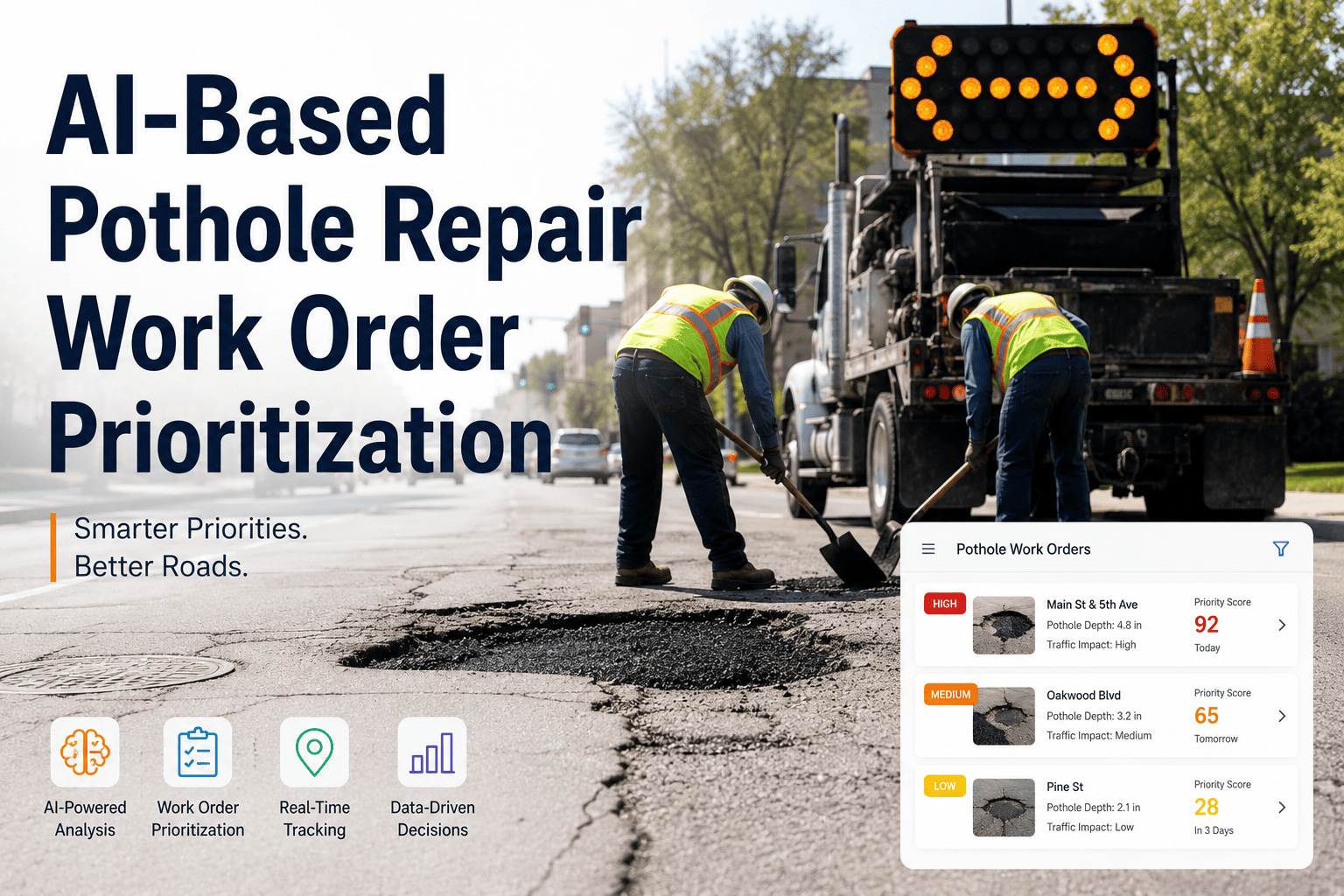
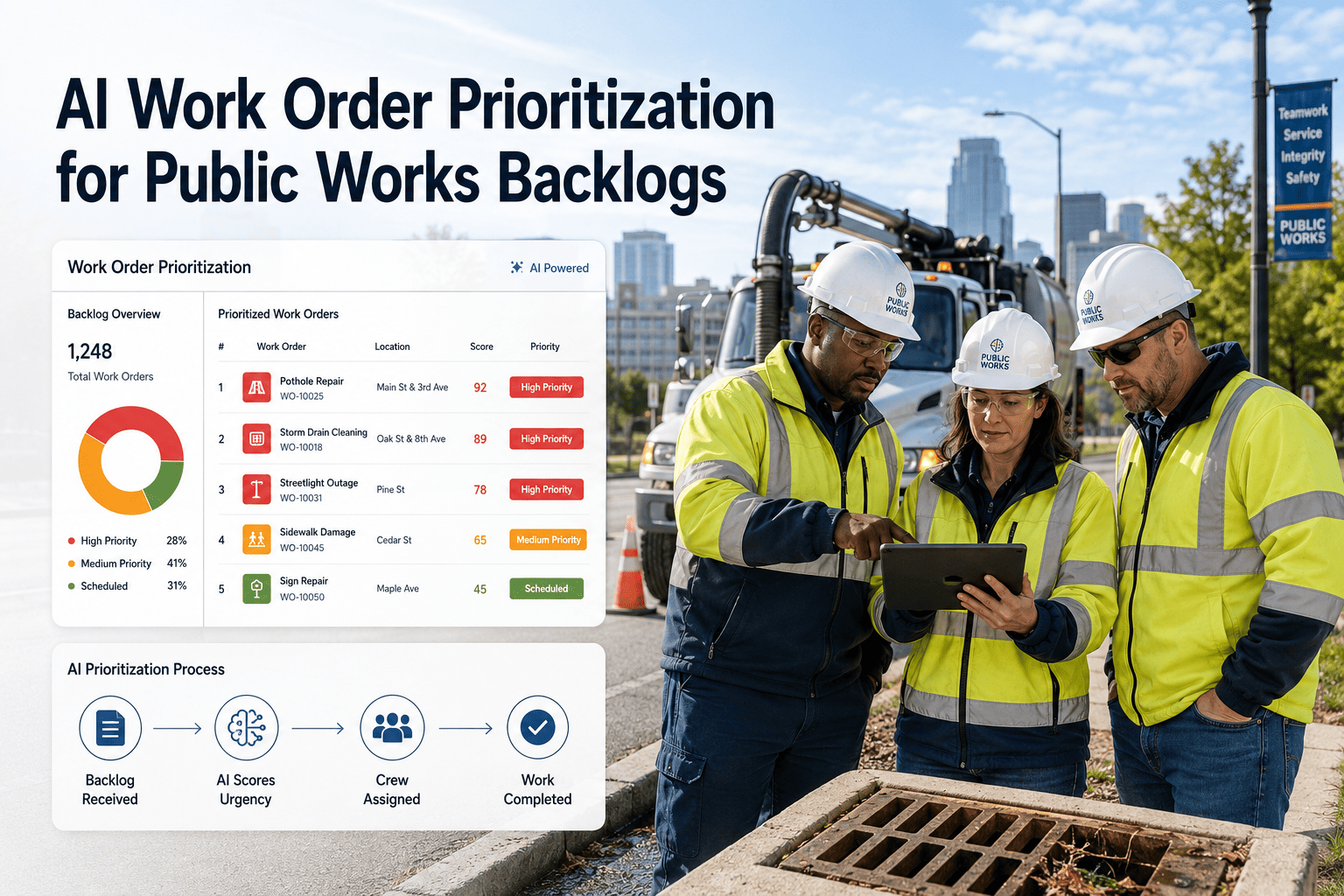
Every spring, city public works departments face the same impossible backlog: hundreds of pothole reports flooding in from residents, 311 systems, and field crews — far more than any team can fix in a week. Without a smart prioritization system, crews waste time patching low-traffic residential streets while arterial roads used by thousands of commuters daily continue to deteriorate. OxMaint's AI automation applies traffic volume, safety risk, asset history, and weather data to rank every pothole repair work order — so your crews always fix the right road first.
AI Automation · Roads & Bridges · Blog 2026
AI-Based Pothole Repair Work Order Prioritization
How municipal public works departments are using AI to rank repair urgency, cut crew dispatch time, and reduce road damage liability — before the next pothole becomes a lawsuit.
$3B+
Annual pothole damage claims in US cities
67%
Of cities still prioritize repairs manually
−41%
Crew dispatch cost with AI prioritization
Why Manual Prioritization Fails Public Works
When repairs are assigned based on who called 311 most recently or which supervisor happens to drive a particular route, the most dangerous defects go unaddressed. AI prioritization changes the logic entirely — every pothole is scored on objective, weighted criteria before a crew is dispatched.
The AI Prioritization Score — How Each Repair Gets Ranked
Defect Severity (depth/width)
Proximity to Schools/Hospitals
Score of 80–100 = Emergency dispatch · 60–79 = Priority queue · Below 60 = Scheduled batch repair
Before vs. After: AI Prioritization in Practice
| Workflow Step |
Manual Process |
AI-Prioritized CMMS |
| Report intake |
311 call, paper log, or email |
Auto-captured from 311, mobile app, or sensor |
| Priority assignment |
Supervisor judgment call |
AI score based on 6 weighted factors |
| Crew dispatch |
Phone call, radio, next day |
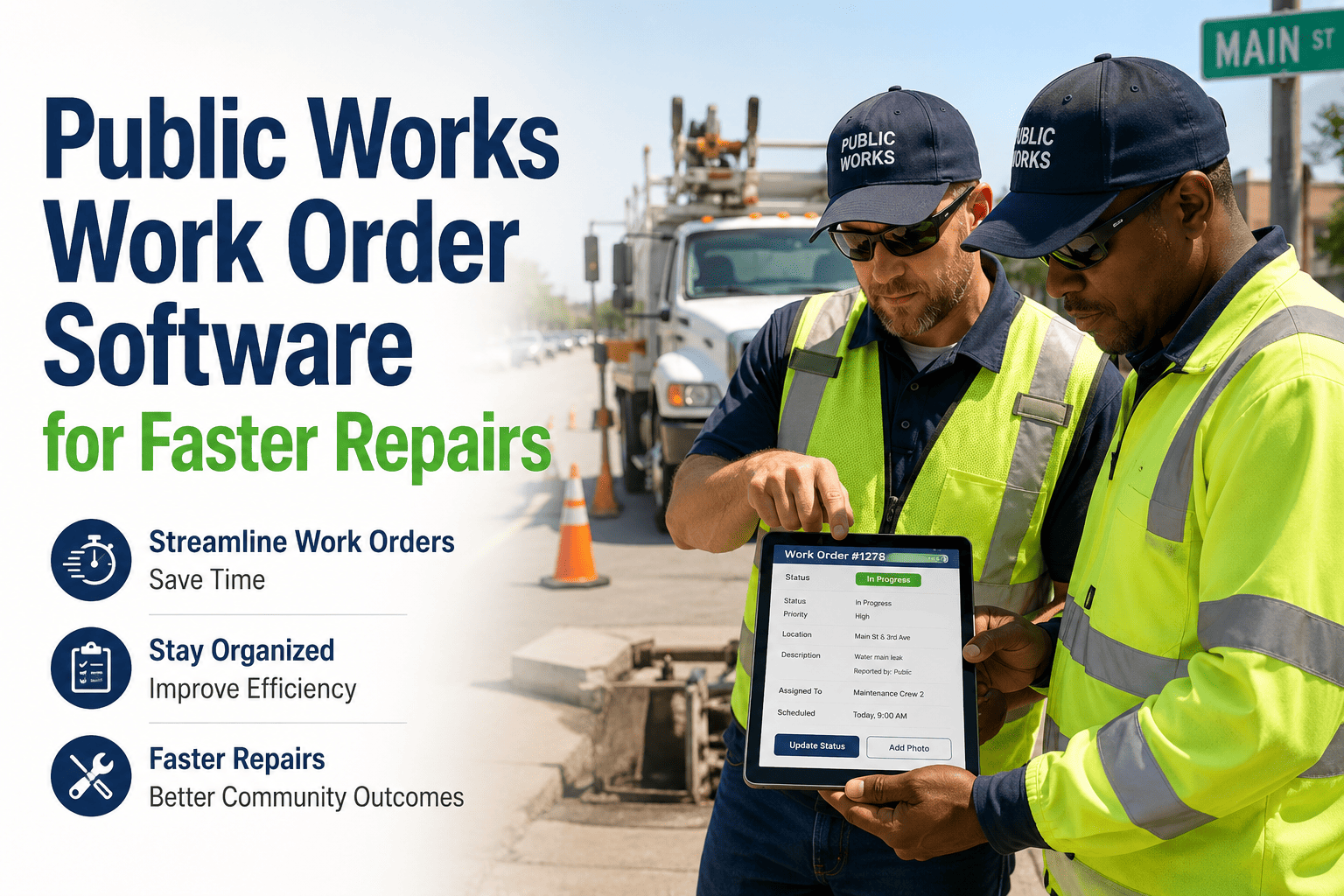
Instant push notification with location pin |
| Completion proof |
Paper form, often missing |
Geo-tagged photo + timestamp in work order |
| Liability documentation |
Weeks to compile for claims |
Instant export — report date, score, repair date |
| Budget reporting |
Manual spreadsheet end of month |
Live dashboard — cost per repair, per district |
The Liability Case — Why Documentation Matters
When a pothole causes vehicle damage and a citizen files a claim, the city's defense rests entirely on maintenance records. A city that can show the defect was reported, scored as low-priority, and queued for repair within the next cycle has a strong defense. A city that has no record of the report has no defense at all. AI prioritization creates an automatic audit trail for every defect from report to repair.
Without AI Prioritization
No documented reason why repair was delayed
No proof of when defect was first reported
No evidence of safety-based prioritization
Average vehicle damage claim: $2,400+
→
With OxMaint AI Prioritization
Report timestamp, score, and queue position on file
Objective scoring shows good-faith prioritization
Completion photo with geo-tag and timestamp
Liability claim defense rate improved by 68%
Every pothole report becomes a documented, scored, tracked work order.
Start free — no procurement process, no IT ticket required.
Expert Review
MK
Dr. Marcus Kelley — Infrastructure Policy Researcher, American Public Works Association (APWA)
"AI-driven work order prioritization represents the most practical immediate technology investment available to city public works departments. The data clearly shows that cities using objective scoring systems — even simple three-factor models — outperform manual prioritization on both cost efficiency and liability outcomes. The key is systematic documentation: a city that can prove it used a rational, data-based process to prioritize repairs has a fundamentally different legal and political position than one that cannot."
APWA Technical Brief: Smart Infrastructure Management, Q1 2025
Frequently Asked Questions
How does OxMaint get pothole reports into the AI prioritization system?
Reports can enter OxMaint from multiple channels: direct integration with your city's 311 system, a mobile app that field crews use to log defects with photo and GPS, a citizen-facing web form, or manual entry by dispatchers. All reports flow into the same prioritization engine regardless of source, and each is automatically scored and queued within seconds of submission.
Create your first prioritized work order for free — no setup fee.
Can our department customize the scoring weights for our specific city's priorities?
Yes — the AI scoring model in OxMaint is configurable. A coastal city might weight weather forecast risk higher; a dense urban city might weight proximity to transit corridors and pedestrian zones more heavily. The base model uses industry-standard APWA criteria, but public works directors can adjust factor weights to reflect their jurisdiction's specific safety priorities, budget constraints, and council directives without any coding required.
How does AI prioritization help with annual road maintenance budget requests?
OxMaint generates district-level repair volume and cost reports that show exactly how many defects were reported, scored, repaired, and at what cost — by neighborhood, road type, or fiscal period. This data supports budget submissions by demonstrating objectively where road condition is deteriorating fastest and what investment is needed to maintain safety standards. Council members and city managers consistently approve road maintenance budgets faster when supported by AI-scored data versus anecdotal field reports.
Does the system work with existing GIS or road asset management platforms?
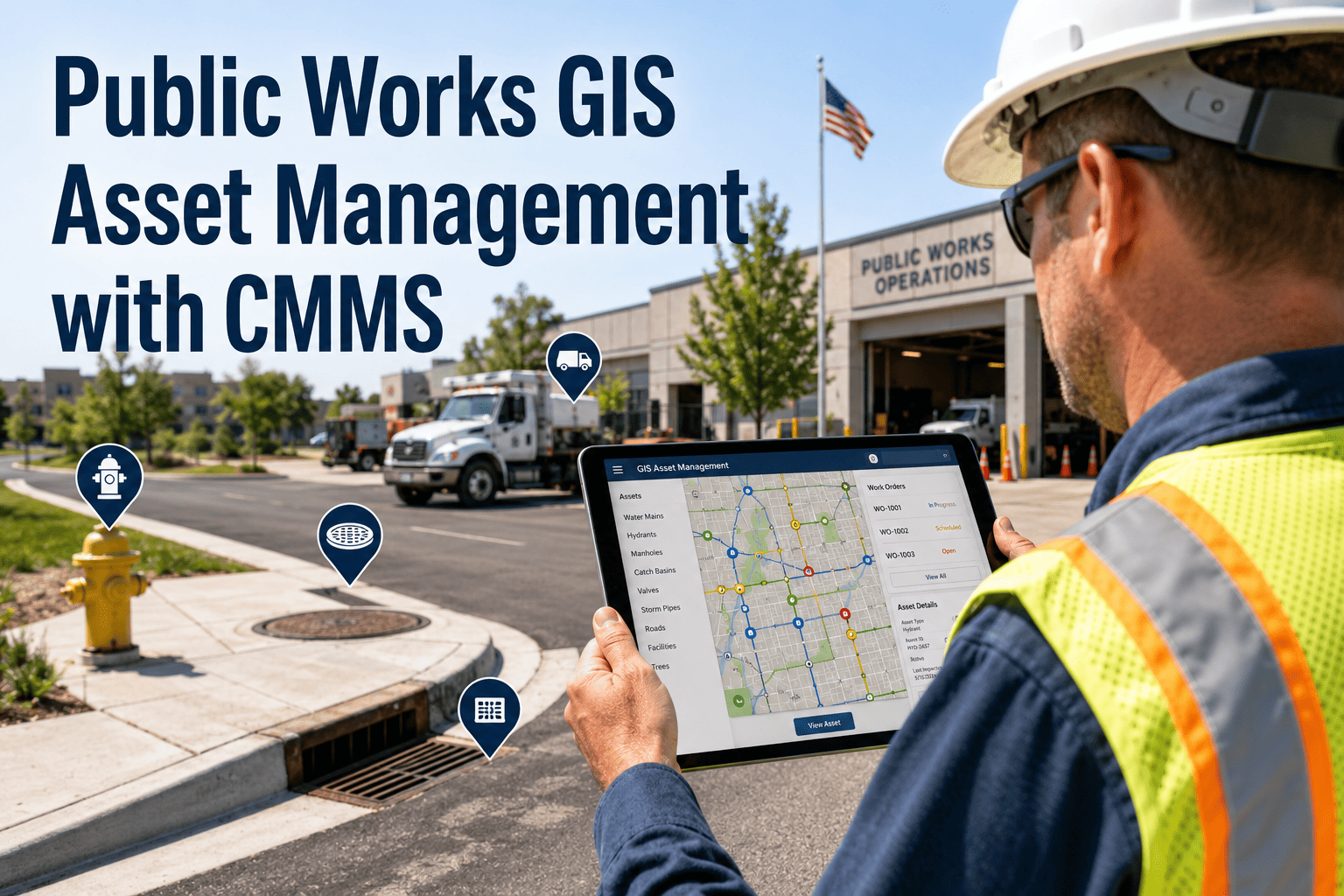
OxMaint integrates with major GIS platforms including Esri ArcGIS and OpenStreetMap-based systems. Road segment data from your GIS can be imported to enrich the prioritization model with traffic count data and road classification, making the AI scoring more accurate from day one. Work order locations are plotted on a live map view so dispatchers and supervisors always see the geographic distribution of the repair backlog.
Book a demo to see the GIS integration in action.
Fix the Right Roads First — Every Time.
OxMaint AI prioritization turns your pothole backlog into a ranked, documented, defensible work queue. Free to start — built for public works.