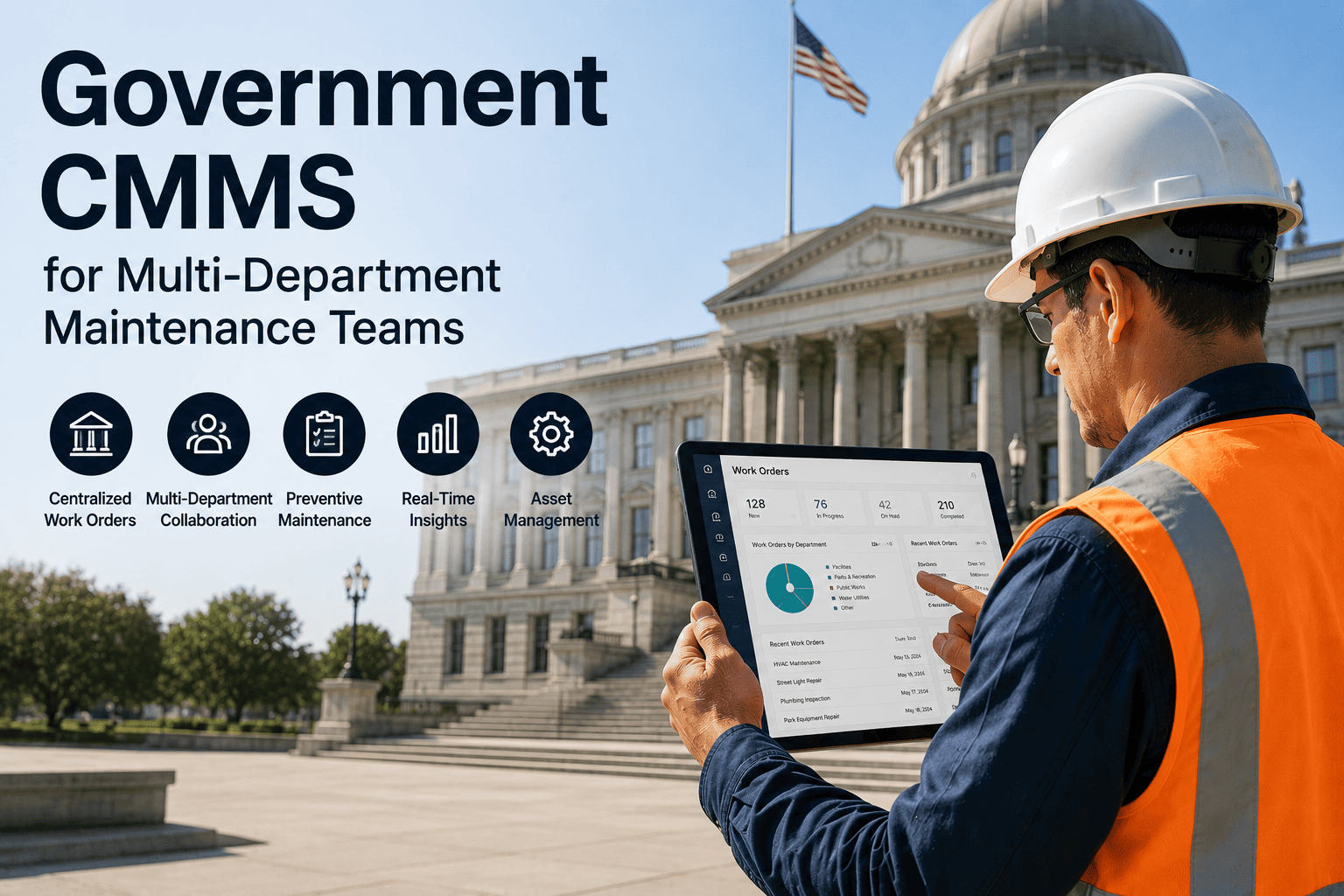
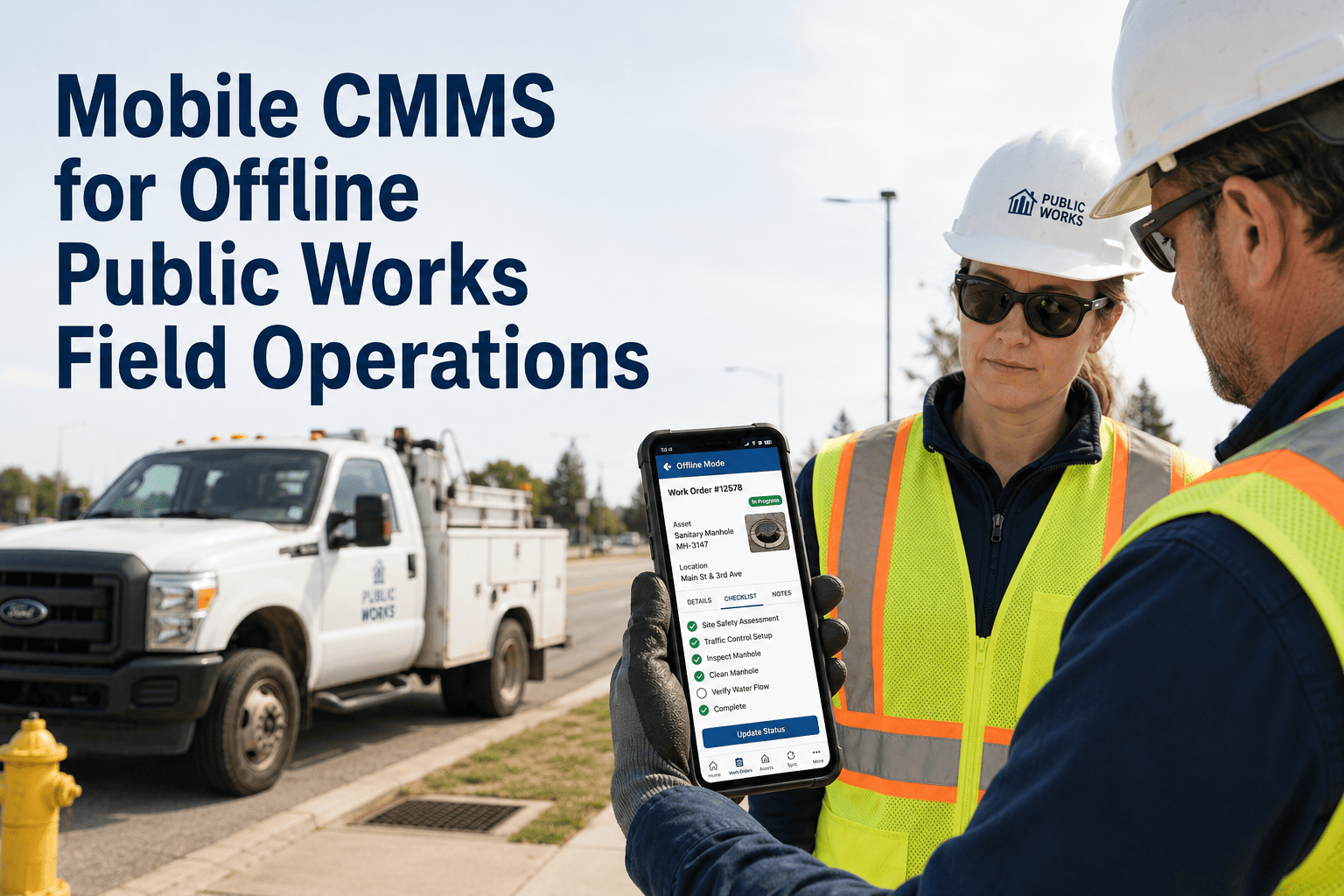
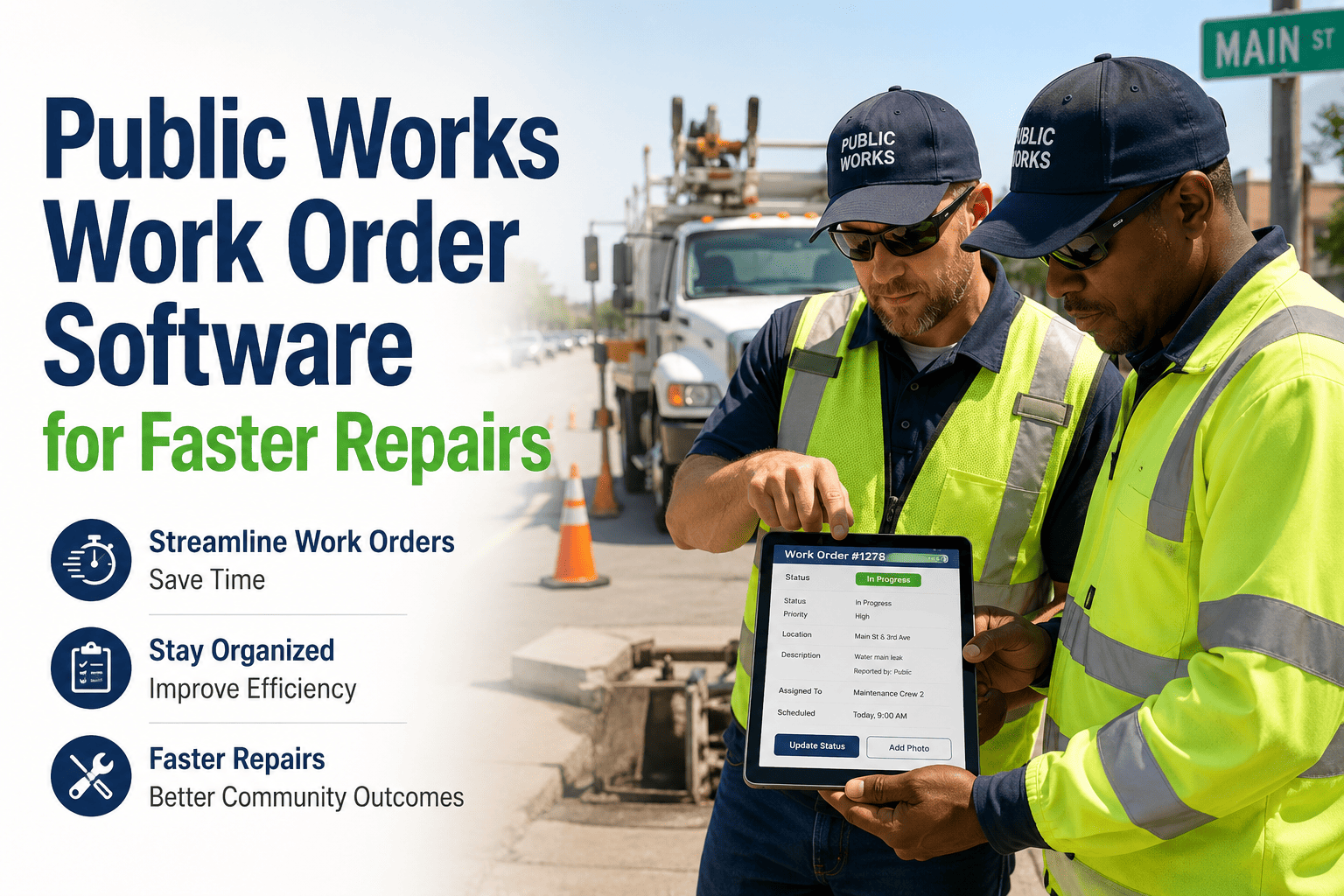
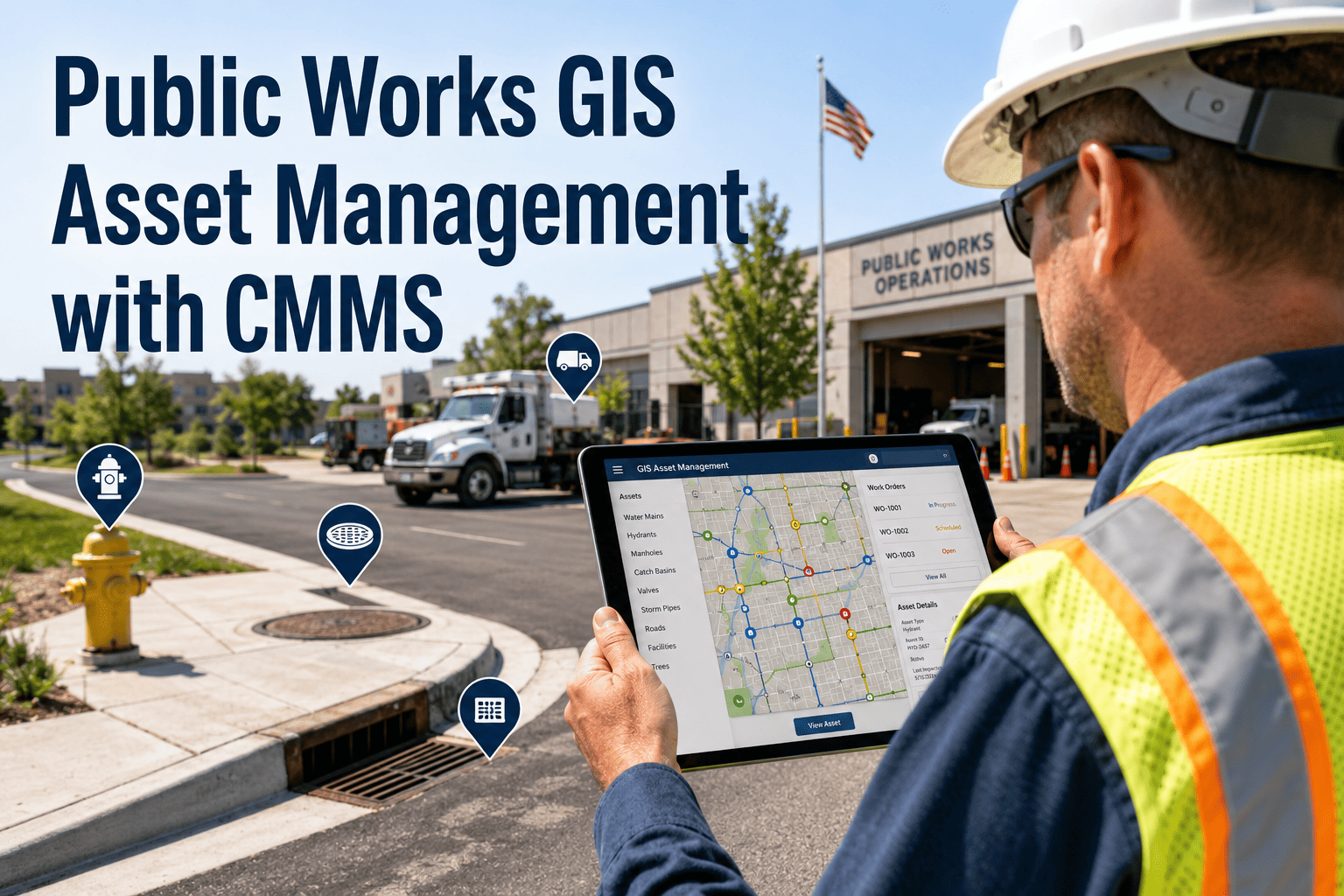
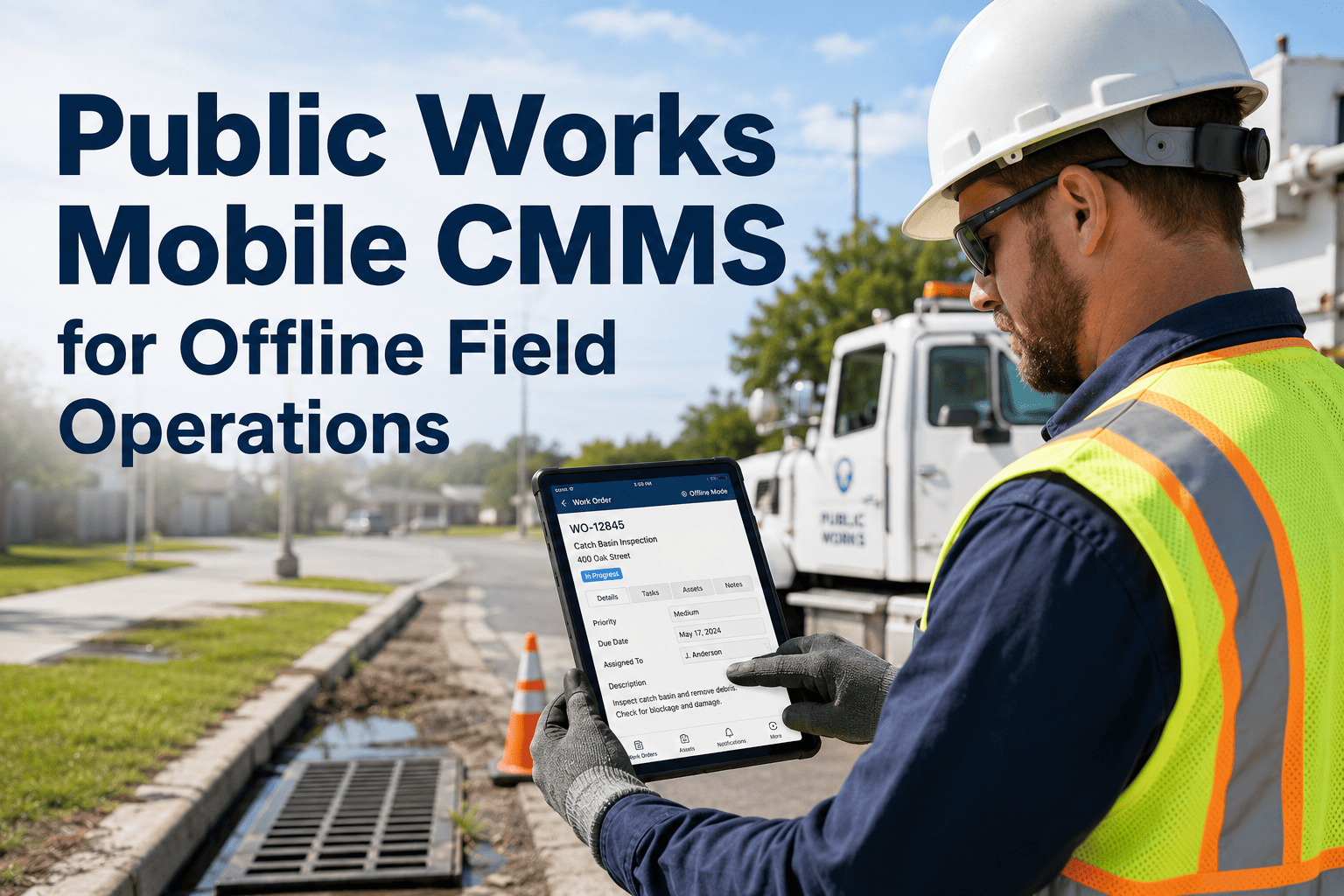
Managing maintenance across a city's public works, facilities, parks, transit, and utilities departments is one of the most fragmented operational challenges in government. Each department runs its own schedule, tracks its own assets, and reports separately — creating silos that cost taxpayers millions in duplicated effort, missed compliance deadlines, and reactive emergency repairs. OxMaint's cloud CMMS platform unifies multi-department government maintenance under one system — giving city managers, directors, and technicians a single source of truth for every work order, asset, and compliance record across the entire public sector operation.
Cloud CMMS · Government · 2026
Government CMMS for Multi-Department Maintenance Teams
One platform. Every department. Full compliance visibility — from public works and parks to transit and utilities.
6–12
Departments in a typical mid-size city with separate maintenance silos
43%
Of government maintenance budget wasted on reactive, unplanned repairs
3×
Faster audit response with unified CMMS vs. paper-based systems
91%
PM compliance achievable with automated cross-department scheduling
The Multi-Department Maintenance Problem
Without a unified platform, government maintenance teams spend as much time coordinating between departments as they do on actual maintenance. Work orders fall through cracks between teams. Assets are duplicated in multiple spreadsheets. Compliance calendars are managed per-department with no shared visibility. The result: missed inspections, duplicated procurement, and budget reports that take weeks to compile.
01
Siloed Work Orders
Public works, facilities, and parks each track work orders separately. Cross-department assets like shared vehicles or generator systems fall through every gap.
02
Compliance Blind Spots
Each department manages its own inspection calendar. When a fire safety inspection or DOT check is missed, no one sees it until an auditor or incident surfaces it.
03
Budget Fragmentation
Cost reporting requires manual consolidation across departments, taking weeks before a council presentation. Data is always stale by the time it reaches decision-makers.
04
No Asset Lifecycle View
Asset replacement decisions are made per-department without a city-wide picture. The oldest assets often stay in service longest because no one has the full cost picture.
How OxMaint Unifies Multi-Department Operations
OxMaint's cloud CMMS is built for government's multi-department reality — with role-based access, department-level reporting, and city-wide visibility that gives every stakeholder exactly the data they need without exposing unrelated operations.
| Department Challenge |
Without CMMS |
With OxMaint |
Impact |
| Work order routing |
Email, radio, paper |
Auto-assigned by skill and zone |
−62% response time |
| Compliance tracking |
Per-department spreadsheets |
Unified inspection calendar |
0 missed inspections |
| Budget reporting |
4–6 weeks manual consolidation |
One-click cross-dept report |
−74% admin time |
| Asset visibility |
Per-silo asset lists |
City-wide asset registry |
Full lifecycle data |
| FOIA response |
Weeks of record hunting |
PDF export in minutes |
Legal protection |
| Predictive maintenance |
Reactive only |
AI-driven fault alerts |
−38% breakdown cost |
Department-by-Department Capability Map
PW
Public Works
Fleet PM scheduling
Road repair work orders
Equipment lifecycle tracking
FM
Facilities
Building inspection records
HVAC and mechanical PM
Fire safety compliance
PR
Parks & Rec
Playground safety checks
Irrigation maintenance
Seasonal asset scheduling
UT
Utilities
Water treatment checklists
Pump and valve PM
Regulatory compliance logs
TR
Transit
Vehicle inspection records
Station facility maintenance
DOT compliance tracking
ES
Emergency Services
Apparatus readiness checks
Station equipment PM
NFPA compliance records
See every department in one dashboard
OxMaint gives city managers and directors a live view of maintenance performance, compliance status, and spending — across every department, at once.
Expert Review
DR
David Reyes — Senior Advisor, National Association of Government Fleet Administrators (NAGFA)
"The single greatest operational gain for any municipal government adopting a cloud CMMS is not the work order system — it's the elimination of departmental data silos. When public works, facilities, parks, and utilities all log into one platform, city management suddenly has a real-time picture of maintenance spending and compliance that previously required weeks of manual reporting. Governments that consolidate onto one CMMS platform typically recoup the platform cost within the first budget cycle through avoided reactive repairs alone."
Published analysis: Government Technology Quarterly, March 2025
Frequently Asked Questions
Can different departments have separate logins and permissions while sharing one system?
Yes — OxMaint uses role-based access control that lets each department operate its own work orders, assets, and reports while city management sees the unified view. A parks technician only sees parks assets; the city manager sees everything. This preserves department autonomy while eliminating the data silos that make cross-department reporting impossible.
Set up your department structure for free and configure permissions in under an hour.
How does OxMaint handle cross-department shared assets like vehicles or generators?
Shared assets in OxMaint are assigned to a primary department but can be accessed, work-ordered, and reported on by any authorized department. When a shared asset — say, a generator used by both facilities and emergency services — gets a work order raised, both departments see it instantly. Maintenance cost is split and attributed by department for budget reporting purposes, eliminating the most common source of double-counting in government asset registers.
What does implementation look like for a city with six or more departments already using spreadsheets?
OxMaint's government onboarding process starts with an asset census import from existing spreadsheets, followed by department-by-department configuration of work order categories, compliance calendars, and user roles. Most cities complete the core setup in 2–4 weeks without any IT procurement process. Historical records can be imported or scanned and attached to asset profiles, giving auditors access to pre-CMMS maintenance history from the same interface.
Can OxMaint generate the consolidated budget reports that city managers need for council presentations?
Yes — OxMaint generates consolidated maintenance cost reports by department, asset category, location, or time period — all from one click. Reports export as PDF or CSV in the format required by budget offices and council submissions. The city manager's view includes a cross-department dashboard showing compliance rates, open work orders, and year-to-date maintenance spend against budget in real time, eliminating the 4–6 week manual consolidation cycle before every council meeting.
Book a demo to see the city manager dashboard live.
Government Maintenance, Finally Unified.
OxMaint connects every department on one cloud CMMS — free to start, no IT procurement required, full compliance tracking from day one.