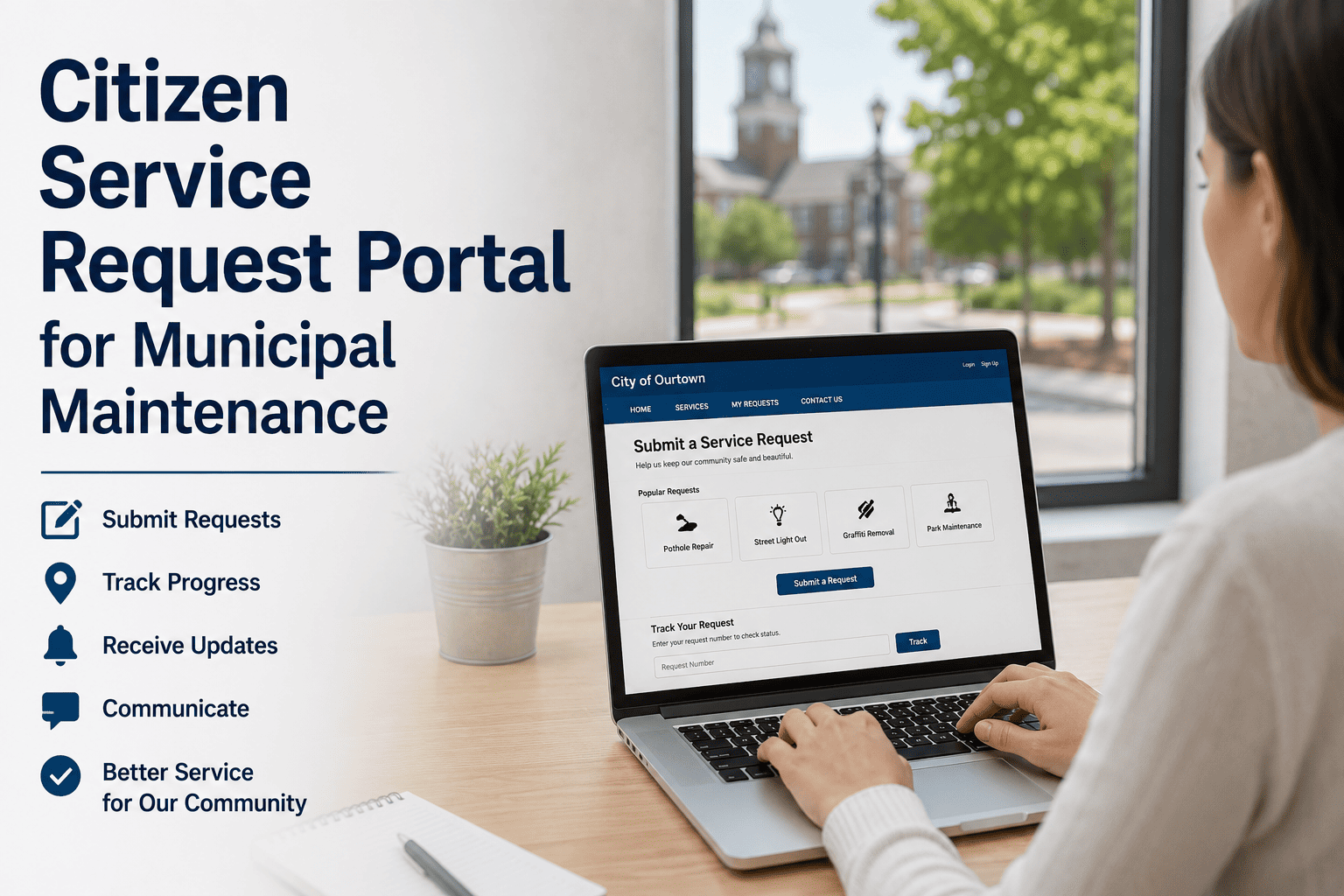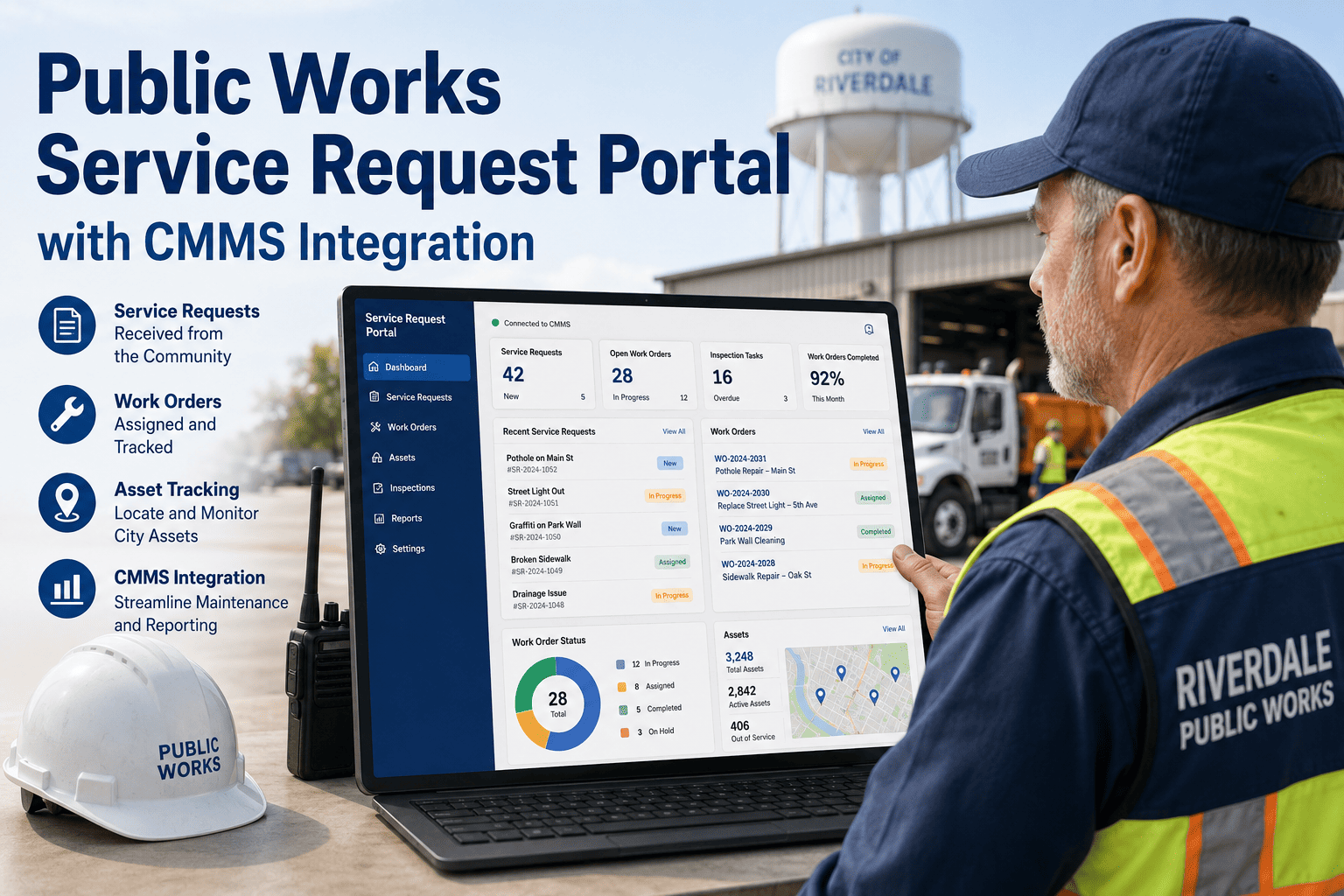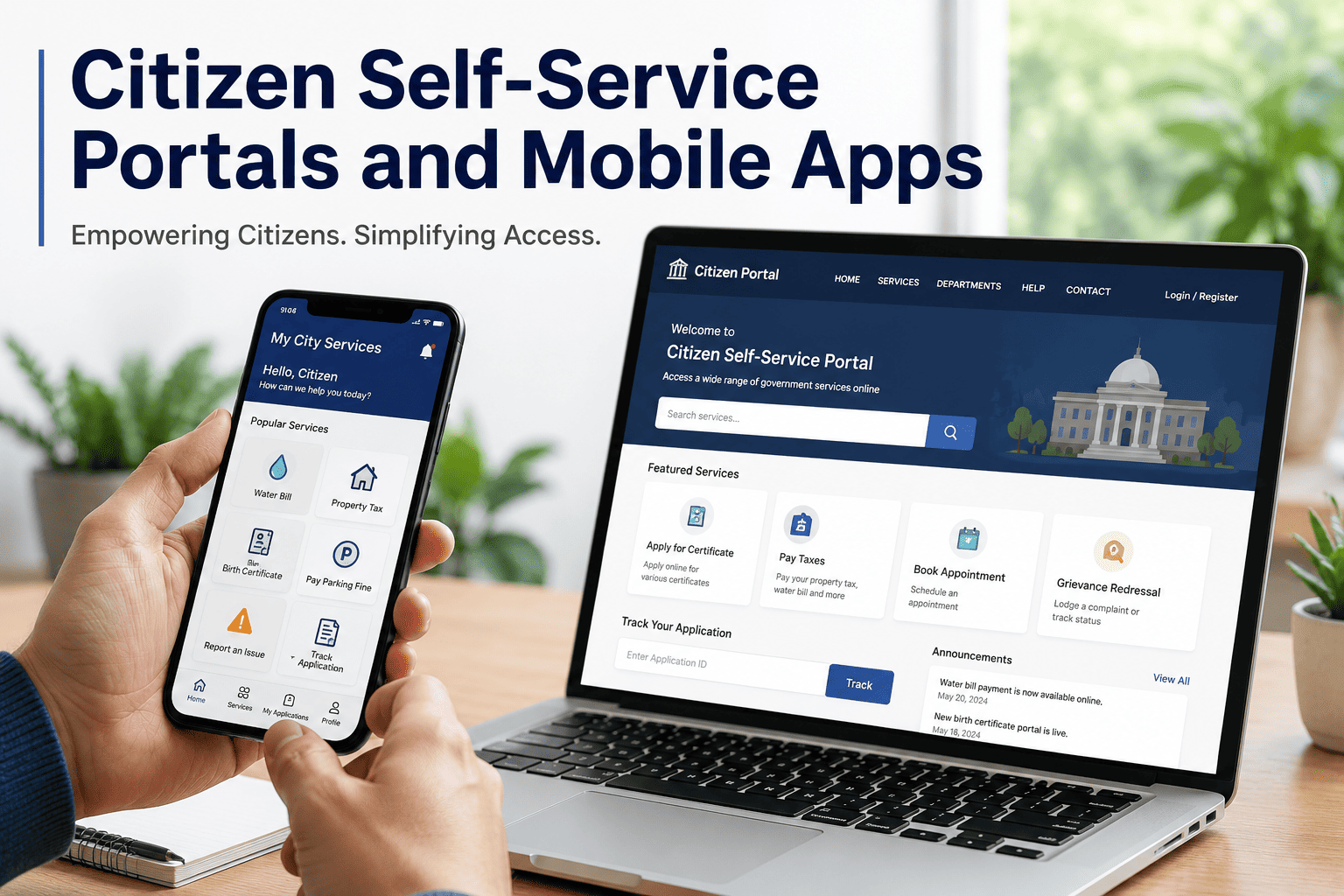
A citizen self-service portal is a secure digital gateway — web and mobile — that lets residents report issues, track requests, pay fees, and access municipal services without calling or visiting a counter. Modern citizen self-service government platforms cut call-center volume by 30–55%, reduce average resolution time, and lift citizen satisfaction scores by giving people 24/7 access to the services they use most. For municipalities managing aging infrastructure and tight budgets, pairing a citizen portal government interface with a CMMS ensures every reported issue flows directly into a structured work-order pipeline — no lost tickets, no duplicate data entry, no finger-pointing. When a resident submits a pothole complaint through a municipal citizen app, the right crew should be dispatched the same day. You can explore the full platform with a Start Free Trial or read on to see how the deployment works.
What if every citizen request reached the right crew in under 60 seconds?
A well-deployed citizen self-service portal and mobile app eliminates phone-tag, lost emails, and paper forms — routing each request directly into your maintenance management system for instant dispatch, tracking, and resolution. Residents get real-time status updates; operations teams get a structured, auditable work-order pipeline.
Why a municipal citizen app is now table stakes, not a nice-to-have
Over 80% of residents now prefer to self-serve digitally rather than wait on hold — and the municipalities meeting that expectation are seeing measurable improvements in both service metrics and citizen trust.
The cost of staying reactive is rising. A mid-sized city handling 40,000 annual service requests through call-center intake alone spends an estimated $480,000 per year on phone-based triage — and still loses roughly 12% of requests to misrouting or transcription errors. A citizen self-service government platform eliminates that loss by capturing structured data at the source: category, location, photo, and priority are all defined by the citizen before the ticket ever enters the system.
Essential features of a high-adoption public service portal
Not all citizen portals are built alike. The platforms that achieve over 60% citizen adoption share a common feature set designed around frictionless reporting and transparent tracking.
Geo-located issue reporting
Citizens drop a pin or auto-share GPS so the exact asset — streetlight, hydrant, sign, pothole — is identified without ambiguity, eliminating 40% of dispatch confusion.
Real-time status tracking
Residents see their request move from "Submitted" to "Dispatched" to "Resolved" with timestamps, cutting "where is my request?" follow-up calls by up to 70%.
Multi-service dashboard
One citizen engagement app consolidates pothole reports, waste schedules, permit applications, and utility payments — so citizens don't bounce between five different department sites.
Secure identity and verification
SSO and address-verified accounts prevent duplicate and fraudulent submissions while letting citizens maintain a full request history across services.
Push-notification updates
Automated SMS and app notifications keep citizens informed at every milestone — acknowledged, scheduled, in-progress, resolved — with zero staff effort required.
Analytics and SLA dashboards
Department leaders see live metrics — volume by category, average resolution time, backlog, SLA compliance — enabling data-driven staffing and budget decisions.
How citizen portals connect to 311 and CMMS for end-to-end resolution
A government citizen portal that doesn't integrate with maintenance operations is just a glorified suggestion box. True ROI comes when every submission auto-creates a tracked work order in the CMMS.
Citizen submits via app or web portal
A resident opens the municipal self-service portal, selects "Streetlight Out," drops a pin, attaches a photo, and submits. The structured form captures category, GPS coordinates, severity, and contact info in under 45 seconds.
311 system validates and deduplicates
The request hits the 311 CRM, which checks for duplicates within a 100-meter radius. If three citizens report the same streetlight, the system merges them into one ticket and notifies all submitters — preventing three crews from being dispatched to one pole.
CMMS auto-generates a work order
The validated request flows into OxMaint as a fully populated work order — asset ID, location, priority, required skill set, and suggested parts. No manual data entry. No clipboard handoff. The assignment rules route it to the correct crew based on proximity and current workload.
Crew resolves and closes the loop
The field technician completes the repair, logs labor and parts on their mobile device, and closes the work order. The citizen portal automatically pushes a "Resolved" notification with a before-and-after photo — closing the feedback loop and building trust.
How OxMaint powers citizen self-service with intelligent maintenance
OxMaint bridges the gap between a citizen service app and the operational systems that actually fix the problems — turning resident reports into dispatched, tracked, and resolved work orders with AI-assisted prioritization.
Instant work-order creation from citizen requests
Every submission from the citizen self-service portal auto-generates a structured OxMaint work order — complete with asset match, priority scoring, and crew assignment. Eliminates 100% of manual intake data entry and cuts dispatch time from hours to under 60 seconds.
AI-powered prioritization and crew routing
OxMaint's AI engine evaluates incoming citizen requests against asset criticality, historical failure patterns, and current crew locations — bundling nearby tickets and routing the right team with the right parts. Field teams complete 25–40% more jobs per shift.
Automatic citizen status updates
When a work order status changes in OxMaint — dispatched, in-progress, resolved — the citizen portal reflects it in real time. Residents get push notifications and resolution photos without any staff intervention, cutting "status check" calls by up to 70%.
Full compliance and SLA tracking
Every citizen request, work order, labor hour, and part is timestamped and traceable. OxMaint's analytics dashboard tracks SLA compliance by category, department, and asset — giving you audit-ready records for council reports and grant compliance.
A proven 90-day rollout for high citizen adoption
The municipalities that hit 50%+ digital adoption don't boil the ocean. They follow a phased rollout that delivers value early, builds internal confidence, and scales channel by channel.
- Map top 10 request categories (potholes, graffiti, streetlights, waste, parking)
- Connect OxMaint CMMS to 311 CRM via REST API — validate bi-directional sync
- Configure asset registry: match citizen-reported locations to asset IDs
- Build priority rules: severity × asset criticality × SLA target
- Soft-launch internally — city staff tests end-to-end flow
- Launch citizen portal web version and government mobile app for citizens
- Run multi-channel campaign: utility bill insert, social media, city website banner
- Deploy QR-code signage at parks, transit stops, and city facilities
- Train 311 call-center agents to redirect callers to the app (script provided)
- Monitor daily: submission volume, duplicate rate, average resolution time
- Add services: permit applications, fee payments, event registrations
- Enable OxMaint predictive maintenance — auto-flag repeat-failure assets
- Publish public dashboard: resolution times, volume trends, SLA compliance
- Gather citizen feedback via in-app NPS survey (target: 45+)
- Report ROI to council: call-volume reduction, cost-per-request, satisfaction lift
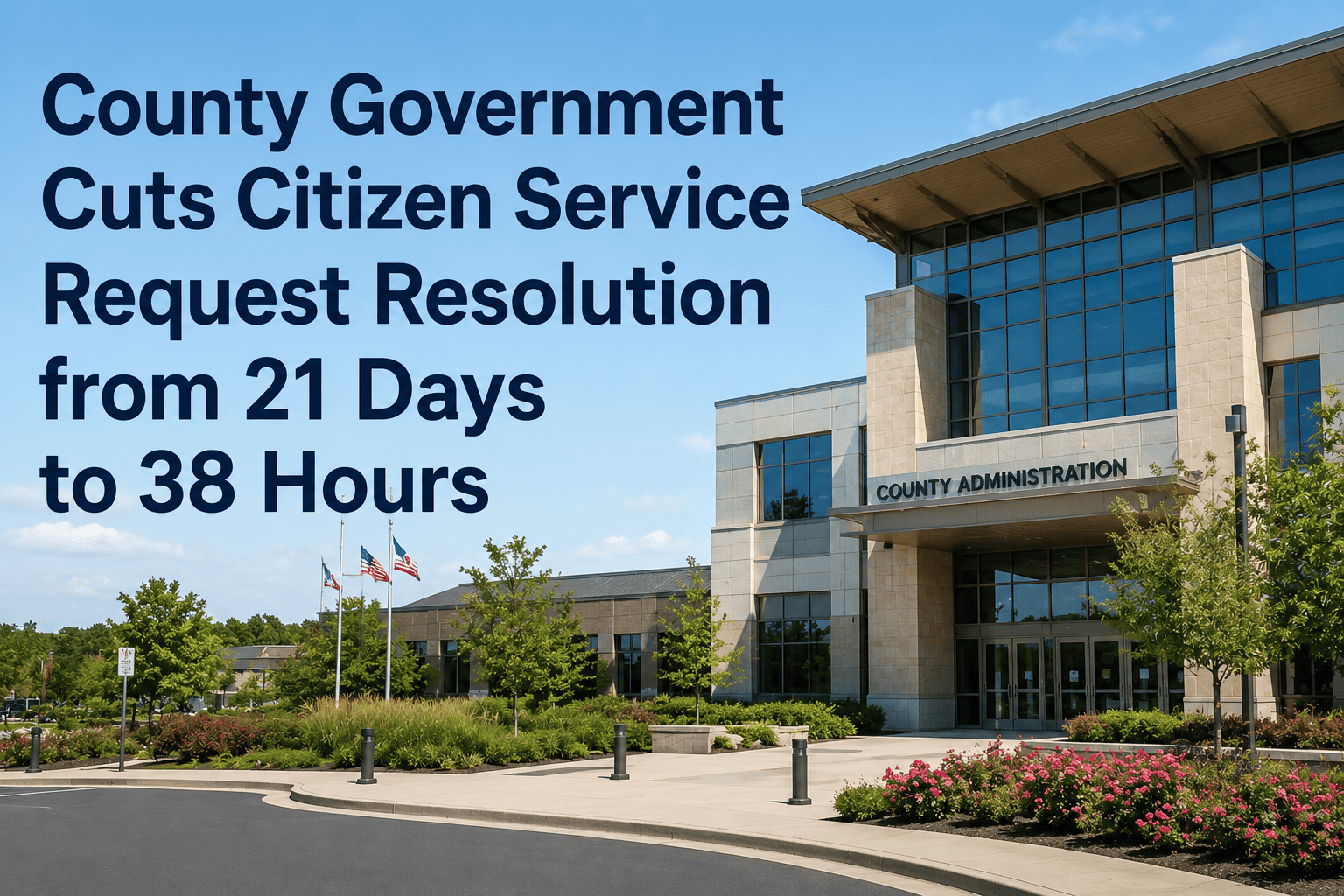
A 120K-resident city deployed a citizen self-service municipal portal integrated with OxMaint. Before launch, they handled 28,000 annual service requests via phone at an average cost of $11.50 per call and a 6-day mean resolution time. After 90 days: 41% of requests arrived through the app, call volume dropped 38%, mean resolution time fell to 2.3 days, and citizen satisfaction rose from 62% to 84%. Annual savings: approximately $124,000 in call-center costs alone — plus an estimated $200K in avoided overtime through smarter crew routing.
Portal-enabled vs. traditional call-center operations
The gap between municipalities that have digitized citizen intake and those still relying on phone-and-paper is widening every year. Here's what the numbers look like side by side.
| Metric | Traditional Call Center | Portal + OxMaint CMMS |
|---|---|---|
| Cost per service request | $11.50 (phone triage + manual entry) | $2.80 (automated intake and dispatch) |
| Average resolution time | 6.0 days | 2.3 days (62% faster) |
| Lost / misrouted requests | 12% of total volume | <1% (structured intake + asset matching) |
| Status-check follow-up calls | 2.3 calls per ticket on average | 0.4 calls per ticket (push notifications) |
| After-hours submission capability | Voicemail only — processed next morning | 24/7 — auto-routed for next-day dispatch |
| Audit trail completeness | Partial — paper logs, manual spreadsheets | 100% — timestamped digital record end-to-end |
| Citizen satisfaction (CSAT) | 58–65% typical | 80–88% typical after 90 days |
See OxMaint close the loop on every citizen request
Book a 30-minute demo and watch a citizen-submitted issue flow from app to dispatched work order to resolved — with real-time status updates and full audit trail.
Citizen self-service portal and mobile app — your questions answered
What is a citizen self-service portal?
A citizen self-service portal is a web and mobile platform that lets residents submit, track, and manage requests for municipal services — pothole repairs, graffiti removal, waste issues, permit applications — without calling or visiting a government office. When integrated with a CMMS like OxMaint, each submission automatically becomes a tracked work order routed to the correct crew, with real-time status updates pushed back to the citizen. You can Start Free Trial to test the full flow.
How much does a citizen self-service government portal cost?
Costs vary widely — custom-built portals run $80K–$250K in development alone, while SaaS platforms bundled with a CMMS typically range from $1,500–$8,000 per month depending on population size and module count. The ROI calculation should include call-center savings (often $100K+ annually for mid-sized cities), reduced resolution times, and improved compliance. Most municipalities achieve full payback within 12–18 months of deployment.
How does a citizen portal integrate with 311 and CMMS?
Integration uses a REST API or middleware layer that connects the citizen-facing portal to the 311 CRM for deduplication and validation, and then to the CMMS (OxMaint) for work-order creation, dispatch, and status tracking. The bi-directional sync ensures that when a technician updates a work order in OxMaint, the citizen sees the new status in real time — no manual reconciliation required. Book a Demo to see the integration live.
How long does it take to deploy a municipal citizen app?
A phased deployment typically takes 60–90 days from kickoff to public launch. The first 30 days focus on integration and configuration — mapping request categories to CMMS assets, setting priority rules, and testing the end-to-end flow internally. Days 31–60 cover public launch and marketing. Days 61–90 focus on optimization, adding services, and publishing performance dashboards. Cities using a pre-built CMMS-integrated platform deploy faster than those building from scratch.
What features drive the highest citizen adoption?
The three features that most predict adoption are: (1) geo-located photo reporting — citizens can submit in under 60 seconds; (2) real-time push notifications at each status change — residents feel their report matters; and (3) a resolution photo showing the completed work — this builds trust and encourages future use. Municipalities that pair all three with proactive call-center redirection consistently hit 40–55% digital adoption within the first year.
Turn every citizen request into a resolved work order
Deploy a citizen self-service portal that connects directly to OxMaint's AI-powered CMMS — auto-dispatched work orders, real-time status updates, predictive maintenance, and full audit trails. Your residents get transparency. Your crews get efficiency. Your council gets data.
Free 14-day trial · No credit card