Citizen Service Request Portal: Digital Engagement for Government Maintenance
By Taylor on February 26, 2026
It is 7:12 AM on a Monday. A commuter hits a pothole on Oak Street that cracks her rim and shreds a tire — the same pothole three other residents reported last month. One called the city's general phone line and left a voicemail that was never returned. Another emailed the public works department and received an auto-reply promising a response within 10 business days — that was six weeks ago. The third walked into City Hall, filled out a paper form, and was told "we'll get someone out there." Nobody did. The pothole grew from a nuisance to a liability claim, and now the city faces a tort notice, an angry council meeting, and a local news crew asking why a known hazard went unrepaired for 47 days. The requests were made. The system failed to route them, track them, or act on them. This is the reality for thousands of municipalities running citizen service requests through phone trees, paper forms, and disconnected email inboxes — where reports enter a black hole and residents lose trust in the government agencies funded by their tax dollars. In 2026, digital citizen service request portals integrated with CMMS are replacing this broken model with transparent, accountable infrastructure that routes every report to the right crew, tracks every resolution, and gives citizens real-time visibility into the status of their community. Start with Oxmaint for free and see the difference a connected citizen portal makes for your municipality.
The Real Cost of Disconnected Citizen Reporting
Before evaluating portal technology, it helps to understand what is at stake. The numbers behind broken citizen service request systems are staggering — and they compound every month as duplicate reports pile up, resolution times stretch, and public trust erodes into political liability. Here is what municipalities without modern citizen engagement systems face every day.
72%
expect digital access
Citizens who expect to submit service requests online and track resolution status digitally — just as they track packages
34 days
avg resolution time
Average time to resolve citizen-reported issues in municipalities without digital request routing systems
40%
duplicate reports
Percentage of citizen requests that are duplicates — consuming staff time, confusing crews, and inflating backlogs
These are not edge cases. They represent the daily reality for municipalities operating without modern citizen engagement infrastructure. The good news: cities deploying CMMS-integrated citizen portals report 60–75% faster resolution times, 85%+ citizen satisfaction ratings, and dramatic reductions in duplicate reporting, phone call volume, and council complaints. Book a demo with Oxmaint to see how these improvements apply to your specific community.
What Separates Great Citizen Portals from Online Forms
Not every digital portal delivers results. Many municipalities have launched web forms only to discover that without auto-routing, CMMS integration, or status transparency, they have simply digitized the same black hole. When evaluating citizen service request platforms for government maintenance, these are the capabilities that separate real civic engagement from expensive web pages that nobody trusts.
Accessibility
Multi-Channel Submission
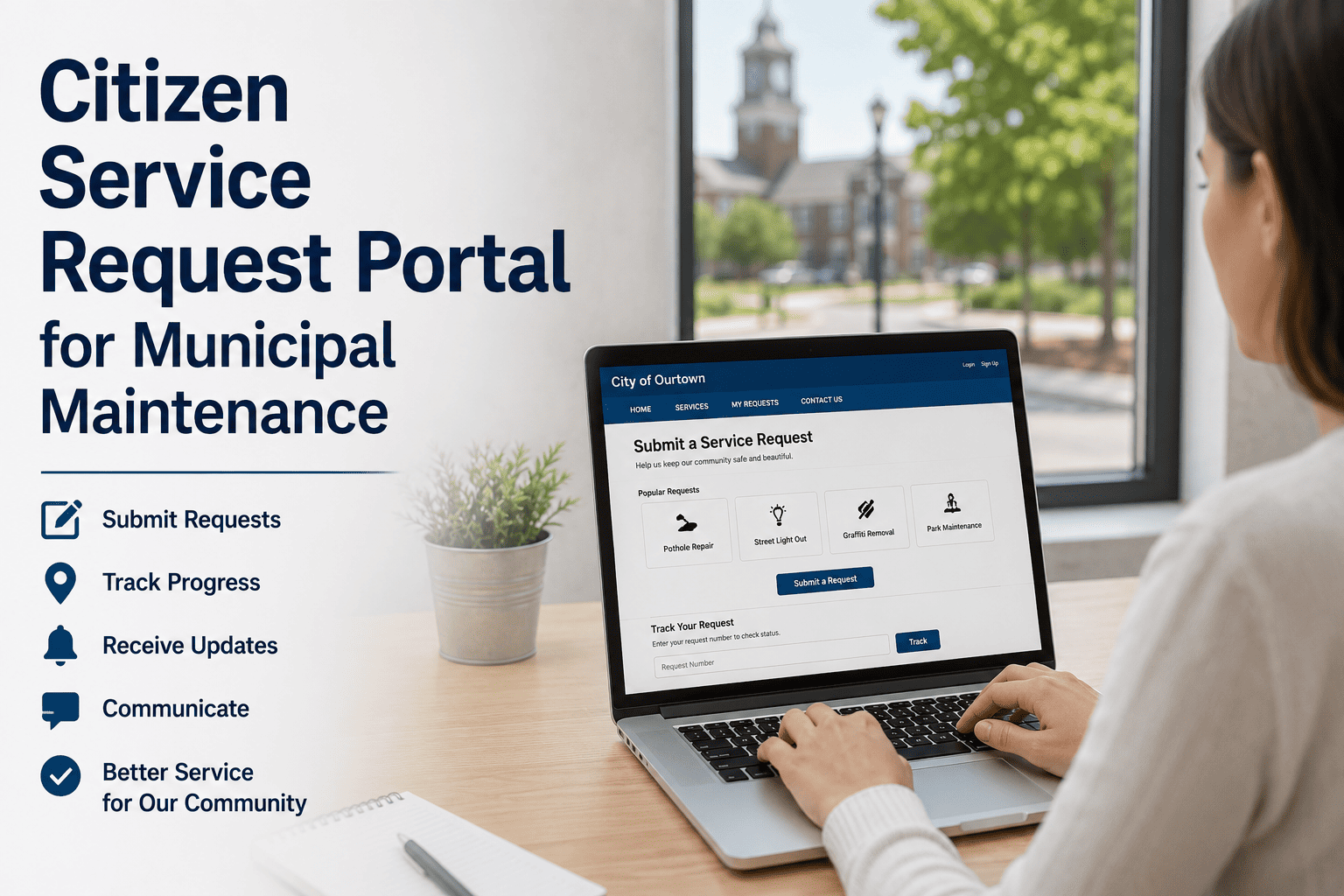
Citizens submit requests via mobile app, web portal, QR codes on street signs, email, or integrated 311 phone system. Every channel feeds the same CMMS queue — no request lost in a separate inbox, voicemail, or paper tray sitting on a desk for three weeks.
Intelligence
AI-Powered Auto-Routing
Natural language processing classifies incoming requests by category — pothole, streetlight, graffiti, drainage, parks — assigns priority based on safety risk and location, and routes directly to the responsible department and crew without manual triage by office staff.
Transparency
Real-Time Status Tracking
Citizens receive automatic updates as their request moves through received → assigned → in-progress → completed stages. No more calling City Hall to ask "what happened to my report?" — the answer is always one tap away on any device.
Efficiency
Duplicate Detection & Merging
GPS-based duplicate detection identifies when multiple citizens report the same pothole, streetlight, or graffiti. Reports merge into one work order — eliminating redundant dispatch and giving each reporter visibility into the shared resolution.
Accountability
CMMS Work Order Integration
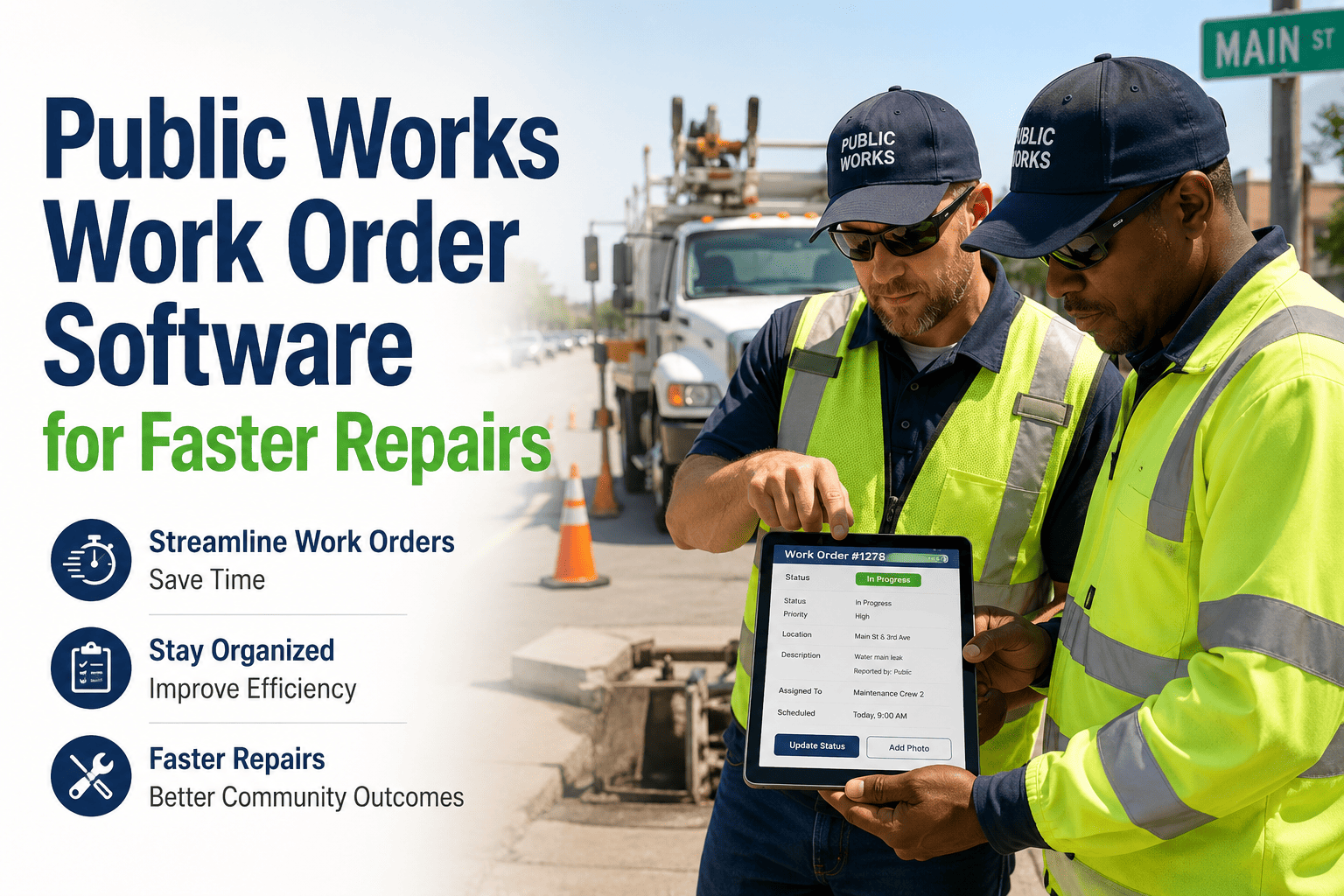
Every citizen request auto-generates a geo-tagged, prioritized work order in Oxmaint CMMS — complete with photos, GPS coordinates, and category classification. Crews receive assignments on mobile devices with exact locations and repair specifications.
Insight
Community Analytics Dashboard
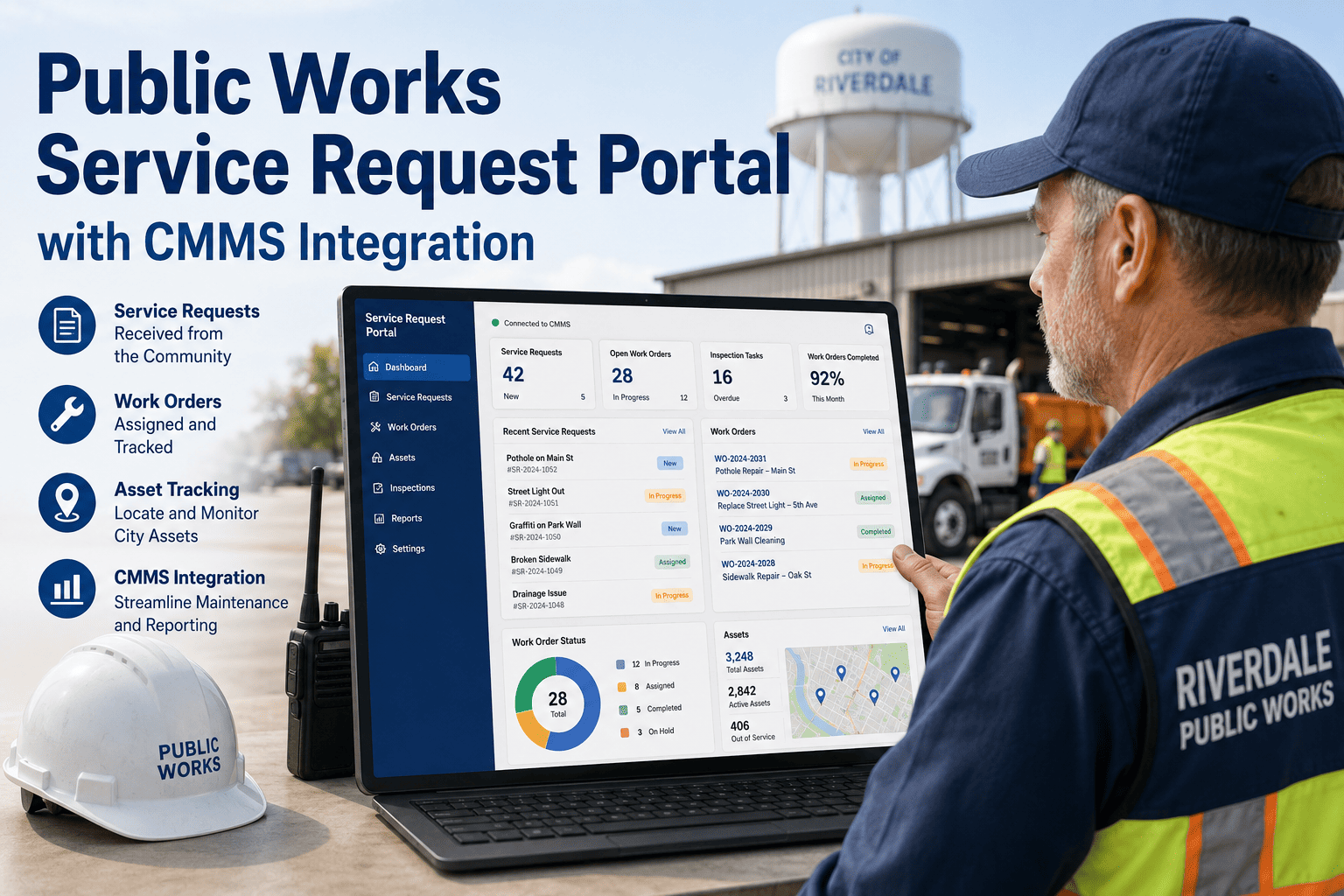
Heatmaps showing request concentrations by neighborhood, category, and time period. Trend analysis reveals which infrastructure systems are deteriorating fastest — powering data-driven capital planning that reflects actual citizen experience.
Oxmaint connects citizen service requests directly to maintenance work orders, crew assignments, and resolution tracking in one platform built for municipal public works. See why cities and counties choose Oxmaint to transform citizen engagement into maintenance action.
Head-to-Head: Top Citizen Service Request Platforms 2026
We evaluated the most capable citizen engagement platforms across the criteria that matter to municipal leaders: ease of citizen use, CMMS integration depth, auto-routing intelligence, status transparency, duplicate detection, and total cost of deployment. Here is an honest comparison to help you shortlist the right fit for your community.
Recommended
Oxmaint Citizen Portal
Cities, counties, and public works agencies
Full citizen-to-work-order CMMS pipelineAI auto-routing and duplicate detectionReal-time status updates for every reporterMobile app + web portal + QR code submissionFree tier available — no procurement hurdles
Established citizen reporting mobile appIntegration with multiple 311 platformsCommunity engagement voting features
Subscription based
CityWorks
GIS-centric public asset management
Deep Esri GIS integration for spatial analysisCitizen portal with work order connectivityStrong in permitting and inspections
Enterprise pricing
Cartegraph
Asset management for mid-size municipalities
Citizen request module with status trackingWork order and asset lifecycle managementMobile crew management tools
Subscription model
PublicStuff
Simple citizen engagement for small cities
Low-cost citizen request submissionBasic notification and routing featuresEasy deployment for smaller communities
Per-population pricing
Accela Civic Platform
Enterprise government operations platform
Full permitting + licensing + service requestsLarge city and county scale deploymentsAdvanced workflow and compliance engine
Enterprise pricing
Platform capabilities reflect publicly available data as of early 2026. Every community's infrastructure mix and citizen expectations are different — the best way to evaluate is hands-on. Create a free Oxmaint account and run a pilot alongside your current process to see real results with your residents.
Why Oxmaint Wins for Municipal Citizen Engagement
Plenty of platforms let citizens file a report. The real test is whether that report reaches the right crew, generates an actionable work order, updates the citizen automatically, and produces the accountability documentation your elected officials and taxpayers demand — without adding administrative burden. Oxmaint is built around one principle: citizen reports are worthless unless they drive maintenance action. Here is how that philosophy translates into real capabilities for municipal agencies.
Report-to-Work-Order in Minutes
When a citizen submits a pothole report with a photo and GPS pin, Oxmaint auto-classifies the request, assigns priority based on road type and safety risk, generates a CMMS work order with exact coordinates, and routes it to the responsible crew — all before the citizen closes the app. No manual triage. No data re-entry. Reports reach crews the same hour they are submitted.
Every Request Category in One Platform
Potholes, streetlights, traffic signals, graffiti, illegal dumping, sidewalk damage, park maintenance, tree hazards, drainage issues, facility complaints — every request type routes through one CMMS with category-specific workflows, SLA timers, and resolution documentation requirements.
Citizen-Facing Status Updates
Automatic push notifications and email updates at every stage: "Request Received," "Crew Assigned," "Work In Progress," "Completed — View Photo." Citizens can view before-and-after photos of completed repairs. This transparency eliminates follow-up calls and builds measurable public trust in your agency.
Council-Ready Accountability Dashboards
Track average response times, resolution rates by category, SLA compliance by department, request heatmaps by ward, and year-over-year trends. Give elected officials and city managers the hard data they need to justify budgets, evaluate performance, and demonstrate responsiveness to constituents. Sign up for Oxmaint to explore live municipal dashboards.
Before & After: What Changes With a Connected Citizen Portal
The shift from phone-based, paper-tracked citizen complaints to CMMS-integrated digital service requests is not incremental — it is transformational. Here is what that transition looks like in practice for a typical municipality or county public works department.
Traditional Citizen Reporting
Phone calls and voicemails during business hours only — weekends ignored
Paper forms manually routed between departments days or weeks later
No status updates — citizens call back repeatedly asking what happened
Duplicate reports create redundant work orders and wasted crew dispatch
No data to show council how quickly or effectively issues are resolved
34 days
average resolution time for citizen-reported maintenance issues
CMMS-Connected Citizen Portal
24/7 submission via mobile app, web portal, QR codes, or 311 integration
AI auto-routes to the right department and crew leader in minutes
Real-time status updates at every stage from receipt to completion photo
Live dashboards show response times, SLAs, and trends by ward and category
5–8 days
average resolution time with CMMS-integrated digital citizen portal
Give your residents a voice — and show them you are listening. Oxmaint's free tier lets you launch a citizen portal pilot in your community — no procurement cycle, no contracts, no consultant fees required to start.
City managers and public works directors need hard data to justify technology adoption to councils and taxpayers. The evidence from early-adopter municipalities is clear — cities that deploy CMMS-integrated citizen portals see measurable returns across responsiveness, efficiency, trust, and cost within the first quarter of operation.
70%
Faster Resolution
Average reduction in time from citizen report to completed repair
85%
Citizen Satisfaction
Approval rating from residents using the digital portal system
60%
Fewer Phone Calls
Reduction in inbound calls from citizen self-service digital adoption
40%
Lower Admin Costs
Reduction in manual intake, triage, routing, and follow-up staff hours
These improvements compound over time as residents adopt digital submission, duplicate detection reduces redundant workload, and analytics drive proactive infrastructure investment in the neighborhoods that need it most. Create your free Oxmaint account and start accepting citizen requests digitally within the first week.
Your 4-Step Path to a Connected Community
Launching a citizen service request portal should not take years of RFPs and consultant studies. Use this streamlined framework to go from disconnected complaints to transparent, CMMS-tracked resolution in weeks — not budget cycles.
1
Audit Your Current Request Channels
Map every way citizens currently contact your department: phone, email, walk-in, social media, council complaints. Measure volume, average response times, and resolution rates per channel. Identify where reports are getting lost — this becomes your priority list for digital conversion.
2
Configure Categories and Routing Rules
Define your request categories — potholes, streetlights, graffiti, parks, drainage, facilities — set SLA targets per category, and configure auto-routing rules that send each type to the responsible department and crew leader automatically without manual triage.
3
Pilot in One Ward or District
Launch the portal in a single area with high request volume. Promote via QR codes on street signs, social media posts, and utility bill inserts. Measure resolution time, citizen satisfaction, and staff workload against your baseline from the same area.
4
Scale Citywide with Public Dashboard
Once proven, expand to all wards with a public-facing dashboard showing aggregate resolution metrics. Present SLA performance data to council. Let accountability drive adoption — both internally with crews and externally with your residents. Schedule a walkthrough to plan your community's rollout.
The cities that earn and keep public trust in the next decade will be the ones that treat every citizen report as a trackable, accountable service commitment — not a suggestion box entry. When residents can see their pothole report become a work order, watch a crew get assigned, and receive a photo of the completed repair, they stop seeing government as a black box. That transparency is worth more than any PR campaign or town hall meeting.
Director of Public Works, Mid-Size U.S. Municipality
Your Residents Deserve a Government That Responds, Tracks, and Delivers
Oxmaint brings together citizen service request submission, AI-powered routing, CMMS work order generation, real-time status tracking, and council-ready accountability dashboards in one platform built for municipal public works. Accept reports from any channel, route them to the right crew, track every resolution, and give your community the transparent, responsive government they are paying for.
How do citizens submit service requests through the Oxmaint portal?
Citizens can submit requests through multiple channels that all feed into the same CMMS queue. The mobile app allows photo upload with automatic GPS tagging — residents simply take a photo of the pothole, broken light, or graffiti and the system captures the exact location. The web portal offers form-based submission with map pin placement for residents who prefer desktop access. QR codes placed on street signs, bus stops, and utility bills let citizens scan and report from any location. For municipalities with existing 311 systems, Oxmaint integrates via API to pull phone-based reports into the same digital workflow. Every channel produces the same structured work order — no report is trapped in a separate system or inbox. Start your free trial to configure submission channels for your community.
How does duplicate detection work for multiple reports of the same issue?
When a new request is submitted, Oxmaint compares its GPS coordinates against all open requests within a configurable radius — typically 50 meters for potholes and 100 meters for streetlights. If a match is found in the same category, the system flags the new report as a potential duplicate and merges it with the existing work order. Each citizen who reported the issue is linked to the shared work order and receives independent status updates when the resolution occurs. This eliminates redundant crew dispatch while ensuring every reporter feels heard and receives closure. In pilot deployments, duplicate detection typically reduces total active work orders by 25–40%, freeing significant crew and administrative capacity for actual repairs.
What types of service requests can the portal handle?
Oxmaint supports fully configurable request categories that match your municipality's service structure. Common categories include road surface damage such as potholes, cracks, and heaving; streetlight outages and traffic signal malfunctions; graffiti and vandalism; illegal dumping and litter accumulation; sidewalk and curb damage; storm drain blockages and flooding; park and playground maintenance; tree hazards and fallen branches; facility issues including public restrooms and community centers; signage damage; and water or sewer infrastructure concerns that route to utility departments. Each category has independent SLA targets, routing rules, priority algorithms, and resolution documentation requirements. Book a demo to configure categories for your specific service structure.
How does the portal integrate with existing 311 and GIS systems?
Oxmaint provides open APIs for bidirectional integration with existing 311 platforms, GIS systems including Esri ArcGIS, and other municipal technology. Phone-based 311 reports are pushed into Oxmaint via API and receive the same auto-routing, duplicate detection, and status tracking as digital submissions. GIS integration enables map-based visualization of all active requests, completed work orders, and infrastructure condition data — allowing planners to overlay citizen reports against asset inventories and capital improvement plans. For municipalities using Tyler Technologies, Accela, or other existing platforms, Oxmaint's API layer enables data sharing without requiring a full system replacement.
What is the ROI timeline for a citizen service request portal?
Most municipalities see measurable improvements within the first 30 days of deployment. Phone call volume to public works typically drops 40–60% as citizens shift to self-service digital submission. Administrative staff time spent on manual request intake, triage, and routing decreases by 50–70%. Average resolution times improve 60–75% as auto-routing eliminates the delay between citizen report and crew assignment. For a mid-size city processing 500+ requests per month, the annual savings in staff time, reduced duplicate dispatch, and avoided liability from faster hazard response often exceeds $150,000–$300,000 — against a platform cost that is a fraction of that figure. The less quantifiable but equally important benefit is the measurable increase in citizen satisfaction and public trust that transparent, trackable government service delivery produces. Book a demo to calculate projected savings for your municipality.