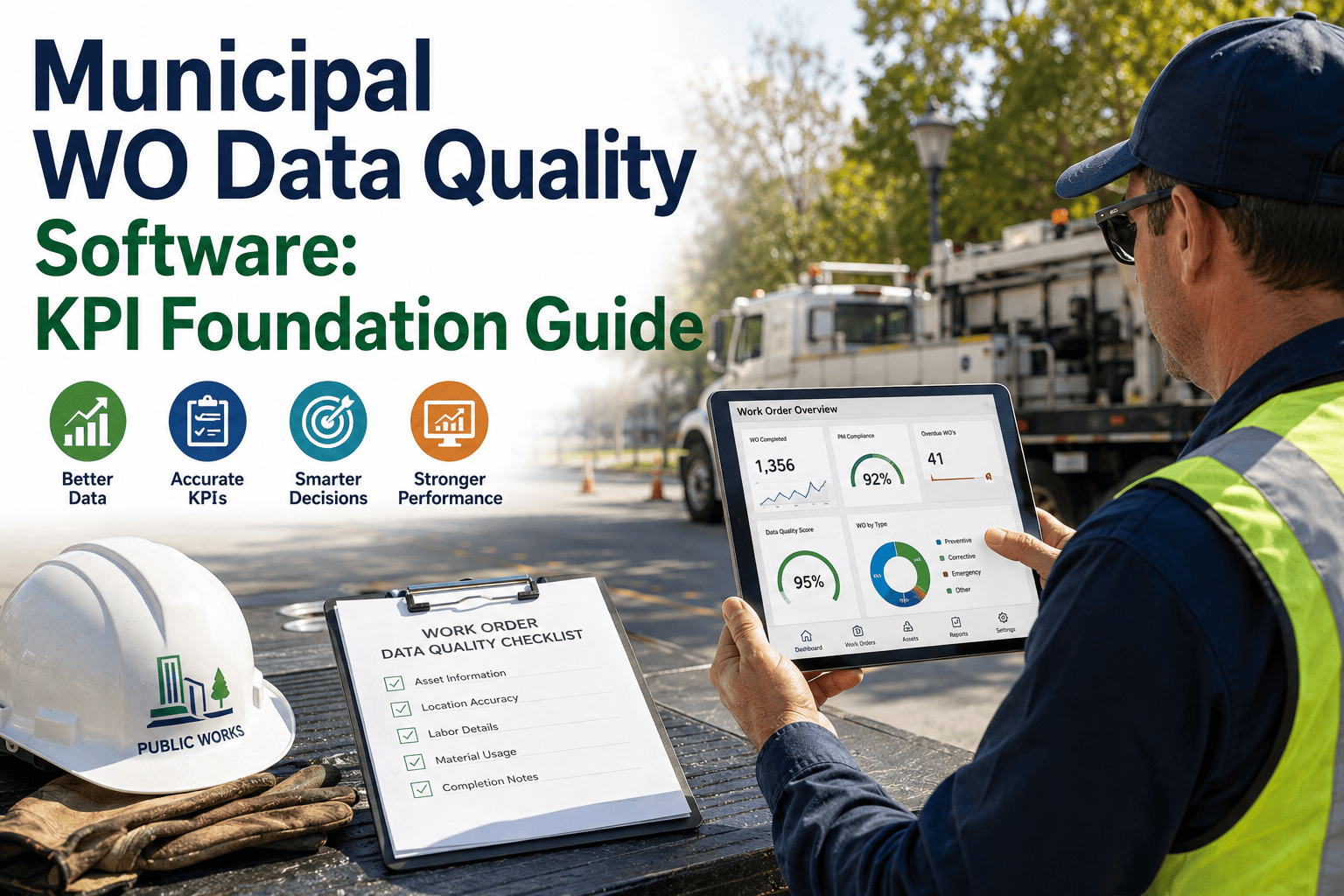
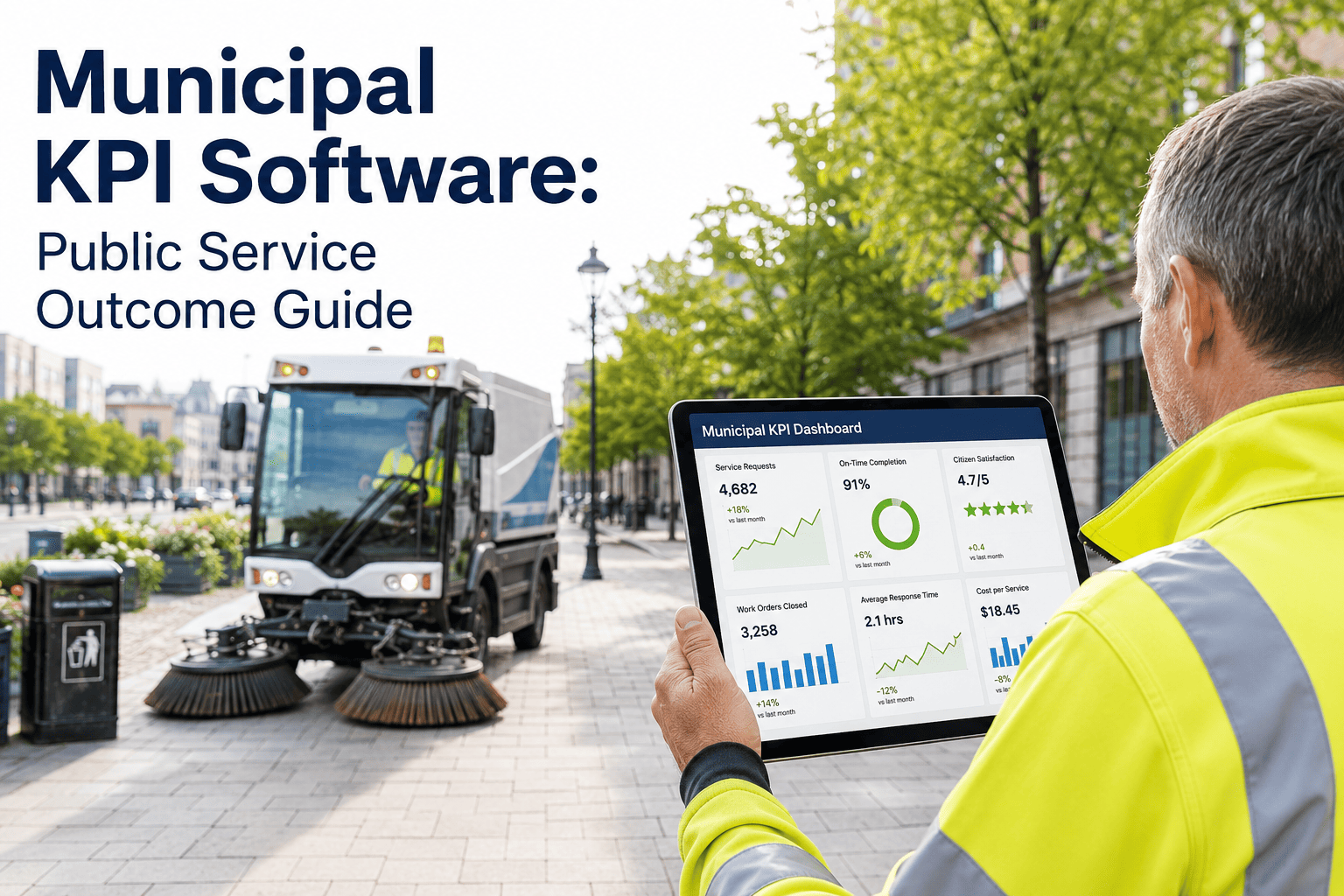
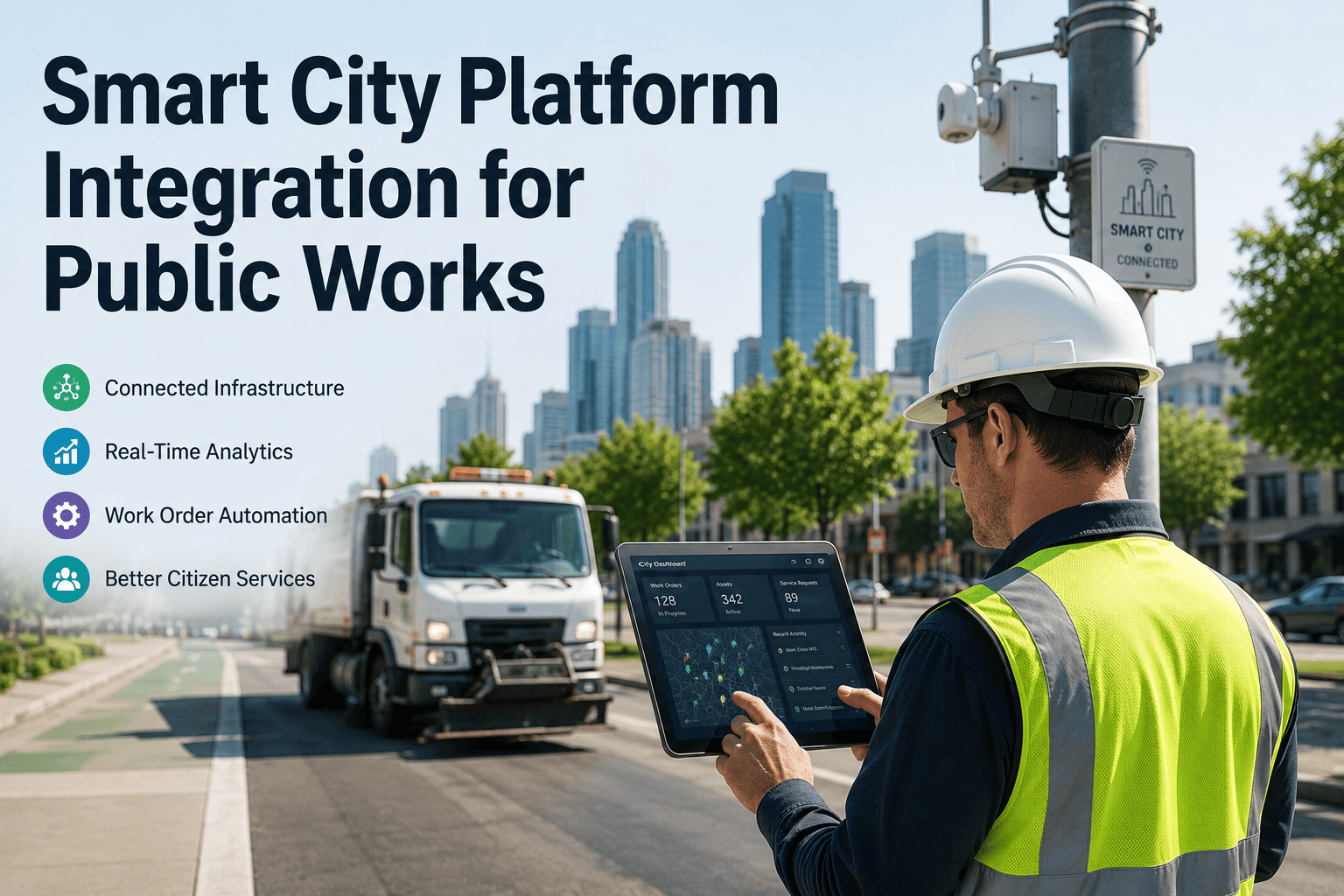
A council meeting rarely goes well when a resident asks "how many potholes are still open in my ward" and the answer is a shrug followed by a promise to check. Open-data ordinances and transparency mandates exist precisely because that shrug used to be the default answer, and in most municipalities it still is — work order data lives in one system, budget data lives in another, and nobody owns the job of turning either into something a resident could actually read. A real transparency portal isn't a PDF uploaded once a quarter; it's KPIs, work order backlog, and response times pulled live from the same system crews use every day. See how OxMaint turns daily work order data into a public-facing transparency dashboard without a separate reporting project.
OxMaint publishes live KPIs, work order backlog, and response times straight from your CMMS to a public-facing portal — no manual export, no stale numbers, no separate reporting project to maintain alongside daily operations.
Why a Quarterly PDF Undermines the Trust It's Meant to Build
A transparency report that's three months stale sends an unintended message: that the department is checking a compliance box rather than actually trying to keep residents informed. Residents increasingly compare a city's transparency page against consumer apps that show a delivery driver's live location, and a PDF uploaded once a quarter looks conspicuously behind by comparison. The gap isn't really about technology — most departments already have the underlying data in their CMMS the moment a crew closes a work order. The gap is that nobody has connected that data to anything a resident can see without filing a records request. Closing that gap doesn't require a new reporting team; it requires pointing the reporting layer at data that already exists instead of rebuilding it by hand every quarter.
What Actually Belongs on a Transparency Portal
Most transparency mandates list categories rather than dictating a specific dashboard design, which leaves departments guessing at what residents and councils actually want to see rather than what a statute technically requires them to post. In practice, the requests that come up in almost every public meeting and every resident complaint fall into five groups, and a portal that covers all five tends to satisfy both the letter of most ordinances and the actual questions residents are asking.
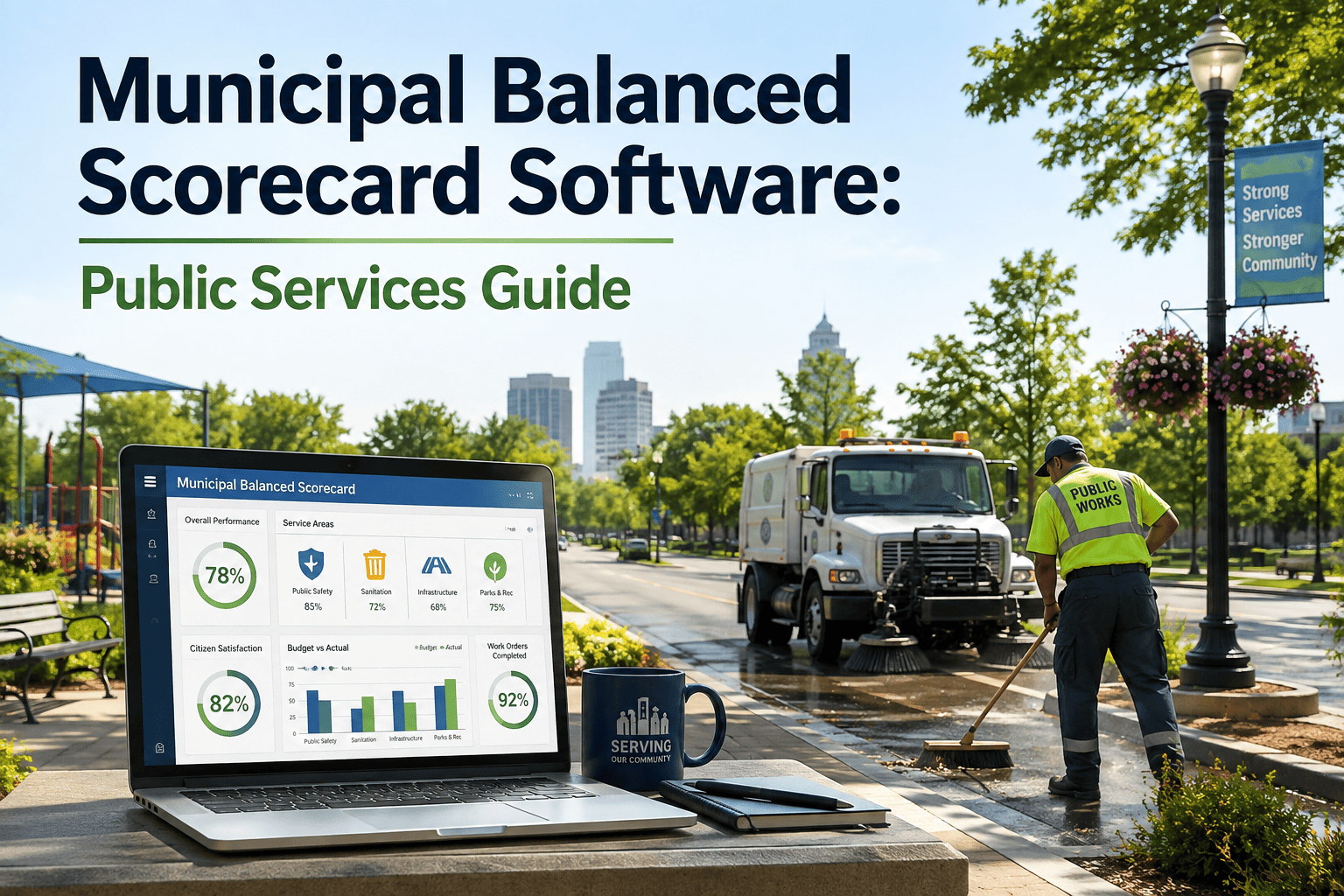
One live dataset powers both the internal council scorecard and the public transparency portal, so nobody spends a week before every meeting reconciling two versions of the same numbers pulled from two different spreadsheets.
From Closed Work Order to Public Dashboard — Automatically
The reason most transparency portals go stale is that publishing them is a manual task somebody has to remember to do, usually squeezed in between other priorities right before a council meeting or an ordinance deadline. When the portal pulls from the same system crews already use to close a work order, publishing stops being a task and becomes a byproduct of normal operations — nobody has to remember to update it, because it was never disconnected from the work in the first place.
One Dataset, Three Very Different Audiences
The same underlying work order and budget data ends up serving three groups that rarely talk to each other directly — residents checking on their own service request, council members preparing for a public meeting, and reporters or grant reviewers looking for objective evidence of need. Building three separate reports for three audiences is exactly the kind of duplicated effort that makes transparency feel like a burden instead of a byproduct of doing the work.
Transparency Mandates Vary — the Baseline Rarely Does
Open-data and transparency ordinances differ by state and by municipality size, but the categories they converge on are remarkably consistent, and most state sunshine-law frameworks set the same baseline expectations even when the exact wording differs. The table below lines up what shows up in most municipal transparency checklists against how quickly a live-data portal can satisfy each one, compared to a manually assembled quarterly report that has to be rebuilt from scratch every reporting cycle.
| Transparency Category | Typical Ordinance Requirement | Manual Quarterly Report | Live CMMS-Fed Portal |
|---|---|---|---|
| Annual Balanced Budget | Published, current fiscal year | Updated once a year | Updated as budget amendments post |
| Independent Audit Report | Published with internal controls note | Published once, after audit | Published once, linked to live spend data |
| Service Request Response Times | Not always mandated, increasingly expected | Reconstructed manually, error-prone | Calculated automatically per request |
| Ordinances & Codes | Available within 10 business days of request | Static document repository | Same, plus linked compliance status |
| Records Request Fulfillment | Statutory deadline, typically 10 business days | Tracked in email or spreadsheet | Tracked with automatic deadline alerts |
What a Real Transparency Portal Is Worth
Transparency compliance is the starting justification, but departments that build a live portal usually find the operational value shows up faster than the compliance value — because the same data discipline that keeps a portal current also keeps internal reporting accurate, and the two reinforce each other instead of competing for staff time. The three areas below are where that value tends to show up first, usually within the first couple of reporting cycles after launch.
Frequently Asked Questions
Does a transparency portal replace our statutory record-keeping requirements?
Can residents see data broken down by their specific ward or district?
How does OxMaint connect to our existing 311 and CMMS systems?
Is the public data delayed or filtered before residents see it?
How long does it take a mid-size municipality to launch a portal like this?
None of this requires replacing your existing 311 system or asking residents to learn a new reporting channel. The improvement is on the back end — the same request that already comes in through 311 or a phone call now flows into one system that both runs the department's daily operations and answers the transparency question a resident, a reporter, or a council member is going to ask eventually anyway. Departments that make this shift usually describe the same before-and-after: fewer status-check calls tying up front-desk staff, a council presentation that used to take a week of spreadsheet reconciliation now assembled in an afternoon, and a public records request that used to trigger a scramble now largely answered by a link to a live page.
Transparency is ultimately a trust exercise as much as a compliance one. A resident who can see, in real time, that their pothole report moved from "received" to "assigned" to "repaired" trusts the next report they file will be seen too — and that trust compounds across every interaction a department has with the public it serves. Building the connection between operational data and public visibility once, correctly, is considerably less work than reconstructing that trust after a resident concludes nobody is watching.
Connect your 311 and work order data once, and let the transparency portal update itself every time a crew closes a job — no separate publishing step for anyone to forget.