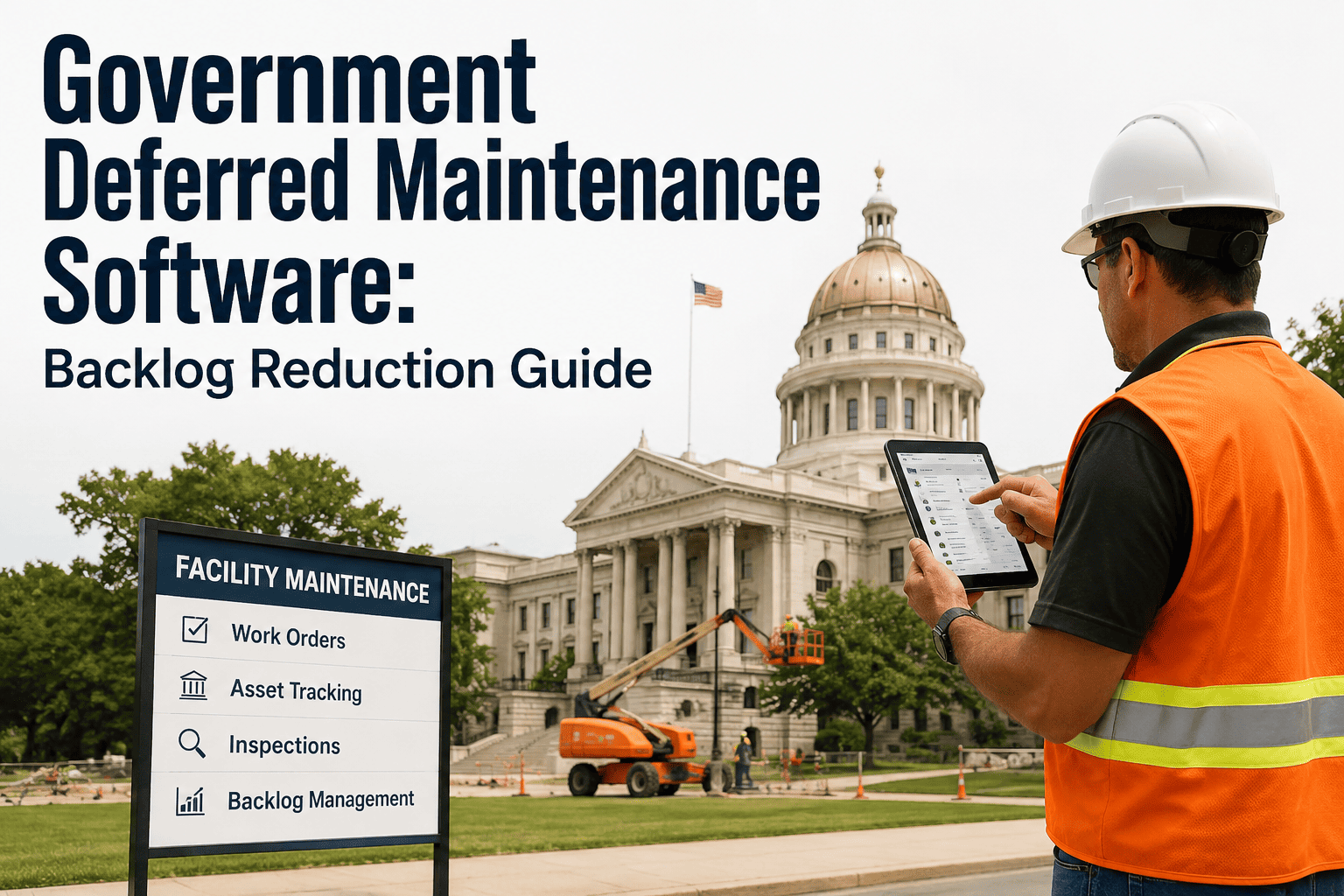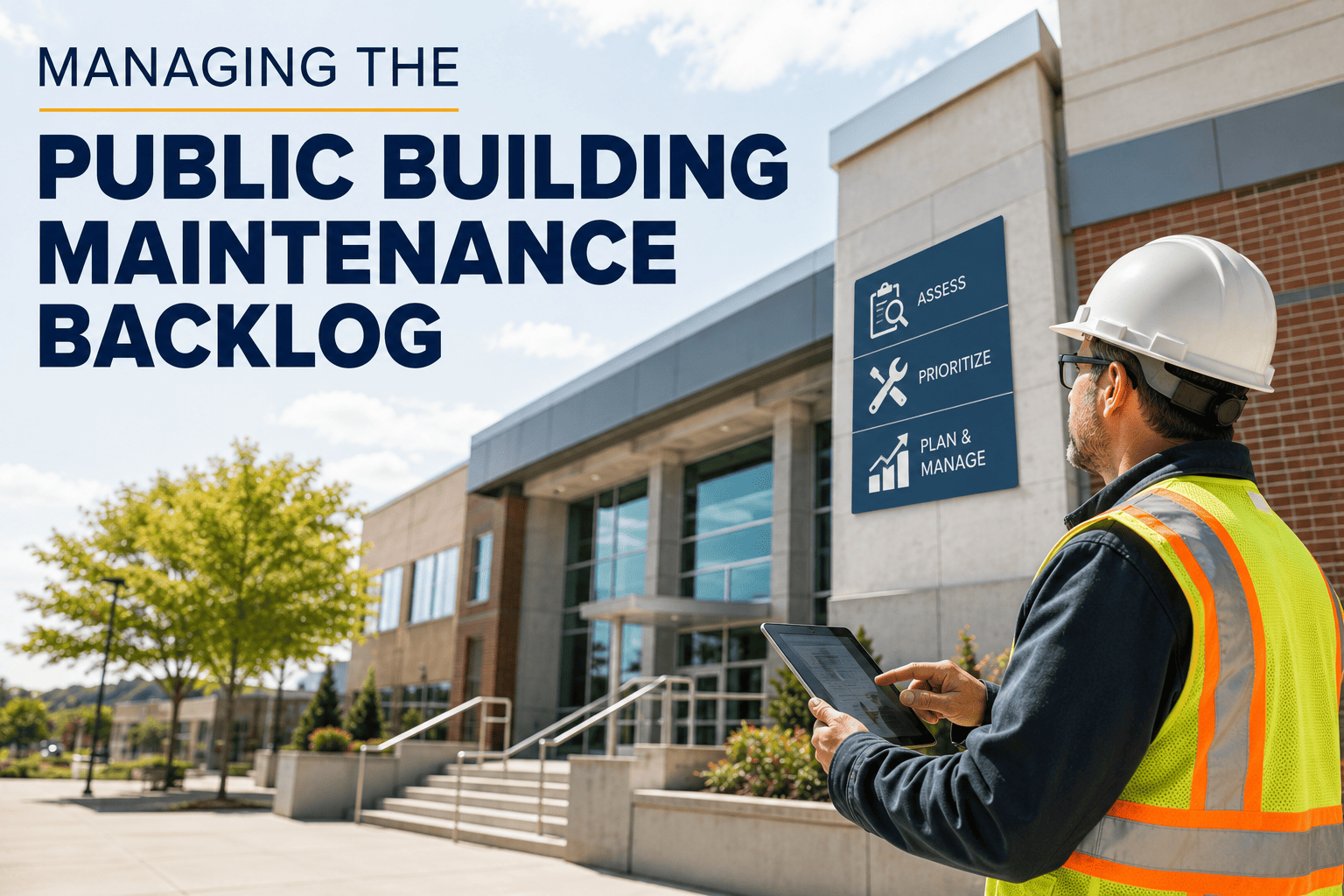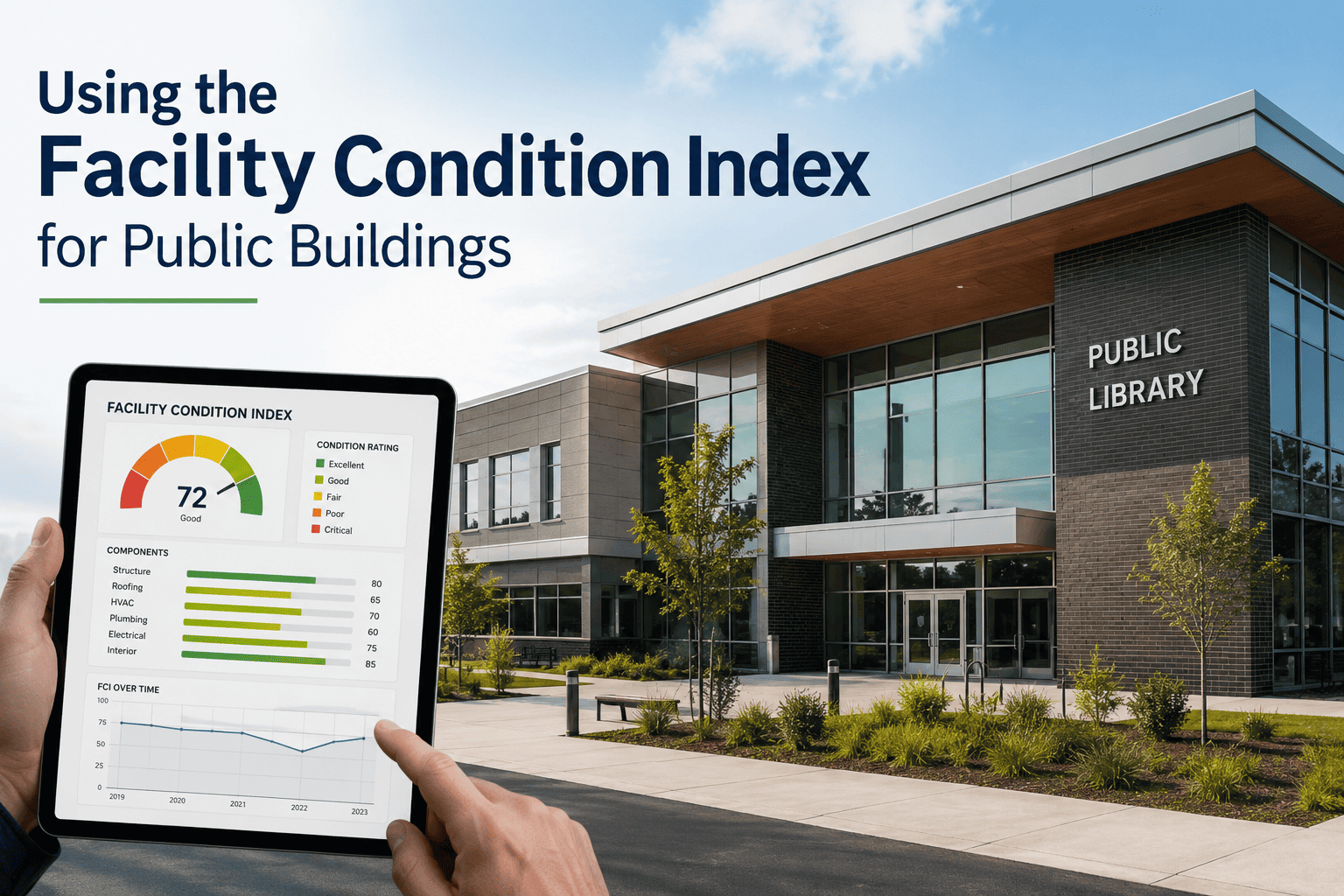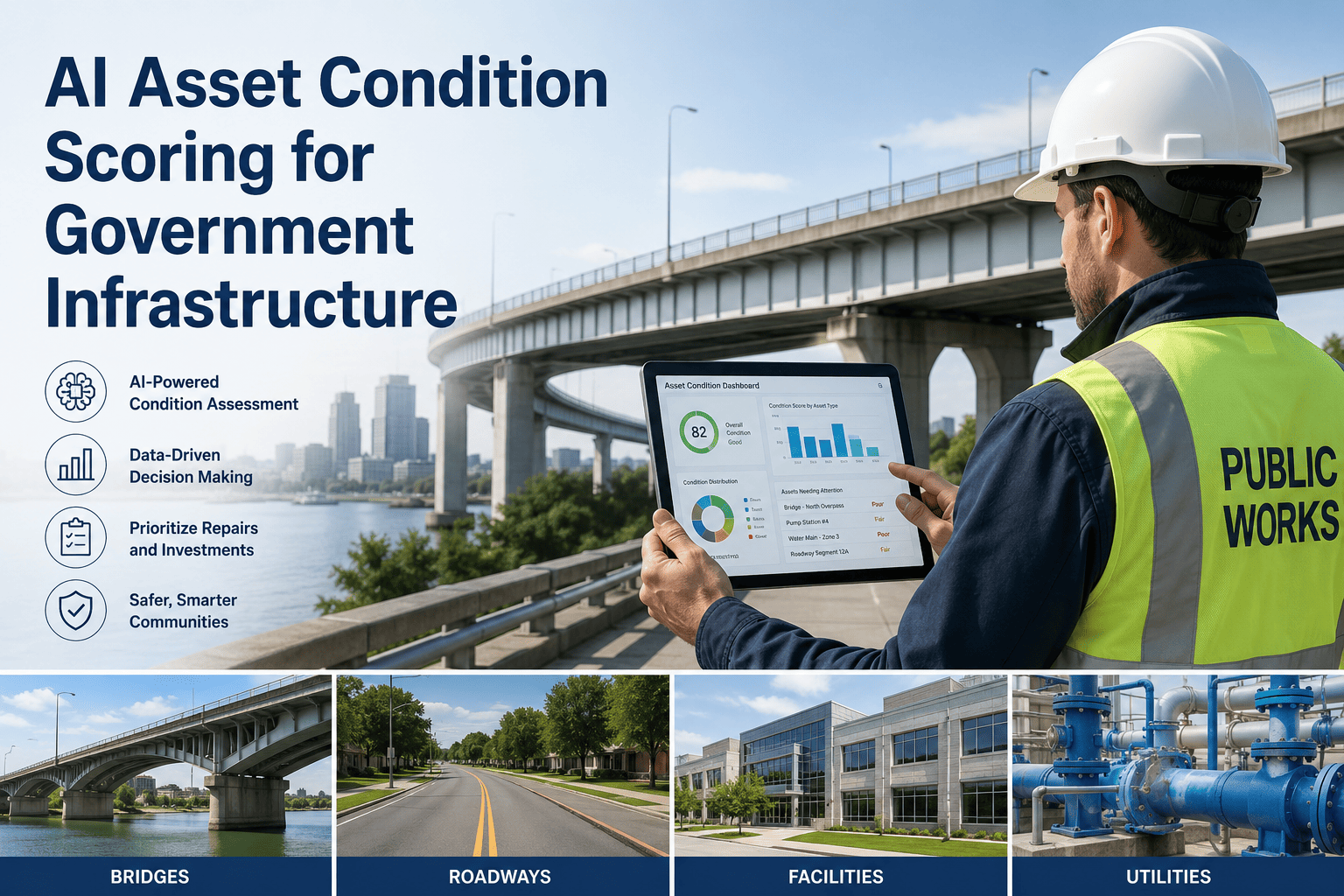
The deferred maintenance backlog in US public buildings now exceeds $1.1 trillion by the most conservative federal estimates — and the majority of that number lives in state and local government facilities where the data to prove the scale of the problem does not yet exist in a form that finance committees and elected officials can act on. Agencies that have deployed AI-powered asset condition tracking are not only quantifying their backlog for the first time, they are prioritizing it by risk, building the capital replacement timeline that finance officers need, and presenting a data-backed case for maintenance investment that replaces the anecdotal arguments that have failed for decades. This case study covers what backlog reduction looks like in practice, what data drives the decisions, and what agencies with the most successful programs have in common. Book a demo to see how OxMaint surfaces your agency's backlog from existing asset and maintenance data.
Case Study · Deferred Maintenance · Government Buildings
Deferred Maintenance Backlog Reduction for Government Buildings
How public agencies are using asset condition scores, risk ranking, and AI-powered planning to quantify, prioritize, and systematically reduce deferred maintenance backlogs that have grown unchecked for decades.
$1.1T
Estimated deferred maintenance backlog in US public buildings (conservative federal estimate)
$4.7M
Median backlog identified by agencies in first 12 months of OxMaint asset condition tracking
6.8x
Higher cost of emergency replacement vs planned replacement at scheduled end-of-life
The Core Problem
Why Deferred Maintenance Backlogs Grow Invisibly — And What Makes Them Suddenly Visible
Why It Grows
No asset-level condition data means needs are invisible until failure
Annual maintenance budgets cut disproportionately during fiscal pressure
Deferred items never re-enter the priority queue because there is no queue
Elected officials cannot approve what maintenance staff cannot quantify
Reactive emergency repairs consume the budget that should fund prevention
What Makes It Visible
Condition scores assigned to every asset with inspection-based evidence
Replacement cost linked to each asset record in the registry
Deterioration rate tracked over time to project when intervention is needed
Backlog value aggregated by building, department, and asset category
Risk ranking separates public safety items from lower-priority deferrals
Case Study Data
Three Agencies That Used OxMaint to Quantify and Reduce Their Backlog — What They Found
County Government — Southeast US
$4.2M
Backlog identified in Year 1 that was previously undocumented
$1.1M
Approved in Year 2 capital budget after backlog data presented to commission
38%
Reduction in emergency repair costs over 3 years as planned work replaced reactive
The commission had rejected maintenance budget increases for four consecutive years before backlog data was available. Once the $4.2M figure was presented with asset-level condition evidence and a prioritized 5-year replacement plan, approval came in the first budget cycle that included OxMaint data.
Mid-Size City Government — Midwest
$2.8M
Backlog value quantified across city hall, library, community center, and public safety
12
Critical assets flagged for replacement within 24 months before failure risk escalated
$340K
Emergency replacement cost avoided on two HVAC systems addressed from backlog priority list
The two HVAC systems that were flagged and addressed from the priority list would have failed within the following heating season based on OxMaint's deterioration projection. Emergency replacement mid-winter was estimated at $340K versus the $98K planned replacement cost that was approved from the backlog data.
Risk Prioritization Framework
How OxMaint Ranks Deferred Maintenance Items — The Four-Tier Risk Matrix
Tier 1 — Critical
Immediate public safety risk, ADA violation, or regulatory non-compliance. Action required within 30 days. Examples: structural defect, failed fire suppression, blocked emergency egress.
Immediate capital allocation required. Cannot be deferred.
Tier 2 — High
Asset condition below 40 and deteriorating. Failure likely within 12 months. Impact on building operations or public service delivery. Examples: aging HVAC, roof with active leak, elevator overdue for certification.
Include in next capital budget cycle. Do not defer beyond 12 months.
Tier 3 — Moderate
Asset condition 40 to 60. Manageable with PM but approaching replacement threshold. Planned intervention within 1 to 3 years recommended. Examples: aging electrical panels, exterior caulking, aging plumbing fixtures.
Include in 3-year capital improvement plan. PM priority elevated.
Tier 4 — Low
Asset condition above 60. Functioning within acceptable range. Replacement timeline 3 to 7 years. Preventive maintenance keeping condition stable. Examples: recently serviced HVAC, newer roofing, compliant electrical systems.
Continue scheduled PM. Monitor for condition decline. Plan in 5-year CIP.
Your Backlog Exists Whether You Can See It or Not — OxMaint Makes It Visible and Actionable
OxMaint surfaces your deferred maintenance backlog from existing inspection data, work order history, and asset ages — assigns condition scores, applies the risk tier framework, and produces the prioritized capital planning output your finance team needs to fund the work. Book a demo and see your building portfolio in the platform.
Expert Perspective
What Finance Officers and Facility Directors Say About Making the Backlog Case
Rated 5 / 5
The finance committee does not speak maintenance language — they speak budget language. What changed our budget conversations was presenting the deferred maintenance backlog as a liability figure with a growth rate, not as a list of repairs we wanted to do. When the committee saw that every year the backlog was not addressed, the cost to address it grew by an estimated 12 percent due to deterioration and construction cost inflation, the framing shifted from "why are you asking for this money" to "what is the plan to address this systematically." OxMaint gave us the liability number and the 5-year plan. That combination got us our first meaningful facilities maintenance budget increase in eight years.
RH
Rachel Harrington, CPA
Deputy Finance Director, Mid-Atlantic County Government · 16 yrs government finance and capital planning
Rated 5 / 5
We had been telling elected officials our buildings needed attention for six years without getting meaningful budget approvals. The problem was we had no numbers — just repair requests and a vague sense that things were getting worse. OxMaint gave us condition scores on 112 building systems across our eight facilities, a risk-ranked backlog of $3.1 million, and a projection showing that two of our courthouse HVAC systems were likely to fail within 18 months. That projection was based on actual condition trend data, not our intuition. The council approved $1.8 million for the priority list items in the same budget cycle we presented the data. The courthouse HVAC systems were in that approval. They would have cost three times as much to replace as emergency work the following winter.
MT
Marcus Tran
Director of Facilities and Capital Projects, Southeast City Government · 23 yrs public facility management
Frequently Asked Questions
Deferred Maintenance Backlog Reduction — Questions From Government Finance and Facility Teams
How quickly can OxMaint produce a deferred maintenance backlog figure if we have never tracked asset conditions before?
OxMaint can generate an initial backlog estimate within the first 30 to 60 days using a structured rapid condition assessment process, where inspectors use mobile checklists to score each building system by condition level during a focused walkthrough. For agencies with existing inspection data in spreadsheets or legacy systems, the migration and scoring model application can produce an initial backlog figure faster. The initial estimate is conservative and becomes more precise as inspection history accumulates. Book a demo to review what data you already have that OxMaint can use immediately.
What format does OxMaint produce for capital improvement plan presentations to elected officials?
OxMaint produces backlog reports in three standard formats: a summary dashboard view for presentation on screen at council or commission meetings, a detailed Excel export with asset-level condition scores, estimated replacement costs, and risk tier assignments for finance committee review, and a PDF report version for inclusion in official budget documents. All three formats pull from the same underlying data so figures are consistent across presentations. Reports can be filtered by building, department, asset class, or fiscal year. See the reporting interface in the free trial.
How does OxMaint handle the difference between deferred maintenance and routine preventive maintenance in its tracking?
OxMaint distinguishes between three work categories: scheduled preventive maintenance (recurring work orders that keep assets in operating condition), reactive corrective maintenance (work orders triggered by failures or defects), and deferred capital maintenance (identified needs with approved deferral status — tracked separately in the backlog module with cost estimates, risk tiers, and deferral dates). This separation allows facility managers to show finance officers exactly how much of the maintenance budget is being consumed by deferred work that should be capital-funded, making the case for capital appropriations rather than operating budget increases.
Can OxMaint integrate with our existing capital improvement planning or ERP system to avoid duplicate data entry?
OxMaint connects to most major government ERP and financial management systems via API, including Tyler Technologies, SAP Public Sector, Oracle Financials, and others. The integration pushes approved capital work orders and their associated asset records into the financial system for appropriation tracking, and pulls project status back into OxMaint. This eliminates the parallel data entry that currently causes discrepancies between facility team records and finance department records. API specifications and available connectors are documented in the OxMaint integration guide, which is shared during the demo.
OxMaint · Deferred Maintenance & Asset Condition Platform
The Backlog Will Not Shrink Until You Can See It. OxMaint Makes Sure You Can.
From rapid condition assessment to risk-ranked capital planning to audit-ready documentation, OxMaint gives government facility and finance teams the data infrastructure to make the deferred maintenance case, get the budget approved, and track reduction progress over time — year after year.