Tuesday, 3:45 AM: Weather service issues blizzard warning—8-12 inches expected within 6 hours across three counties. State DOT dispatch attempts to mobilize winter response fleet but discovers: 4 snowplows down for maintenance (delayed PM tasks), salt spreader control systems failing on 3 trucks (known issue, no parts ordered), 2 emergency trucks with expired inspections (can't legally deploy), and command vehicle GPS system offline (software update pending). Result: Delayed response by 90 minutes, 47-mile highway section uncleared during critical morning commute, 6 accidents attributed to road conditions, and intense public backlash. Post-incident review reveals all issues were preventable with systematic asset preparedness and risk-based maintenance prioritization.
State DOTs face unique emergency preparedness challenges: unpredictable weather events, aging infrastructure, public accountability, legislative oversight, and zero tolerance for response failures. Leading state DOTs achieve 90%+ emergency fleet readiness through systematic risk assessment, predictive maintenance, and AI-powered asset monitoring. Departments ready to transform emergency preparedness can explore how Oxmaint CMMS enables state-level emergency response optimization.
Critical Asset Risk Assessment Framework
Risk-based asset prioritization ensures limited maintenance resources focus on equipment critical to emergency response and public safety.
Fire Station Equipment Risk Prioritization Matrix
| Risk Tier | Asset Category | Failure Impact | Maintenance Priority | Readiness Target |
|---|---|---|---|---|
| Tier 1: Critical | Fire engines (pumpers), ladder trucks, SCBA equipment, thermal imaging cameras, defibrillators | Immediate life safety risk, failed emergency response, potential fatalities, major property loss | 24/7 monitoring, predictive maintenance, immediate response to alerts, zero tolerance for PM delays | 98% available, instant mobilization |
| Tier 2: High | Station generators, bay doors, air compressors (SCBA fill), hydraulic rescue tools (jaws of life) | Delayed response, reduced operational capacity, potential safety compromise | Condition monitoring, scheduled PM, 24-hour repair SLA, strategic parts inventory | 90% available, 4-hour repair turnaround |
| Tier 3: Moderate | Utility vehicles, station HVAC, cleaning equipment, gym equipment, administrative IT | Operational inefficiency, minor delays, crew comfort impact | Calendar-based PM, standard repair queue, basic tracking | 80% available, 72-hour repair acceptable |
Fire Station Equipment Inspection Checklist System
Systematic preparedness transforms fire station readiness from a manual chore into a verifiable, automated process ensuring life-saving equipment performs when called upon.
Daily Apparatus Readiness
- ✓ Engine fluids checked (oil, coolant, transmission), fuel >3/4 tank
- ✓ Pump engaged, primer test passed, tank water level full
- ✓ All emergency lights and sirens operational (360-degree check)
- ✓ Tire pressure verified, lug nuts visual check, brake system air pressure normal
- ✓ Cab tilt system operational (if applicable), cab latches secure
- ✓ SCBA packs: bottles full (>4000 psi), masks clean, PASS device operational
- ✓ Radios: batteries charged, channel check on all tactical frequencies
- ✓ Thermal imaging cameras: battery check, display functional
- ✓ Gas monitors: bump test passed, sensors within date
- ✓ AED/Defibrillator: battery status OK, pads present and in-date
- ✓ Oxygen cylinders: tank pressures verified, regulators functional
- ✓ Hydraulic tools: fuel/battery check, blades/tips inspected for damage
Weekly Station & Safety Equipment
- ✓ Emergency generator: no-load run test (30 mins), fuel/oil levels verified
- ✓ Apparatus bay doors: safety sensors tested, manual override accessible
- ✓ Station exhaust extraction system: hoses intact, auto-disconnect tested
- ✓ Air compressor/Cascade system: oil level check, filter check, air quality log
- ✓ Foam concentrate levels verified, transfer pump operational
- ✓ Hose inventory: visual check for abrasion, couplings tight
- ✓ PPE inventory: spare gloves/hoods/boots audit, washer/extractor check
Annual Compliance & Certification
- ✓ Annual Pump Test (NFPA 1911): Draft test, pressure control, volume discharge
- ✓ Aerial Ladder NDT (NFPA 1914): Weld inspection, torque verification, hydraulic analysis
- ✓ Ground Ladder Testing (NFPA 1932): Horizontal bend, hardware, heat sensor labels
- ✓ SCBA Flow Testing (NFPA 1852): Bench test of all regulators and facepieces
- ✓ Fire Hose Service Testing (NFPA 1962): Pressure test all attack/supply lines
- ✓ Turnout Gear Inspection (NFPA 1851): Advanced inspection, hydrophobicity test
Reimagine Fire Department Efficiency Through Predictive Maintenance
Predictive maintenance enables fire departments to prevent critical apparatus failures before the alarm sounds, ensuring 99.9% fleet readiness.
| Approach | Reactive Maintenance (Traditional) | Predictive Maintenance (Modern) |
|---|---|---|
| Philosophy | Repair when it breaks or fails inspection | Monitor health to prevent failure |
| Apparatus Readiness | Discover pump primer failure during morning check (or fire scene), truck OOS for days | Sensors detect primer vacuum leak trends weeks early, repair scheduled during downtime, truck stays ready |
| SCBA Management | Regulators fail annual flow test, scramble for loaners, batch repairs | Usage data and air consumption trends flag potential regulator issues before annual test |
| PM Scheduling | Calendar-based (e.g., every 3 months), ignoring actual run hours or pump hours | Condition-based (engine hours, pump hours), optimized for actual wear and usage |
| Budget Impact | Unpredictable big-ticket repairs, emergency parts shipping costs | Forecasted component replacements, bulk parts savings, extended asset life |
| Community Safety | Reserve apparatus (older/slower) frequently in service due to frontline breakdown | Frontline apparatus consistently available, response times optimized |
Predictive Technologies for Fire Stations
IoT Telematics & Pump Sensors
- Pump monitoring: Discharge pressure variance, primer activation time, cavitation detection
- Chassis health: Engine load, DPF regeneration status, brake wear sensors
- Battery management: Voltage drop analysis on start, shoreline charge status
AI-Powered Analytics
- Failure prediction: Algorithms correlate pump hours vs. maintenance history
- Lifecycle modeling: Predict optimal replacement age for apparatus based on maintenance cost curves
- Inventory optimization: Auto-order fluids, filters, and bulbs based on consumption rates
Mobile Inspection Apps
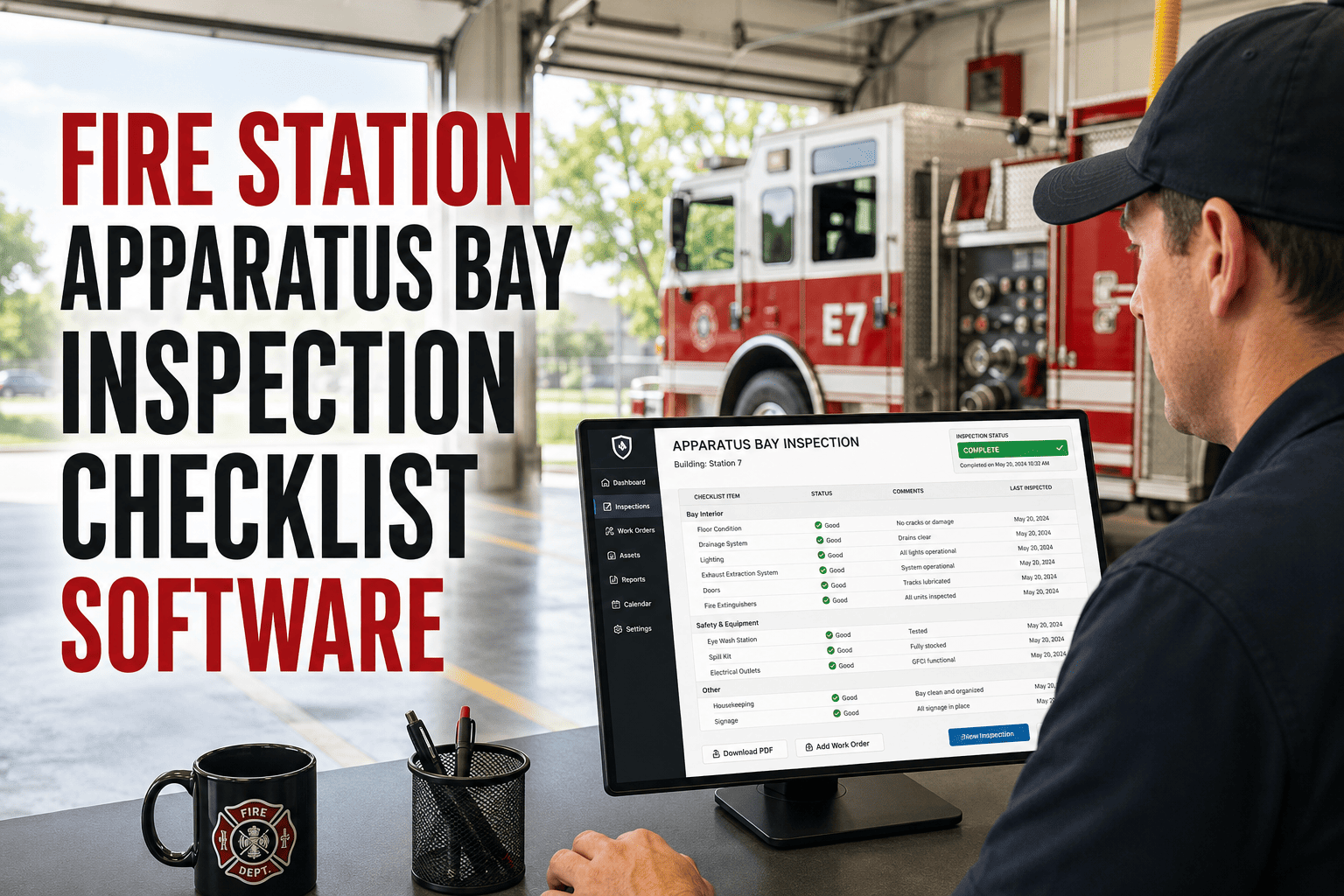
- Digital checklists: RFID/Barcode scanning of equipment ensures physical check (no "pencil whipping")
- Instant reporting: Photo documentation of defects triggers immediate work order to shop
- Compliance log: Automated NFPA documentation for liability protection
Automated PPE Tracking
- Gear lifecycle: Track exposure hours, wash cycles, and repairs for every coat/pant/helmet
- Retirement alerts: Auto-flag gear nearing 10-year NFPA retirement age
- Cleanliness verification: Document post-fire decon to reduce carcinogen exposure risks
From Manual to Digital — A Fire Service Operating Model with AI
AI-powered operating models modernize fire departments, moving from paper logs and reactive repairs to data-driven readiness and safety.
Laying the groundwork:
- Catalog all assets: Apparatus, loose equipment, SCBA, PPE, station systems
- Tag assets with Barcodes/RFID for mobile scanning
- Import maintenance history and NFPA testing records
- Launch mobile app for daily apparatus checks (replace paper logbooks)
- Train officers and engineers on digital reporting
Connecting the data:
- Integrate telematics from apparatus (engine/pump data) into CMMS
- Set automated alerts for diagnostic trouble codes (DTCs)
- Configure preventive maintenance (PM) triggers based on engine/pump hours
- Implement "failed inspection" workflows (auto-notify mechanics)
- Start tracking PPE cleaning and inspection cycles digitally
Refining operations:
- Analyze breakdown trends to identify "lemon" components or training gaps
- Automate NFPA compliance reporting (pump tests, ladder tests, hose tests)
- Optimize spare parts inventory based on usage data
- Implement station-level dashboards for readiness scores
- Link inspection data to budget planning for replacements
Future state:
- AI predicts apparatus failure probabilities 60 days out
- Smart station systems (lights, doors, HVAC) integrated with dispatch
- Predictive health monitoring for firefighter PPE (exposure tracking)
- Regional asset sharing based on real-time availability data
- Continuous improvement loop driven by operational data
AI Operating Model Benefits for Fire Departments
See Predictive Maintenance in Action for Fire Departments
Watch a live demo showing how digital checklists, asset tracking, and automated maintenance workflows keep fire stations mission-ready. Ideal for Chiefs and Fleet Managers.
Real-World Fire Department Results
Suburban Fire District (5 Stations, 120 Personnel)
Metropolitan Fire Department (Logistics Division)
12-Month Implementation Roadmap for Fire Stations
1: Foundation (Months 1-3)
- Digitize full asset registry (Apparatus, SCBA, Hose, PPE)
- Apply QR codes/Barcodes to all trackable assets
- Configure daily check templates in mobile app
- Train Captains and Engineers on mobile inspection process
- Establish baseline readiness metrics
2: Integration (Months 4-6)
- Connect fleet telematics for auto-mileage/hour updates
- Set up automated PM schedules based on NFPA standards
- Launch work order workflow for defect reporting to mechanics
- Begin tracking PPE cleaning/inspection cycles
- Implement inventory alerts for station supplies
3: Optimization (Months 7-9)
- Deploy predictive alerts for critical systems (pumps, batteries)
- Refine inspection checklists based on common failure points
- Integrate parts inventory with repair workflows
- Conduct first digital internal audit of all assets
- Train staff on advanced reporting and analytics
4: Advanced Operations (Months 10-12)
- Review annual data for fleet replacement planning
- Analyze "cost per mile/hour" for each apparatus
- Automate annual compliance reporting for NFPA/ISO
- Evaluate station facility maintenance efficiency
- Plan expansion to additional departments/stations if applicable
Frequently Asked Questions
Ensure Mission Readiness for Your Fire Department
Transition from paper logs to a digital readiness platform. Join fire departments increasing fleet availability, ensuring NFPA compliance, and protecting their crews with Oxmaint's equipment inspection and maintenance system.
Start with a free pilot at one station. See the difference digital inspections make in just 30 days.