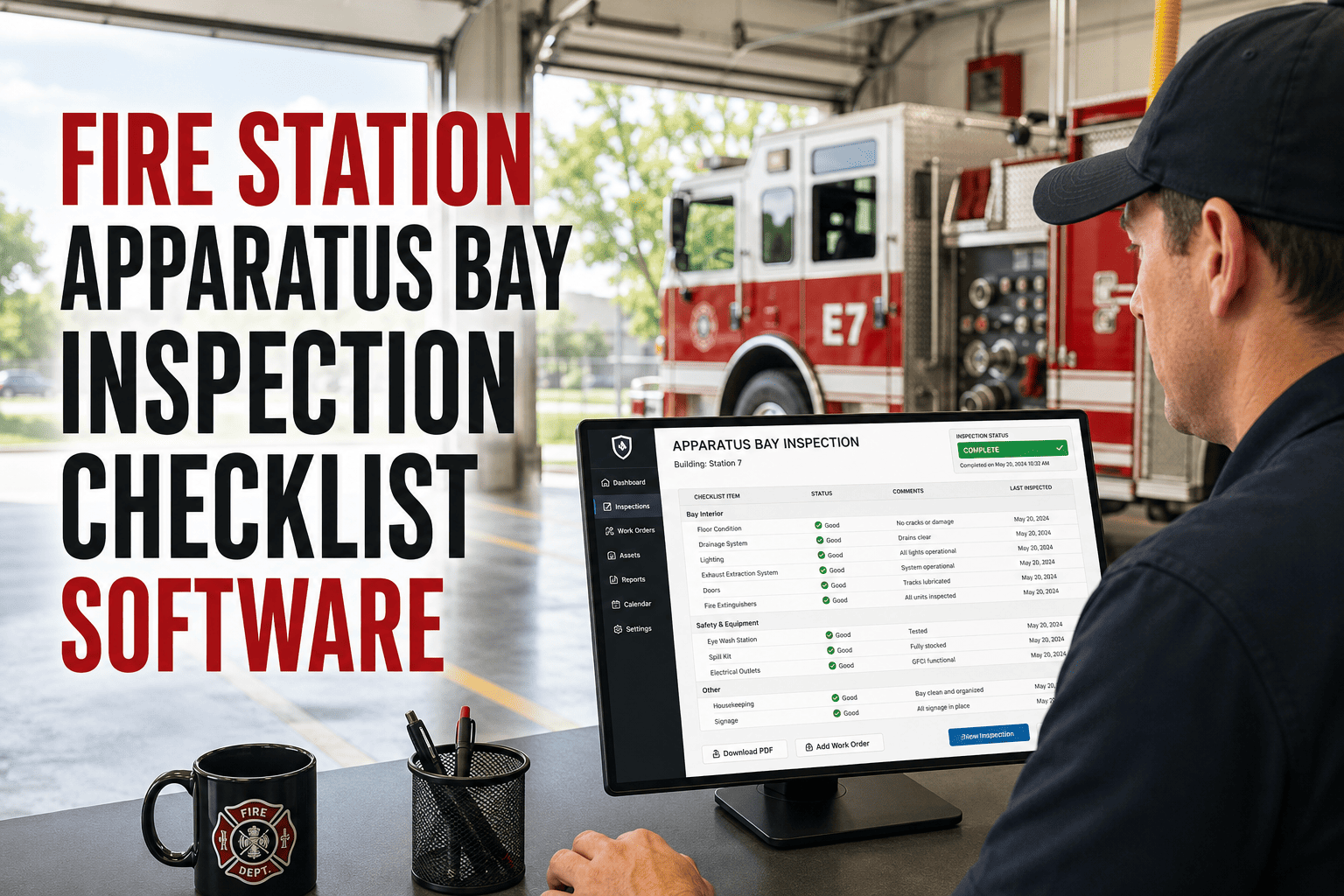
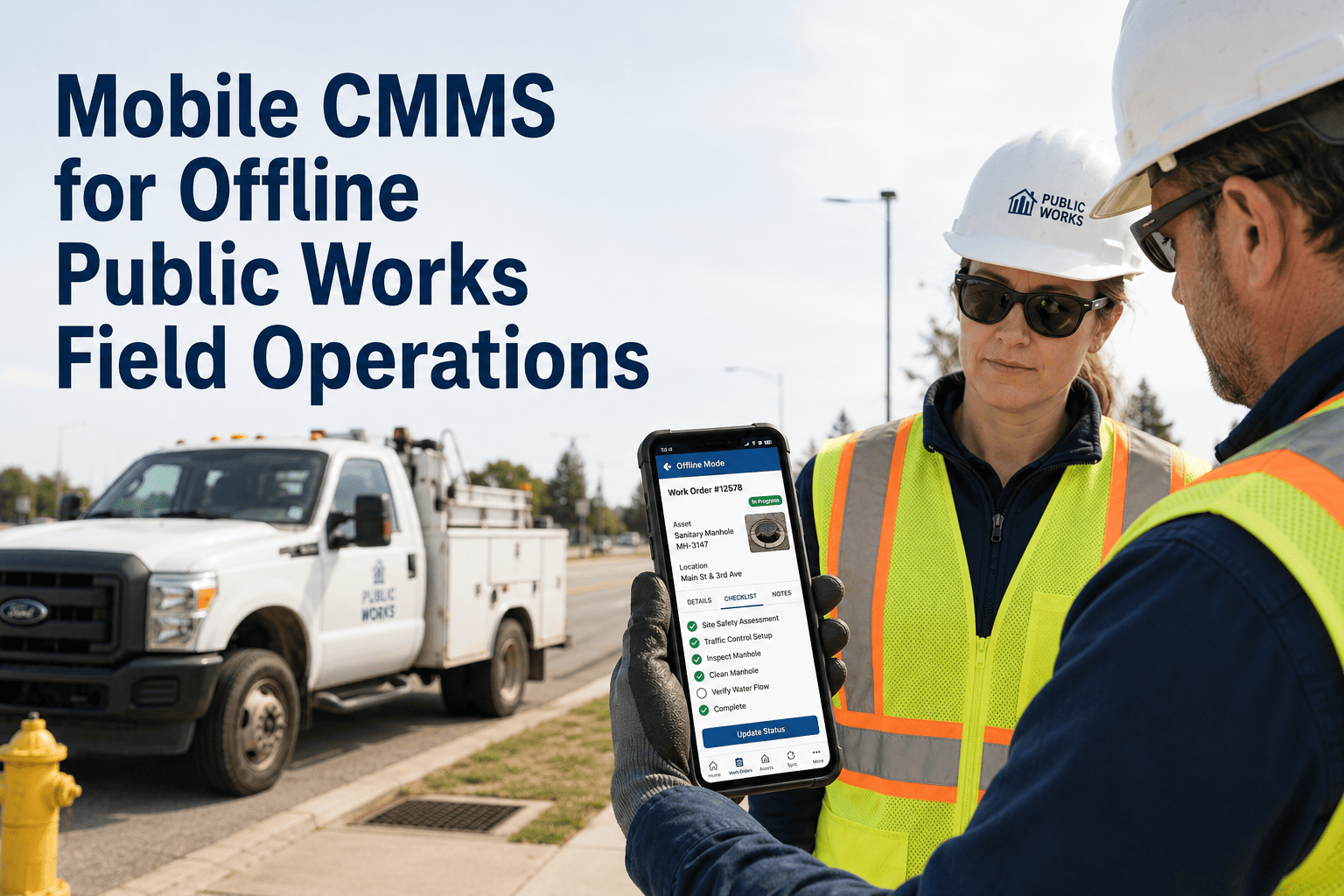
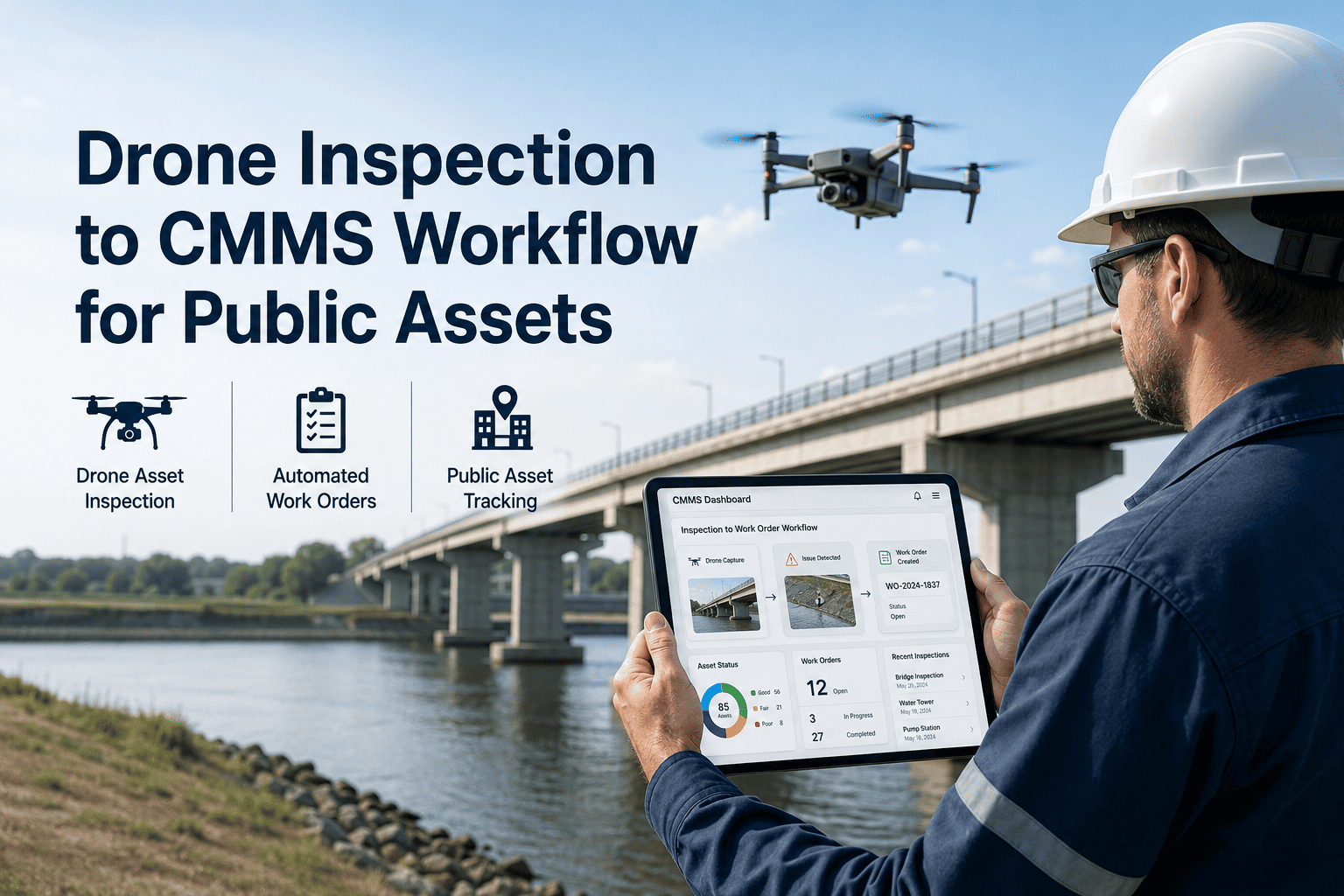
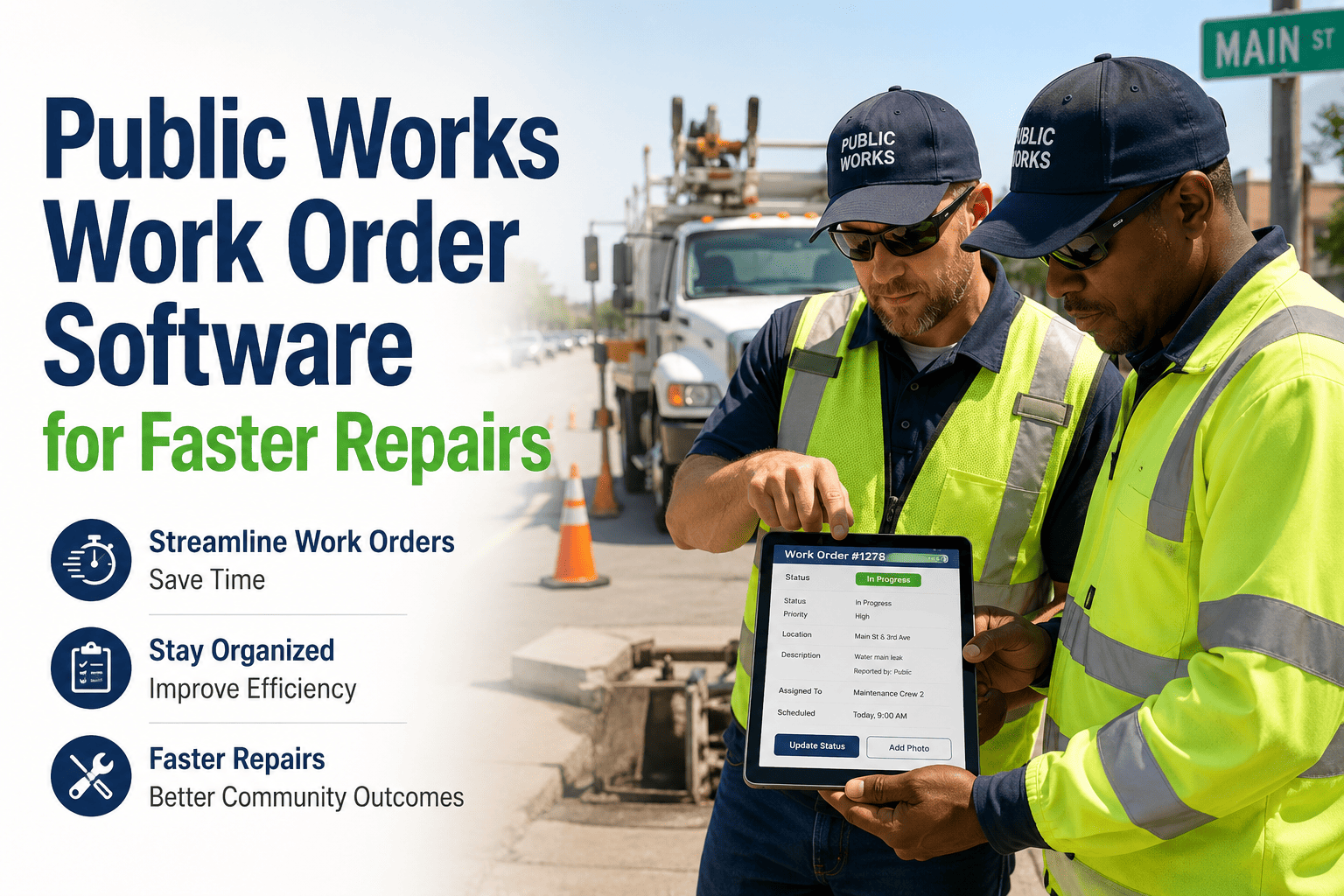
Fire departments run on readiness — and readiness depends on apparatus bays that are safe, functional, and inspection-ready at all times. A missed floor drain, a failing bay door seal, or an unlogged HVAC issue can compromise vehicle deployment, endanger personnel, and expose the department to liability. OxMaint's Inspection Management module replaces paper checklists with mobile-first workflows that capture photos, log defects, trigger work orders, and build an audit trail automatically. This page walks through the complete apparatus bay inspection framework and shows how OxMaint makes compliance effortless for fire facility managers. Book a demo to see it live.
Checklist · Fire Facilities · Inspection Management · Mobile CMMS
Fire Station Apparatus Bay Inspection Checklist Software
Mobile checklists, photo capture, auto work orders, and audit-ready records — purpose-built for fire facility managers who cannot afford missed inspections.
68%
of fire facility deficiencies go unrecorded on paper-based inspection programmes
4x
faster inspection completion with mobile checklists vs paper forms
$120K+
average cost of a single apparatus bay fire from deferred maintenance
100%
audit trail coverage when every inspection is logged in OxMaint
Bay Doors & Seals
Flooring & Drainage
Exhaust Extraction
Electrical & Lighting
HVAC & Ventilation
Safety Equipment
CRITICAL
Exhaust Extraction System
CO poisoning risk to personnel if extraction fails during vehicle warmup
Immediate work order — bay out of service until resolved
CRITICAL
Bay Door Operation
Deployment delay risk — failed door prevents apparatus response
Immediate escalation to facility manager + backup door protocol
HIGH
Floor Drain Blockage
Water pooling creates slip hazard and vehicle damage risk
Work order within 24 hours — area marked as hazard
HIGH
Electrical Panel Condition
Overloaded circuits create fire risk in high-demand bay environment
Electrician inspection within 48 hours
MEDIUM
Bay Door Seals & Weatherstripping
Compromised seals allow water, pests, and temperature variance
Scheduled repair within 7 days
MEDIUM
HVAC Filters
Clogged filters reduce air quality and increase equipment wear
Preventive maintenance per schedule
Zone 01
Bay Doors, Seals & Overhead Systems
Apparatus bay doors are the most mechanically stressed component in any fire station. High-cycle overhead doors in active stations average 8–12 operations per day — and door failure during an emergency call is not a maintenance issue, it is an operational failure with life-safety consequences. Inspections must cover the full door mechanism, not just visible surface condition.
Bay Door Inspection Checklist
Weekly Inspection — All Bay Positions
Full open and close cycle tested under power — door travels full range without hesitation, binding, or unusual noise; auto-reverse safety function tested with obstruction placed at floor level; reversal confirmed within 2 inches of contact
Record: Pass/fail with photo · Role: Assigned Technician
Door seals and weatherstripping inspected on all four sides — seals intact with no cracks, gaps, or compression failure; bottom seal contacts floor continuously when door is closed; any gap exceeding 10mm flagged for replacement
Record: Photo of each seal section · Role: Assigned Technician
Spring tension and counterbalance system visually inspected — torsion springs show no visible cracking or deformation; cables are tensioned evenly with no fraying; drum and bearing plates secure with no movement under operation
Record: Visual inspection log — specialist required if defects found · Role: Assigned Technician
Manual override operation tested — manual release cord accessible and functional; door can be operated manually by one person without excessive force; manual operation documented as tested with date and operator name
Record: Manual override test log · Role: Assigned Technician
Zone 02
Flooring, Drainage & Spill Containment
Apparatus bay floors carry concentrated point loads from heavy vehicles, are regularly exposed to fuel, hydraulic fluid, and water, and must drain efficiently to prevent both slip hazards and environmental compliance issues. Oil-water separators downstream of bay drains are often subject to municipal wastewater permit requirements — missed inspection records can trigger regulatory violations independent of physical condition.
Floor & Drainage Checklist
Monthly Inspection
Floor surface inspected for cracks, spalling, or delamination — any crack exceeding 3mm width or 300mm length logged with photo and location marked on bay floor diagram; epoxy coating condition assessed for peeling or delamination that could create trip hazard
Record: Floor condition map with photos attached to asset record · Role: Facility Manager
All floor drains tested for flow — water poured into each drain; confirmed free-flowing with no standing water after 60 seconds; drain grates intact and secured; drain covers removable for cleaning without tools
Record: Drain flow test result per drain location · Role: Assigned Technician
Oil-water separator inspection completed — separator accessible and service record current; oil layer depth measured and recorded; separator pumped out if oil layer exceeds manufacturer specification; inspection report filed in OxMaint and linked to environmental compliance record
Record: Oil layer measurement + last service date · Role: Facility Manager
Zone 03
Exhaust Extraction & Air Quality
Vehicle exhaust contains carbon monoxide, diesel particulates, and nitrogen oxides. NFPA 1 and OSHA guidelines require that apparatus bays have mechanical exhaust extraction systems capable of capturing vehicle exhaust at the tailpipe. CO levels in enclosed bays without functioning extraction can exceed OSHA PEL (50 ppm 8-hour TWA) within minutes of engine startup.
Exhaust Extraction Checklist
Weekly — Critical Safety System
Exhaust hose connection and retraction system tested — hose connects to vehicle tailpipe without adapter modification; automatic retraction activates when vehicle moves; hose returns to storage position without manual assistance; hose condition checked for cracks, kinks, or deterioration
Record: Retraction test result + hose condition photo · Role: Assigned Technician
Fan motor and extraction unit operation confirmed — fan activates with vehicle ignition signal or manual switch; airflow at extraction point confirmed with anemometer or visual smoke test; fan motor shows no unusual vibration, noise, or heat at motor housing
Record: Fan operation log + airflow reading · Role: Assigned Technician
CO detector calibration and operation verified — CO detectors within calibration date (typically annual); alarm tested and confirmed audible at station threshold; detector placement correct per NFPA 1 guidelines; calibration certificate attached to asset record in OxMaint
Record: Calibration date + last test result · Role: Safety Officer
OxMaint converts every checklist item into a mandatory mobile gate — technicians cannot mark a zone complete without photo evidence and readings. Every defect auto-generates a work order routed to the right team, and every record is searchable in seconds for your next audit.
Paper vs Digital — Apparatus Bay Inspection Outcomes
| Inspection Activity |
Paper Process |
OxMaint Digital |
| Defect photo documentation |
Optional, often missing |
Mandatory gate — cannot proceed without photo |
| Work order creation on defect |
Manual re-entry, 24–72 hr delay |
Auto-generated on defect log — immediate routing |
| Audit trail for compliance |
Paper binder — easy to lose |
Permanent digital record, exportable in minutes |
| Missed inspection alerts |
Not available |
Automated escalation to supervisor |
| Asset maintenance history |
Siloed in paper files |
Full history on each asset record |
| Inspection completion rate |
54% avg (industry data) |
94%+ with mobile accountability |
Expert Review
MR
Marcus Reid
Fire Facilities Director · 22 years · CFPS Certified · NFPA 1 Compliance Specialist
The apparatus bay is not just a parking structure — it is the first critical system in every emergency response. In my experience auditing fire stations across three states, the most common finding is not broken equipment, it is undocumented equipment. A bay door that failed two months ago and was repaired informally, a CO detector that was tested but never logged — these gaps create liability exposure that no department can afford. Digital checklist platforms like OxMaint solve the documentation problem at source by making the record creation inseparable from the inspection itself. You cannot complete the inspection without the record — and that changes behavior across the entire team.
Frequently Asked Questions
What inspection frequency is required for fire station apparatus bays?
NFPA 1 requires that fire station facilities be maintained in a safe and operational condition, with inspection frequencies set by the authority having jurisdiction. Best practice for high-use apparatus bays is daily visual checks, weekly mechanical system inspections (doors, exhaust extraction), and monthly comprehensive reviews covering flooring, drainage, electrical, and HVAC.
OxMaint's preventive maintenance scheduler automates these cadences so no inspection window is missed, and supervisors receive alerts when inspections are overdue.
How does OxMaint handle work order creation when a defect is found during inspection?
When a technician logs a defect in OxMaint's mobile checklist — for example, a failed bay door seal or a blocked floor drain — the system automatically generates a corrective work order pre-populated with the asset ID, defect description, and photo evidence. The work order is routed to the assigned maintenance team with priority classification based on your configuration. This eliminates the manual re-entry step and ensures defects are never lost between inspection and repair.
Book a demo to see this workflow in action.
Can OxMaint produce inspection records for insurance and liability audits?
Yes. Every completed inspection in OxMaint produces a timestamped, signed digital record with photo evidence, technician identity, defect log, and linked work orders. These records are stored in a searchable asset history and can be exported as PDF reports for insurance reviews, state facility audits, or internal compliance checks.
Start a free trial to explore the reporting module and see what your audit trail would look like.
Does OxMaint work for multi-station fire departments?
OxMaint is built for multi-site operations. Each station and each bay can be set up as a separate asset location with its own inspection schedule, assigned personnel, and compliance history. Facility managers can view inspection status across all stations from a single dashboard and drill down into individual records. For departments managing 5 to 50+ stations, the centralised visibility removes the need for manual status reporting from individual stations.
See a multi-station demo with your team.
OXMAINT · FIRE FACILITIES · INSPECTION MANAGEMENT
Every Bay. Every Inspection. Every Record — Automatically.
OxMaint gives fire facility managers mobile checklists, automatic work order creation, photo documentation, and audit-ready compliance records — all in one platform built for government and public safety facilities.