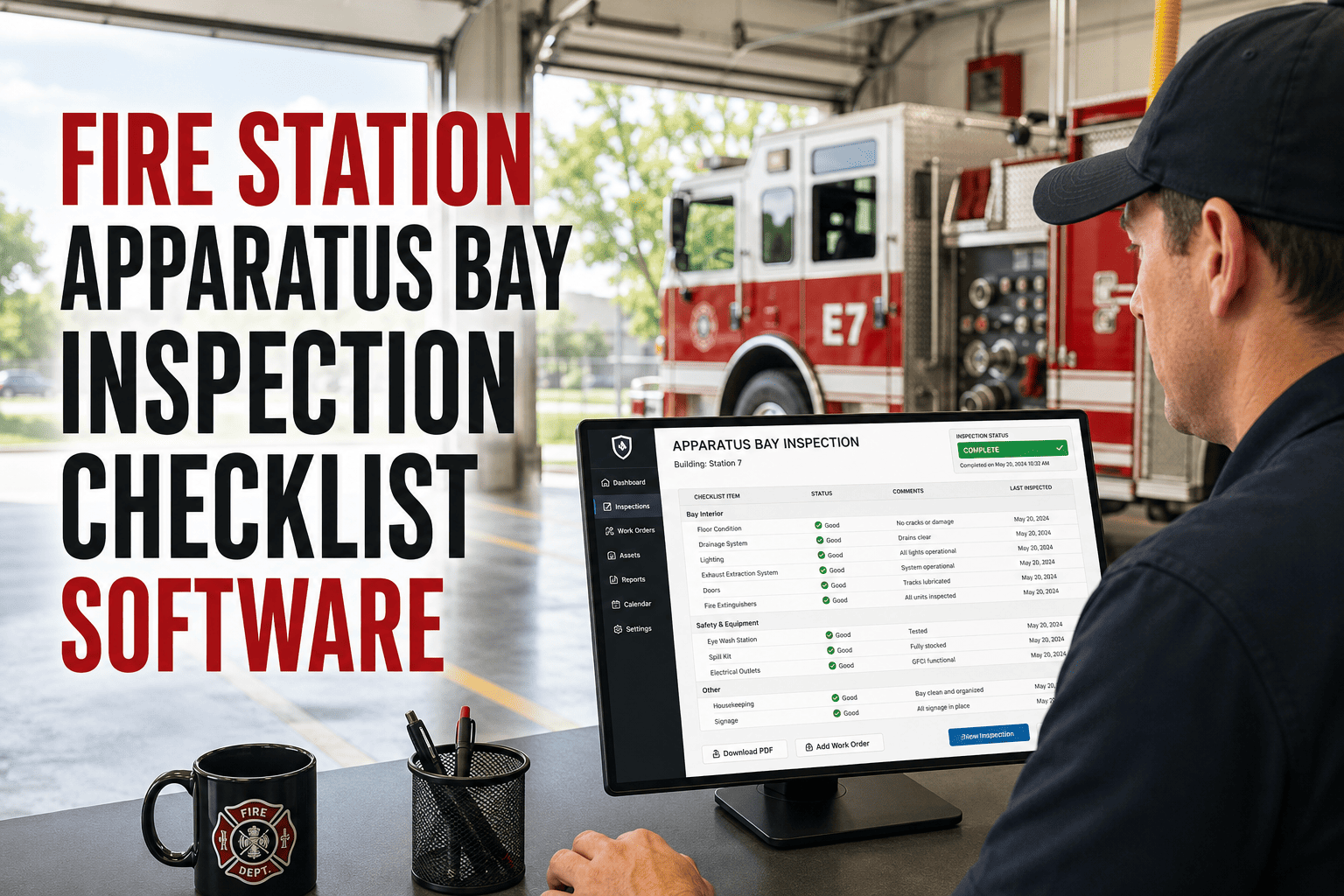
Fire stations are the nerve centers of public safety, where readiness is measured in seconds. A fire truck that fails to start due to a dead battery, or a hydraulic rescue tool that leaks fluid during an extraction, isn't just an inconvenience—it is a potential tragedy. When equipment failure strikes, response times lag, and the safety of both firefighters and the community is compromised.
This guide provides fire chiefs and fleet maintenance officers with a comprehensive inspection checklist for critical station equipment, covering diagnostic procedures, symptom recognition, and corrective maintenance protocols. Departments ready to modernize their fleet readiness can start building their predictive equipment monitoring system today.
Why Equipment Readiness is Mission Critical
Fire service equipment operates under extreme stress—high heat, heavy loads, and rapid deployment requirements. Maintaining this equipment requires a rigorous approach that goes beyond simple visual checks. Modern fire departments integrate CMMS platforms to track maintenance history, schedule preventive tasks, and ensure every piece of gear is ready for the next call.
For fire departments, these readiness factors address unique challenges: the corrosion of chassis from road salts, the degradation of PPE from UV exposure and carcinogens, and the wear on hydraulic seals from intense pressure. A failure in an SCBA regulator poses a life-threatening risk, necessitating rigorous, documented inspections.
Designing Preventive Task Systems for Fleet Readiness
Traditional preventive maintenance often relies on paper logs and memory. This approach is prone to errors and missed inspections. A missed oil change on a ladder truck or a skipped hydrostatic test on an SCBA cylinder can lead to costly repairs and regulatory fines.
Digital tracking enables data-driven preventive task scheduling that aligns maintenance intensity with actual usage hours, engine cycles, and manufacturer recommendations, creating a zero-failure tolerance program.
Crew performs start-of-shift inspections: fluid levels, lights, sirens, tire pressure, and equipment inventory verification.
Issues identified are logged immediately via mobile app, complete with photos and detailed descriptions of the symptom.
Automated system creates a work order, assigns priority based on risk score, and notifies the fleet maintenance team.
Mechanics perform necessary repairs, referencing OEM manuals and recording parts used and labor hours.
Apparatus undergoes a final check to ensure the issue is resolved before being returned to active service status.
This disciplined approach ensures that fleet maintenance resources target assets showing true signs of wear rather than just arbitrary calendar dates. Research demonstrates that proactive maintenance can reduce breakdown rates by up to 30%. Fire departments ready to implement data-driven fleet maintenance can schedule a consultation with public safety CMMS specialists to design custom workflows.
Symptoms & Troubleshooting Strategies
Implementing a robust response to equipment issues requires moving from "it's broken" to specific diagnostic categories. Successful troubleshooting requires structured analysis of the failure characteristics.
| Symptom | Probable Cause | Field Check | Corrective Action |
|---|---|---|---|
| Engine Slow to Crank | Weak battery or starter connection | Check battery voltage & terminals | Clean terminals, charge/replace battery |
| Hydraulic Tool Weakness | Low fluid or air in system | Check reservoir level | Top off fluid, bleed air from lines |
| SCBA Air Leak Hiss | O-ring damage or loose connection | Soap test connections | Replace O-ring, tighten fittings |
| Pump Cavitation Noise | Air leak or restriction | Check intake screens & prime | Clean screens, re-prime pump |
| Siren/Light Failure | Blown fuse or wiring short | Inspect fuse panel | Replace fuse, trace wiring short |
| Generator Surging | Fuel filter clog or bad fuel | Check fuel filter | Replace filter, drain/refill fuel |
The transition from reactive patching to root-cause solving typically occurs when maintenance teams are empowered with mobile diagnostic checklists that force the identification of why the component failed, not just that it failed.
Oxmaint CMMS delivers integrated asset tracking, automated maintenance tasks, and mobile diagnostics designed specifically for fire and emergency services.
Trusted by fire departments managing critical response infrastructure
Implementation Roadmap: From Breakdown to Readiness
Departments transitioning from "fix-it-when-it-breaks" to precision maintenance requires structured implementation that prioritizes critical assets first.
Operationalizing AI Insights: A Fleet Health Lifecycle
The true value of integrated monitoring emerges when inspection data flows seamlessly into AI-powered analytics. This ecosystem prevents the most common cause of apparatus failure: ignoring minor symptoms until they become major breakdowns.
For municipal operations, these improvements translate directly to budget stability and public trust. A fire truck that starts every time is a truck that saves lives. Government agencies can explore AI-powered fleet dashboards designed specifically for public safety applications.
Compliance Documentation and Regulatory Reporting
Readiness isn't just a mechanical issue; it's a legal one. NFPA standards and state regulations require rigorous documentation of asset integrity, especially for life-safety equipment like SCBA and aerial ladders.
Oxmaint delivers comprehensive asset tracking, sensor integration, and mobile-first workflows designed specifically for fire departments.
Join fire departments nationwide modernizing critical response management
Best Practices for Fire Station Equipment Management
Successful management of fire service equipment requires attention to unique operational constraints—24/7 readiness, varied equipment types, and high stakes. Departments achieving high reliability consistently follow these best practices:
Conclusion: The Commander's Imperative for Readiness
Equipment readiness is a direct reflection of a department's professionalism and capability. When chiefs view maintenance not as a chore but as a strategic pillar of public safety, they unlock massive gains in reliability and budget performance. Citizens expect help to arrive when they call. Firefighters expect their gear to work when they need it. All objectives align when departments deploy connected tools, automated preventive tasks, and rigorous fleet management.
The departments that implement these capabilities benefit from extended apparatus lifecycles, reduced liability, and the confidence that comes from audit-ready documentation. Those that delay face the continuous drain of emergency repairs, shortened vehicle life, and the looming risk of critical service failures.
The technology exists. The maintenance principles are proven. The implementation roadmap is clear. What remains is the organizational commitment to transform legacy maintenance into precision readiness programs. For a personalized assessment of your fleet's modernization readiness, request a tailored implementation strategy from fire service CMMS specialists.