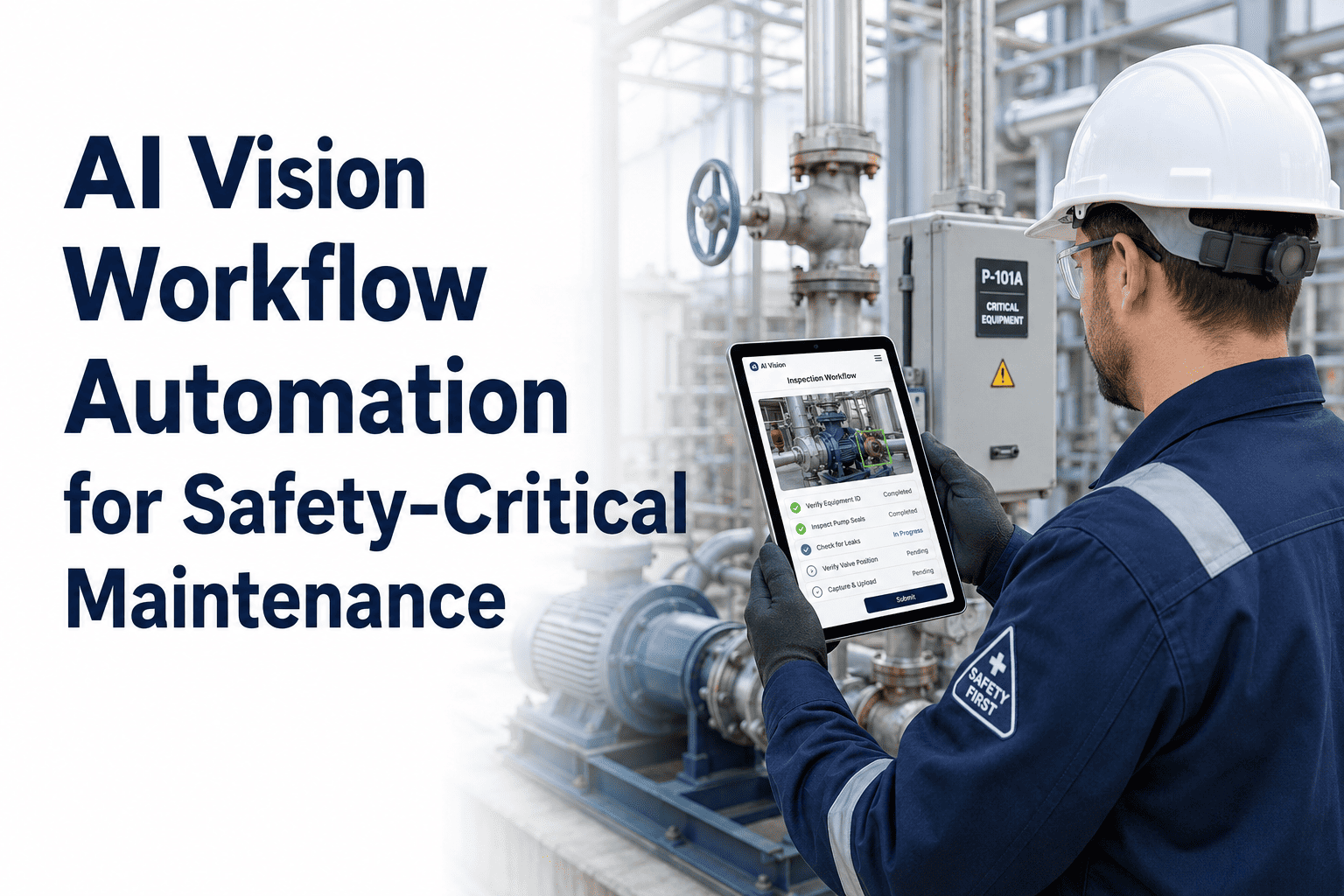
Government work permit systems have entered a new era. Traditional approaches—paper forms, clipboards, and manual sign-offs—can no longer address the complexity of modern municipal safety compliance and hazardous work authorization. Digital permit workflows transform how government teams issue, track, and manage critical work permits—using AI-powered routing, automated safety checks, and intelligent authorization tracking to ensure every hot work, confined space, excavation, and electrical permit meets regulatory standards. Schedule a consultation to explore how digital permit workflows can transform safety compliance at your municipality.
Why Digital Work Permit Workflows Matter for Government
Government operations face mounting pressure from OSHA requirements, municipal safety mandates, public liability exposure, and multi-department coordination demands. Manual permit processes create safety gaps, unauthorized work activities, and delayed projects when they should be progressing safely and efficiently.
Digital Permit Workflow Architecture
Modern government permit systems combine digital authorization, intelligent routing, automated safety verification, and centralized tracking to deliver seamless permit management from request through closure and compliance reporting.
Permit Type Capabilities
AI-powered permit workflows handle every type of government work authorization—from hot work and confined space entry to excavation and electrical isolation—delivering consistent safety enforcement impossible to achieve with paper-based methods.
Permit Types Across Government Operations
Comprehensive digital permit workflows accommodate every authorization type across diverse municipal operations. Each permit category requires specific safety checks, approval hierarchies, and closure verification protocols.
| Permit Type | Validity Period | Key Data Captured | Safety Impact |
|---|---|---|---|
| Hot Work Permit | Single shift (8-12 hours) | Fire watch details, atmospheric readings, combustible clearance radius, suppression equipment | Prevents fire incidents—leading cause of industrial losses in municipal facilities |
| Confined Space Entry | Single entry (shift-based) | Atmospheric test results, entrant/attendant IDs, rescue plan, ventilation data | Prevents asphyxiation and toxic exposure—OSHA's highest-penalty violation category |
| Excavation Permit | Project duration (days-weeks) | Dig location, utility clearances, soil type, shoring specs, competent person ID | Prevents cave-ins and utility strikes—reduces public infrastructure damage risk |
| Electrical Isolation | Task duration (hours-days) | Energy source IDs, lockout points, voltage readings, qualified worker certs | Prevents electrocution and arc flash—NFPA 70E compliance mandatory |
| Road Closure / Traffic | Scheduled duration (hours-weeks) | Closure zones, detour plans, signage inventory, emergency access routes | Ensures public safety during municipal construction and maintenance work |
| Working at Heights | Single shift (8-12 hours) | Fall protection type, anchor points, equipment inspection dates, rescue plan | Prevents fall injuries—the leading cause of construction fatalities |
Paper-Based vs. Digital Permit Management
Understanding the capabilities difference between paper-based permit systems and AI-powered digital workflows reveals why modern government operations are transitioning to automated safety authorization systems.
- Carbon-copy paper permit forms
- Manual safety checklist verification
- Physical sign-off from each authority
- No real-time visibility into active permits
- Audit preparation takes days of file searching
- Mobile-first digital permit forms
- AI-enforced safety requirement validation
- Parallel digital authorization routing
- Real-time permit dashboard and monitoring
- Instant audit-ready compliance reports
Department-Specific Permit Applications
Different government departments have distinct permit requirements, safety frameworks, and regulatory oversight. Digital permit workflows adapt to each department's unique authorization and safety demands.
| Department | Work Types | Critical Permits | Compliance Priorities |
|---|---|---|---|
| Public Works & Infrastructure | Road repair, bridge maintenance, utility work | Excavation, road closure, confined space, hot work | OSHA compliance, public safety, utility protection |
| Water & Wastewater | Treatment plants, pump stations, sewer lines | Confined space, electrical isolation, chemical handling | EPA compliance, H2S monitoring, chlorine safety |
| Parks & Recreation | Tree removal, facility maintenance, trail construction | Working at heights, excavation, hot work, general work | Public area safety, environmental protection, ADA compliance |
| Building & Code Enforcement | Inspections, demolition oversight, construction permits | Structural work, electrical, excavation, hazmat abatement | Building code compliance, contractor safety, public protection |
| Transportation & Transit | Signal maintenance, rail work, bus depot operations | Electrical isolation, traffic control, confined space, hot work | FTA compliance, public transit safety, signal integrity |
| Emergency Services Support | Station maintenance, equipment repairs, facility upgrades | Electrical, hot work, working at heights, general work | Continuous readiness, minimal service disruption, fire codes |
ROI of Digital Permit Workflows
AI-powered permit management delivers returns through reduced safety incidents, improved administrative efficiency, better audit outcomes, and prevented unauthorized work activities. The financial impact compounds across multiple operational areas.
Technical Specifications
Government digital permit platforms must meet demanding specifications for security compliance, multi-department access control, and integration flexibility to deliver consistent performance across distributed municipal operations.
Implementation Approach
Successful digital permit deployment requires careful planning across workflow configuration, department onboarding, and user adoption. A phased approach delivers quick wins while building toward comprehensive permit automation.
Integration Capabilities
Digital permit platforms integrate with existing government systems to enable seamless data flow across safety, HR, operations, and compliance departments.
| System | Integration Type | Data Exchange |
|---|---|---|
| CMMS / Asset Management | Real-time bidirectional | Work orders, equipment status, maintenance schedules, safety flags |
| HR / Training Systems | Event-triggered | Worker certifications, training records, competency verification, new hire onboarding |
| GIS / Mapping Platforms | Automatic sync | Permit locations, utility maps, geofence boundaries, concurrent work zones |
| Environmental Monitoring | Real-time feed | Weather alerts, air quality data, atmospheric readings, temperature conditions |
| Incident / Claims Management | Event-triggered | Incident reports, near-miss data, investigation records, insurance notifications |
Common Challenges & Solutions
Digital permit deployments face unique challenges from legacy process migration, field adoption, and multi-department coordination. Understanding these challenges and proven solutions accelerates successful implementation.
| Challenge | Impact | Solution |
|---|---|---|
| Legacy paper process migration | Historical permits trapped in filing cabinets | Phased digital transition, prioritized active permits first, bulk digitization of high-value records |
| Field crew technology resistance | Workers bypass digital system for paper shortcuts | Simple mobile interface, clear time-saving demonstration, supervisor enforcement, offline capability |
| Multi-department approval delays | Permits stalled waiting for cross-department sign-off | Parallel approval routing, automatic escalation timers, mobile push notifications for approvers |
| Varying safety standards across departments | Inconsistent permit requirements between divisions | Standardized permit templates with department-specific add-ons, central safety office oversight |
| Integration with legacy municipal systems | Data silos between safety, operations, and HR | Pre-built connectors for common government platforms, custom API development, phased integration |