Public parks, sports fields, medians, and civic green spaces depend on irrigation systems that run largely unseen, watering thousands of square feet every day without anyone watching. When a valve sticks open or a sprinkler head snaps off, the damage builds quietly — flooded turf in one corner, a browning median in another — until a resident complaint or a spiking water bill forces attention. Parks and recreation departments managing dozens of dispersed sites cannot walk every zone every week, so leaks, misaligned heads, and failed controllers often run unnoticed for months. Purpose-built municipal irrigation maintenance software turns that blind spot into a proactive system, tracking every zone, valve, and controller so failures surface in hours instead of seasons. Departments already using Oxmaint's irrigation maintenance CMMS are cutting water waste and protecting landscape budgets at the same time.
Parks & Recreation · Water Conservation · 2026
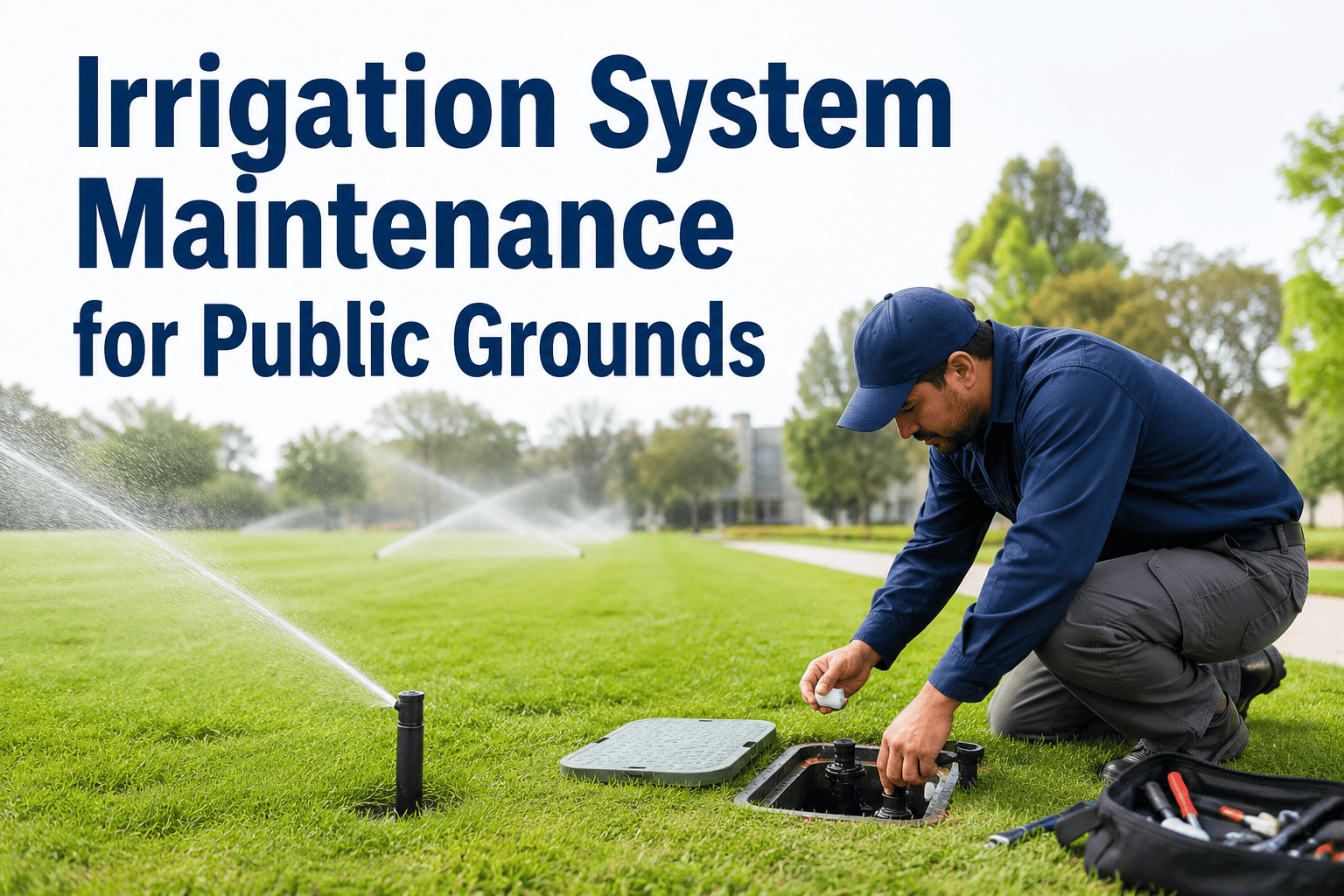
Irrigation System Maintenance for Public Grounds
A practical framework for tracking zones, catching leaks early, and keeping public landscapes green without watching water budgets disappear underground.
30-60%
of irrigation water is typically wasted through leaks, misaligned heads, and poor scheduling
25,000
gallons a single broken sprinkler head can waste in one year if left unrepaired
6,300
gallons lost monthly from a leak no bigger than the thickness of a dime
50%
of outdoor water use is lost to wind, evaporation, and runoff from inefficient systems
Where Public Irrigation Systems Quietly Fail
Grounds crews are stretched across parks, medians, cemeteries, sports complexes, and civic campuses. Irrigation failures rarely announce themselves — they show up as a shrinking landscape budget and a resident complaint about a flooded sidewalk. These are the failure points that go unnoticed the longest.
01
Zones With No Owner
Large sites have dozens of zones split across controllers with no single record of what was last inspected, adjusted, or repaired.
02
Night-Cycle Blind Spots
Most systems run before sunrise while grounds crews are off site, so broken heads and stuck valves run unseen for days at a time.
03
Reactive Repair Cycles
Without scheduled checkpoints, repairs only happen after turf dies or a water bill spikes, well past the point of easy fixes.
04
No Seasonal Adjustment Trail
Controller run-times set once and forgotten waste water in cooler months and under-water landscapes during peak heat.
How Oxmaint Keeps Every Zone Accountable
1
Map Every Zone as an Asset
Controllers, valves, and zones across every park and site are logged individually in Oxmaint, each with its own maintenance history.
2
Schedule Recurring Checkpoints
Preventive maintenance tasks are auto-generated on a set cadence, so heads, filters, and pressure are checked before problems start.
3
Log Field Findings Instantly
Crews record leaks, broken heads, and coverage gaps from the field, tagged to the exact zone and site for a permanent record.
4
Route Repairs Automatically
Flagged issues convert into assigned work orders with priority ranking, so a cracked lateral doesn't wait behind routine paperwork.
5
Track Water and Cost Trends
Every repair and adjustment builds a site-level history, giving directors the data to defend budgets and plan replacements.
Stop Losing Water Budget to Zones Nobody Is Watching
See how Oxmaint tracks every controller, valve, and zone across your parks system and turns field findings into completed repairs.
Irrigation Zones Tracked Across Your Grounds
| Site Type |
Common Failure Point |
Oxmaint Tracking Outcome |
Recommended Check |
| Sports Fields & Turf |
Uneven coverage, compacted zones |
Zone-level run-time log with wear pattern history |
Weekly |
| Park Beds & Medians |
Broken or missing spray heads |
Photo-tagged repair record linked to asset ID |
Bi-weekly |
| Cemetery & Memorial Grounds |
Sunken heads, root intrusion |
Recurring PM task with technician sign-off |
Monthly |
| Civic Campus Landscaping |
Controller programming drift |
Seasonal run-time adjustment log per controller |
Seasonal |
| Trails & Streetscape Planters |
Drip line clogging, low pressure |
Flow anomaly alert tied to work order |
Monthly |
Spreadsheet Tracking vs. Oxmaint-Managed Irrigation
Manual, Paper, or Spreadsheet
Zone history lives in whoever remembers checking it last
Leaks are usually caught by a bill spike, weeks after they start
Seasonal controller adjustments are inconsistent across sites
No record to justify budget requests or replacement timing
Oxmaint-Managed Irrigation
Every zone has a standing asset record and maintenance history
Field-reported issues become work orders within minutes
Preventive checkpoints keep controllers on a consistent cycle
Cost and repair trends export instantly for budget reviews
Field Perspective
The single biggest saving in irrigation maintenance is not a new controller or a smarter sprinkler — it is knowing exactly when a zone was last checked. Departments that track every valve as an asset catch failures within a cycle or two instead of an entire season, and that difference alone can cut water waste dramatically.
Grounds Operations Consultant, Municipal Landscape Management
Frequently Asked Questions
How does irrigation maintenance software help catch leaks earlier?
Each zone and controller is logged as an asset in
Oxmaint, with recurring inspection tasks assigned on a set schedule. When a crew flags a broken head or low pressure in the field, it converts into a work order immediately instead of sitting in a notebook.
Can one system track irrigation across many separate park sites?
Yes. Oxmaint organizes controllers, valves, and zones by site, so a parks department managing dozens of locations can see every asset's condition and repair history from a single dashboard rather than separate spreadsheets per site.
How much water can better irrigation maintenance actually save?
Studies on landscape irrigation consistently show that leaks, misaligned heads, and poor scheduling waste a large share of water applied, often 30 percent or more. Catching these issues on a regular cycle rather than after a bill spike is what drives the savings.
Does this replace the need for a licensed irrigation technician?
No. Oxmaint organizes inspections, findings, and repair work so technicians spend their time fixing verified issues instead of searching for them.
Book a demo to see how the workflow fits an existing crew structure.
What does it take to get started tracking irrigation assets in Oxmaint?
Most departments begin by loading their controllers and zones as assets, then setting a recurring inspection cadence per site type. Support teams can help map an existing irrigation footprint during onboarding.
Bring Every Zone, Valve, and Controller Under One Record
Oxmaint gives parks and recreation departments a single system to track irrigation assets, catch failures early, and protect water budgets across every public site.