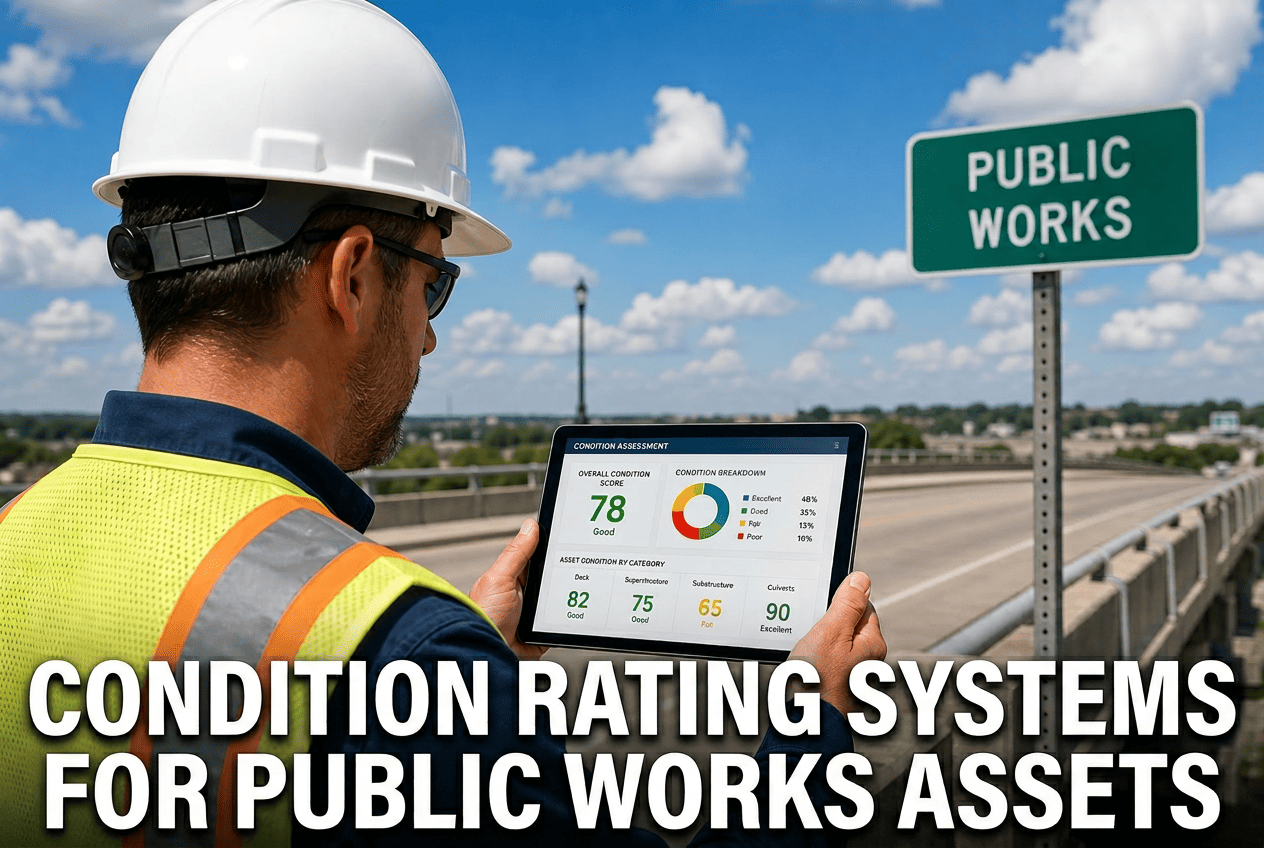
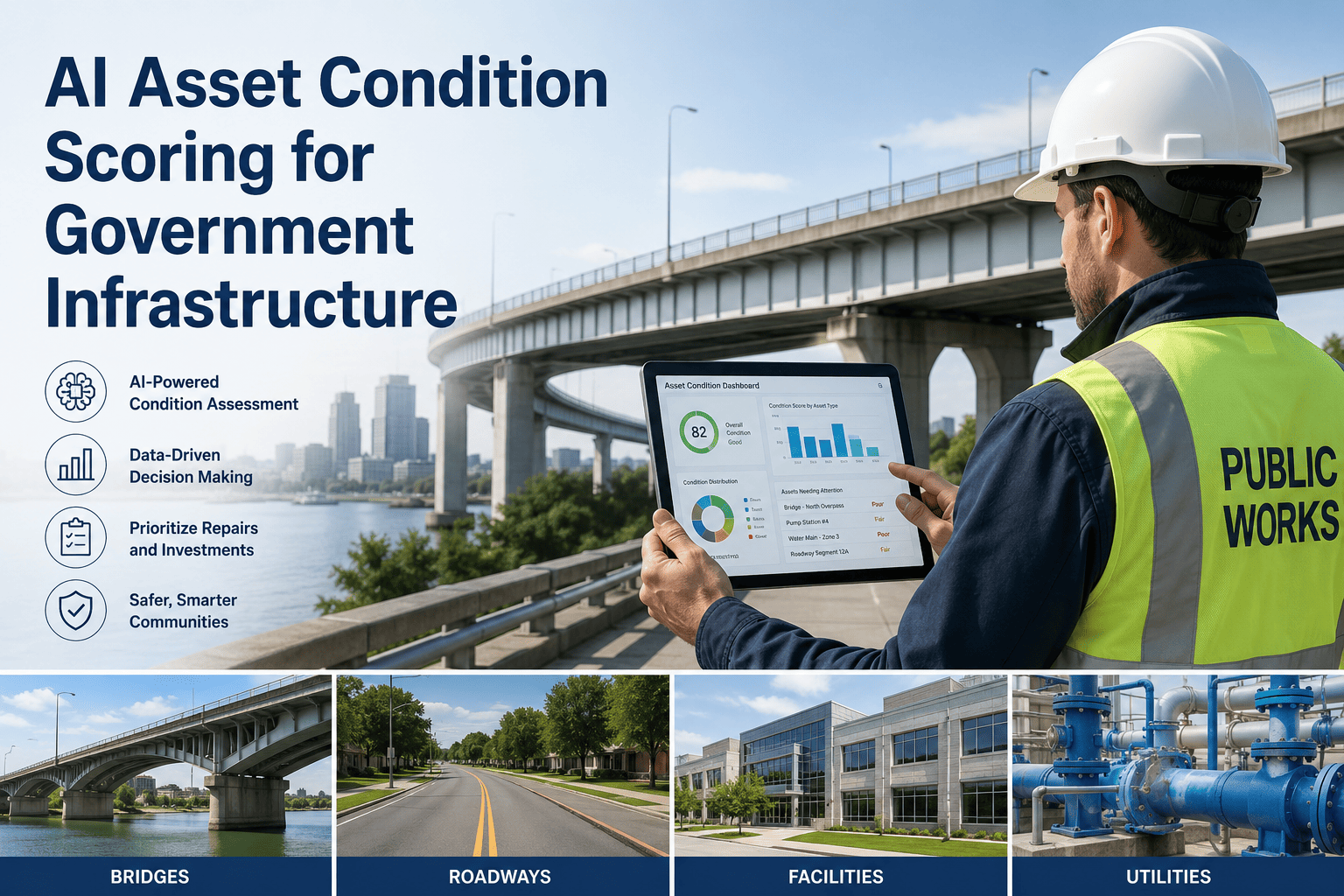
A bridge engineer rates a structure on a 0-to-9 federal scale. A sewer inspector rates a pipe on a 1-to-5 defect grade. A pavement crew scores a road on a 0-to-100 index. Three assets, three completely different number systems — and a public works director trying to decide which one gets funded first this year has no common ground to stand on. Standardized condition rating turns every one of those native scales into the same shared language: Good, Fair, or Poor, backed by a number everyone in the budget room understands. Oxmaint applies that common scale across your entire asset inventory so a bridge, a pipe, and a roof can finally be ranked side by side.
One Rating Scale Across Every Kind of Public Asset
Bridges, pavement, pipes, and buildings are inspected using completely different scoring systems. Standardized condition rating translates them all into a common scale — so capital planning becomes a comparison, not a guessing game.
The Problem: Every Asset Class Speaks a Different Number
Each engineering discipline built its own rating system for good reason — a sewer defect grade and a bridge deck score measure completely different physics. But when those native scales never get translated into something comparable, the loudest complaint wins the budget instead of the worst asset.
Bridges
National Bridge Inventory scale, 0 (failed) to 9 (excellent)
Pavement
Pavement Condition Index, 0 to 100, plus roughness (IRI) readings
Water & Sewer Pipes
Defect grading scale, typically 1 (best) to 5 (worst)
Buildings
Facility Condition Index, expressed as a repair-to-replacement percentage
The Fix: Translate Every Scale Into Good, Fair, or Poor
Federal guidance for bridges and pavement already resolves down to a three-tier condition label. Applying the same three-tier logic across pipes, buildings, and fleet gives every asset class a rating that means the same thing no matter who is reading it.
Good
Bridge rating 7–9 · Pavement index 70–100 · Pipe grade 1–2 · FCI under 5%
Fair
Bridge rating 5–6 · Pavement index 50–69 · Pipe grade 3 · FCI 5–10%
Poor
Bridge rating 0–4 · Pavement index under 50 · Pipe grade 4–5 · FCI over 10%
Rank every asset class on one dashboard
Oxmaint standardizes condition data from bridges, pipes, pavement, and buildings into one Good-Fair-Poor view your whole team can act on.
Who Rates What, and How Often
Standardization does not mean one inspector checks everything the same way — it means every discipline's findings land in the same reporting structure once the inspection is done.
| Asset Class |
Inspection Method |
Typical Cycle |
| Bridges |
Hands-on structural inspection |
Every 2 years |
| Pavement |
Automated surface and roughness survey |
Every 2–3 years |
| Water & Sewer Pipes |
CCTV camera inspection |
Every 7–10 years, full system |
| Buildings |
Facility Condition Assessment |
Every 3–5 years |
| Fleet |
Visual and mechanical inspection |
Annual, plus mileage-based checks |
Why a Shared Scale Changes Capital Planning
Cross-Asset Prioritization
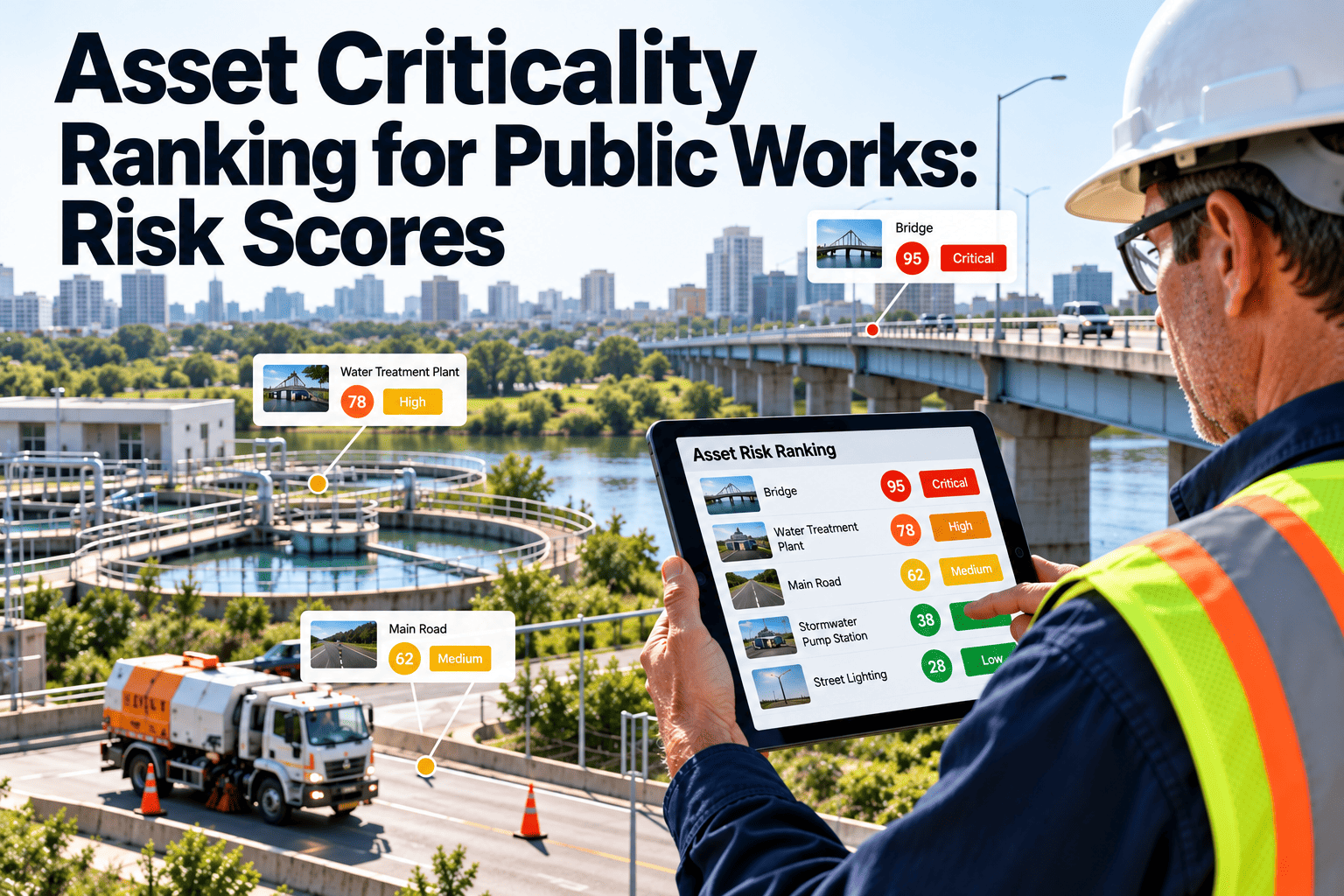
A council can compare a Poor-rated bridge against a Poor-rated lift station using the same word, not two different number systems.
Defensible Budget Requests
Standardized ratings backed by inspection data hold up under audit, bond review, and public records requests.
In-House and Consultant Data Match
Field staff using calibrated CMMS checklists produce ratings consistent with specialist consultant assessments.
Trend Visibility Over Time
A common scale lets leadership see whether the whole portfolio is improving or sliding, not just one asset at a time.
The Practical Payoff
Councils don't fund percentages and index numbers — they fund a story about risk. The moment a bridge, a pipe, and a roof can all be described as Good, Fair, or Poor on the same chart, that story becomes obvious, and the hardest part of capital planning stops being persuasion and starts being arithmetic.
Public Works Asset Management Perspective
Frequently Asked Questions
Does standardizing ratings mean giving up the detailed engineering scales?
No. The native scale — NBI score, pipe defect grade, pavement index — stays in the asset record. A Good-Fair-Poor label is layered on top for reporting and comparison.
Start a free trial to see both views on the same asset.
Can in-house staff rate assets consistently with outside consultants?
Yes, with calibration training and standardized checklists. Routine CMMS-based inspections between formal assessments keep condition data current without a consultant on every visit.
How does this help with GASB reporting or audit requirements?
A documented, standardized rating history across asset classes gives auditors and bond reviewers consistent, defensible evidence instead of scattered inspection notes.
Book a demo to see the reporting view.
What happens when different asset classes disagree on urgency?
A shared Good-Fair-Poor rating lets leadership weigh consequence of failure and population served alongside condition, rather than comparing raw index numbers that were never meant to be compared.
How often should the standardized ratings be refreshed?
As often as any underlying inspection or work order closes. Continuous updates between formal assessment cycles keep the portfolio-wide picture from going stale.
Stop comparing bridges to pipes using different math
Bring every asset class onto one standardized condition scale with Oxmaint, and give your capital plan a common language.