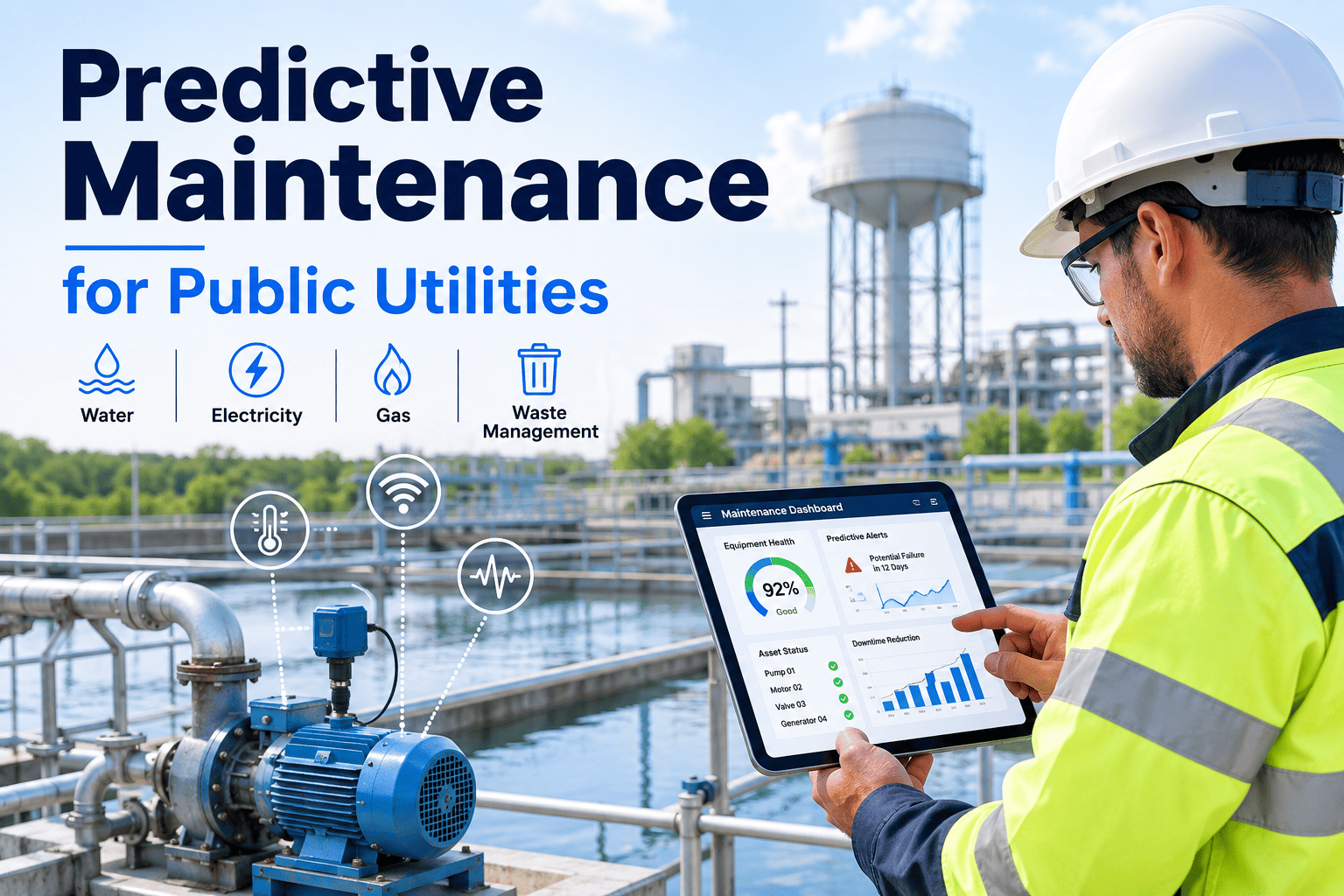
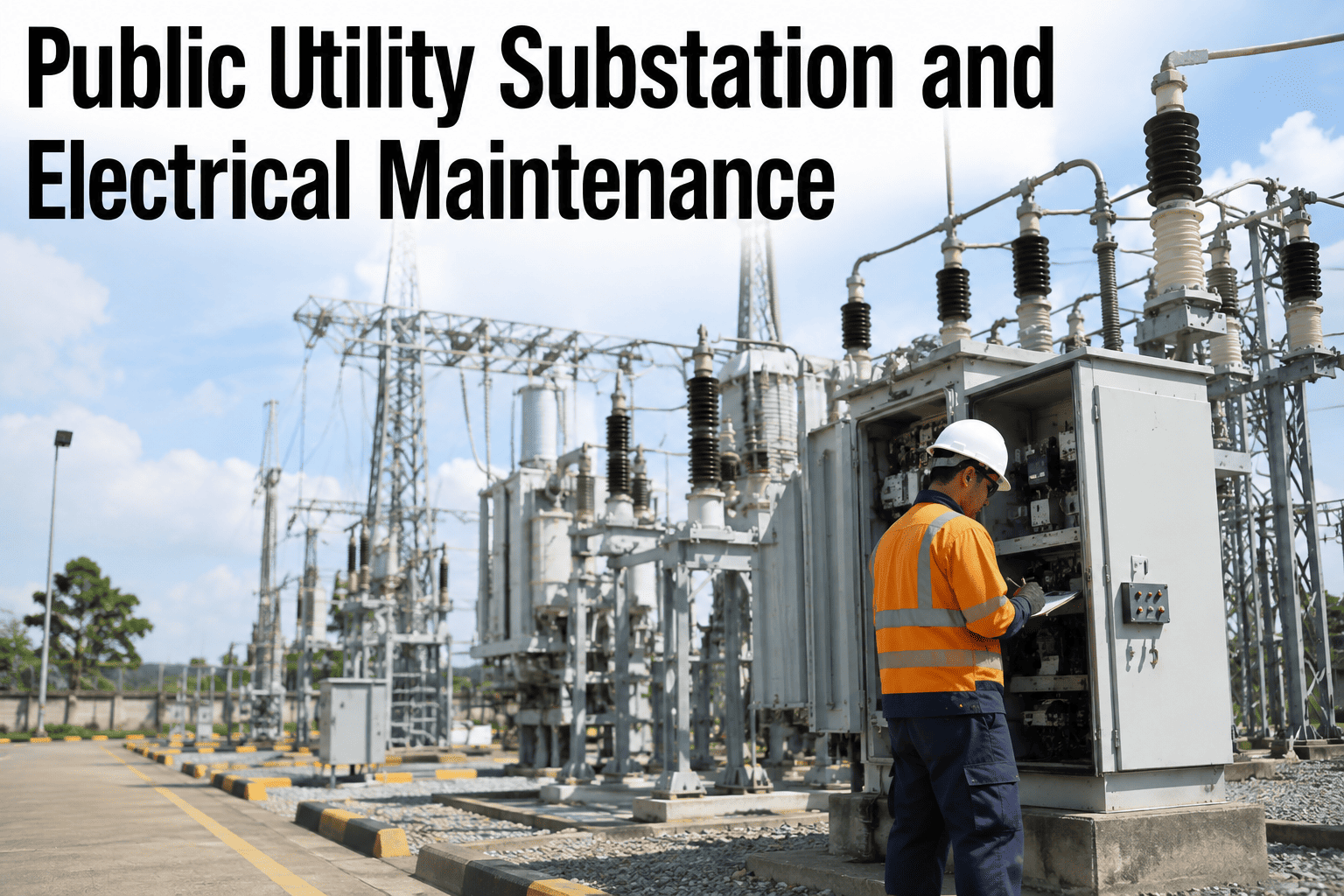
Water main breaks make headlines, but the real story happens weeks earlier — a slow pressure drop, a bearing that runs a few degrees hotter, a corrosion pattern a sensor catches and a paper log misses. Public water, wastewater, and electric utilities are shifting from calendar-based maintenance to condition-based maintenance, and reliability data is starting to prove the shift out. Aging pipe networks, a retiring workforce, and tighter capital budgets have pushed predictive maintenance from a side pilot to a standard operating requirement for utility asset managers. This guide walks through how public utilities are actually implementing predictive maintenance today — technique selection, pilot design, and the technology stack that makes it stick. If your utility is ready to move past reactive repairs, book a free demo to see a predictive maintenance rollout built for public utility teams.
Public Utilities · Water, Wastewater & Electric · Predictive Maintenance
Predictive Maintenance for Public Utilities: From Reactive Repairs to Condition-Based Reliability
See how water, wastewater, and electric utilities are cutting emergency repair costs and unplanned downtime by acting on asset condition data instead of waiting for the next scheduled inspection.
Why It Matters Now
The Reliability Problem Public Utilities Are Actually Facing
6B gal
of treated water lost to leaks every single day across U.S. drinking water systems
30%
of the water utility workforce is eligible to retire within the next five years
30–50%
typical reduction in unplanned equipment downtime after predictive maintenance adoption
40%
drop in unplanned pump station downtime reported in recent utility predictive maintenance studies
Technique Selection
Predictive Maintenance Techniques Utilities Use, by Asset Type
Not every asset needs the same sensor or the same model. The right technique depends on the failure mode you're trying to catch — and most utilities run several of these in parallel across their asset portfolio.
Vibration Analysis
Tracks bearing wear, misalignment, and cavitation in pumps and motors before they cause a mechanical failure or unplanned trip.
Acoustic Leak Detection
Listens for the sound signature of water escaping distribution mains, flagging leaks well before they surface as a visible break.
Thermal Imaging
Spots hot spots in electrical switchgear, transformers, and motor housings that indicate loose connections or overload risk.
SCADA & Sensor Analytics
Layers predictive models over existing flow, pressure, and PLC data so control systems keep running exactly as they do today.
AI Vision Inspection
Scores photo and video inspections for corrosion, seal wear, and structural degradation, turning a field walkthrough into structured data.
Oil & Fluid Analysis
Detects contamination and wear particles in gearboxes and hydraulic systems long before a lab report would normally catch it.
Implementation Path
How Public Utilities Roll Out Predictive Maintenance in Practice
1
Pick a Bounded Pilot
Start with one asset class — lift stations or a substation feeder — instead of the whole portfolio, so the win is measurable in weeks.
2
Connect Existing Data
Pull from SCADA, PLCs, and CMMS work order history through standard connectors — no rip-and-replace of control infrastructure required.
3
Calibrate the Model
Run the model against 90 to 180 days of history so severity scoring reflects your assets, your climate, and your failure patterns.
4
Train the Response Team
Give supervisors and technicians a clear playbook for what happens the moment a severity alert crosses the response threshold.
5
Scale Asset by Asset
Expand to the next asset class once the pilot shows a measurable drop in emergency work orders, not on a fixed calendar date.
Reactive vs Predictive
What Changes When Utilities Move to Condition-Based Maintenance
See a Predictive Maintenance Pilot Built for Your Asset Mix
OxMaint connects to your existing SCADA and CMMS data to score asset condition and flag the failures worth acting on — before they become a break, an outage, or an emergency call.
Utilities that succeed with predictive maintenance don't start by monitoring everything. They start with the asset class causing the most emergency work orders, prove the model catches real failures early, and let that result build the case for the next rollout. The technology is rarely the blocker — the sequencing is.
Director of Asset Reliability, Municipal Water & Electric Utility
18 Years Utility Operations · Predictive Maintenance Program Lead · SCADA & CMMS Integration
Frequently Asked Questions
How long does a predictive maintenance pilot take to show results?
Most utility pilots run 90 to 180 days on one asset class before results are reliable enough to act on.
Book a demo to see a pilot timeline scoped to your asset portfolio.
Does predictive maintenance replace our existing SCADA and CMMS systems?
No. Predictive maintenance layers on top of SCADA and CMMS through standard connectors, so control systems and work order processes keep running as they do today.
Start a free trial to see how the data layer connects.
Which utility assets see the fastest return from predictive maintenance?
Pump stations, lift stations, and substation feeders typically show the fastest measurable drop in emergency work orders because their failure modes are well understood and sensor-detectable.
Do we need new sensors, or can we use existing data?
Many utilities start with existing SCADA, flow, and pressure data before adding dedicated sensors.
Book a demo to review what your current data already supports.
How do smaller municipal utilities afford predictive maintenance?
Starting with one bounded pilot instead of a portfolio-wide rollout keeps upfront cost low, and the emergency repair savings from that pilot typically fund the next phase of expansion.
OxMaint · Predictive Maintenance · Public Utilities
Prevent the Break Before It Makes Headlines
OxMaint helps water, wastewater, and electric utilities move from reactive repairs to condition-based reliability — with a pilot scoped to the assets that matter most to your team.