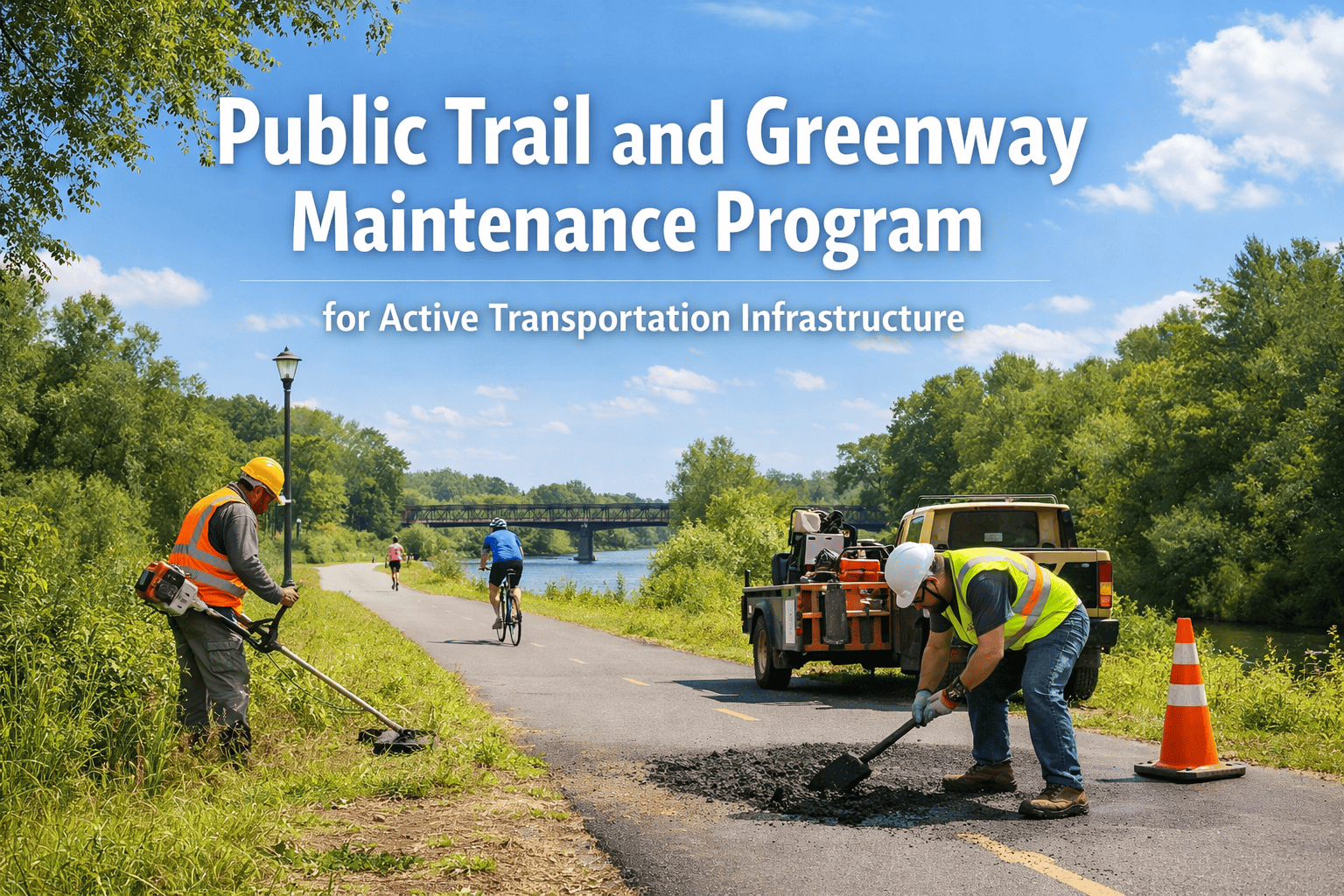
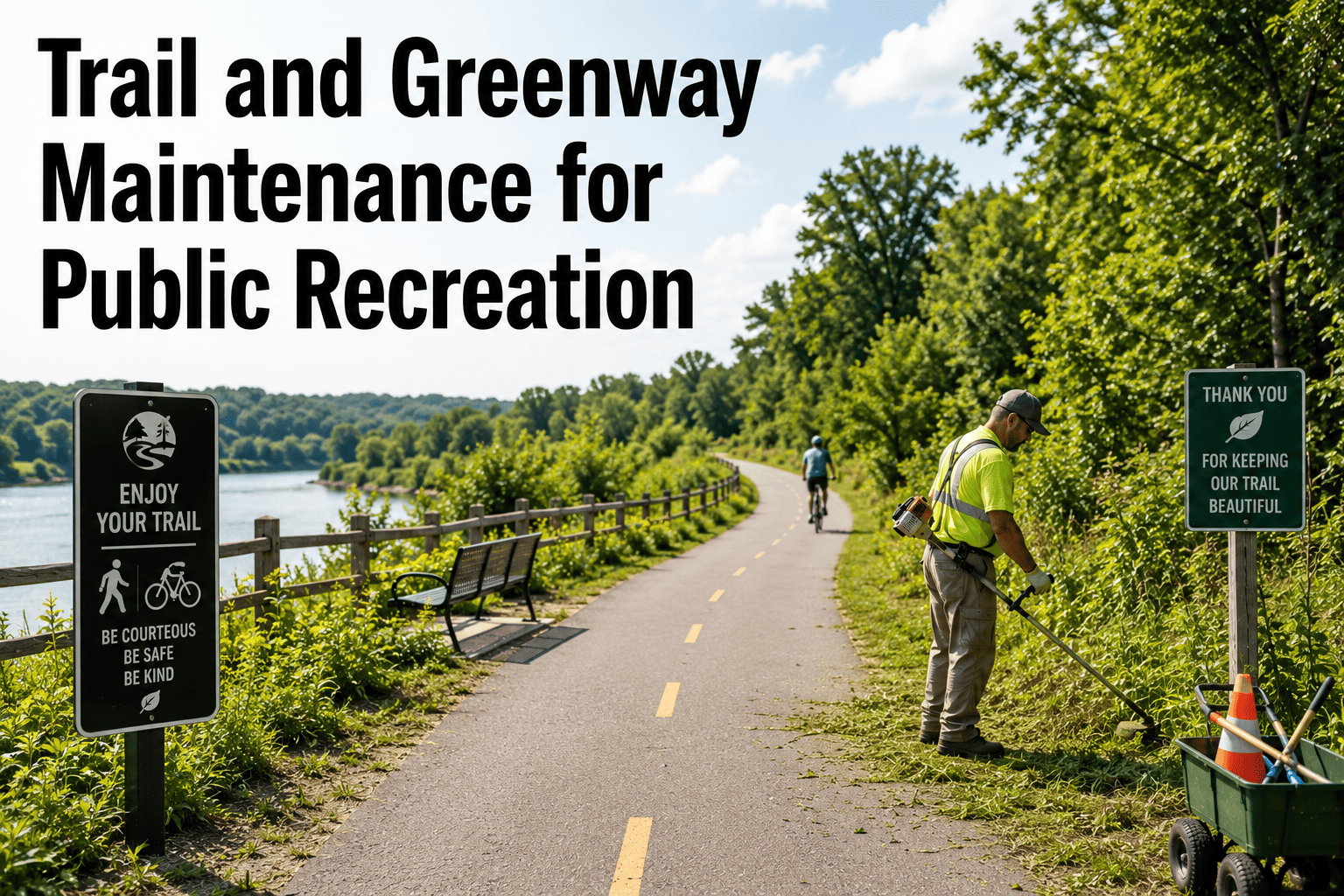
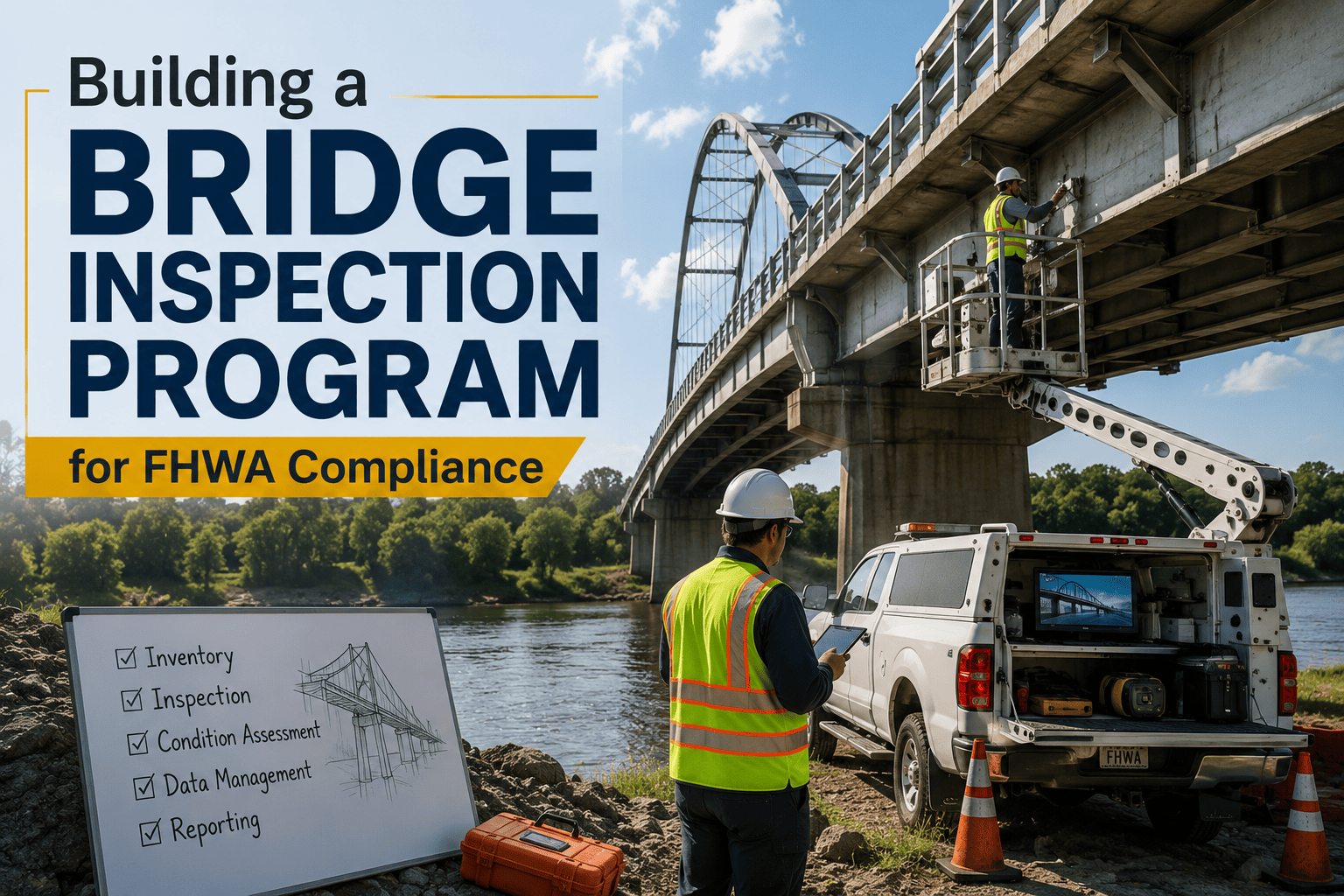
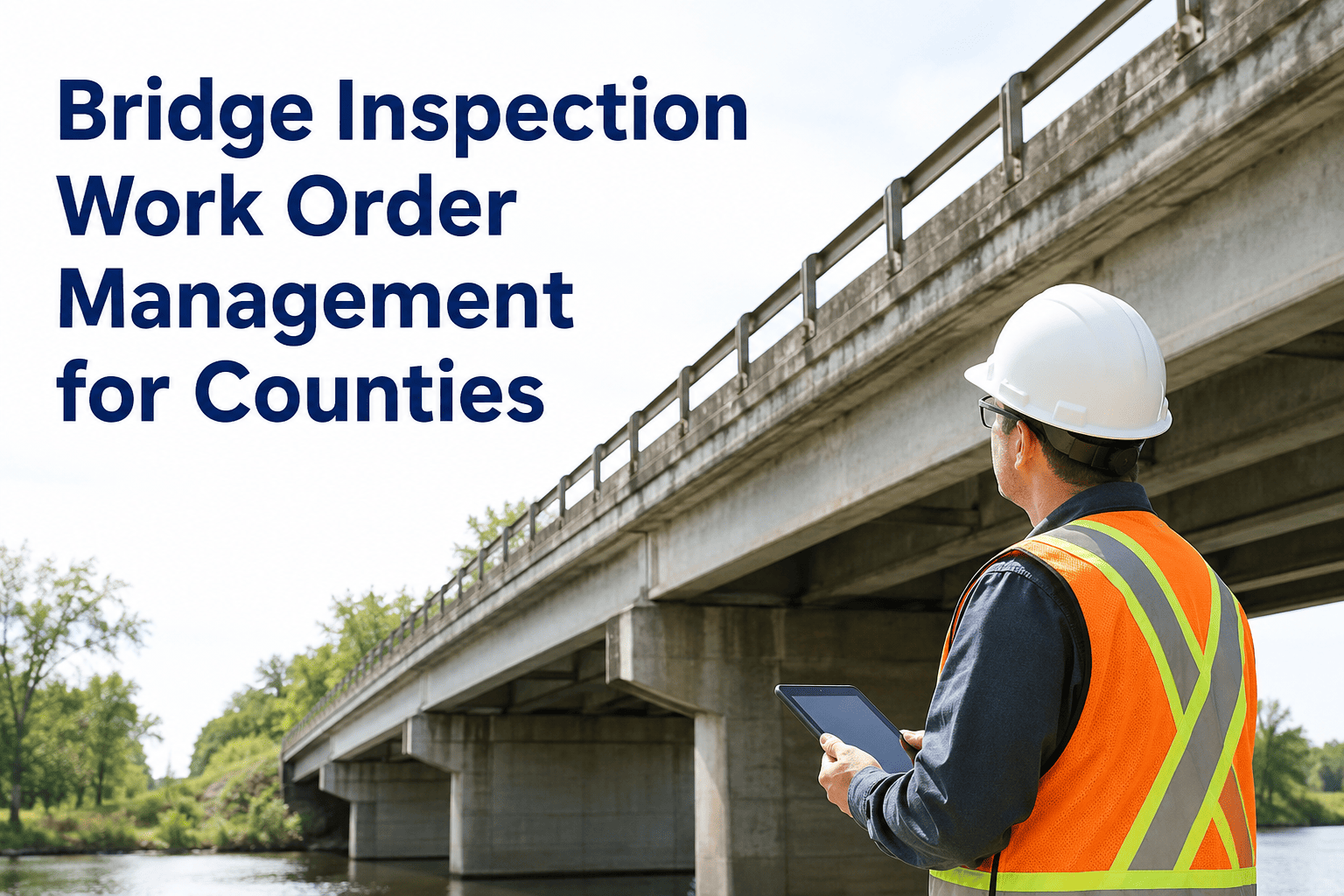
Municipal trail and greenway networks are among the most undertracked assets in any parks and recreation portfolio — linear infrastructure spanning dozens of miles, hundreds of drainage structures, bridge crossings, signage installations, and surface sections managed across disconnected spreadsheets with no centralized inspection scheduling or condition documentation. A single deferred pedestrian bridge inspection or unaddressed surface failure creates both ADA compliance exposure and uninsured liability risk that dwarfs the annual cost of a structured trail maintenance program. Book a demo to see how Oxmaint automates trail segment condition tracking, bridge inspection scheduling, and signage PM across your entire active transportation network.
$1.4B+
Annual deferred maintenance backlog across US municipal trail and greenway networks
62%
Of trail bridge structures in municipal networks lack current documented inspection records
3–5x
Emergency trail repair cost premium versus planned surface rehabilitation interventions
$280K
Average cost of a single trail-related slip-and-fall liability settlement without maintenance documentation
Oxmaint gives parks and recreation directors a live trail segment condition dashboard, automated bridge inspection scheduling, and signage PM tracking — linked to every asset in your active transportation network. Book a Free Demo or Start Free Trial to see it configured for your trail portfolio.
What Is a Public Trail and Greenway Maintenance Program?
A municipal trail and greenway maintenance program is the structured, asset-linked system for scheduling surface inspections, managing drainage and vegetation PM, tracking pedestrian bridge condition ratings, documenting signage compliance, and producing the audit-ready records required for federal grant eligibility, ADA accessibility compliance, and public liability protection. Unlike reactive pothole-fill responses, a structured program operates on defined inspection cycles for every trail segment, structure, and amenity — and creates the documented maintenance history needed to defend against litigation and secure Land and Water Conservation Fund and federal transportation enhancement grants.
Quick Answer
A public trail and greenway maintenance program is a preventive, asset-linked schedule covering surface condition rating, drainage inspection, pedestrian bridge assessment, signage compliance audits, lighting PM, and vegetation management across the full active transportation corridor. It produces the timestamped inspection records required for ADA compliance, LWCF grant documentation, and municipal liability protection — while reducing emergency repair costs by 60–70% versus reactive maintenance cycles.
01
Trail Surface and Pavement Management
Scheduled condition rating of asphalt, concrete, compacted stone dust, and natural surface segments using Pavement Condition Index methodology — with crack sealing, resurfacing, and ADA-compliant cross-slope correction triggered by threshold scores and linked to each linear asset record.
02
Pedestrian and Trail Bridge Inspection
Documented structural assessments of trail bridge decks, railings, abutments, and drainage scour zones — scheduled per AASHTO and local department of transportation frequency requirements, with condition ratings, photo evidence, and load-posting decisions recorded in each bridge asset file.
03
Drainage and Culvert Maintenance
Scheduled inspection and cleanout of trail culverts, cross drains, catch basins, and detention features — with blockage, erosion, and inlet damage documented per asset ID. Unmanaged trail drainage failures account for 38% of surface deterioration events and accelerate pavement lifecycle failures by three to five years.
04
Signage, Lighting, and Amenity Tracking
Systematic condition audits of wayfinding signs, regulatory markers, ADA-compliant signage, trail lighting fixtures, benches, bike repair stations, and drinking fountains — scheduled on seasonal PM intervals with retroreflectivity testing documentation required for federal transportation grant compliance.
Why Trail Maintenance Programs Fail Without Asset-Linked Scheduling
Trail and greenway networks managed on seasonal inspection rounds and paper-based logs accumulate deferred maintenance at 7% annually — a $90K surface rehabilitation deferred four years becomes a $118K+ emergency intervention with unplanned contractor mobilization costs. Parks departments with no centralized trail asset registry cannot produce the documented condition history required for federal grant applications or the maintenance records needed to defend against slip-and-fall litigation. Book a demo to see how Oxmaint eliminates reactive trail maintenance cycles across your corridor network.
01
Pedestrian Bridge Inspection Gaps
Trail bridge structures without documented annual or biennial inspections carry uninsured structural liability. A single undocumented bridge failure creates $500K–$2M+ in litigation costs and emergency closure expenses — costs that a $6,500 annual inspection scheduling program eliminates entirely.
02
ADA Compliance Documentation Gaps
Trail surfaces with cross-slopes exceeding 2% or longitudinal grades over 5% on accessible routes create federal ADA Title II violation exposure. Without documented inspection and correction records, municipalities face DOJ complaint investigations and retrofit costs averaging $85,000–$340,000 per accessible route segment.
03
Deferred Surface Repairs Accelerating Lifecycle Failures
Trail surfaces with PCI scores below 55 that receive only crack sealing — rather than scheduled overlay rehabilitation — deteriorate to PCI below 30 within two to three seasons, triggering full reconstruction costs of $180,000–$420,000 per mile versus $45,000–$95,000 per mile for planned overlay interventions.
04
Federal Grant Documentation Deficiencies
Land and Water Conservation Fund, Transportation Alternatives Program (TAP), and RAISE grants all require documented trail condition assessments and maintenance history as funding conditions. Paper-based logs and undocumented inspection rounds fail audit review and put $300K–$3M in federal active transportation funding at risk per grant cycle.
How Oxmaint Delivers a Structured Trail and Greenway Maintenance Program
01
Build the Linear Trail Asset Registry by Corridor, Segment, and Structure
Every trail segment, bridge crossing, culvert, signage installation, lighting fixture, and amenity registered in Oxmaint's Trail Asset Registry — organized by corridor, mile-marker segment, and structure type — with surface material, installation date, PCI baseline, and inspection frequency. QR asset tags enable field crews to pull up segment records and submit condition ratings from mobile devices at any point on the corridor without paperwork or radio dispatch.
02
Automate Bridge Inspection and Structural Assessment Scheduling
Oxmaint's Bridge Inspection Scheduling module generates structural assessment work orders on AASHTO-aligned frequencies — annually for bridge decks under 20-year design life, biennially for newer structures — with escalating alerts at 45, 14, and 3 days before deadline. Every completed inspection records condition ratings per element, scour zone status, load-posting decisions, and photo documentation — producing the bridge file required for state and federal reporting without manual record assembly.
03
Manage Signage, Drainage, and Vegetation PM on Automated Cycles
Oxmaint's Signage Tracking module generates retroreflectivity inspection and replacement work orders per MUTCD compliance schedules, while drainage cleanout and vegetation encroachment PM run on seasonal intervals tied to each corridor segment. Every completed work order records technician attribution, GPS check-in, and photo evidence — creating the documented maintenance history that protects municipalities in slip-and-fall litigation and supports ADA compliance audit responses.
04
Export Grant-Ready and Audit-Ready Trail Condition Documentation
Every completed trail inspection and maintenance work order exports with timestamp, technician ID, GPS coordinates, and photo evidence — formatted for LWCF documentation packages, Transportation Alternatives Program grant applications, ADA transition plan evidence, and public records requests. Parks directors receive a live corridor dashboard showing PCI trend, inspection currency, and open work order counts across every segment in the active transportation network.
Oxmaint Platform Features for Municipal Trail and Greenway Networks
Trail Asset Registry
Linear asset hierarchy for every corridor — segments, bridges, culverts, signage, and amenities — with PCI baselines and condition trend tracking. Departments using Oxmaint's trail registry report 93% inspection completion rates versus 58% industry average without structured scheduling.
Bridge Inspection Scheduling
AASHTO-aligned inspection work orders with automated frequency tracking, element-level condition rating forms, scour documentation, and load-posting records — producing the bridge file required for state transportation department reporting and federal grant eligibility without manual record assembly.
Signage Tracking and MUTCD Compliance
Retroreflectivity inspection scheduling per MUTCD requirements, with per-sign condition records, replacement work order generation at threshold failure, and wayfinding audit documentation. Ensures regulatory compliance for federal transportation funding without manual sign inventory audits.
ADA Compliance Documentation
Cross-slope and grade inspection records per ADA Title II standards, with correction work orders auto-generated for segments exceeding 2% cross-slope on accessible routes. Every ADA inspection timestamped and photo-documented for transition plan evidence and DOJ compliance response.
Federal Grant Documentation Export
Every completed trail inspection exports as a formatted LWCF, TAP, or RAISE grant condition record — ready for federal submission without additional staff preparation. Parks directors deploying Oxmaint report 100% grant audit pass rates with structured documentation packages.
Corridor PCI and Condition Dashboard
Network-level view of PCI scores, bridge inspection currency, signage compliance status, and open work orders by corridor segment — giving parks directors the condition data needed for CIP budget justification and capital improvement plan submissions to city council.
Trail Network KPI Scorecard
Inspection PM Compliance Rate
57%
Bridge Inspection Currency
38%
Average Trail PCI Score
52
Signage MUTCD Compliance
44%
ADA Route Compliance Rate
61%
Avg Days to Close Defect
22 days
Performance Outcomes — Oxmaint-Deployed Trail Networks
Inspection PM Compliance Rate93%
Bridge Inspection Documentation Currency96%
Reduction in Emergency Surface Repair Events67%
Signage MUTCD Compliance Rate89%
Reduction in ADA Complaint Investigations74%
Federal Grant Audit Pass Rate100%
Trail Maintenance Investment vs Return
| Program Element |
Annual Investment |
Annual Return / Avoidance |
Payback Period |
| Trail Asset Registry and PCI Tracking |
$8,000 per network |
$135,000 per mile in premature reconstruction avoided per corridor |
Under 3 weeks |
| Bridge Inspection Scheduling |
$6,500 per network |
$500,000+ in structural liability exposure reduced per inspection cycle |
First inspection cycle |
| Signage MUTCD Compliance Program |
$4,500 per network |
Federal TAP and RAISE grant eligibility preserved — awards averaging $750,000 |
First grant cycle |
| ADA Compliance Documentation |
$5,000 per network |
$85,000–$340,000 per accessible route segment retrofit avoided |
Under 4 weeks |
| Full Oxmaint Trail Platform |
$22,000 per year |
$220,000+ in combined avoidance across surface, bridge, signage, and grant outcomes |
Under 5 weeks |
Oxmaint delivers structured trail and greenway maintenance — surface PCI tracking, bridge inspection scheduling, MUTCD signage compliance, ADA documentation, and federal grant records — across every active transportation corridor in your municipal network from a single platform.
Frequently Asked Questions
QHow often should municipal trail bridges be inspected?
AASHTO guidelines recommend annual inspections for trail bridges under 20-year design life and biennial inspections for newer structures — with underwater scour inspections after major flood events. Without documented records, municipalities carry uninsured structural liability on every permitted user.
Book a demo to see Oxmaint's bridge inspection scheduling module.
QWhat ADA standards apply to municipal trails and greenways?
ADA Title II requires accessible trail routes to maintain cross-slopes under 2% and longitudinal grades under 5% on designated accessible routes, with documented inspection and correction records. Undocumented routes are presumed non-compliant in DOJ investigations.
Book a demo to see Oxmaint's ADA compliance documentation tools.
QHow do I justify a trail maintenance platform investment to city council?
One avoided slip-and-fall settlement saves $280K+ in taxpayer-funded liability costs; one avoided trail bridge closure saves $500K+ in structural emergency intervention; and documented maintenance programs are conditions of LWCF and TAP federal grant eligibility averaging $750K per award.
Book a demo to build a council-ready investment case.
QDoes a documented trail maintenance program strengthen federal grant applications?
Yes. LWCF, Transportation Alternatives Program, and RAISE grant reviewers require documented trail condition assessments and maintenance history as funding conditions. Oxmaint's timestamped, photo-evidenced records are formatted for direct grant submission without additional staff preparation.
Book a demo to see the grant documentation module.
QHow long does it take to build a trail asset registry and deploy PM scheduling?
QCan Oxmaint manage trails across multiple departments and jurisdictions from one platform?
Continue Reading
Public Park Maintenance Checklist
Complete PM checklist for municipal park assets — playgrounds, shelters, irrigation, lighting, and grounds equipment across all park facility types.
Click here to read more
Operations Guide10 min read
Sports Complex and Athletic Facility Maintenance
Turf management scheduling, bleacher structural inspections, event readiness documentation, and federal grant compliance for municipal athletic facilities.
Click here to read more
Asset Management11 min read
Public Swimming Pool and Aquatic Facility Maintenance
Chemical treatment scheduling, mechanical room PM, and health department compliance documentation for municipal aquatic facilities and natatoriums.
Click here to read more
Community Center and Recreation Building Maintenance
HVAC, plumbing, electrical, and ADA compliance maintenance programs for municipal recreation buildings and community centers.
Click here to read more
Deploy a Structured Trail Maintenance Program Across Your Active Transportation Network — Starting This Week
Oxmaint automates trail segment PCI tracking, pedestrian bridge inspection scheduling, MUTCD signage compliance, ADA documentation, and federal grant records across every corridor in your parks and recreation portfolio — live in under three weeks, no IT project, no hardware replacement.
Trail Asset Registry
Bridge Inspection Scheduling
Signage MUTCD Tracking
Federal Grant Documentation