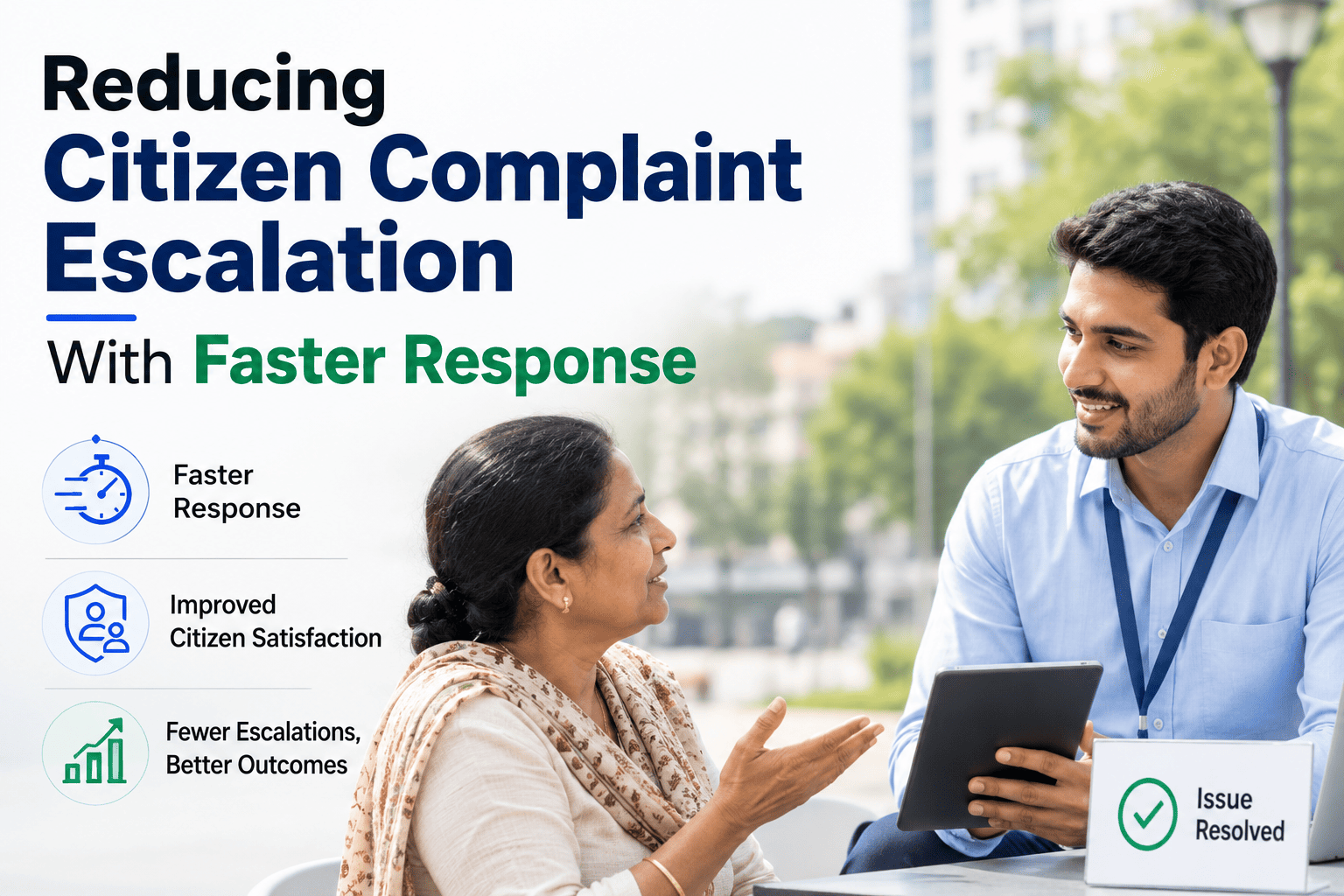
Citizen complaint escalation to elected officials is one of the earliest and most visible warning signs of a breakdown in municipal service delivery. When a public works or municipal maintenance team takes more than 24 hours to acknowledge a request, the likelihood that a citizen will bypass standard channels and contact a council member or mayor skyrockets by over 60%. Reducing citizen complaint escalation requires tightening citizen response time at the municipal level through closed-loop communication, automated status updates, and rapid work order dispatch. By shifting from reactive, paper-based logging to an AI-powered CMMS like OxMaint, local governments can cut escalation rates, restore public trust, and prove their operational value with hard data. You can Start Free Trial today to see how quickly your teams can modernize their citizen complaint management.
Citizen Service Response & Escalation Control
How fast does your municipality respond before a citizen complaint escalates to elected officials?
Under-24-hour response times cut complaint escalation to elected officials by 65%. When municipal maintenance teams acknowledge requests instantly and provide automated status updates, citizens stop calling council members and start trusting the process.
Reduction in Escalation
Municipalities implementing sub-24-hour citizen request response SLAs reduce direct escalations to mayors, council members, and city managers by nearly two-thirds.
The Cost of Delay
Why citizen complaint escalation is the leading indicator of service failure
In municipal operations, an escalated complaint is rarely about the original pothole, broken streetlight, or water leak—it is about the silence that followed. Research shows that 72% of citizens who escalate a government complaint to an elected official do so because they received no acknowledgment of their initial request within 48 hours. When public complaint escalation occurs, it forces department directors into reactive mode, pulling maintenance crews off scheduled preventive tasks to handle emergency political requests. This disrupts the entire municipal maintenance workflow, increases overtime costs by an average of 18%, and delays resolution for other citizens waiting in the queue.
Escalations driven by lack of initial acknowledgment within 48 hours
Higher resolution cost for complaints escalated to elected officials
Average administrative cost per escalated citizen complaint
Increase in maintenance overtime budgets due to reactive escalation management
SLA Framework
How to set citizen response time SLAs that prevent public complaint escalation
A citizen complaint response Service Level Agreement (SLA) is the contractual backbone of municipal service delivery. Without clear response time targets, complaint handling becomes subjective, and escalation becomes inevitable. A well-structured government complaint response SLA defines exactly when a citizen is acknowledged, when they receive a status update, and when the issue must be resolved. The most effective municipal complaint response programs use a tiered SLA model based on public safety risk and asset criticality.
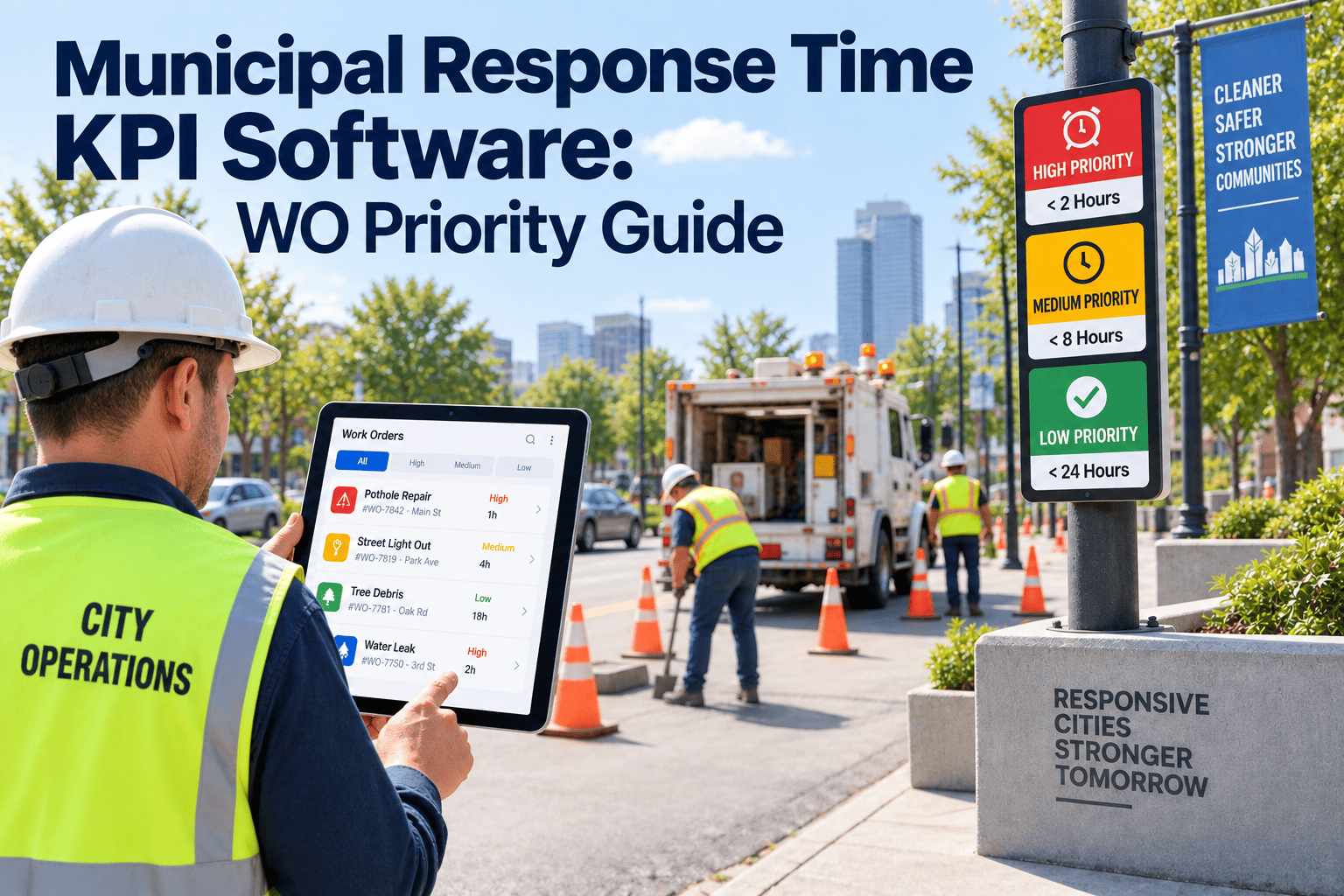
Immediate public safety hazards (e.g., downed stop signs, water main breaks, exposed electrical).
Significant service disruption (e.g., streetlight outages, large potholes on arterial roads, storm drain blockages).
Routine maintenance and non-urgent requests (e.g., park repairs, graffiti removal, minor sidewalk cracks).
Process Blueprint
Closed-loop citizen complaint management: From intake to resolution
To effectively reduce complaint escalation, public agencies must move beyond simply logging requests. Closed-loop citizen complaint management ensures that every request is tracked, communicated, and analyzed. When citizens are kept in the loop with automated status updates via SMS or email, they are 80% less likely to call the municipal office for updates, freeing up staff and drastically reducing frustration. Here is the proven 4-step closed-loop workflow that cuts escalation rates.
Automated Intake & Triage
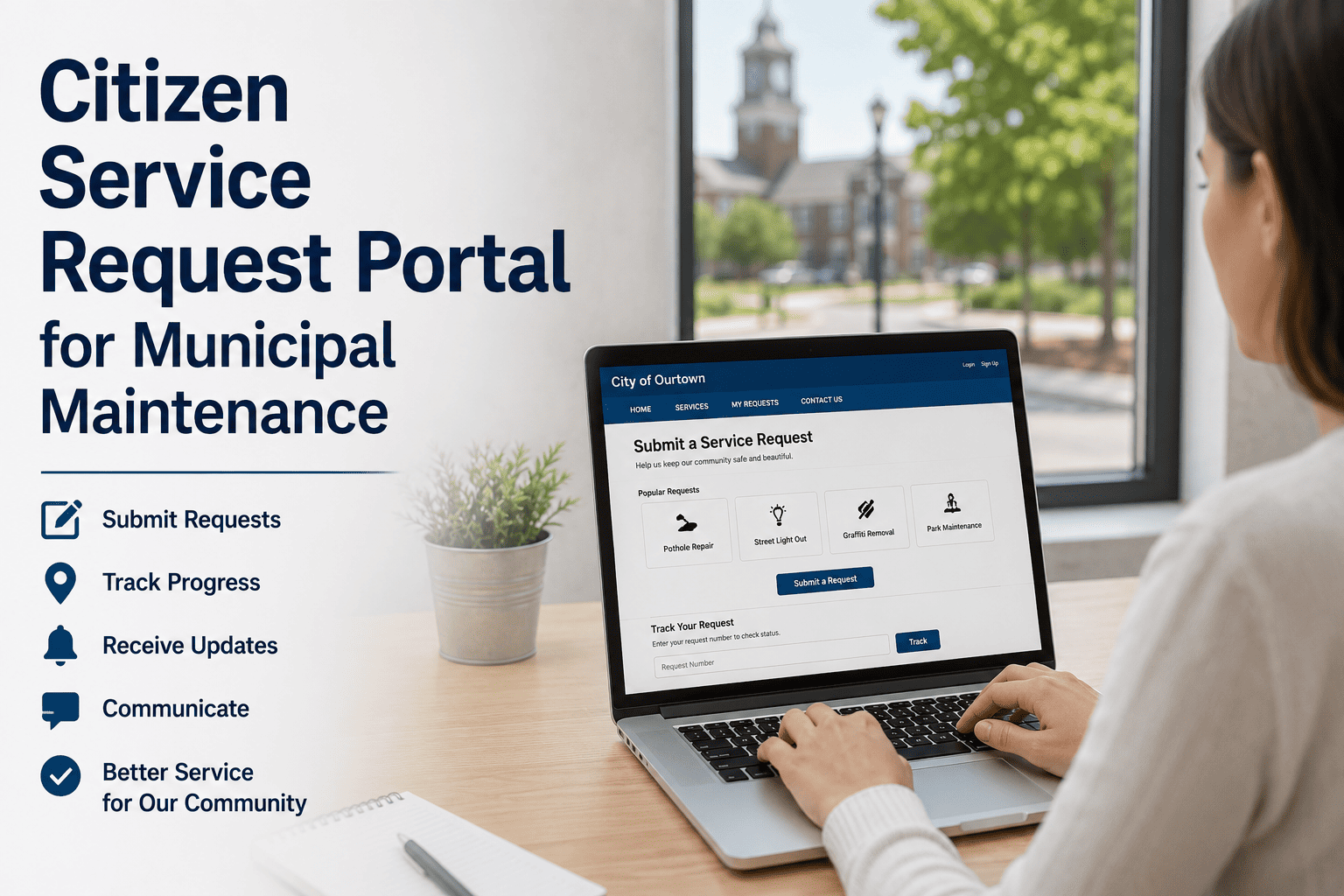
Citizen requests submitted via portal, app, or phone are automatically logged, categorized by asset type, and routed to the correct maintenance crew based on GPS location and skill set. The citizen receives an instant acknowledgment with a tracking number.
Dispatch & Field Updates
Work orders are pushed directly to field technicians' mobile devices. As technicians update the work order status (En Route, On-Site, Parts Needed), the system automatically notifies the citizen, eliminating the information black hole that triggers escalation.
Resolution & Verification
Upon completion, the system sends a closure notification with before-and-after photos of the repair. This visual proof of resolution increases citizen satisfaction scores by 40% and provides an audit trail for municipal compliance.
Root Cause Analysis
Data from closed complaints is analyzed to identify recurring asset failures. By shifting from reactive fixes to predictive maintenance, municipalities address the root cause—reducing repeat complaints by up to 50% over six months.
OxMaint Solution
How OxMaint helps reduce citizen complaint escalation
OxMaint is an AI-powered CMMS and EAM platform designed to eliminate the operational gaps that cause government complaint response failures. By replacing whiteboards, spreadsheets, and fragmented phone logs with a unified digital workspace, OxMaint ensures municipal maintenance teams can acknowledge, dispatch, resolve, and analyze citizen requests with unprecedented speed. Here is how OxMaint directly lowers public complaint escalation rates.
Automated Work Order Dispatch
Instantly converts citizen requests into tracked work orders and routes them to the nearest qualified technician. Cuts citizen request response time by up to 60% and ensures no ticket is lost in a spreadsheet.
Closed-Loop Citizen Updates
Sends automated SMS and email status updates at every milestone. Eliminates the "black hole" effect, reducing follow-up calls by 75% and preventing the frustration that leads to complaint escalation.
Predictive Maintenance Analytics
Uses AI to analyze asset failure trends and predict breakdowns before they generate citizen complaints. Shifts maintenance from reactive to preventive, reducing repeat service requests by 30-50%.
Asset & Inventory Tracking
Tracks the complete lifecycle of municipal assets and automatically reorders spare parts when stock drops below safety levels. Ensures crews have the parts they need on the first visit, improving first-time fix rates by 45%.
Real-World Impact
A municipal case study: Cutting escalation by 65% in 90 days
Consider a mid-sized municipality managing 12,000 public assets—ranging from streetlights and traffic signals to park facilities and water infrastructure. Previously relying on a paper-based log and phone dispatch system, the public works department faced an average citizen complaint response time of 52 hours. Consequently, the mayor's office received an average of 45 escalated complaints per month, requiring 120 hours of administrative fire-fighting monthly.
By implementing OxMaint, the municipality automated request intake, pushed work orders directly to field technicians' mobile devices, and sent proactive status updates to citizens. Within 90 days, average citizen service response time dropped to 4 hours, first-time fix rates soared to 89% due to better spare-parts inventory tracking, and complaints escalated to elected officials fell by 65%. The department recovered 85 hours of administrative time per month, redirecting it to preventive maintenance scheduling.
Stop letting slow response times damage public trust
See how OxMaint's automated work orders and closed-loop communication can cut your citizen complaint escalation rates by over 60% in the first quarter.
Frequently Asked Questions
Reducing citizen complaint escalation: Common questions
What is the ideal citizen complaint response time for municipalities?
The ideal citizen complaint response time is under 24 hours for standard requests and under 1 hour for high-priority public safety issues. Municipalities that acknowledge requests within this window see a 65% reduction in complaints escalated to elected officials. Acknowledgment can be automated with a Start Free Trial of OxMaint to instantly trigger citizen updates.
How does a CMMS help reduce public complaint escalation?
A CMMS like OxMaint reduces public complaint escalation by automating request intake, instantly dispatching work orders to field crews, and sending closed-loop status updates to citizens. This eliminates the communication black hole that causes frustration, cutting escalation rates by up to 65% and improving first-time fix rates.
Why do citizens escalate complaints to elected officials?
Citizens typically escalate complaints to elected officials because they feel ignored. Over 72% of escalations occur when a citizen does not receive an acknowledgment or status update within 48 hours of their initial request. Escalation is rarely about the broken asset itself; it is a failure of municipal communication and complaint management.
Can preventive maintenance reduce the volume of citizen complaints?
Yes, preventive maintenance significantly reduces citizen complaint volume. By using predictive analytics to service assets before they fail, municipalities can prevent the issue from ever becoming visible to the public. Data shows that shifting to a predictive maintenance model reduces repeat service requests by 30-50% within six months.
How long does it take to implement a municipal complaint management system?
Implementing a cloud-based municipal complaint management system like OxMaint typically takes 2 to 4 weeks, depending on asset data migration and team size. You can book a 30-minute demo at Calendly to see a custom deployment plan for your municipality's specific infrastructure.
Ready to cut citizen complaint escalation by 65%?
Join the municipalities using OxMaint to deliver faster, transparent, and data-driven public services. See the platform on your assets today.
Free 14-day trial · No credit card required