Urban tree canopy is public infrastructure that happens to be alive — and like any infrastructure, it fails without maintenance. A city's street trees intercept stormwater, cool sidewalks and building facades, and add measurable value to nearby property, but an unmanaged canopy also carries deadwood, root-heaved sidewalks, and hazard trees that create real liability exposure. Public works and parks departments that treat tree care as routine grounds work rather than structured asset management are the ones facing emergency storm cleanup bills and injury claims after a limb comes down on a parked car. A documented inventory, a risk-based pruning cycle, and a hazard identification workflow turn that exposure into a defensible, budgeted program — teams ready to build one can start a free trial of OxMaint's municipal forestry tools.
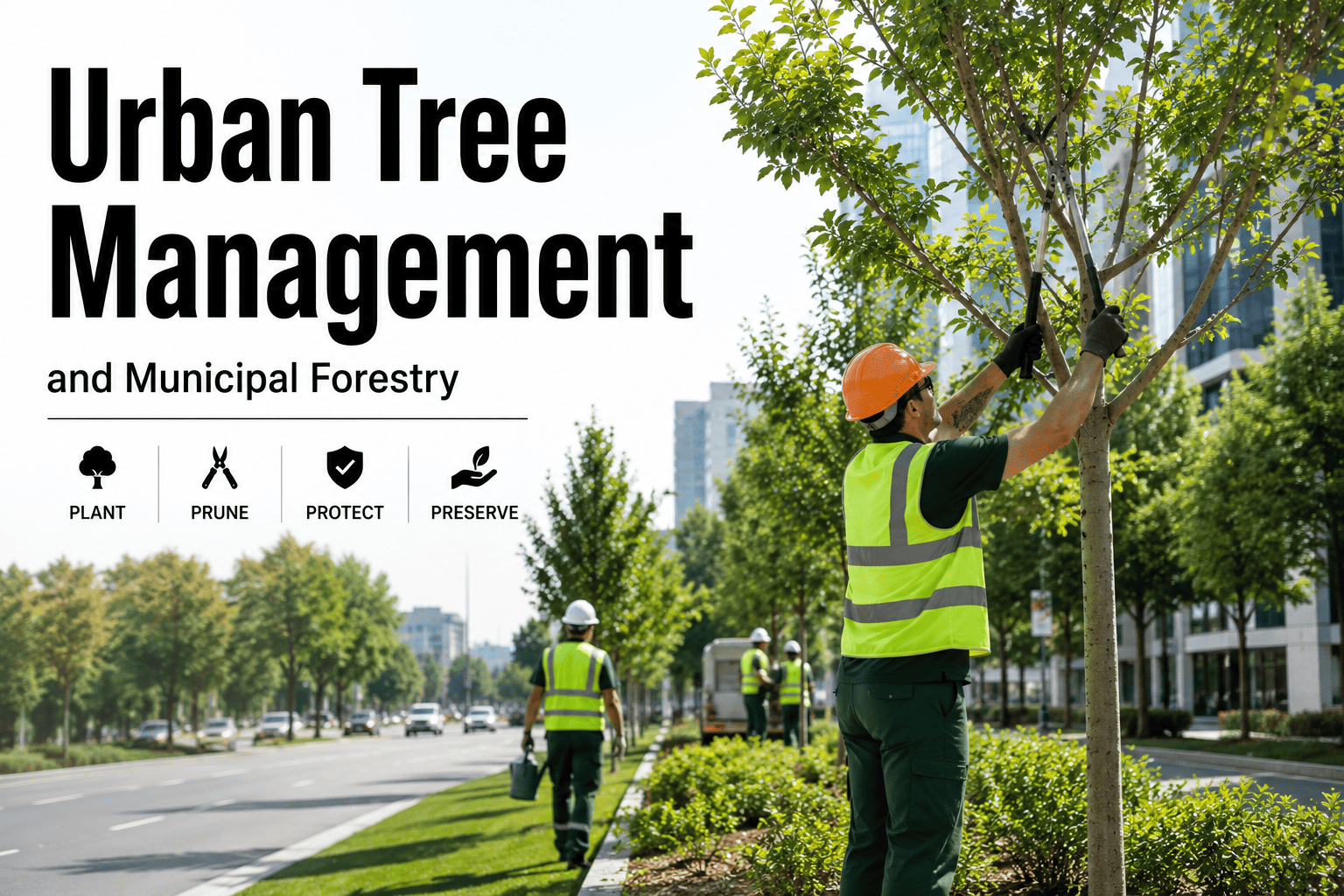
Urban Tree Management and Municipal Forestry
Every street tree is doing two jobs at once — cooling the block and carrying risk. A structured forestry program keeps the benefit and manages the exposure before a storm or a failed limb forces the issue.
Every Street Tree Is Both a Community Asset and a Standing Liability
City councils tend to see the canopy as landscaping. Risk managers see it as thousands of unmonitored structures near roads, sidewalks, and buildings. Both views are correct, and a working forestry program has to manage both at once.
- Intercepts stormwater and reduces load on storm sewers during heavy rain events
- Shades pavement and buildings, cutting summer cooling costs along the block
- Raises nearby property assessments and speeds up real estate turnover
- Improves air quality and has been linked to safer, slower-moving traffic corridors
- Deadwood and cavity decay create failure points over roads, homes, and playgrounds
- Root heave cracks sidewalks and curbs, generating trip-and-fall claims
- Courts apply a reasonableness test — did the city know, or should it have known
- Undocumented inspection history is the hardest gap to defend after a failure
The Tree Risk Matrix — Likelihood of Failure Against What It Could Hit
Professional arborists don't rate a tree as simply "safe" or "hazardous." They score the likelihood that a stem, branch, or the whole tree fails, then weigh that against the target underneath it — a footpath carries less consequence than a school bus stop. The matrix below is the logic municipal risk programs run on.
Occasional foot traffic
Sidewalk or parking area
Roadway, playground, transit stop
Sound structure
Routine cycle
Routine cycle
Note and monitor
Visible defect present
Routine cycle
Schedule pruning
Priority work order
Advanced decay or lean
Schedule pruning
Priority work order
Remove or restrict access now
A Documented Risk Score Is the Difference Between a Work Order and a Lawsuit
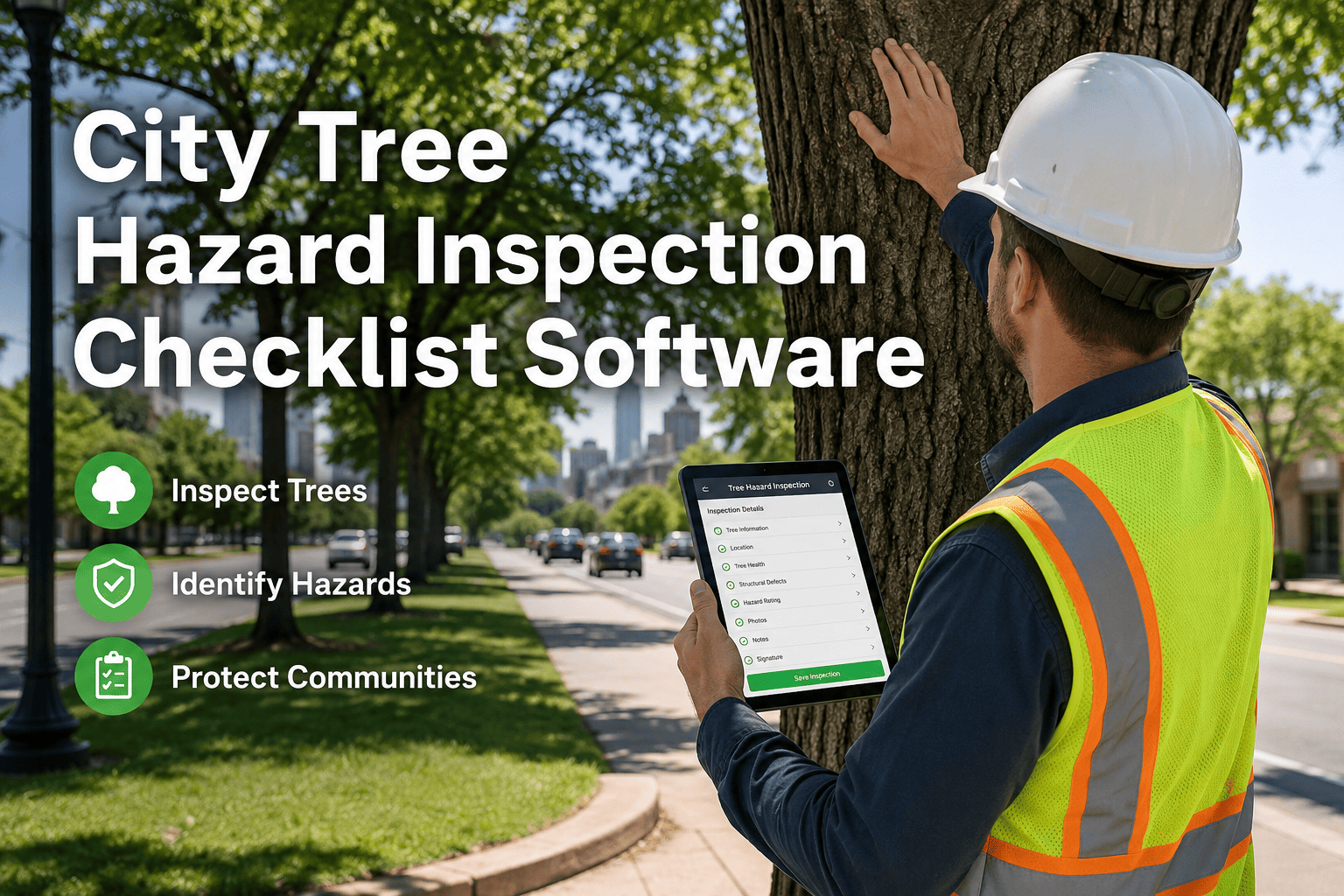
OxMaint gives field crews a mobile risk assessment form built on this exact matrix, so every tree gets a consistent score, a photo record, and a scheduled next inspection — instead of a guess made from the truck window.
How Often Each Tree Category Actually Needs to Be Inspected
A single citywide pruning cycle wastes budget on healthy young trees while leaving legacy trees near sidewalks under-inspected. Cycle length should follow tree age, size, and what stands beneath it, not a flat calendar rule.
| Tree Category | Recommended Cycle | Primary Risk Factor | Inspection Priority |
|---|---|---|---|
| Young street trees (0–10 yrs) | Every 2–3 years | Poor structural form if left unpruned early | Standard |
| Established mature trees | Every 3–5 years | Deadwood and canopy conflict with sightlines or wires | Moderate |
| Large legacy trees (50+ yrs) | Annual visual check | Internal decay, cavities, and root plate movement | High |
| Trees over high-use targets | Annual to biennial | Any structural defect carries higher consequence here | High |
| Storm-exposed or recently topped | Within 30 days of event | Included bark, exposed decay, weak reattachment | High |
Routine Pruning vs. Storm Cleanup vs. Litigation — What Each Actually Costs
Deferred tree work does not disappear from the budget — it moves further down the cost curve and gets more expensive at every stage. The comparison below is why scheduled pruning is the cheapest line item on this list by a wide margin.
Building a Municipal Forestry Program — Four Steps in Sequence
Most municipal forestry work still happens tree by tree, complaint by complaint. These four steps convert that into a program that inspects on a schedule and can show its work when a tree does fail.
GPS-locate each street and park tree with species, trunk diameter, and estimated age. This register is what every risk score, work order, and canopy report gets built from.
Run the likelihood-versus-target assessment on every inventoried tree and assign a condition and risk rating, with photo evidence attached to the record.
Route crews to high-risk and high-target trees first, then work down through the standard and moderate cycles as capacity allows each season.
Log every pruning, removal, and storm response against the tree record. Use the trend data for canopy goal reporting and for defending claims when they arise.
How OxMaint Runs Municipal Tree and Forestry Programs
OxMaint applies the same structured asset management approach used for fleet and facility maintenance to the urban canopy — giving forestry crews the inventory, risk scoring, and reporting tools the work actually requires. Teams can start a free trial or book a demo to see it configured for their canopy.
Catalog species, trunk diameter, condition, and location for the full public canopy in one searchable asset register.
Field crews score likelihood of failure against target value on-site, with geo-tagged photos attached directly to the tree record.
OxMaint auto-generates pruning and removal work orders ranked by risk score so crews reach the highest-consequence trees first.
Record emergency limb-down and removal jobs with response time, crew, and photos, all tied back to the original tree record.
Every risk score, work order, and completed job is logged with date and crew, giving legal and risk management a defensible record.
Condition trends and species distribution feed canopy goal reports and budget requests backed by real asset condition data.
Frequently Asked Questions
How often should municipal street trees be inspected?+
What is a tree risk assessment and how is it scored?+
Who is liable when a public tree falls and causes damage?+
How do we start a tree inventory with no existing records?+
Does OxMaint help document storm and emergency tree work?+
The Next Storm Will Test Every Tree You Haven't Inspected Yet
An unscored canopy is a liability sitting in plain sight. OxMaint builds the inventory, the risk scoring, and the pruning schedule that turns your urban forest back into a documented, defensible municipal asset.