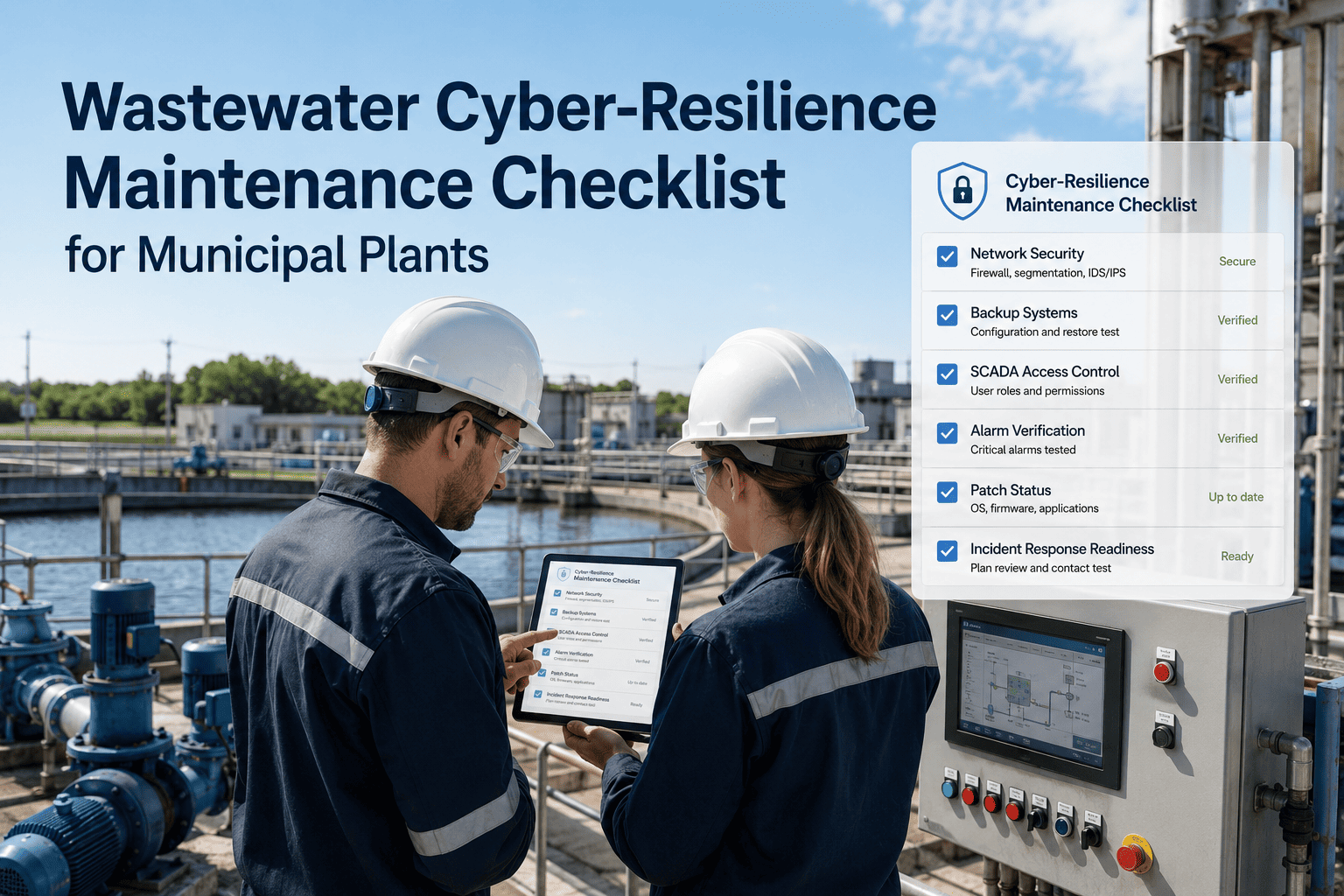
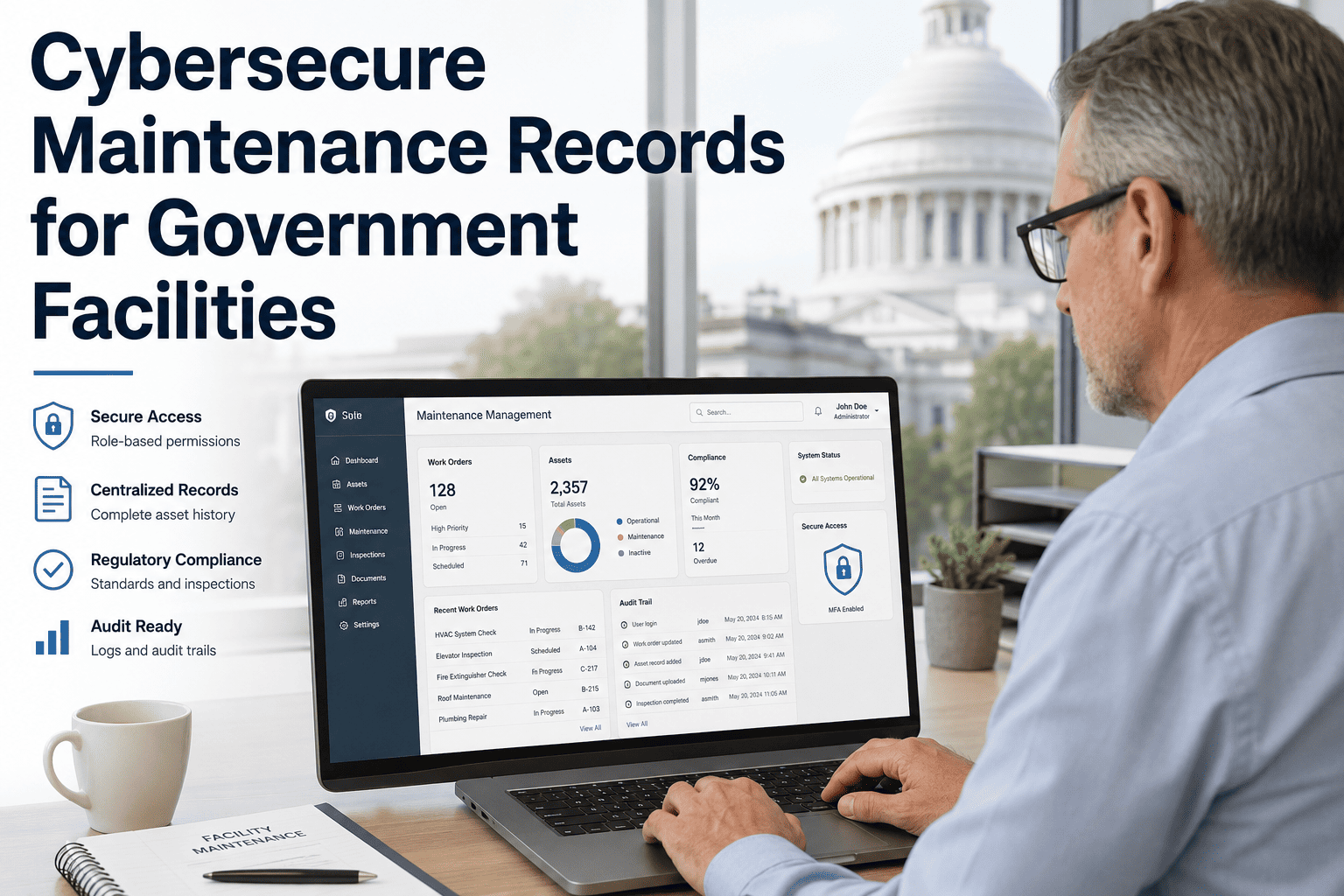
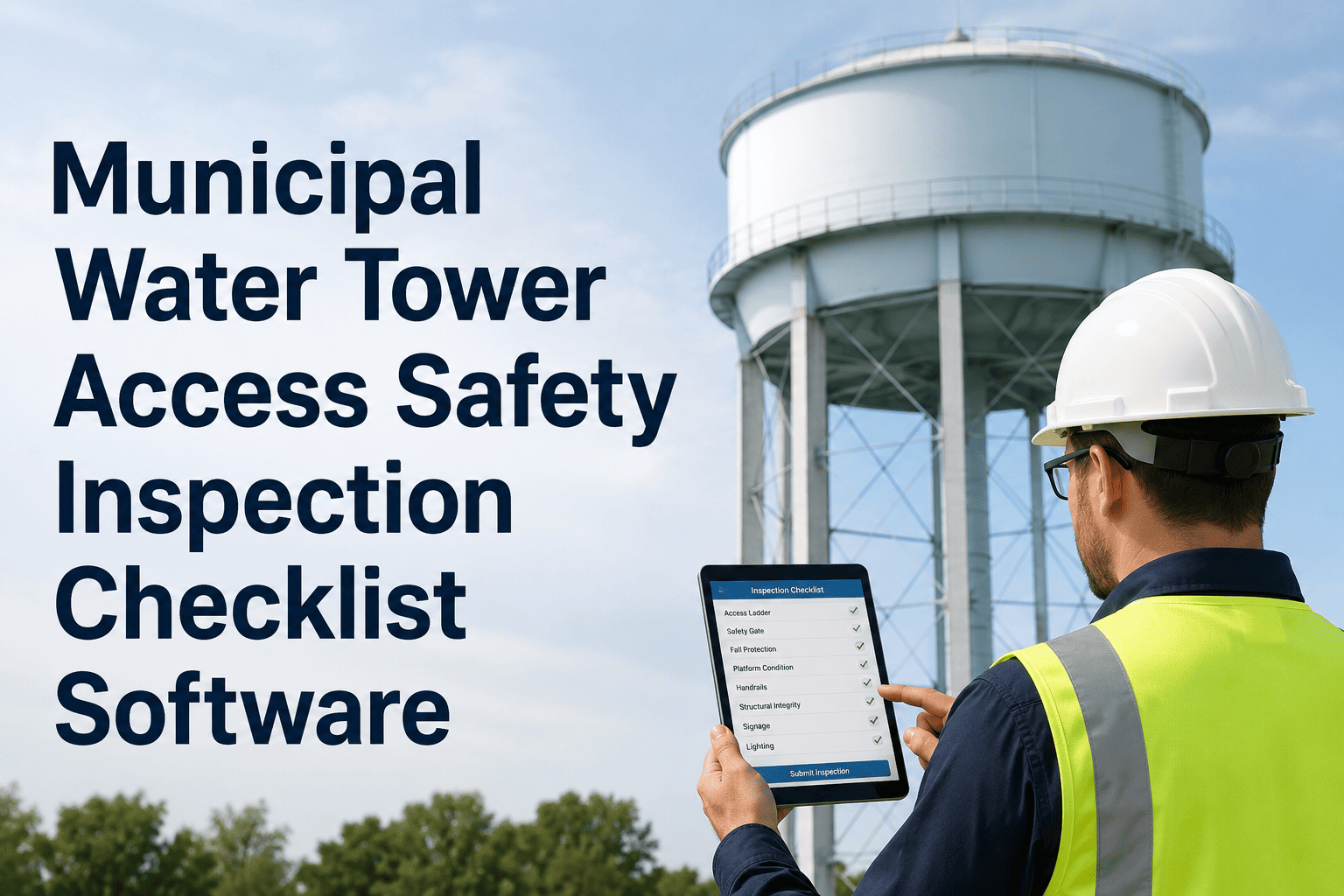
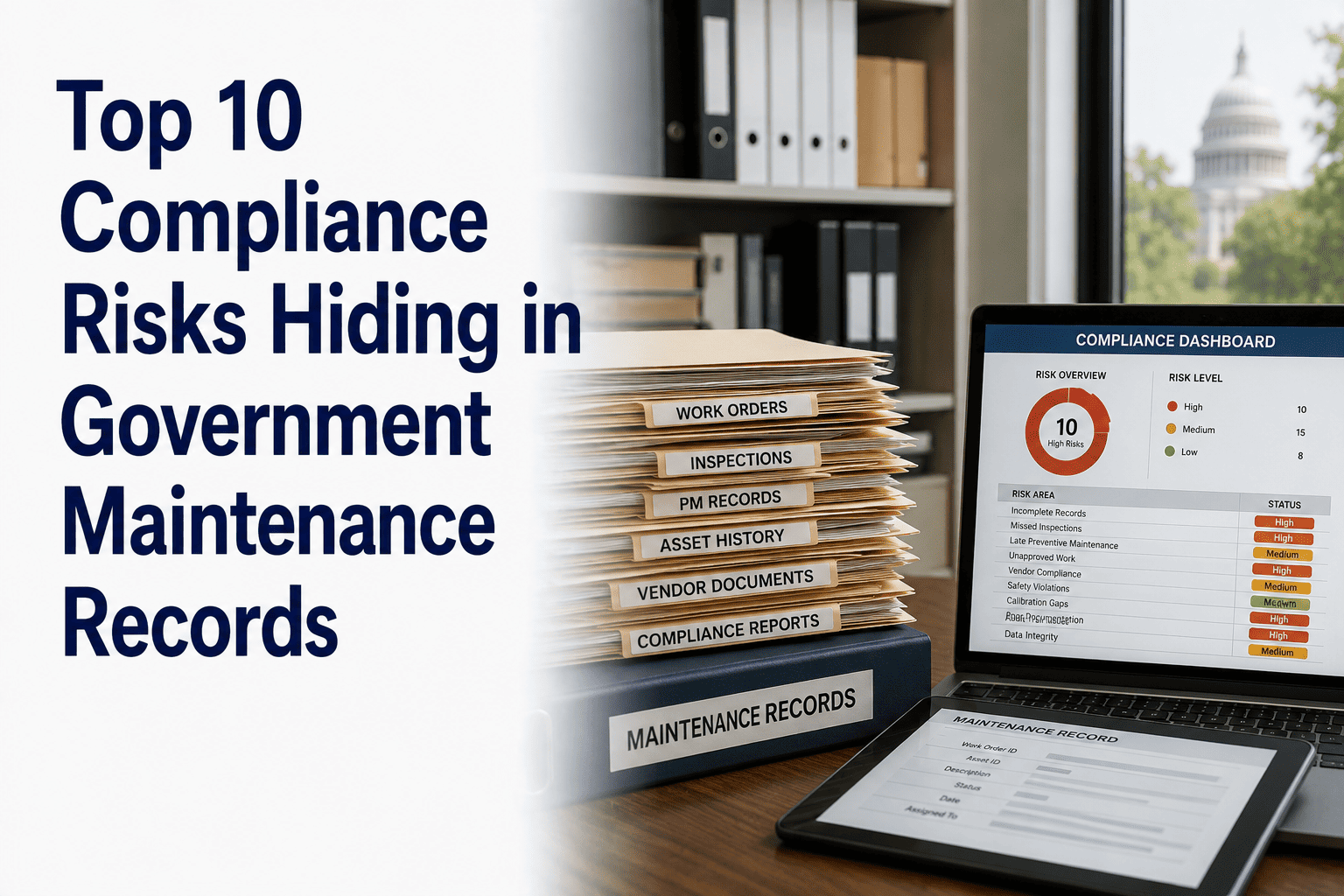
Municipal wastewater plants are no longer just physical infrastructure — they are networked, sensor-driven, and increasingly exposed to cyber threats that can manipulate chemical dosing, disable pump controls, and trigger sanitary sewer overflows without a single technician making an error. In October 2024, American Water — the largest regulated water utility in the United States — was forced to shut down billing systems after a cyberattack disrupted operations for millions of customers. A month earlier, threat actors exploited default SCADA passwords at a Texas water facility and caused a tank overflow. OxMaint's Safety and Compliance module gives municipal wastewater operators a structured, digital maintenance checklist framework that bridges the gap between cybersecurity controls and day-to-day operational maintenance — keeping your OT environment auditable, your EPA records current, and your team aligned on every inspection, every shift. The water sector cybersecurity market is forecast to exceed $14 billion by 2028 as regulators and utilities accelerate their investment in resilient maintenance frameworks. Book a demo to see how OxMaint helps your plant stay compliant, secure, and inspection-ready.
Regulatory Alert — Active in 2025–2026
EPA cybersecurity guidance (revised Aug 2024) now requires wastewater utilities to conduct documented risk and resilience assessments. Indiana, New York, and 14 other states have enacted or are enacting mandatory cyber incident reporting within 24 hours of detection. Non-compliance carries enforcement action and potential consent decree exposure.
75%
of water and wastewater operators do NOT perform annual cybersecurity risk assessments (EPA, 2024)
24 hrs
Maximum reporting window for cyber incidents under new state mandates in NY, IN, and others
$4.8M
Average cost of an OT/ICS security incident at a public water or wastewater utility
12
WaterISAC Cybersecurity Fundamentals that every wastewater facility must now document and maintain
01
OT Asset Inventory & Access Control
EPA Priority: Critical
Maintain a current register of all SCADA nodes, RTUs, PLCs, HMIs, and networked sensors — updated whenever hardware changes occur
Monthly
Audit all active remote access accounts; disable any inactive credentials within 48 hours of staff departure
Monthly
Confirm that default vendor passwords have been changed on all OT devices — document the change with timestamp and responsible technician
On deployment + quarterly audit
Verify network segmentation between IT business systems and OT control networks; no flat Layer-2 bridging between domains
Quarterly
02
SCADA Alarm & Work Order Integrity
EPA Priority: High
Verify that all SCADA alarm events generate a corresponding work order or documented acknowledgement — no unresponded alerts older than 4 hours
Daily
Confirm alarm historian logs are write-protected and backed up to an air-gapped or offsite location
Weekly
Review alarm setpoint modifications for any unauthorized changes to chemical dosing thresholds, pump speed limits, or overflow triggers
Weekly
Test the manual override capability for each critical control loop to ensure operators can maintain control if SCADA is compromised
Quarterly
03
Chemical Feed & Dosing System Controls
EPA Priority: Critical
Inspect physical access locks on all chemical dosing control panels; log any evidence of tampering or unauthorised access
Daily
Verify dosing pump setpoints against approved process parameters — flag any deviation exceeding 5% for immediate investigation
Per shift
Confirm that dosing system firmware is current and that vendor-issued security patches have been applied within 30 days of release
Monthly
Document all setpoint changes with operator ID, timestamp, and approval authority — retained for minimum 3 years for EPA audit
Every change event
04
Incident Detection & Response Readiness
EPA Priority: High
Confirm the plant's cyber incident response plan is current (reviewed within 12 months) and accessible to all shift supervisors
Annual
Verify emergency contact list for EPA/state regulator cyber incident reporting is posted at the control room and updated
Quarterly
Conduct a tabletop exercise simulating a ransomware lockout of the SCADA historian — document response time and gaps identified
Semi-annual
Test backup and restore process for OT configuration files; confirm recovery time objective (RTO) is documented and achievable
Semi-annual
05
Compliance Records & Audit Documentation
EPA Priority: Medium
Confirm all maintenance work orders are digitally logged with technician ID, completion photo, and timestamp — exportable for state agency audit
Ongoing
Verify that operator cybersecurity training hours are recorded per licence renewal requirements (NY: minimum hours every 5-year cycle)
Annual
Ensure your plant's Risk and Resilience Assessment (RRA) reflects current OT asset inventory and has been updated since the last major process change
Annual
Archive completed checklist records in a tamper-evident system accessible to plant director and state primacy agency without notice
Ongoing
OxMaint digitises every checklist item above — with mobile capture, photo proof, technician sign-off, and automatic EPA-ready export. No paper. No gaps.
Compliance Gap Matrix — Manual vs. OxMaint Digital Checklists
| Compliance Requirement |
Paper / Manual Process |
OxMaint Digital Checklist |
Risk if Missed |
| SCADA alarm acknowledgement log |
Hand-written shift log — gaps common |
Auto-timestamped in CMMS on every alarm |
EPA enforcement notice |
| Chemical dosing setpoint records |
Paper form, often incomplete |
Digital field with operator ID + photo |
Consent decree exposure |
| Asset firmware patch documentation |
Spreadsheet — rarely updated |
Linked to asset record with patch date |
CISA audit finding |
| Incident response drill records |
Memo filed in binder — inaccessible |
Work order record with outcomes logged |
RRA non-compliance |
| Operator cybersecurity training log |
HR system — not linked to operations |
Linked to technician profile in OxMaint |
Licence renewal failure |
Expert Review
Marcus Delgado — Water Infrastructure Security Advisor, 18 years, formerly EPA Region 6
The biggest compliance failure I see in wastewater cyber resilience is not a technology gap — it is a documentation gap. Plants have the SCADA alarms. They have the control systems. What they do not have is a structured, time-stamped, retrievable record that proves those alarms were responded to, those setpoints were verified, and those access controls were reviewed. When an EPA auditor or a state primacy agency arrives, they are not asking whether you have cybersecurity intentions — they are asking whether you have cybersecurity evidence. OxMaint closes that gap by converting every checklist action into a permanent, auditable, operator-signed digital record. That is exactly what the 2024 EPA guidance requires and what most wastewater plants are still missing.
Frequently Asked Questions
Is a formal cybersecurity risk assessment legally required for wastewater plants?
Under federal law, wastewater utilities are not currently mandated under SDWA Section 1433, which applies to drinking water systems. However, EPA strongly recommends RRAs for all wastewater facilities, and multiple states — including New York, Indiana, and others — have enacted or are enacting mandatory cyber incident reporting with 24-hour windows.
Book a demo to see how OxMaint helps your plant build a defensible, audit-ready compliance documentation trail regardless of your state's current mandate.
How does OxMaint handle compliance documentation for EPA and state auditors?
OxMaint stores every completed checklist, work order, inspection record, and operator sign-off in a tamper-evident digital record linked to the specific asset or control system. Compliance exports can be generated by date range, asset type, or checklist category in minutes — eliminating the manual binder-search problem that causes most audit preparation delays.
Sign in to OxMaint to explore the compliance export dashboard and see how records are structured for regulatory review.
Can OxMaint integrate with our existing SCADA system to automate checklist triggers?
Yes. OxMaint connects to SCADA systems via OPC-UA, Modbus TCP, and webhook-based alarm event APIs. When a SCADA alarm fires, OxMaint can automatically generate a corresponding checklist task or work order assigned to the duty technician — ensuring no alarm goes undocumented regardless of shift staffing levels.
Book a demo to discuss your plant's specific SCADA platform and confirm the integration pathway available for your system.
What happens to our existing paper-based checklist records when we migrate to OxMaint?
OxMaint supports a parallel-run transition period where your existing paper checklist schedules are replicated digitally before you retire the paper process. Historical records can be uploaded as PDF attachments to the relevant asset or inspection records, maintaining a complete audit trail that spans your pre- and post-digital periods.
Start your free trial and your OxMaint onboarding specialist will guide your plant through the migration without disrupting active compliance schedules.
OxMaint · Safety & Compliance · Water Utilities
Your wastewater plant generates compliance obligations every single shift. OxMaint turns every checklist, every alarm acknowledgement, and every maintenance action into a permanent, audit-ready record — automatically.
EPA Compliance · SCADA Alarm Records · Digital Checklists · Operator Sign-Off · Audit Export · Multi-Plant