Municipal wastewater treatment plants operate under a maintenance discipline with consequences that extend far beyond budget overruns — a failed aeration blower, an unmaintained clarifier mechanism, or a missed NPDES discharge monitoring report can trigger Clean Water Act violations, consent decrees, and fines exceeding $50,000 per day per violation. The operational reality is that most municipal wastewater facilities manage maintenance across dozens of interdependent biological, mechanical, and electrical systems using disconnected paper logs, spreadsheet PM schedules, and manual DMR compilation — with no automated escalation when inspection deadlines approach and no documented corrective action trail when SCADA alarms occur. Schedule a demo to see how Oxmaint delivers purpose-built CMMS for municipal wastewater operations.
Wastewater treatment plant maintenance best practices center on five disciplines: structured PM programs for pumps, blowers, and clarifiers; aeration system condition monitoring; biological process support through consistent equipment reliability; NPDES discharge compliance documentation; and biosolids handling system integrity. Unlike water treatment, wastewater operations are governed by Clean Water Act NPDES permits and EPA 40 CFR Part 503 biosolids rules — requiring maintenance records that directly support discharge monitoring reports and permit compliance certifications. A wastewater CMMS must connect equipment maintenance history to effluent quality data and generate the timestamped technician records that state permit writers and EPA inspectors require. See the complete EPA and state compliance framework for water and wastewater utilities.
Why Wastewater Maintenance Programs Fail: Four Critical Gaps
Every gap below is measurable, auditable, and directly connected to either a consent decree risk or a capital budget failure. Most municipal wastewater operations carry all four simultaneously.
Aeration blowers and diffuser systems are the largest energy consumers and most maintenance-intensive assets in a biological treatment plant. Diffuser fouling increases oxygen transfer resistance by 15–30% before operators detect process impacts. Without condition-based PM, blower bearing failures cause biological process upsets that take 2 to 4 weeks to restabilize — during which effluent quality approaches or exceeds permit limits.
Primary and secondary clarifier drive mechanisms, flights, squeegees, and effluent weirs require documented inspection at AWWA-recommended intervals. Mechanism failures during peak wet weather flows cause solids carry-over into receiving waters — a direct NPDES violation. Sludge blanket measurement records and rake torque trending are required evidence in many state permit compliance reviews.
Wastewater SCADA systems generate continuous alarm data — DO setpoint deviations, high influent flow alerts, pump failures, and chemical feed faults. Operators acknowledge alarms in the HMI without creating work orders or maintenance records. When a permit exceedance occurs, regulators request the corrective action documentation and find no maintenance trail — the single most common driver of formal enforcement actions at municipal WWTPs.
Discharge Monitoring Reports require certified data on effluent quality, treatment system performance, and equipment operation. When maintenance records are in paper logs across multiple departments, DMR preparation takes 3 to 6 weeks and still produces data gaps that state agencies flag as monitoring violations — separate from any actual effluent exceedance. Digital maintenance records that link directly to DMR data fields eliminate this risk entirely.
Five Core Maintenance Disciplines for Municipal Wastewater Plants
These disciplines define a complete wastewater plant PM program — from biological process support through biosolids handling system integrity. Download the complete water and wastewater utility maintenance checklist.
Covers influent lift station pumps, RAS/WAS pumps, digester feed and recirculation pumps, and effluent reuse pumps. PM intervals follow AWWA M-series and manufacturer recommendations for bearing lubrication, mechanical seal inspection, impeller wear measurement, and motor insulation resistance testing. Lift station wet well inspections must be documented as confined space entries under OSHA 29 CFR 1910.146 — creating a mandatory work order record for every inspection event.
Aeration blowers represent 50–70% of a biological treatment plant's electrical energy budget. Scheduled PM covering inlet filter replacement, bearing temperature trending, belt tension on rotary lobe blowers, and oil analysis for centrifugal units reduces unplanned blower outages by 74%. Fine pore diffuser cleaning and integrity testing — ceramic, EPDM, and PTFE membrane types — prevents alpha factor decline that degrades oxygen transfer efficiency and elevates energy costs without process operators detecting the cause. See asset management frameworks for water and wastewater infrastructure.
Drive mechanism torque readings, flight and squeegee condition, effluent weir levelness, and sludge blanket depth are the four mandatory inspection categories for NPDES permit compliance documentation. Clarifier mechanism failures during wet weather peak flows are the most common cause of total suspended solids permit exceedances at municipal WWTPs. Quarterly mechanism inspections with documented torque trending and annual drive gear oil analysis prevent the majority of in-service failures.
Polymer dosing systems for sludge conditioning, ferric coagulant systems for phosphorus removal, and sodium hypochlorite disinfection systems each require calibrated dosing pump maintenance and documented chemical feed rate verification. Chemical feed failures directly cause permit exceedances — phosphorus limits, TSS limits, and fecal coliform effluent standards — triggering automatic NPDES violation reporting obligations. Every chemical system calibration event must create a timestamped record linked to the associated DMR data period. See full EPA compliance documentation requirements for wastewater utilities.
Gravity thickeners, belt filter presses, centrifuges, and anaerobic digesters operate under EPA 40 CFR Part 503 biosolids regulations requiring documented pathogen reduction records, vector attraction reduction verification, and land application monitoring. Digester gas systems — including gas storage, flares, and co-generation equipment — require NFPA 820 inspection intervals and documented pressure testing records. Dewatering equipment belt tracking, wash water pressure, and cake solids monitoring must be captured in maintenance work orders that support Part 503 compliance certification.
Automate Wastewater Plant PM Scheduling Across All Treatment Stages
Oxmaint generates work orders automatically for every equipment class in your wastewater plant — blowers, clarifiers, pumps, chemical systems, and biosolids equipment — with escalating alerts before each deadline and NPDES-ready documentation on every completion.
Equipment PM Program by Treatment Stage
The table below maps PM coverage requirements to each major treatment stage in a conventional activated sludge municipal WWTP — with the regulatory documentation requirement that makes each PM interval non-negotiable. See the complete wastewater utility PM checklist.
| Treatment Stage | Critical Equipment | PM Interval & Key Tasks | Compliance Driver |
|---|---|---|---|
| Preliminary Treatment | Bar screens, grit classifiers, screenings compactors, influent flow meters | Weekly screen brush inspection, monthly grit classifier bearing lube, quarterly flow meter calibration | NPDES influent flow accuracy for DMR; OSHA confined space for screenings removal |
| Primary Treatment | Primary clarifier drives, sludge scrapers, scum removal systems, primary effluent pumps | Monthly drive torque readings, quarterly mechanism inspection, semi-annual weir levelness check | NPDES TSS and BOD limits; permit compliance requires clarifier operational records |
| Biological Treatment | Aeration blowers, fine pore diffusers, RAS/WAS pumps, dissolved oxygen probes | Monthly blower bearing temp, quarterly diffuser integrity test, semi-annual DO probe calibration | NPDES effluent ammonia and BOD limits; aeration records support process control documentation |
| Secondary Clarification | Secondary clarifier drives, sludge blanket sensors, effluent weirs, return sludge pumps | Monthly sludge blanket trending, quarterly mechanism inspection, annual drive gear oil analysis | NPDES TSS and turbidity limits; clarifier failure during peak flow is leading cause of TSS violations |
| Chemical Treatment | Polymer dosing pumps, ferric feed systems, pH adjustment, phosphorus precipitation | Monthly calibration verification, quarterly pump rebuild, semi-annual secondary containment inspection | NPDES phosphorus and effluent limits; chemical feed calibration records required for DMR certification |
| Disinfection | UV disinfection systems, sodium hypochlorite feed, chlorine contact basins, dechlorination | Weekly UV lamp intensity check, monthly dosing pump calibration, quarterly contact time verification | NPDES fecal coliform limits; CT documentation required for surface water discharge permits |
| Biosolids Handling | Belt filter presses, centrifuges, gravity thickeners, anaerobic digesters, gas systems | Daily cake solids monitoring, monthly press belt inspection, quarterly digester gas system pressure test | EPA 40 CFR Part 503 pathogen reduction and vector attraction reduction documentation requirements |
NPDES Permit Compliance: Maintenance Records That Matter
Every maintenance gap in a wastewater plant is a potential NPDES violation pathway. The connection between equipment condition and permit compliance is direct — not theoretical. See the full EPA and state compliance guide for water and wastewater utilities.
Oxmaint Platform Features for Wastewater Operations
Each capability is configured for the specific equipment classes, biological process dependencies, and regulatory frameworks that govern municipal wastewater treatment plant maintenance. See the broader municipal water infrastructure asset management framework.
All pumps, blowers, clarifiers, chemical systems, diffusers, and biosolids equipment registered with manufacturer specs, installation dates, PM intervals, and replacement values. Facility Condition Index calculated at asset, treatment stage, and plant level — with remaining useful life projections formatted for capital budget submission to city council.
Links completed maintenance work orders directly to DMR data periods — chemical dosing calibrations, clarifier inspection records, and blower PM completions automatically populate the maintenance evidence fields required for permit compliance certification. DMR audit packages export in one click with zero manual compilation from paper logs or disconnected spreadsheets.
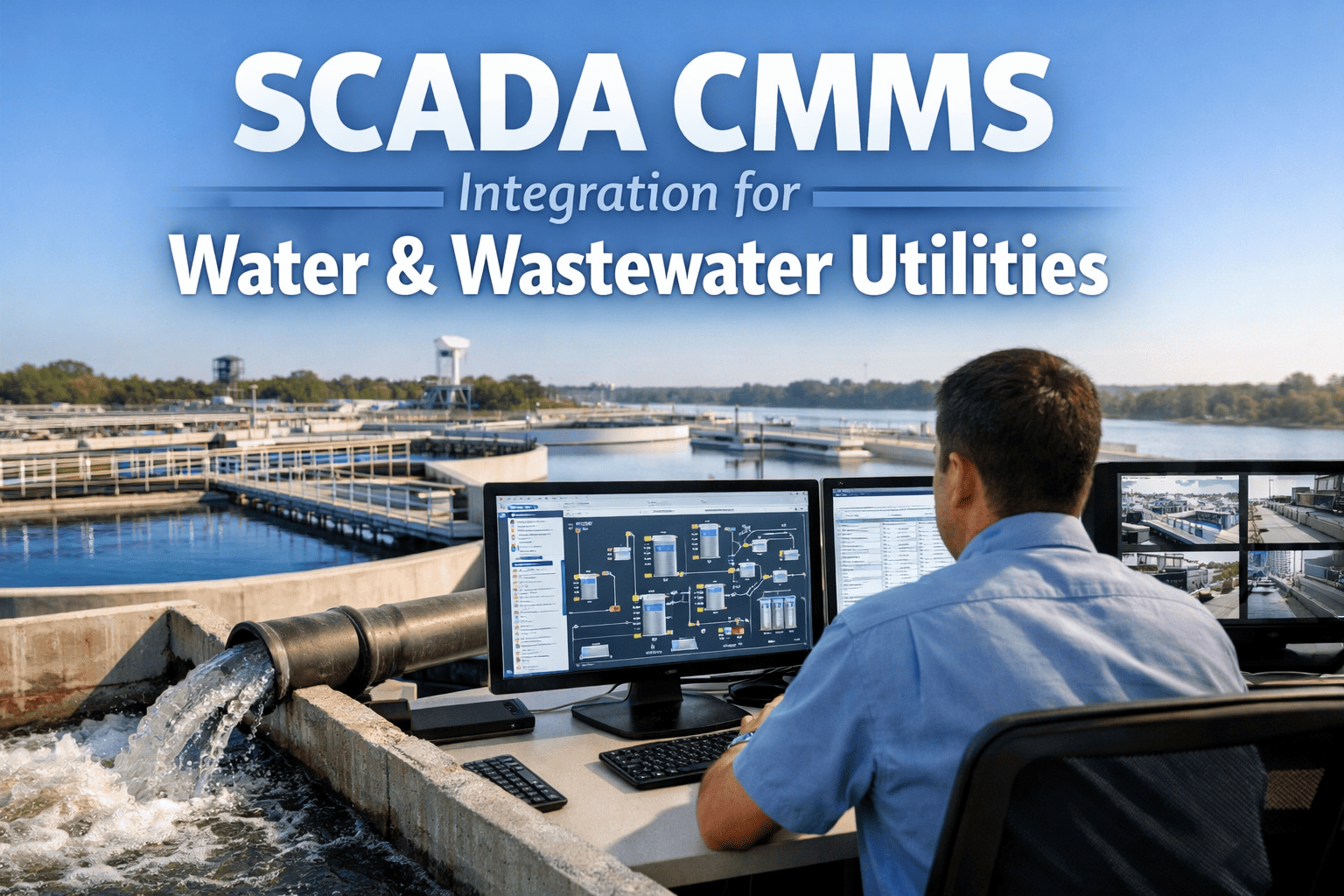
Configurable SCADA alarm thresholds — DO setpoint deviations, high blanket level, blower fault, chemical feed failure — automatically generate Oxmaint work orders with equipment ID, alarm value, and timestamp pre-filled. Every corrective action creates a permanent maintenance record that satisfies permit inspectors requesting proof that equipment faults received documented responses.
Technicians complete lift station inspections, wet well entries, and digester maintenance with offline mobile work orders — GPS check-in for confined space entry documentation, photo capture for equipment condition records, and QR asset scanning for rapid work order creation. Confined space entry records created automatically from mobile check-in satisfy OSHA 29 CFR 1910.146 documentation requirements without separate permit logbooks.
40 CFR Part 503 pathogen reduction and vector attraction reduction records generated from completed dewatering and digestion work orders — with cake solids percentages, temperature records, and distribution event logs stored per USEPA format. Annual biosolids report data compiles automatically from work order records rather than requiring dedicated data entry into separate environmental compliance software.
Connects effluent quality data from online analyzers — ammonia, phosphorus, TSS, turbidity, and fecal coliform sensors — to maintenance event records. When effluent parameter exceedances occur, the platform automatically queries maintenance history for the implicated treatment systems, producing the corrective action timeline that EPA and state agency enforcement staff request within 72 hours of a reportable event.
Regulatory Compliance Coverage for Wastewater Operations
Oxmaint's compliance module is pre-configured for the federal and state regulatory frameworks governing municipal wastewater treatment plant operations and biosolids management. See the full regulatory compliance framework for water and wastewater utilities.
| Regulatory Framework | Maintenance Documentation Required | Oxmaint Coverage |
|---|---|---|
| Clean Water Act NPDES | Equipment maintenance records supporting DMR certification, permit condition compliance evidence, corrective action trails for exceedances | DMR-linked work order records, permit condition PM templates, compliance dashboard by permit parameter |
| EPA 40 CFR Part 503 | Pathogen reduction documentation, vector attraction reduction records, land application event logs, annual biosolids report data | Digester and dewatering work order integration with Part 503 data fields, annual biosolids report export |
| OSHA 29 CFR 1910.146 | Confined space permit records for lift station, wet well, and digester entries — attendant, entrant, and rescue plan documentation | Mobile GPS confined space entry records with attendant assignment, photo documentation, and rescue plan attachment |
| OSHA PSM / EPA RMP | Process safety management mechanical integrity records for anhydrous ammonia and chlorine systems above TQ thresholds | PSM mechanical integrity PM schedules, pre-startup safety review work orders, management of change documentation |
| State Discharge Permits | State-specific operating permit conditions, monthly operating report data, annual maintenance program certifications | State permit condition PM template library, MOR data exports, annual certification documentation package |
Frequently Asked Questions: Wastewater Treatment Plant Maintenance
Continue Reading: Water & Wastewater Utility Maintenance
Stop NPDES Violations Before They Start With a Structured Wastewater PM Program
Wastewater utilities on Oxmaint reach 91% PM compliance, reduce emergency work orders by 68%, and produce NPDES audit documentation in under 4 hours — live in 14 days with no hardware replacement and no consultant fees.