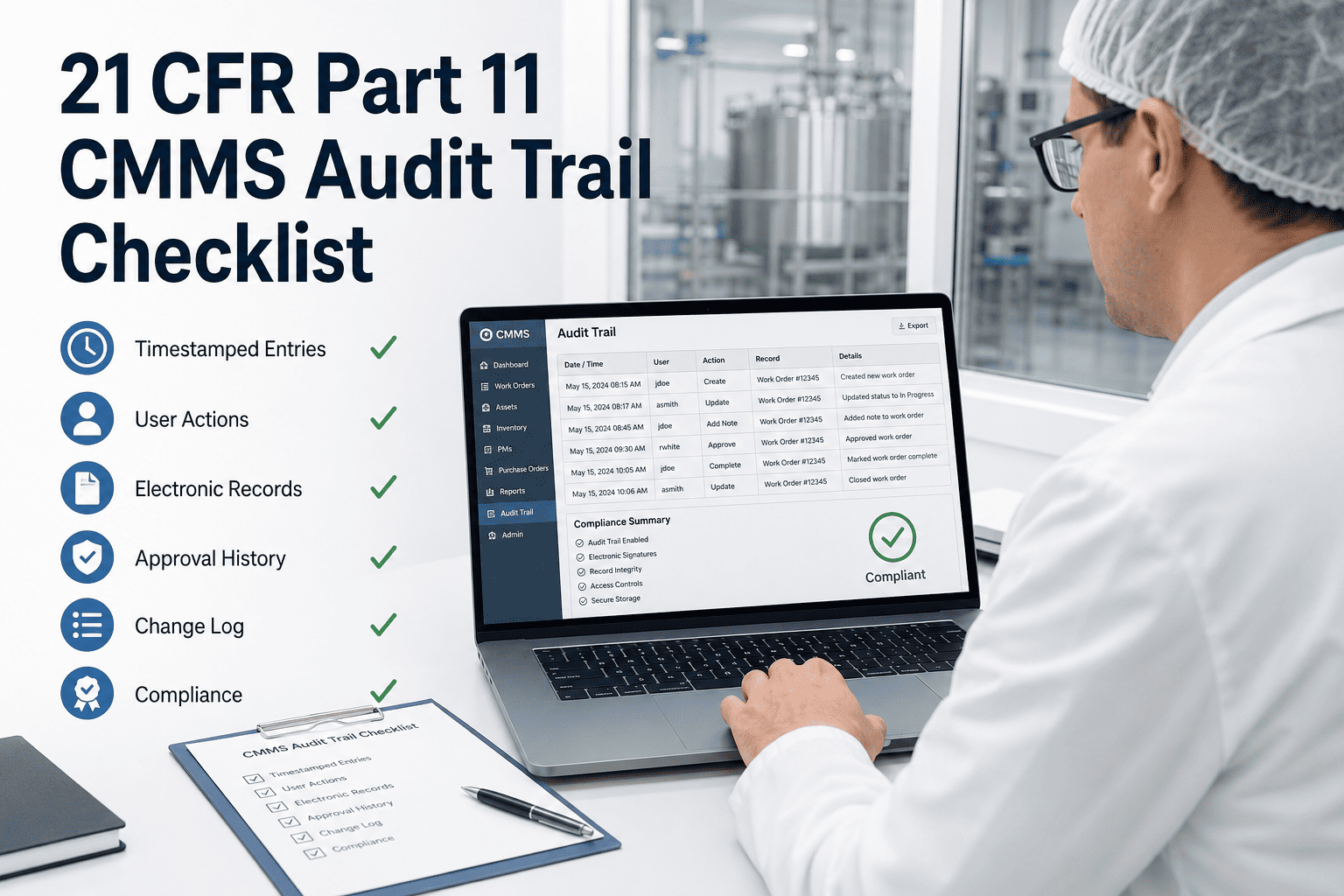
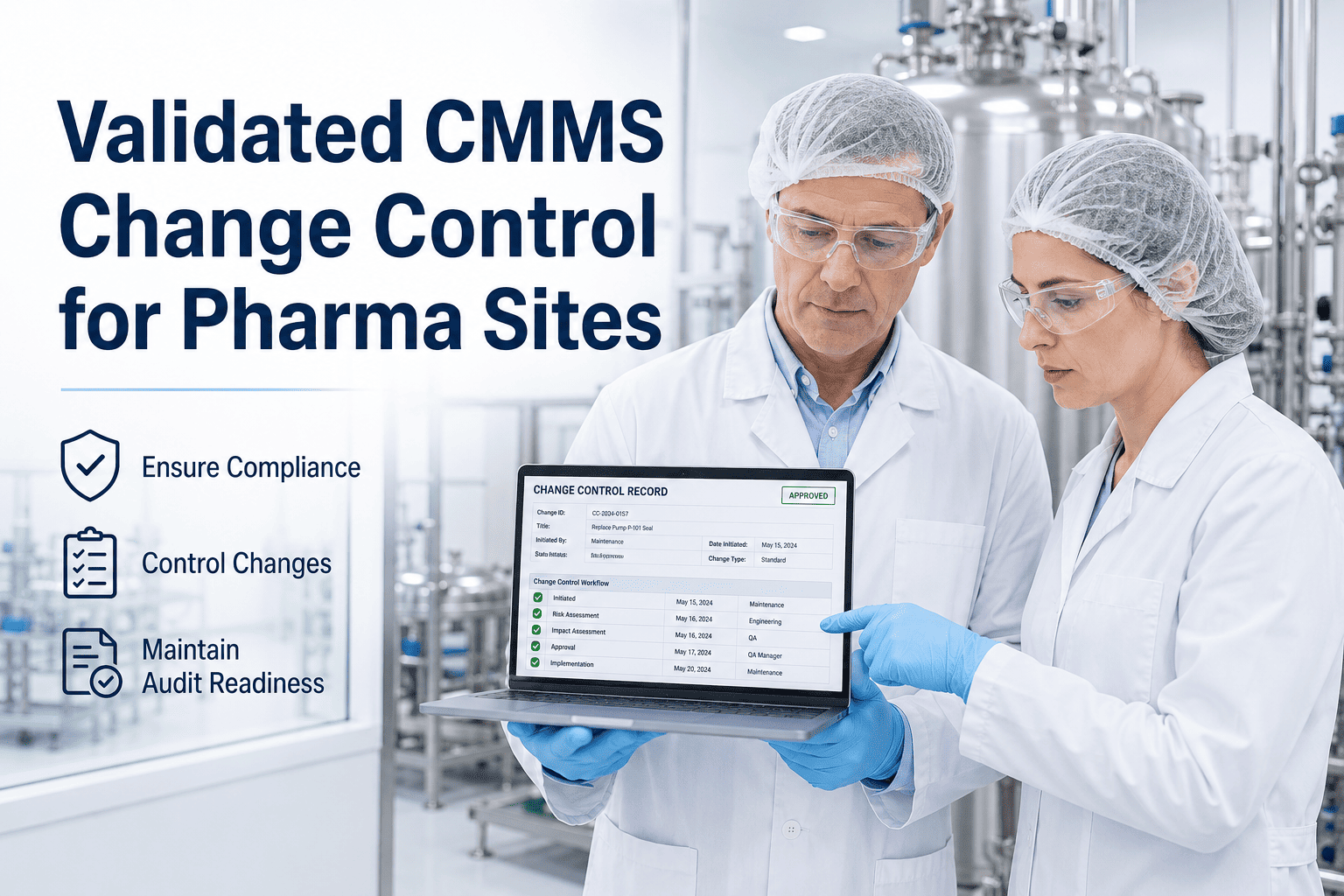
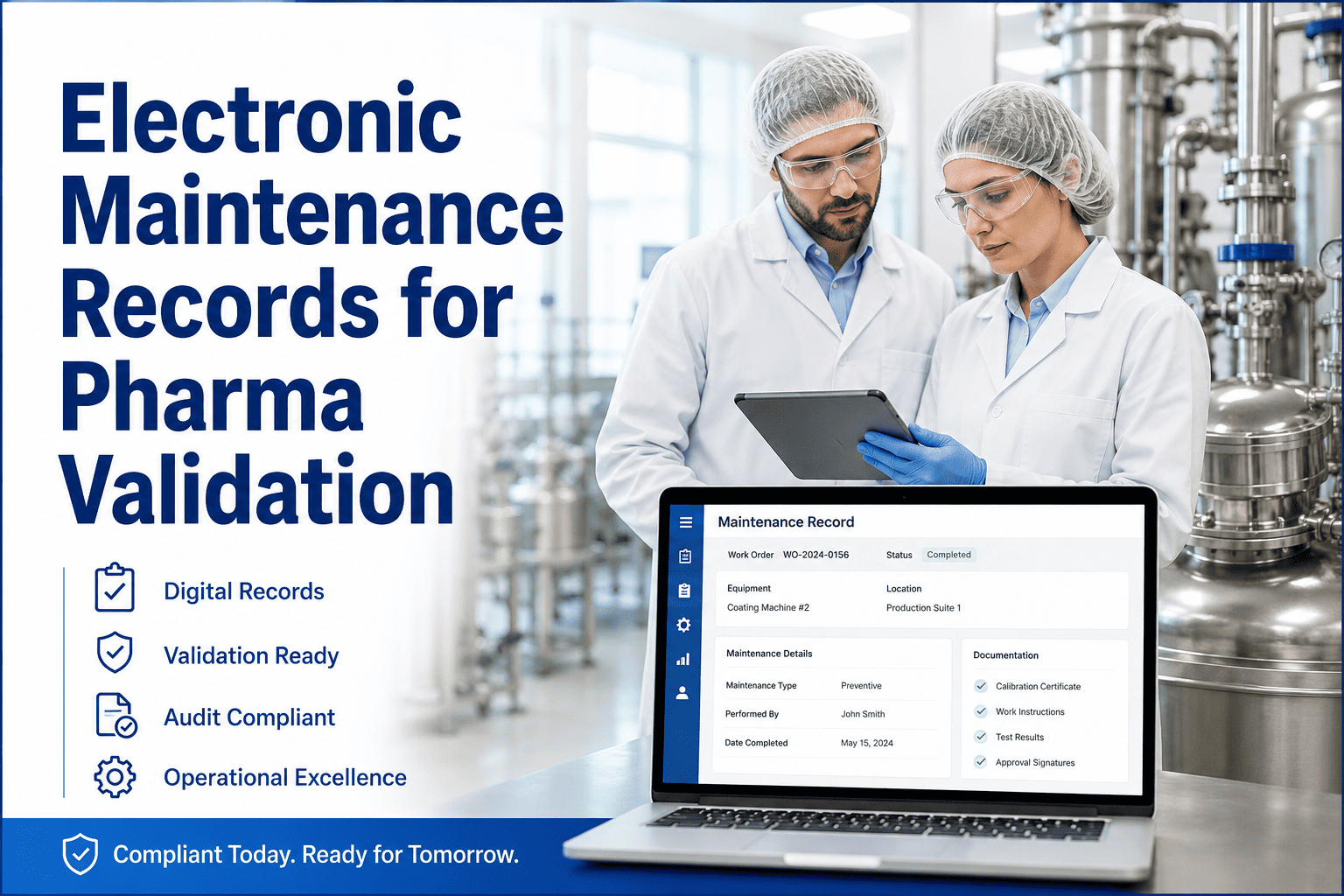
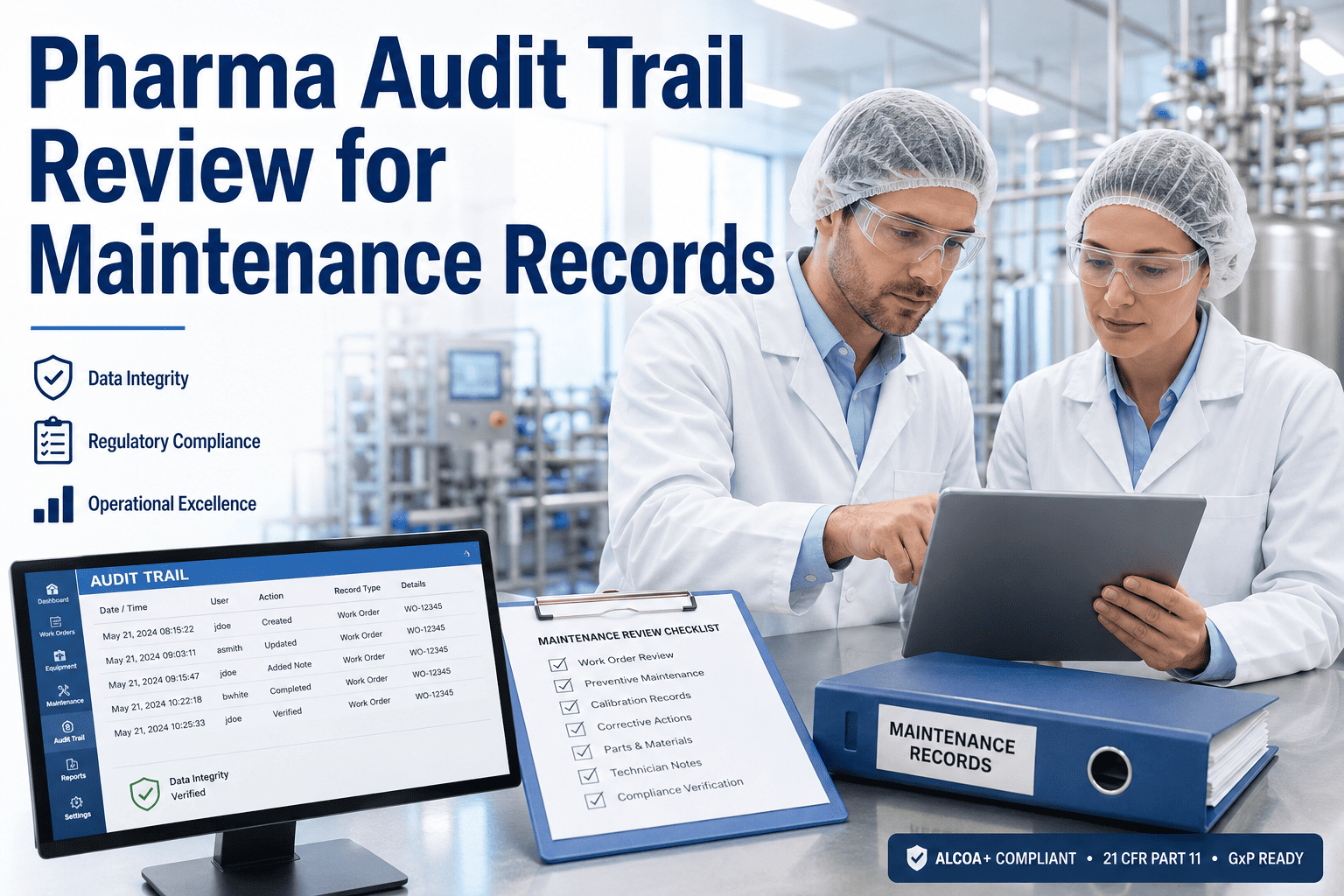
21 CFR Part 11 is the FDA regulation that governs electronic records and electronic signatures in pharmaceutical, biotech, and medical device manufacturing — and it applies directly to any maintenance software that creates, modifies, stores, or transmits records in electronic form. For facilities using a CMMS to manage work orders, PM schedules, calibration records, or deviation documentation, Part 11 compliance is not optional. Understanding exactly what it requires — and where maintenance software implementations most often fall short — is the difference between a clean inspection and a 483 observation that takes months to remediate. OxMaint is designed with the specific requirements of 21 CFR Part 11 built into its architecture, giving pharma maintenance teams a compliance-ready platform from day one.
Which Maintenance Software Functions Trigger Part 11?
Not every feature in a maintenance CMMS requires Part 11 controls — the regulation applies specifically to electronic records that would be required under FDA-applicable regulations and electronic signatures used in place of handwritten signatures. Understanding which functions are in scope is the starting point for a proportionate compliance program.
| CMMS Function |
Part 11 Scope? |
Applicable Requirement |
Rationale |
| Work Order Completion Records |
In Scope |
§11.10(e), §11.50 |
GMP maintenance records required under 21 CFR 211.68; electronically signed by technician |
| PM Schedule Management |
In Scope |
§11.10(e), §11.10(g) |
PM records are GMP required documentation; schedule changes require audit trail |
| Calibration Records |
In Scope |
§11.10(e), §11.50 |
Calibration records directly referenced in batch records; technician and QA e-signatures required |
| Deviation/CAPA Linkage |
In Scope |
§11.10(e), §11.50 |
QA approval signature on linked deviation records carries regulatory weight |
| Asset Register / Equipment Master |
Partial |
§11.10(g) |
Asset data itself may not be a regulated record, but access controls on modification are required |
| Internal Scheduling / Notifications |
Out of Scope |
N/A |
Internal workflow triggers not themselves FDA-required records |
The 5 Part 11 Requirements Most Often Cited in CMMS Inspections
1
Incomplete Audit Trail Coverage
The audit trail does not capture all field-level changes — only header-level events. FDA expects to see before/after values for any modification to a regulated record field, including time, user ID, and reason for change where required.
OxMaint fix: Field-level audit trail on all regulated record fields, immutable and searchable.
2
E-Signature Missing Meaning Manifestation
Electronic signatures that display only a name and timestamp but not the meaning of the signature (e.g., "Approved," "Reviewed and Verified") fail §11.50(a)(3). Every approval click must have an assigned meaning.
OxMaint fix: All e-signature events include configurable meaning text — "Approved," "Completed," "Reviewed by QA," etc.
3
Shared Login Accounts
Multiple technicians sharing a single login account invalidates the individual attribution required by §11.100. FDA has cited this as a data integrity violation in maintenance software contexts — shared accounts are not permitted on any GMP system.
OxMaint fix: Role-based individual user accounts with unique credentials; shared logins architecturally prevented.
4
No System Validation Documentation
Using a CMMS to manage GMP records without a completed IQ/OQ/PQ validation package violates §11.10(a). The system must be validated before its electronic records are relied upon for GMP decision-making or batch record support.
OxMaint fix: Provides CSV documentation support including URS templates, IQ/OQ test scripts, and traceability matrix.
5
Records Not Protected from Modification
Closed work orders or completed calibration records that can be edited without generating an audit trail entry fail §11.10(e). Finalized GMP records must be protected from alteration, with any changes generating a documented change record.
OxMaint fix: Closed records locked from editing; any override requires supervisor authorization and generates an audit event.
See OxMaint's Part 11 Compliance Architecture in Action
Walk through audit trail, e-signature workflows, access controls, and record protection in a live demo — with a review of the validation documentation package available to pharma clients.
21 CFR Part 11 Compliance Checklist for Maintenance Software
System Validation
User Requirements Specification (URS) documenting all GMP-critical system functions
Installation Qualification (IQ) completed and approved with software version documented
Operational Qualification (OQ) test scripts executed with actual vs. expected results
Traceability matrix mapping each URS requirement to at least one test case
Audit Trail
Field-level audit trail on all regulated records (work orders, calibrations, PM completions)
Before/after values captured for all field changes
Audit trail cannot be disabled or modified by any user role
Audit trail searchable and exportable for inspection purposes
Electronic Signatures
Printed name, date/time, and meaning of signature displayed on all e-signed records
E-signatures require authentication at time of signing (re-entry of credentials)
Each user has a unique account — shared logins prohibited
Deactivated user signatures cannot be assumed by another account
Access Controls
Role-based access limiting each user to functions appropriate to their job
Access control matrix documented and tested in OQ
Terminated user accounts deactivated promptly with documented procedure
Password requirements (length, complexity, expiry) configured per site SOP
Expert Review
11
21 CFR Part 11 compliance for maintenance software is one of the most consistently under-resourced areas in pharmaceutical quality systems. Facilities routinely invest in validated QMS and LIMS platforms while their CMMS — which stores just as many regulated records — runs on paper or unvalidated spreadsheets. The FDA's increased focus on data integrity in recent years has made this gap increasingly visible. The good news is that modern CMMS platforms designed for pharma make Part 11 compliance achievable without massive IT projects — the key is starting with a clear scoping assessment and a vendor who can support the validation effort.
Regulatory Affairs Director
Top-30 Global Pharmaceutical Manufacturer, FDA and EMA data integrity inspection lead, 24 years pharma regulatory experience
Frequently Asked Questions
Does 21 CFR Part 11 apply to cloud-based maintenance CMMS platforms?
Yes. 21 CFR Part 11 applies regardless of whether the system is hosted on-premises, in a private cloud, or as a software-as-a-service (SaaS) platform. For cloud-based CMMS, the facility must assess vendor controls, data residency, backup and recovery procedures, and security certifications (SOC 2 Type II is commonly used as evidence). The facility remains responsible for Part 11 compliance even when using a vendor-hosted system — the vendor's infrastructure supports it, but the facility's validation and procedural controls are still required.
OxMaint is a cloud-based platform with SOC 2 security controls and full Part 11 architecture documentation.
What is the difference between an electronic record and an electronic signature under Part 11?
An electronic record under Part 11 is any combination of text, graphics, data, or other information created, modified, stored, or transmitted in digital form — including work orders, PM completion records, and calibration documents in a CMMS. An electronic signature is the digitally recorded equivalent of a handwritten signature — for example, clicking "Approve" in a CMMS work order with user authentication. Both carry full regulatory weight when the system meets Part 11 requirements. The distinction matters because some CMMS records require only electronic records controls (audit trail, integrity protection), while others require both — particularly those with GMP approval workflows.
Book a demo to see how OxMaint handles both.
Can a pharmaceutical facility use a CMMS that is not Part 11 compliant for maintenance records?
A facility can use a non-Part 11-compliant system for records that are not required by FDA regulations — administrative scheduling tools, internal communication platforms, and similar non-GMP functions. However, any system that stores or generates records required under 21 CFR 211 (or other applicable GMP regulations) and uses electronic rather than paper formats must meet Part 11 requirements. Using a non-compliant CMMS for GMP maintenance records is a regulatory violation that has resulted in FDA 483 observations, warning letters, and consent decree actions at facilities that were investigated for data integrity issues.
What does FDA look for during an inspection of a CMMS used for GMP maintenance records?
FDA investigators typically review four areas when examining a CMMS during a GMP inspection: the validation documentation package (is there an approved, completed IQ/OQ/PQ?); the audit trail (does it capture all field-level changes, and has anyone attempted to modify or disable it?); the access control structure (are accounts individual, and is the access matrix tested and current?); and the e-signature configuration (do signatures display name, date/time, and meaning?). Investigators may request a live demonstration of the audit trail function and may attempt to reproduce specific records from the system to verify completeness and integrity.
Build a Part 11-Compliant Maintenance Program with OxMaint
OxMaint's architecture is built for 21 CFR Part 11 from the ground up — with audit trails, e-signatures, access controls, and validation documentation support designed for pharmaceutical maintenance teams.