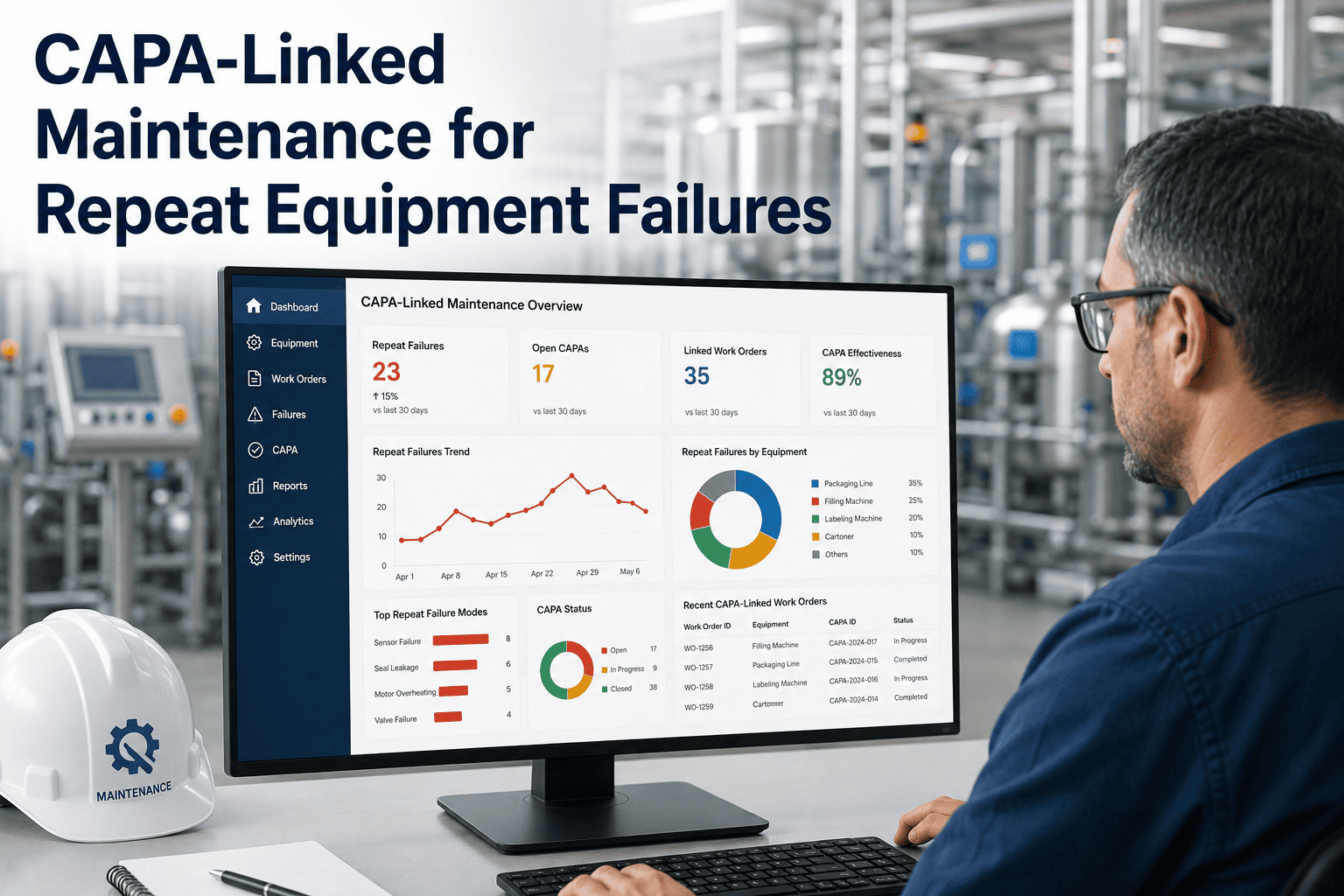
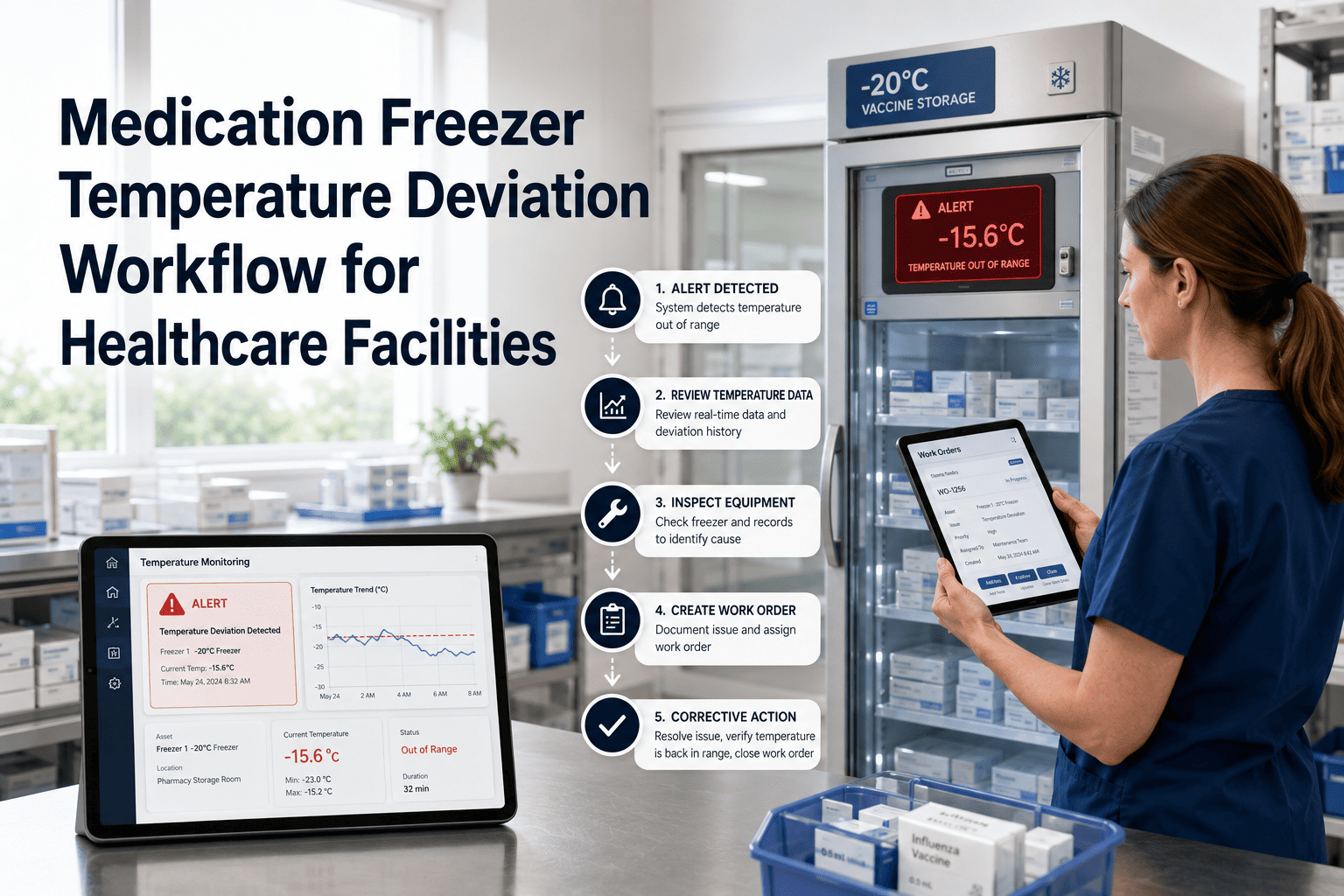
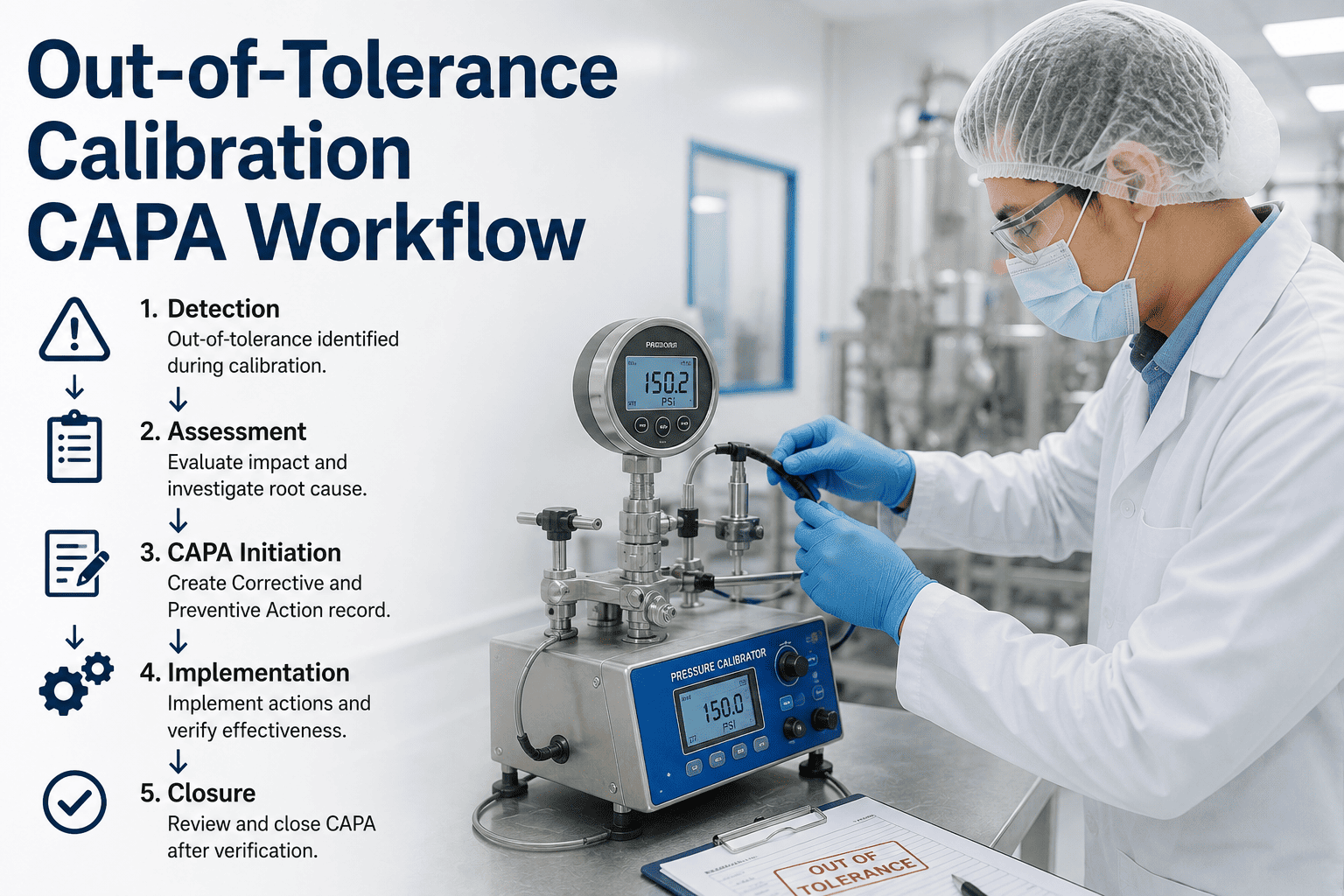
In GMP-regulated manufacturing, a maintenance failure is never just a maintenance failure — it is a potential deviation event with regulatory consequences. When a critical asset fails unexpectedly, the clock starts immediately: the failure must be documented, linked to a deviation investigation, assigned a CAPA, and closed with verified corrective evidence before the next audit. OxMaint connects your maintenance work orders directly to deviation workflows, investigation records, and asset history — so GMP closure happens in days, not months.
Pharma Deviation Management
From Maintenance Failure to GMP Closure — Faster
Link equipment failures, deviations, CAPA tasks, and asset history in a single audit-ready workflow built for pharma quality teams.
60%
Faster deviation closure with linked CMMS records
3x
More complete CAPA evidence packages
40%
Reduction in repeat deviations from same asset
The GMP Deviation-Maintenance Gap
Most pharma quality systems manage deviations in one platform and maintenance work orders in another — or on paper. The result: when an FDA investigator asks "What was the maintenance history on this asset in the 90 days before the deviation?", QA has to dig through two disconnected systems, cross-reference by date, and hope nothing was missed. OxMaint closes this gap by design.
1
Equipment Failure
Unplanned work order created in OxMaint with failure mode, asset, and time of occurrence
2
Deviation Triggered
Failure linked to a deviation record — GMP product impact assessed and documented
3
Investigation Opened
Root cause investigation uses full asset maintenance history as evidence — no manual searching
4
CAPA Assigned
Corrective and preventive actions created as structured tasks with owner, due date, and evidence fields
5
GMP Closure
Complete record: failure → investigation → CAPA → verification, all time-stamped and audit-ready
Deviation Types OxMaint Handles
Planned Deviations
Maintenance activities that require temporary GMP process changes — documented and approved before execution with pre- and post-activity verification records.
Unplanned Deviations
Unexpected equipment failures, calibration out-of-tolerance findings, and utility interruptions — immediately triggerable from the maintenance work order screen.
Recurring Deviations
OxMaint flags assets with repeated deviation events over a configurable period, escalating to effectiveness review and systemic CAPA before FDA identifies the pattern first.
What Lives in an OxMaint Deviation Record
| Record Section |
Data Captured |
Audit Use |
| Failure Description |
Asset ID, failure mode, discovery time, reported by |
Links to asset history for pattern analysis |
| GMP Impact Assessment |
Product impact, batch number, risk classification, QA review date |
Demonstrates regulatory impact determination |
| Root Cause Investigation |
Investigation narrative, supporting evidence, asset maintenance history attachment |
Satisfies 21 CFR 211.192 batch record investigation requirements |
| CAPA Tasks |
Action type (corrective/preventive), assignee, due date, completion evidence |
Demonstrates systematic response per ICH Q10 |
| Effectiveness Check |
Post-CAPA monitoring period, recurrence check, QA sign-off |
Closes the loop required by ISO 9001 Clause 10.2 |
| E-Signature Closure |
QA reviewer ID, timestamp, review comments |
21 CFR Part 11 compliant closure record |
Connect Your Maintenance Failures to GMP Deviation Workflows
See how OxMaint links work orders, investigations, CAPA tasks, and asset history in a single audit-ready record — built for pharma QA teams.
OxMaint vs. Disconnected Systems: What Changes
Without OxMaint
Maintenance records in spreadsheets or paper; deviation records in a separate QMS
Root cause investigation requires manual cross-referencing of two systems
CAPA tasks tracked in email threads with no formal completion evidence
Recurring asset failures not systematically flagged — FDA identifies pattern first
Deviation closure takes 45–90 days due to documentation gaps
With OxMaint
Maintenance work order linked to deviation record in one click — same platform
Full asset history automatically attached to investigation — searchable by date or type
CAPA tasks have assigned owners, due dates, and structured evidence upload
Recurring deviation flag triggers systemic CAPA before regulatory observation
Deviation closure time reduced by up to 60% with complete pre-built evidence packages
Expert Review
EX
The single biggest root cause of extended deviation closure timelines is documentation fragmentation — maintenance data sitting in one system, quality records in another, CAPA tasks tracked informally. When these records are integrated from the point of failure through to CAPA effectiveness verification, investigation timelines compress dramatically and the resulting record is far more defensible to a regulatory reviewer.
GMP Quality Systems Director
22 years pharmaceutical QA, FDA and EMA audit experience
Frequently Asked Questions
What is the regulatory basis for linking maintenance failures to deviations in pharma?
21 CFR 211.192 requires investigation of any unexplained discrepancy or failure of a batch to meet any of its specifications, including equipment-related causes. ICH Q10 further requires that CAPAs address the root cause of equipment-related deviations with documented effectiveness checks. Linking maintenance work orders to deviation records is not optional in GMP environments — it is the evidence that demonstrates a systematic investigation was conducted.
OxMaint builds this linkage into the standard maintenance workflow.
How does OxMaint handle CAPA tasks within the deviation record?
OxMaint creates CAPA tasks directly from the deviation record — with assigned owner, due date, action type (corrective or preventive), and a structured evidence field for upload of completion documentation. Task status is tracked in real time, and overdue CAPAs trigger escalation notifications to the QA reviewer. The entire CAPA chain — from failure event to effectiveness check — is visible in a single audit trail, eliminating the most common gap in pharma CAPA programs.
Book a demo to see a live CAPA workflow.
Can OxMaint identify assets with recurring deviation events before an audit does?
Yes. OxMaint tracks deviation events per asset over configurable time windows and flags assets that exceed a threshold — for example, three deviations from the same unit in 90 days. This recurring deviation flag automatically elevates the CAPA to a systemic investigation level, requiring root cause analysis at the asset management or process design level, not just the individual event level. This proactive escalation is what FDA expects from a mature pharmaceutical quality system.
Does OxMaint support e-signature requirements for deviation closure under 21 CFR Part 11?
OxMaint's deviation closure workflow includes a QA reviewer e-signature step with user authentication, timestamp, and meaning of signature — meeting the three core requirements of 21 CFR Part 11 for electronic signatures. All signature events are recorded in an immutable audit trail. For facilities requiring formal computer system validation of the CMMS, OxMaint provides IQ/OQ documentation support and system access controls documentation.
Close Deviations Faster with Complete Maintenance Evidence
OxMaint gives pharma QA teams the linked records they need to investigate, correct, and close GMP deviations with confidence — and without the document chase.