
Every year, 1 in 31 hospital patients contracts a healthcare-associated infection during the course of their care. That is not an outlier number — it is the predictable consequence of monitoring systems that rely on manual rounds, paper checklists, and reactive cleaning protocols designed before connected technology existed. AI-powered infection control is changing that equation fundamentally: cameras that never blink, sensors that never forget, and predictive models that flag contamination risk hours before a patient is exposed. The infrastructure supporting these systems starts at the facility operations layer. Want to see how high-performing hospitals are building that foundation? Start a free trial for 30 days or book a demo and see the platform purpose-built for healthcare operations at scale.
AI for
Infection Control
in Hospitals
Smart Sanitation Monitoring & Hygiene Compliance
Computer vision, IoT sensors, and predictive AI are eliminating the manual blind spots that make healthcare-associated infections the fourth largest cause of death in developed nations.
The Hospital That Monitors Everything Prevents Everything
Legacy infection control relies on spot checks and incident response. AI-powered monitoring creates a continuous, facility-wide hygiene intelligence layer — detecting contamination risks in real time, validating cleaning compliance automatically, and feeding data to the operations teams responsible for maintaining the equipment and environments that keep patients safe. Your sanitation AI is only as effective as the facility infrastructure it monitors. Start a free trial for 30 days to see how Oxmaint provides the operational backbone for hospital hygiene compliance at scale, or book a demo with our healthcare operations team.
What Is AI Infection Control in Hospitals?
AI infection control refers to the integration of machine learning, computer vision, IoT sensor networks, and real-time analytics into hospital sanitation and hygiene management workflows. Unlike traditional infection control — which depends on manual audits, staff self-reporting, and reactive response after an incident — AI systems create a persistent, automated surveillance layer across every patient zone, high-touch surface, and clinical environment in the facility.
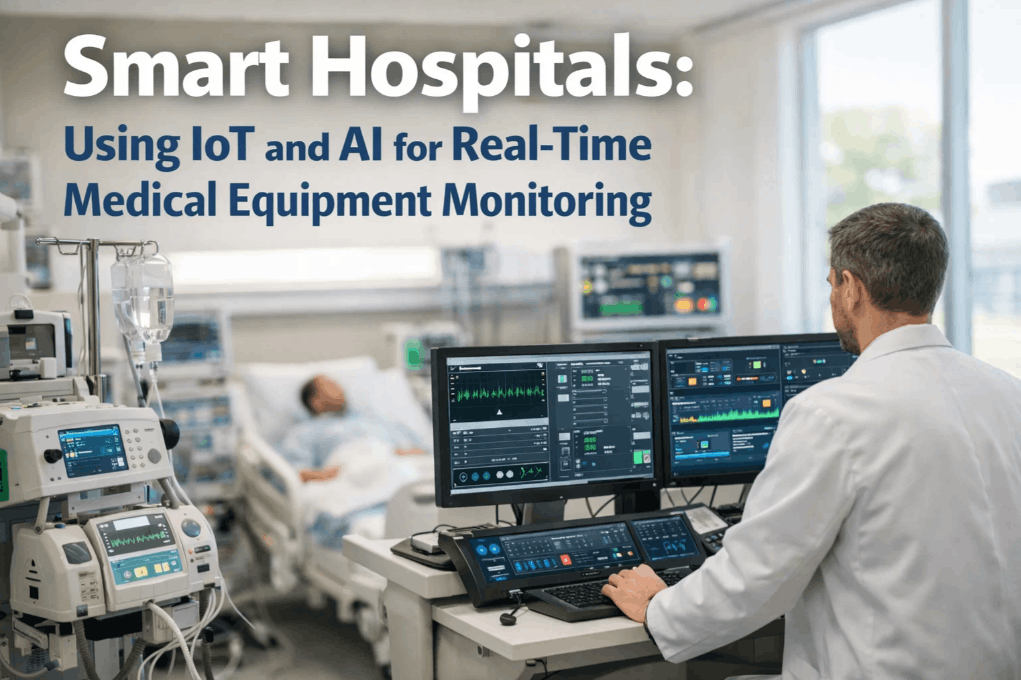
These systems monitor hand hygiene compliance rates in real time, detect improper cleaning sequences via camera AI, alert teams when disinfection thresholds are missed, and model pathogen spread risk based on patient movement patterns. The result: facilities that shift from reactive outbreak management to continuous, data-driven prevention. The hospitals achieving 40%+ HAI reductions are not just deploying better cleaning products — they are deploying smarter monitoring systems and the operational infrastructure to support them. Start a free trial for 30 days to see how operational intelligence connects to infection prevention outcomes, or book a demo to explore the full platform.
The Six AI Systems Powering Hospital Infection Control
Modern AI infection control is not a single product. It is a layered architecture of specialized systems — each targeting a different vector of contamination risk across the hospital environment.
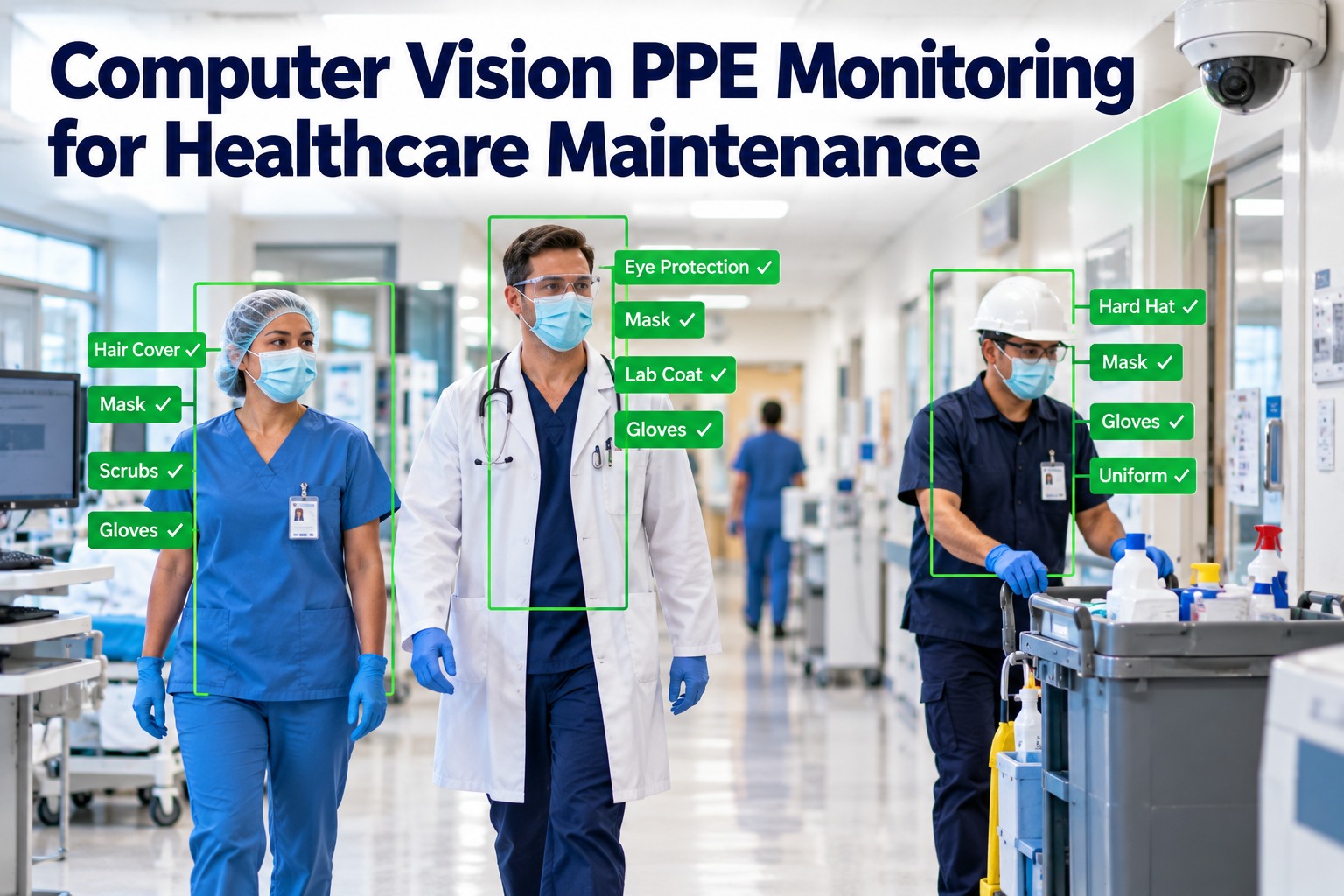
AI cameras installed at entry and exit points monitor handwashing compliance in real time — logging adherence rates per zone, per shift, and per staff role. Facilities using CV hand hygiene monitoring report 32% compliance improvement within 90 days.
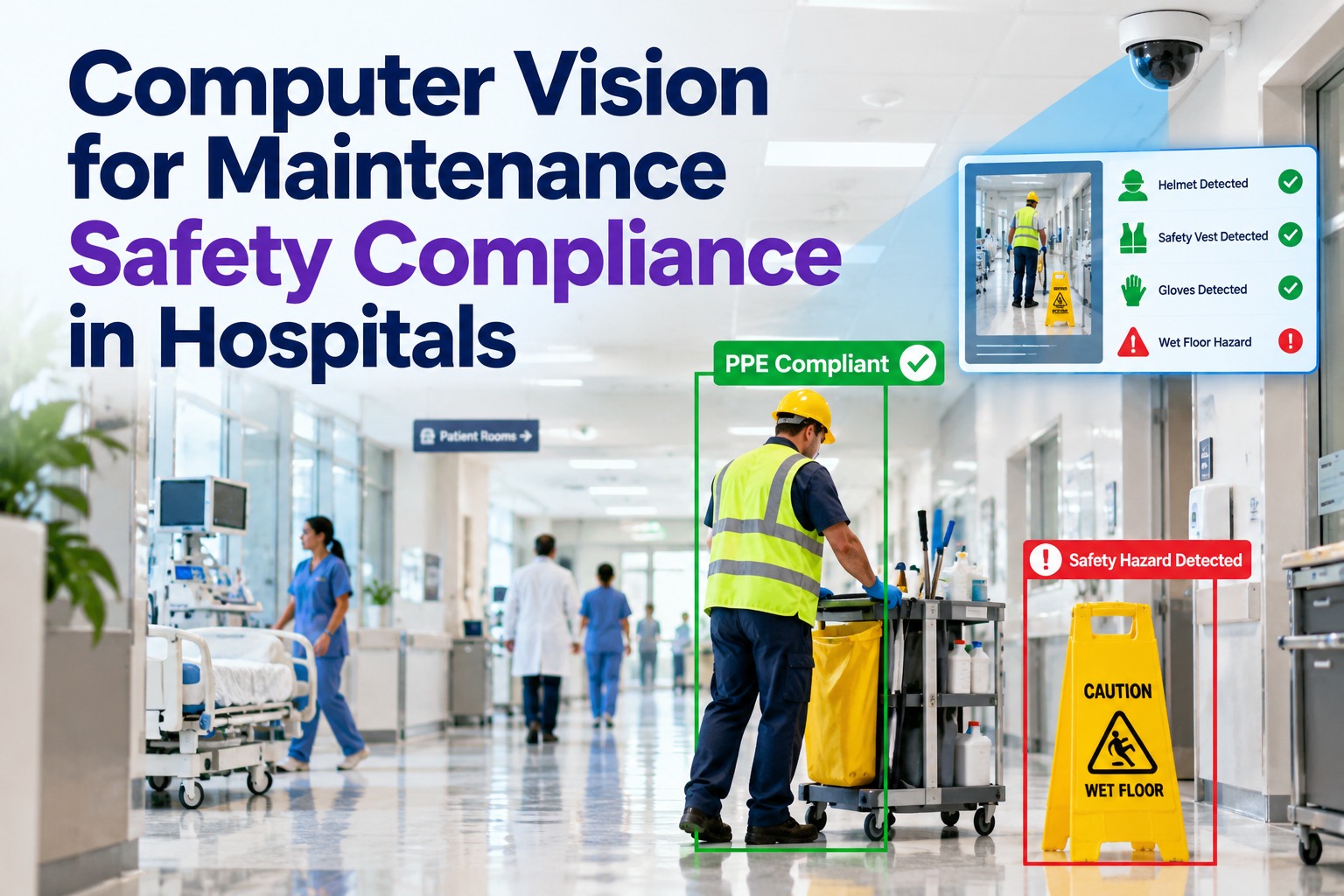
UV-fluorescent marker analysis and computer vision verify that cleaning staff have covered all required surfaces per protocol — eliminating the 60% of missed surfaces that manual audit spot-checks fail to catch.
Machine learning models analyze patient location data, staff movement patterns, and environmental readings to predict high-risk transmission pathways — alerting infection control teams before outbreaks occur.
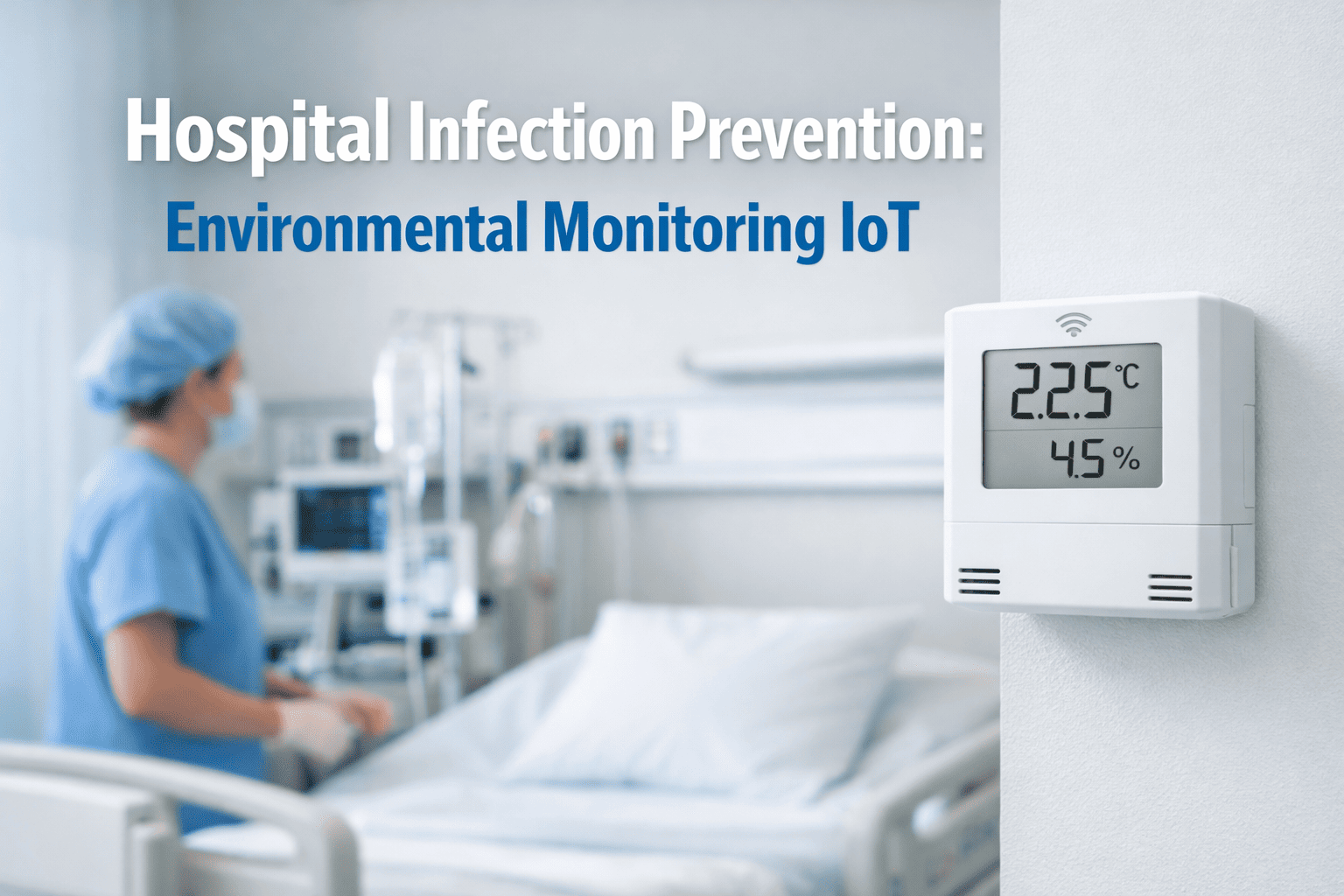
Networked sensors continuously track air quality, humidity, temperature, and particulate counts — environmental conditions that directly influence bacterial and viral survival rates across patient zones.
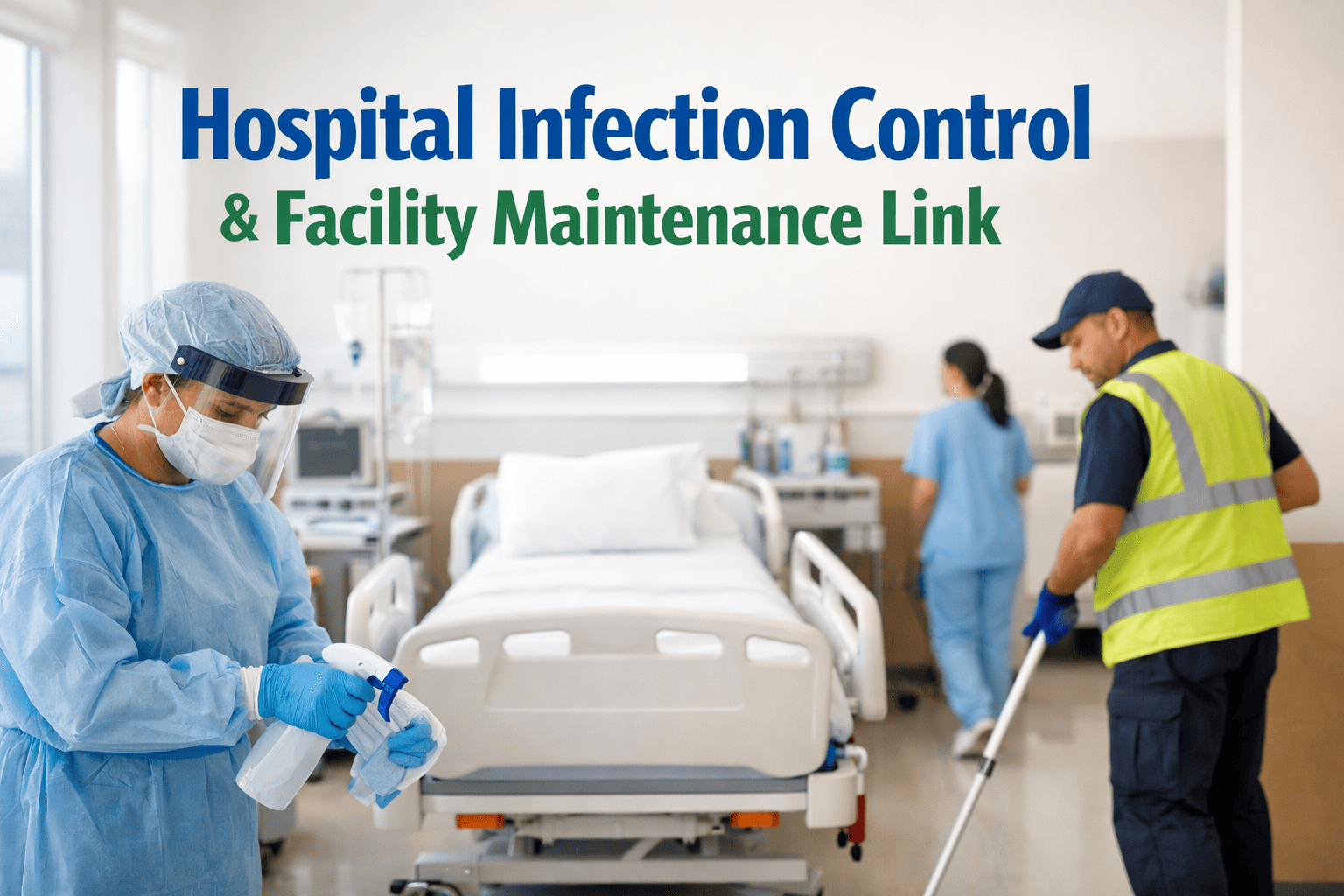
AI systems digitize, assign, and verify cleaning task completion across all hospital zones — replacing paper logs with real-time dashboards that show compliance rates by room, ward, and cleaning crew.
Neural networks correlate patient outcomes data, microbiology results, and environmental sensor readings to identify emerging infection clusters at a scale and speed impossible for manual surveillance teams.
Why Traditional Infection Control Is Failing Hospitals
Manual infection control protocols were designed for a pre-sensor, pre-AI world. They are structurally incapable of providing the continuous, facility-wide coverage modern patient safety demands.
Manual audits cover less than 2% of all cleaning events in a 500-bed hospital. The remaining 98% are unmonitored — creating vast contamination blind spots that no amount of additional staffing can close without automation.
Hand hygiene compliance drops from 81% (when observed) to 36% (unobserved) — a 55-point gap driven by the absence of continuous monitoring. Manual auditing cannot solve what it cannot observe consistently.
Traditional microbiology surveillance typically identifies an HAI cluster 14–21 days after transmission begins. By that point, dozens of patients may already be affected and quarantine protocols are reactive rather than preventive.
Medical devices and shared equipment are HAI vectors that manual protocols systematically undertrack. Ventilators, infusion pumps, and diagnostic equipment require AI-supported maintenance and decontamination logging to meet infection control standards.
CMS and Joint Commission audits require comprehensive cleaning compliance documentation. Paper logs are easily falsified, frequently incomplete, and unable to provide the timestamped, room-level records that regulators increasingly expect.
Cleaning operations, biomedical engineering, and clinical teams operate with entirely separate data systems. Without integrated platforms, pattern recognition — the core capability needed to prevent HAI clusters — is structurally impossible.
How Oxmaint Builds the Operational Foundation for AI Infection Control
AI infection monitoring systems are only as effective as the equipment and environments they monitor. Oxmaint gives hospital operations teams the asset intelligence, maintenance compliance, and IoT integration layer that transforms sanitation AI from a monitoring tool into a prevention infrastructure. Book a demo to see how Oxmaint integrates with your infection control workflow.
Preventive maintenance schedules for every sterilization device, HVAC filter, and clinical equipment item are tied directly to infection control protocols — ensuring that no cleaning or decontamination cycle is missed, delayed, or undocumented.
Every maintenance event, cleaning verification, and equipment inspection is logged with timestamped digital signatures — producing the audit-grade documentation that CMS, Joint Commission, and NHS infection control standards require.
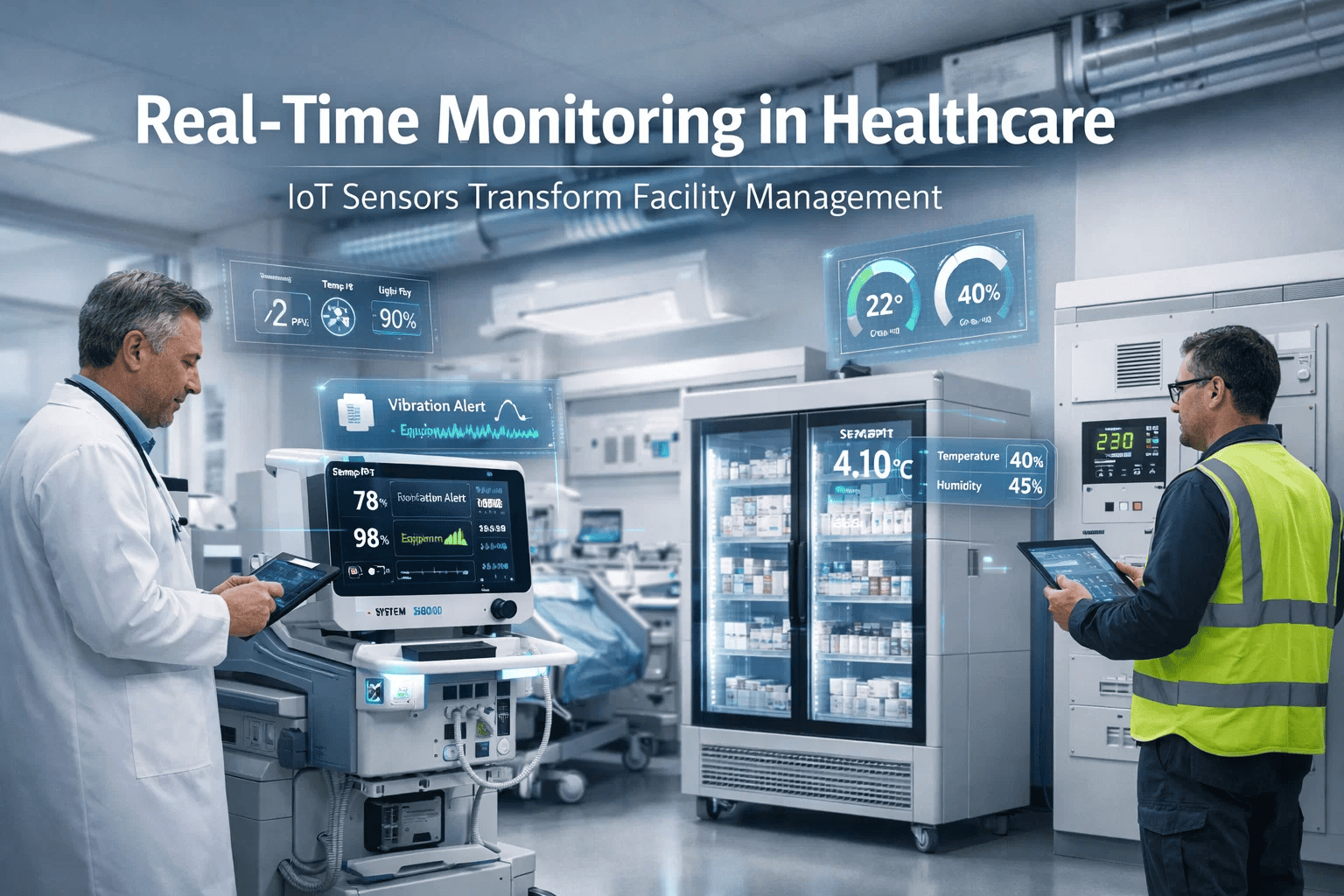
Oxmaint integrates with IoT environmental sensors and SCADA systems to pull real-time air quality, temperature, and humidity data into the same operational dashboard used by maintenance teams — connecting environmental conditions to equipment performance records.
Oxmaint's digital inspection modules support GMP, ISO, and Joint Commission frameworks — enabling infection control-aligned inspection checklists that are completed on mobile devices by frontline staff and automatically verified against compliance thresholds.
Health systems managing multiple facilities can monitor maintenance compliance, equipment condition, and inspection completion rates across every site from a single dashboard — giving operations leadership the cross-facility visibility needed to catch systemic infection control failures early.
Oxmaint's full asset registry tracks condition scores for every piece of clinical equipment — enabling biomedical engineering teams to prioritize decontamination and replacement for devices at highest infection transmission risk before they become HAI vectors.
Traditional Infection Control vs. AI-Powered Hygiene Monitoring
The operational gap between legacy manual protocols and AI-integrated infection control systems is not marginal. It is the difference between reacting to outbreaks and preventing them — with measurable patient safety and financial outcomes at scale.
| Infection Control Function | Traditional / Manual | AI-Powered System |
|---|---|---|
| Hand Hygiene Monitoring | Periodic spot audits, 36% unobserved compliance | Continuous CV monitoring, 81%+ sustained compliance |
| Surface Disinfection Verification | Manual sign-off, 60% of surfaces unchecked | AI vision validation, 99%+ surface coverage tracking |
| HAI Cluster Detection | 14–21 days post-transmission | 48–72 hours predictive alert |
| Cleaning Protocol Compliance | Paper logs, easily falsified, no real-time data | Digital workflows, 94% adherence, timestamped records |
| Environmental Monitoring | Manual temperature checks, no air quality data | 24/7 IoT sensor array across all patient zones |
| Regulatory Documentation | Fragmented paper records, high audit risk | Auto-generated, audit-grade digital compliance records |
| Equipment Decontamination Tracking | Ad hoc records, no lifecycle visibility | Full asset registry with condition scoring and PM schedules |
| Response to Contamination Events | Reactive, after patient exposure | Predictive, before patient exposure |
What Hospitals Are Reporting After AI Infection Control Deployment
How Hospitals Are Implementing AI Infection Control Systems
The fastest-moving hospitals are following a four-phase approach that pairs AI monitoring deployment with the operational infrastructure improvements needed to support sustainable hygiene compliance outcomes. Start a free trial for 30 days to explore how Oxmaint fits into Phase 1, or book a demo for a tailored deployment walkthrough.
Audit existing cleaning protocols, equipment maintenance records, and environmental monitoring capabilities. Identify the top 5 high-risk zones by surface contact frequency and patient acuity. Establish a pre-AI HAI rate baseline. Digitize maintenance records and create a full equipment asset registry — this is where Oxmaint delivers immediate value for 76% of facilities starting this journey.
Install IoT environmental sensors in priority zones. Deploy computer vision systems at hand hygiene points. Connect sensor data feeds to the facility operations platform. Facilities completing this phase report a measurable uptick in compliance rates within 30 days of CV activation — driven by the Hawthorne effect amplified by 24/7 visibility.
Once baseline environmental and compliance data is available, activate predictive outbreak models. Connect microbiology results feeds to the AI engine. Set automated escalation workflows for when risk thresholds are breached. Integrate with the maintenance and PM platform so equipment condition data feeds into infection risk scoring.
Extend AI monitoring to all wards and patient zones. Optimize cleaning protocols based on 6+ months of behavioral and environmental data. Publish compliance metrics in real-time dashboards accessible to infection control teams, operations management, and clinical leadership. Conduct the first post-AI HAI rate review and report to board-level governance.
Questions Infection Control Leaders Ask Before Deployment
Answered with clinical and operational specificity — not marketing copy. Ready to go deeper? Book a demo and speak directly to our healthcare operations specialists.
How does AI hand hygiene monitoring work without infringing on patient privacy?
Enterprise AI hand hygiene systems use anonymized posture detection and proximity sensors rather than facial recognition or identifiable imagery. Camera systems are installed at point-of-care entry and exit points — not in patient rooms — and process only movement patterns and hand contact events. HIPAA-compliant data handling ensures that no personally identifiable information is stored. Several NHS and CMS-regulated hospitals have deployed these systems through standard procurement with no patient privacy violations, as the monitoring scope is restricted to compliance behaviors rather than clinical interactions. Start a free trial for 30 days to explore how Oxmaint's compliance documentation supports privacy-safe monitoring deployments.
What is the ROI timeline for AI infection control investment?
Most facilities report measurable ROI within 12–18 months, driven by three streams: reduced HAI penalties from CMS value-based purchasing programs (which can cost hospitals up to 1% of total Medicare payments), lower treatment costs for preventable infections (averaging $28,000–$45,000 per case), and reduced litigation exposure. Facilities reporting 40% HAI rate reductions on a base of 200 annual HAIs at $28,000 average cost are generating $2.2M+ in annual value from prevention alone — before accounting for compliance penalty avoidance or staff productivity gains. Book a demo to model the ROI for your specific facility profile.
How do these AI systems integrate with existing hospital management software?
Modern AI infection control platforms are built with API-first architectures that integrate with EHR systems (Epic, Cerner, Meditech), environmental monitoring databases, CMMS platforms, and clinical surveillance systems via HL7 FHIR and standard REST interfaces. Integration complexity varies by existing infrastructure — most facilities complete core integrations within 8–16 weeks. The operations management layer, which handles equipment maintenance and environmental sensor data, is typically the fastest to deploy and delivers standalone value from day one. Start a free trial for 30 days to see Oxmaint's integration capabilities in a live environment.
Does AI infection control meet Joint Commission and CMS regulatory requirements?
AI infection control systems specifically generate the types of continuous, timestamped, audit-grade documentation that Joint Commission and CMS increasingly expect during infection control surveys. Paper-based systems are facing heightened scrutiny as regulators recognize their inherent falsifiability and incompleteness. Facilities deploying AI-supported documentation consistently report smoother infection control surveys, fewer corrective action plans, and stronger performance on the CMS hospital quality reporting programs that directly influence reimbursement. Oxmaint's digital signature and inspection modules are designed to produce exactly this type of regulatory-grade documentation at the facility operations layer. Book a demo to see the compliance documentation workflow in action.
AI Infection Control Starts With Operational Infrastructure That Works
The hospitals achieving 40% HAI reductions are not just deploying better cameras — they are building better operational foundations. Every AI sensor depends on working HVAC systems. Every compliance record depends on functional equipment. Every predictive model depends on clean, complete asset and maintenance data. Oxmaint provides the operational layer that makes AI infection control infrastructure reliable, compliant, and audit-ready from day one. Start a free trial for 30 days and begin building the maintenance intelligence foundation your infection control program depends on.

.jpg)