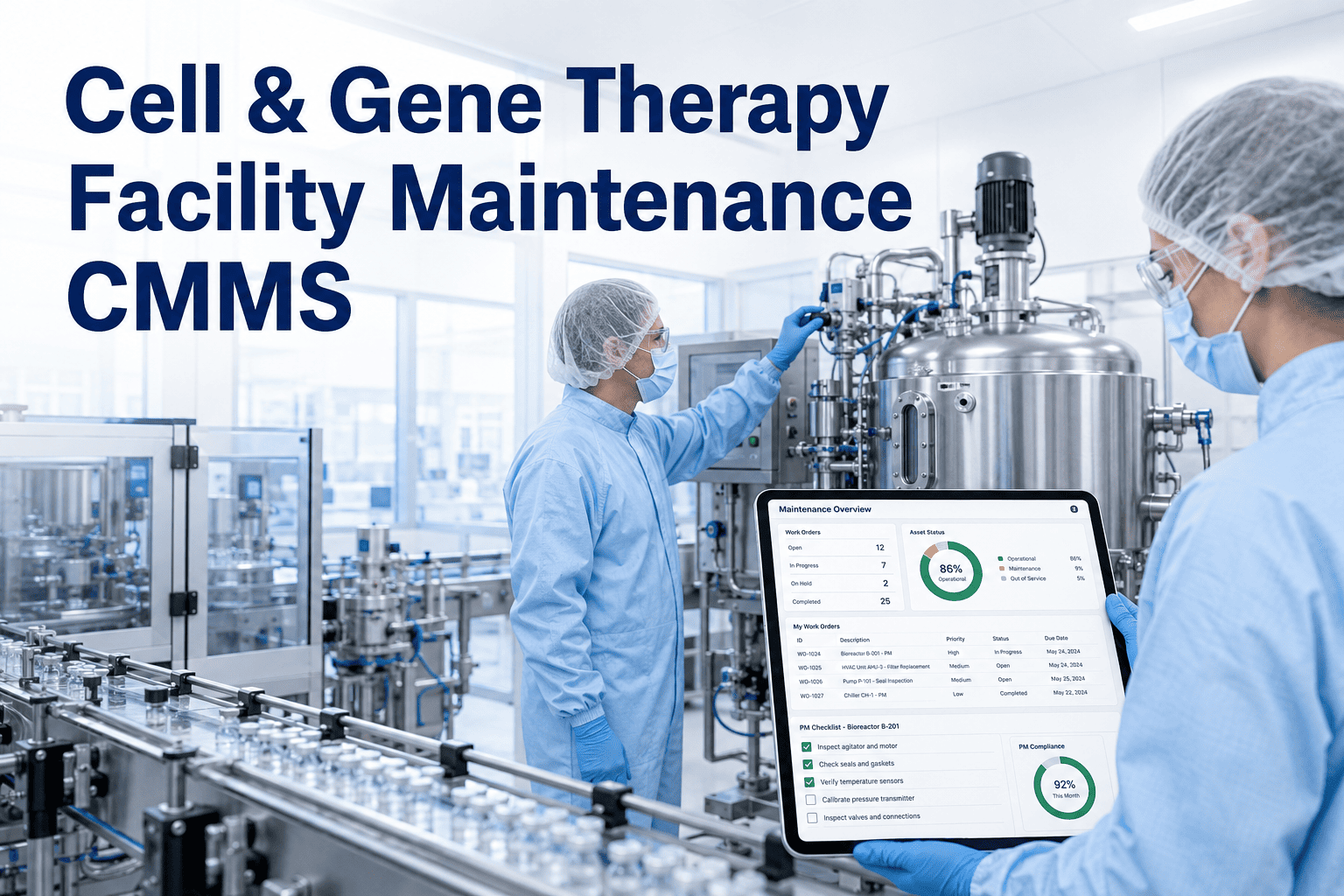
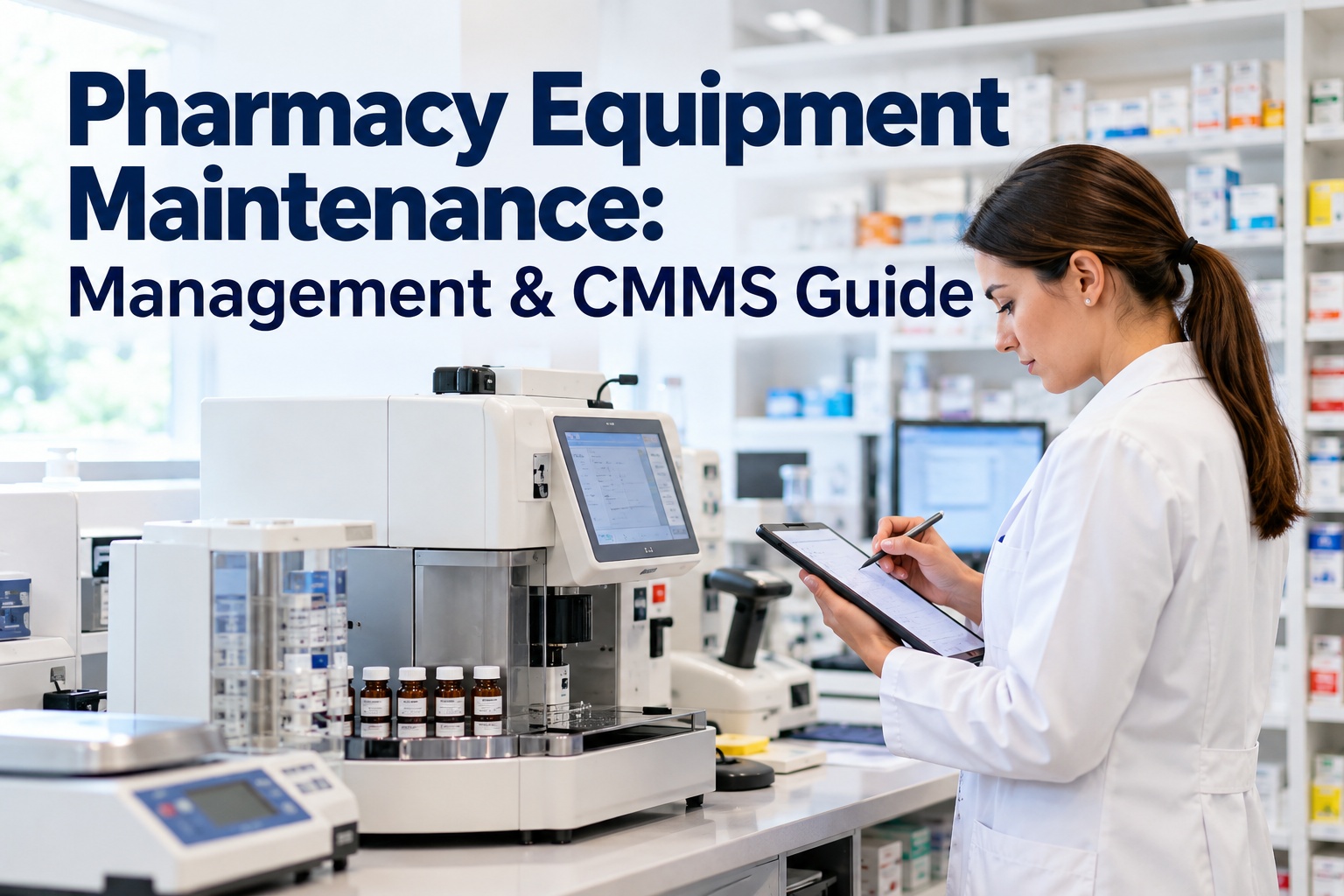
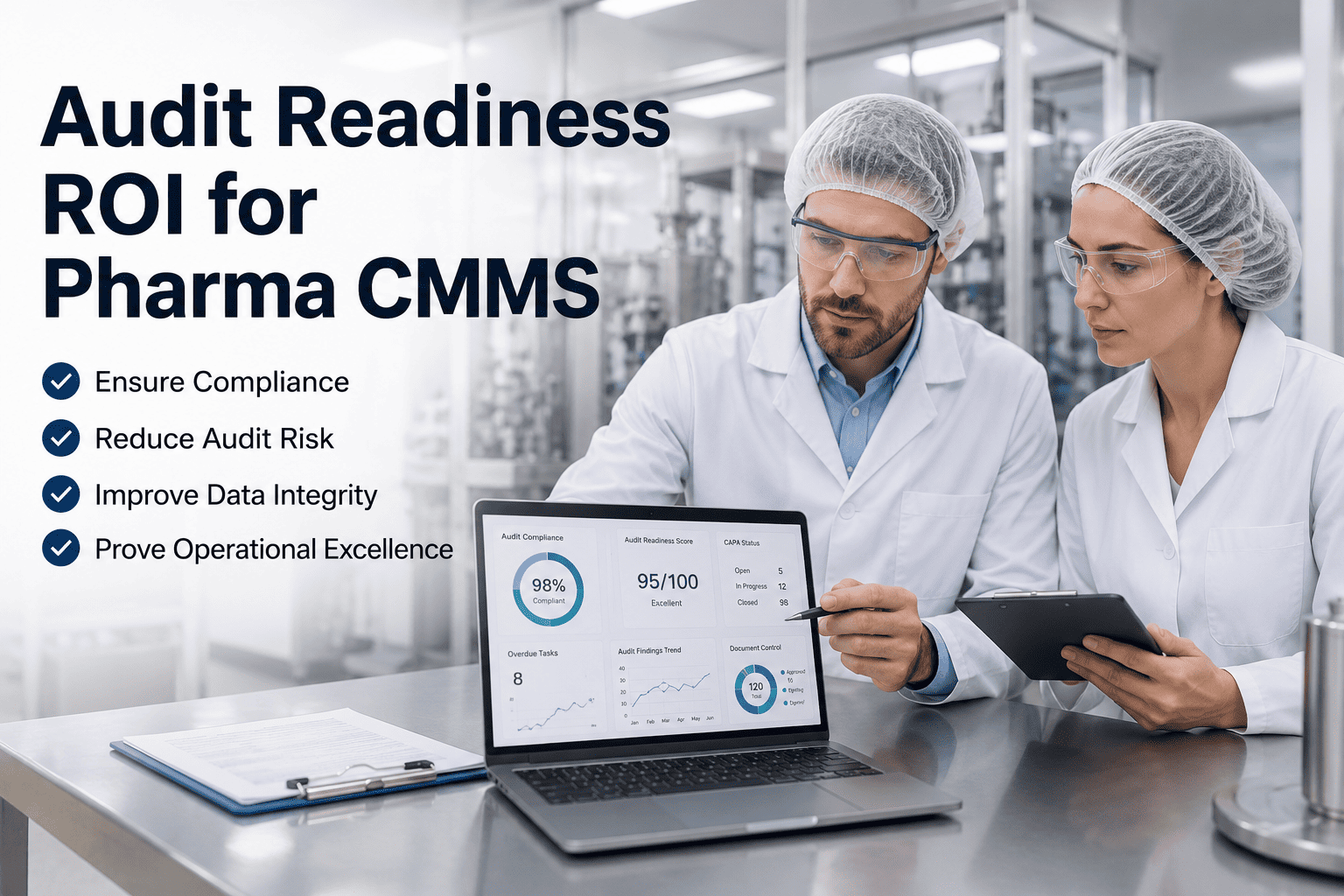
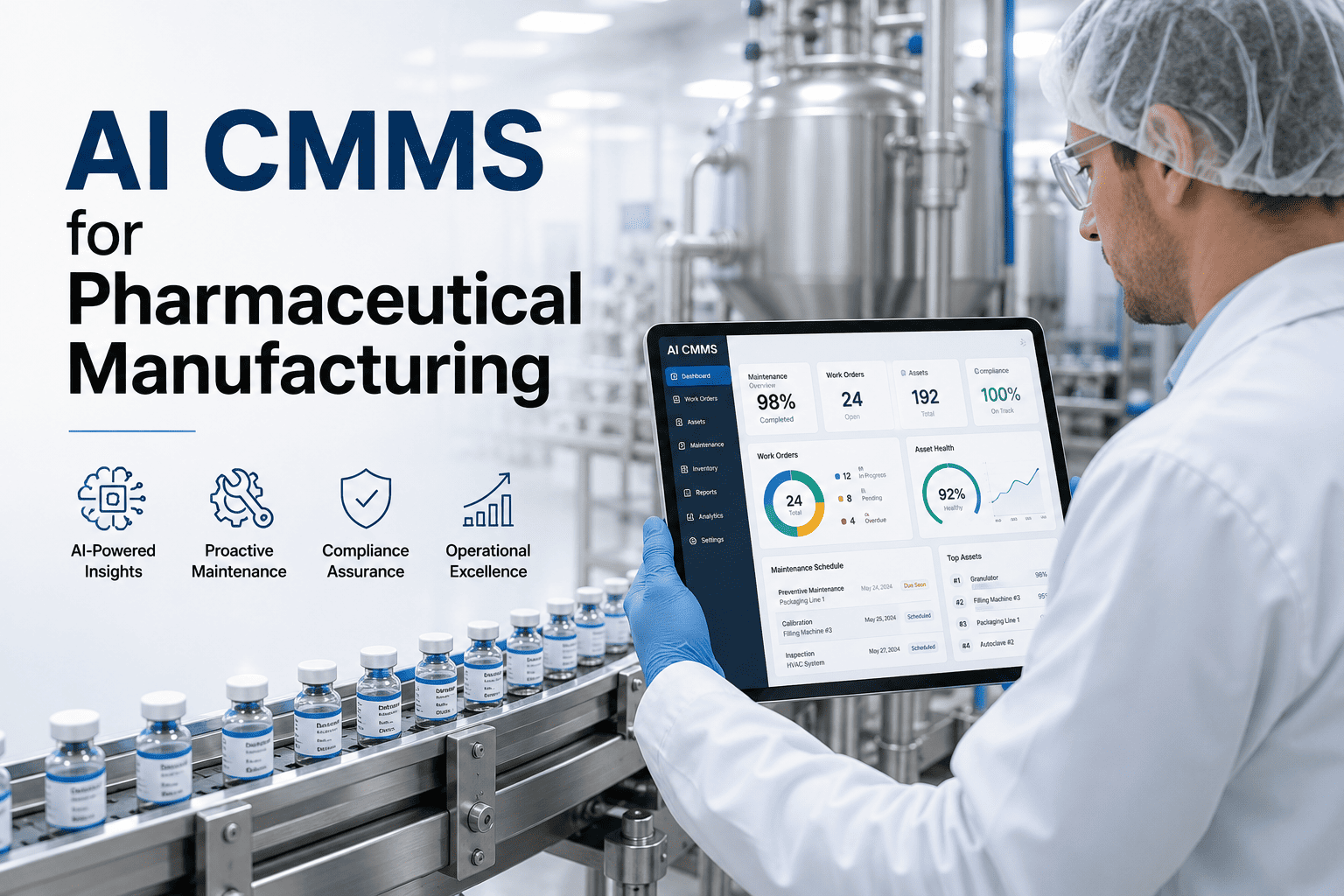
Cell and gene therapy facilities operate under some of the most demanding maintenance requirements in all of biopharmaceutical manufacturing. A single HVAC failure in an ISO 7 cleanroom, an undetected ultra-low freezer temperature excursion, or a missing equipment qualification record can invalidate a batch that represents months of patient-specific work and millions of dollars. Unlike traditional pharma production, CGT manufacturing involves smaller batch sizes, live biological materials, and often one-of-a-kind patient samples where there is no opportunity for a rerun. Managing facility readiness, controlled room monitoring, critical cold storage, and equipment records across this environment requires a CMMS built for biologics complexity — not a generic work order tool. Start a free trial to see how OxMaint manages CGT facility maintenance, or book a 30-minute walkthrough with a biologics CMMS specialist.
Landing Page · Biologics Manufacturing · CGT CMMS
Cell & Gene Therapy Facility Maintenance CMMS
Manage cleanroom readiness, critical freezer PM, controlled room monitoring, equipment qualification records, and QA workflows — in one platform built for CGT complexity.
Why CGT Maintenance Is Different
Patient-specific batches — no rerun if equipment fails mid-process
ISO 5–8 cleanrooms require continuous environmental monitoring and documented responses to excursions
Critical freezers hold irreplaceable biological material at -80°C or below — a single alarm response delay can destroy a batch
GMP qualification records (IQ/OQ/PQ) must be current for every piece of equipment before production begins
CGT Facility Equipment: Maintenance by Category
A cell and gene therapy facility contains multiple categories of equipment with distinct maintenance requirements, qualified personnel, and documentation standards. Tracking them in one system is not optional — it is the only way to maintain continuous GMP readiness.
Cleanroom Infrastructure
HVAC & Air Handlers
PM: Monthly filter inspection, quarterly HEPA integrity test, annual balance verification
Pressure Differential Monitors
PM: Daily readout verification, monthly calibration, alarm response documented within 1 hour
Environmental Monitoring Sensors
PM: Quarterly calibration per ISO 14644-1; EM sampling results logged per batch
Cold Storage Chain
ULT Freezers (-80°C)
PM: Daily alarm verification, monthly coil inspection, annual temperature mapping
Controlled-Rate Freezers
PM: Pre-use protocol verification, cooling profile validation, annual OQ
LN2 Vapor Storage
PM: Daily level check, monthly O2 sensor calibration, annual vessel inspection
Cell Processing Equipment
Biosafety Cabinets (BSC)
PM: Annual NSF/ANSI 49 certification, monthly airflow velocity check, pre-use UV decon log
CO2 Incubators
PM: Weekly CO2 and temperature verification, monthly HEPA and water pan decon, annual OQ
Centrifuges
PM: Monthly rotor inspection and imbalance test, semi-annual speed calibration, decon after each use
Cleanroom Readiness: What "Ready" Means Before a Batch
01
Environmental Monitoring Status
All viable and non-viable particle counts from the most recent scheduled EM event are within alert and action limits. Pressure differential readings for all airlocks and ISO zones are confirmed within validated range and logged in the batch record.
02
Equipment Qualification Currency
Every piece of equipment that will be used in the upcoming batch has a current qualification status — IQ, OQ, and PQ completed, periodic requalification not overdue. CMMS must flag any equipment with lapsed requalification before batch start, not after.
03
Cold Storage Confirmation
All freezers and refrigerators that will hold starting material, intermediates, or finished product are confirmed operating within their validated temperature ranges. Alarm systems are active and tested. Backup units are identified and ready if primary fails.
04
Cleaning & Decontamination Verification
Cleanroom cleaning logs confirm all surfaces were decontaminated according to SOP. BSC decontamination (UV cycle or VHP) is complete and logged. Surface swab results from previous cleaning are within acceptance criteria.
OxMaint Tracks All Four Readiness Checks — Automatically
Set up your CGT facility's equipment hierarchy, qualification schedules, and cleanroom PM tasks in OxMaint. Before every batch, the system confirms which equipment is in-spec and flags anything overdue — before production starts, not during.
QA Workflow Integration
In CGT manufacturing, the line between maintenance and QA is not a line — it is a continuous feedback loop. Every maintenance finding that affects product quality must trigger a deviation record. Every deviation must link to a CAPA. Every CAPA must close before the equipment returns to service.
PM
Scheduled PM Completed
→
!
Finding Logged (Out of Spec)
→
D
Deviation Record Opened
→
C
CAPA Assigned & Tracked
→
✓
Equipment Released for Production
OxMaint closes this loop digitally: maintenance findings automatically generate linked deviation work orders, CAPA tasks are assigned with due dates, and equipment is locked from production scheduling until CAPA is verified closed.
Expert Review
DL
Dr. Dana Lim
GMP Operations Lead · Cell & Gene Therapy Manufacturing · 14 Years · Academic & Commercial CGT Facilities
"The biggest operational gap I see in CGT facilities is not equipment capability — it is equipment readiness visibility. Teams are running pre-batch checklists in Excel, calling the cold storage team to confirm freezer temperatures by phone, and manually cross-checking qualification status in a separate QMS. When you are working with patient-specific material that cannot be recreated, that gap is unacceptable. A CMMS that gives you a real-time dashboard of cleanroom status, qualified equipment, and cold storage alarms — tied to the batch record — is not a nice-to-have. It is GMP infrastructure. The CGT sector is catching up to this reality fast."
★★★★★
Frequently Asked Questions
What GMP regulations apply to cell and gene therapy facility maintenance?
CGT facilities fall under FDA 21 CFR Parts 210 and 211 for pharmaceutical manufacturing requirements, and CGT-specific guidance under 21 CFR Part 1271 for human cells, tissues, and cellular products. The FDA's Process Validation Guidance and the ICH Q10 pharmaceutical quality system guideline also apply. For facilities operating under EU oversight, EU GMP Annex 2 (Manufacture of Biological Active Substances) and Annex 15 (Qualification and Validation) define equipment qualification requirements. All of these frameworks require documented preventive maintenance, equipment qualification currency (IQ/OQ/PQ), environmental monitoring records, and a closed-loop deviation and CAPA system — all of which OxMaint manages in one platform.
Start a free trial to set up your CGT equipment register.
How should a CGT facility manage an alarm response for a critical freezer temperature excursion?
A critical freezer alarm in a CGT facility triggers a defined response protocol: the alarm must be acknowledged within the site's validated response time (typically 15–30 minutes), the material stored must be assessed for impact, and a written decision must be made within 24–48 hours on material disposition. Every step — alarm receipt, response action, material assessment, and disposition decision — must be documented with timestamps and operator identification in a traceable record. If the excursion occurred during off-hours, the backup equipment readiness confirmation must also be documented. OxMaint's alarm response work orders capture all of this automatically: when a freezer alarm triggers a work order, the technician completes the response workflow on mobile, and the completed record links to the affected batch records.
Book a demo to see the alarm response workflow.
What is the right CMMS for a cell and gene therapy manufacturing facility?
A CGT-appropriate CMMS must support GMP equipment qualification status tracking (not just generic work orders), environmental monitoring integration with automatic alert and action limit flags, cold storage PM and alarm response workflows, mobile-first completion for cleanroom-grade personnel who cannot bring paper into ISO 7 environments, and a closed-loop deviation-to-CAPA workflow. Most general-purpose CMMS platforms handle work orders but do not address 21 CFR Part 211 calibration record formats, IQ/OQ/PQ currency tracking, or batch record linkage. OxMaint is designed for pharma and biologics manufacturing, with asset hierarchy models that natively support CGT facility equipment categories.
Start a free trial and configure your first cleanroom asset register at no cost.
How often does cleanroom environmental monitoring need to be performed in a CGT facility?
Environmental monitoring frequency for a CGT cleanroom is defined during facility validation and depends on the ISO classification of each room and the risk profile of the operations performed inside it. ISO 5 areas (biosafety cabinets and laminar flow zones) typically require EM sampling at each production session. ISO 7 suites require viable and non-viable particle monitoring per batch, with additional trend monitoring over time to detect environmental excursions. ISO 8 gowning and anteroom areas are typically sampled weekly during production periods. All EM results must be logged against defined alert and action limits, and any exceedance must trigger a documented investigation before the next batch proceeds in the affected area. OxMaint manages EM sampling schedules and results logging as part of its cleanroom asset maintenance workflow.
CGT Facility Readiness Starts with the Right CMMS
OxMaint gives biologics maintenance teams the equipment qualification tracking, cleanroom PM scheduling, cold storage alarm workflows, and QA-linked deviation management they need to stay audit-ready every day — not just before an inspection.