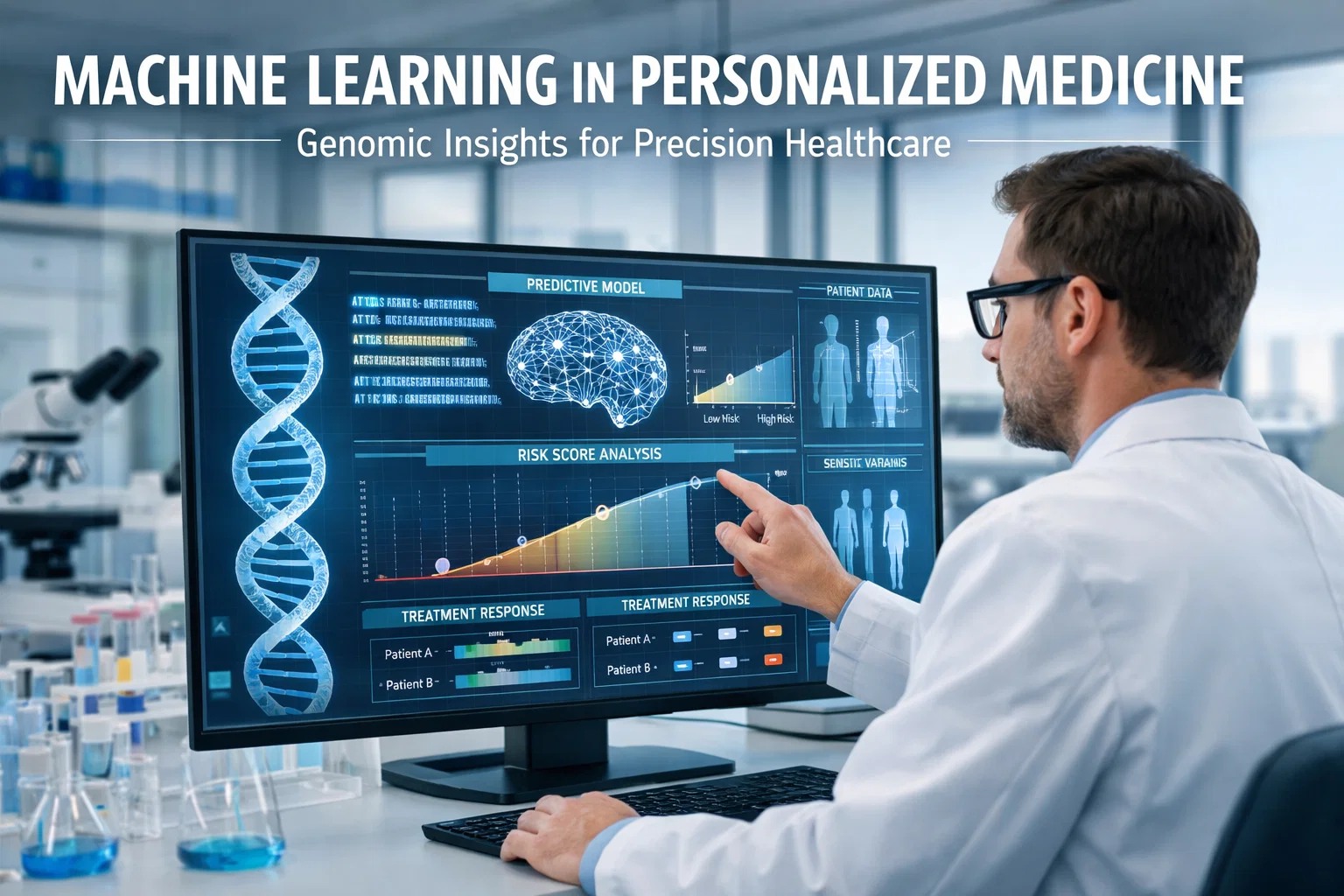
Oncology is being fundamentally reshaped by artificial intelligence. Predictive models trained on genomic data, imaging archives, and clinical records are enabling oncologists to forecast therapy responses, identify high-risk patients before symptoms escalate, and personalise treatment protocols at a level that was impossible with traditional statistical methods. The speed and precision of AI-driven decision support is translating directly into improved survival outcomes across multiple cancer types — and the pace of adoption is accelerating globally. If you manage operations in a healthcare setting and want to see how data-driven platforms support better clinical and operational outcomes, start a free trial for 30 days and book a demo with Oxmaint today.
$13.7B
AI in Oncology Market
Global market value projected by 2030, growing at 28.4% CAGR
94%
Diagnostic Accuracy
Achieved by AI models detecting early-stage skin cancer vs 87% for dermatologists
40%
Reduction in Misdiagnosis
Reported in radiology oncology workflows augmented with AI image analysis
30%
Faster Treatment Planning
Time reduction in personalised radiotherapy contouring using AI-assisted tools
OVERVIEW
What Is AI in Oncology and Why Does It Matter Now?
AI in oncology refers to the application of machine learning, deep learning, and natural language processing algorithms to cancer diagnosis, prognosis, and treatment decision-making. These models ingest structured clinical data, unstructured physician notes, histopathology images, genetic sequencing results, and real-world treatment outcomes — then generate predictions that augment clinical judgment with statistical precision at scale. The urgency is clear: cancer is the second leading cause of death globally, responsible for nearly 10 million deaths per year, and treatment outcomes remain highly variable across patient populations. AI-driven predictive models are closing the gap between available evidence and point-of-care decisions. For healthcare operations teams looking to pair clinical excellence with operational efficiency, start a free trial for 30 days and book a demo to explore what unified data infrastructure looks like in practice.
KEY CONCEPTS
Core Capabilities Driving AI-Powered Oncology
The clinical impact of AI in oncology flows from four foundational capabilities — each addressing a distinct stage in the cancer care pathway.
DETECTION
Early Cancer Detection
Deep learning models analyse radiology scans, pathology slides, and genetic markers to detect malignancies at Stage I or II — when survival rates are 2–3x higher than late-stage diagnosis. AI achieves sub-millimetre tumour detection accuracy in CT and MRI imaging.
GENOMICS
Genomic Data Analysis
ML models process whole-genome sequencing data across thousands of cancer variants to identify targetable mutations, predict drug sensitivity, and stratify patients for clinical trials — compressing weeks of manual genomic review into hours.
PROGNOSIS
Survival Outcome Prediction
Predictive models trained on multi-cohort survival data forecast individual patient outcomes with accuracy rates up to 85–90% across common cancer types — enabling oncologists to tailor treatment aggressiveness and prioritise palliative intervention timing.
TREATMENT
Personalised Therapy Matching
AI analyses patient genomics, clinical history, prior treatment responses, and published evidence to recommend optimal first-line and second-line therapy combinations — reducing trial-and-error treatment cycles that cost 6–12 months of patient time.
PAIN POINTS
The Gaps AI Is Designed to Close in Cancer Care
Even in well-resourced healthcare systems, the complexity of modern oncology creates decision-making bottlenecks that delay diagnosis, introduce treatment variability, and compromise outcomes for patients who cannot afford to wait.
!
Late-Stage Diagnosis Rates Remain High
Over 70% of cancer cases in low-to-middle-income countries are diagnosed at Stage III or IV — when 5-year survival rates drop below 30% for most solid tumours. Early detection tools are under-utilised due to capacity constraints and screening gaps.
!
Treatment Response Variability
Standard chemotherapy protocols produce complete response in only 20–40% of patients depending on tumour subtype — yet most facilities lack the genomic profiling infrastructure to predict responders before therapy begins, exposing patients to toxic side effects with limited benefit.
!
Oncologist Capacity Constraints
The global oncologist-to-patient ratio is unsustainable — the ASCO projects a shortage of up to 2,550 oncologists in the US alone by 2030. Manual literature review, imaging analysis, and MDT coordination consume 30–40% of clinical time that could be redirected to patient care.
!
Fragmented Data Across Care Episodes
Patient data is spread across imaging systems, EHRs, lab platforms, and genomic databases — often incompatible. Without unified data infrastructure, predictive models cannot access the longitudinal patient records needed to generate reliable therapy recommendations.
See How Oxmaint Supports Data-Driven Healthcare Operations
Oxmaint gives healthcare operations teams the unified asset and maintenance intelligence platform they need to support clinical excellence — from equipment uptime to audit-ready compliance documentation across every facility.
APPLICATION AREAS
Where Predictive AI Is Delivering Measurable Oncology Impact
AI applications in oncology span the full clinical pathway — from screening and diagnosis through treatment planning, toxicity monitoring, and survivorship tracking. The strongest evidence for measurable outcome improvement is concentrated in six clinical domains. Healthcare teams scaling these capabilities need an equally robust operational backbone — start a free trial for 30 days and book a demo to see what Oxmaint delivers for facilities managing complex diagnostic and treatment equipment.
01
Radiology AI and Tumour Detection
AI-powered imaging tools detect lung nodules, breast lesions, and colorectal polyps with sensitivity rates exceeding 90% — outperforming single-reader radiology review and significantly reducing missed diagnoses in high-volume screening programmes.
02
Digital Pathology and Histology
Computational pathology models classify tumour morphology, grade, and subtype from digitised slides in minutes — tasks that require 20–40 minutes of expert pathologist time per slide. Throughput increases of 300–500% are achievable in high-volume pathology labs.
03
Genomic Biomarker Prediction
Models trained on TCGA and real-world genomic databases predict biomarker status — including BRCA, EGFR, and PD-L1 expression — from standard histology images, removing the need for expensive molecular testing in resource-constrained settings.
04
Treatment Response Forecasting
Multimodal ML models combine baseline imaging, lab values, genomic profiles, and treatment parameters to predict complete pathological response with accuracy rates of 80–88% — enabling oncologists to escalate or de-escalate therapy before cycle completion.
05
Toxicity and Adverse Event Prediction
Predictive safety models identify patients at elevated risk for grade 3–4 chemotherapy toxicity, allowing proactive dose adjustment and supportive care planning — reducing hospitalisation rates for treatment-related adverse events by up to 25%.
06
Recurrence Risk and Survivorship
Post-treatment AI monitoring analyses surveillance imaging trends, ctDNA levels, and clinical markers to forecast recurrence probability — triggering early intervention pathways up to 6 months before clinical relapse becomes detectable by standard methods.
HOW OXMAINT CONNECTS
How Oxmaint Supports the Operational Foundation of AI-Enabled Oncology
AI-powered oncology tools depend on an uninterrupted operational backbone — diagnostic equipment must be calibrated, maintained, and audit-ready at all times. Oxmaint's unified CMMS and asset management platform ensures that the clinical infrastructure supporting AI-driven cancer care never becomes the limiting factor. Operations managers who want to ensure maximum uptime for critical diagnostic and treatment equipment can start a free trial for 30 days and book a demo to see how real-time asset intelligence integrates with hospital operations.
A
Critical Equipment Uptime
Preventive maintenance schedules tied to MRI, CT, PET scanners, and radiotherapy equipment ensure oncology diagnostic tools deliver maximum uptime — with IoT-integrated condition monitoring flagging degradation before failures occur.
B
Compliance and Audit Readiness
Digital maintenance records, inspection logs with electronic signatures, and GMP-compliant documentation keep oncology facilities audit-ready for OSHA, Joint Commission, and NHS regulatory requirements without manual record consolidation.
C
Asset Lifecycle and CapEx Planning
Rolling 5–10 year CapEx forecasting models for high-value oncology equipment — linear accelerators, PET-CT systems, and robotic surgery platforms — enable facilities to plan capital budgets based on asset condition data rather than estimates.
D
Multi-Site Portfolio Management
Portfolio-level reporting across hospital networks, cancer centres, and satellite facilities gives VP-level operations teams complete visibility into asset condition, maintenance compliance, and equipment availability across every site from a single dashboard.
Equip Your Oncology Operations With Intelligent Asset Management
AI-powered clinical tools need AI-powered operational support. Oxmaint delivers preventive maintenance, asset lifecycle intelligence, and compliance documentation for every piece of critical oncology equipment across your portfolio.
COMPARISON
Traditional Oncology Practice vs AI-Augmented Cancer Care
The operational and clinical gap between conventional and AI-augmented oncology is measurable across every stage of the cancer care pathway. Here is how the two approaches compare on the dimensions that matter most to clinical and operational decision-makers.
| Care Dimension |
Traditional Oncology |
AI-Augmented Oncology |
| Tumour Detection |
Manual radiology review with 20–30% miss rate for sub-centimetre lesions |
AI imaging models achieve 90%+ sensitivity for early-stage lesion detection |
| Diagnosis Speed |
Average 3–6 weeks from symptom presentation to confirmed cancer diagnosis |
AI triage and prioritisation reduces time-to-diagnosis by up to 40% in pilot programmes |
| Treatment Selection |
Protocol-based with limited genomic personalisation, 20–40% response rates |
Genomic ML matching improves first-line response selection precision significantly |
| Pathology Throughput |
20–40 min per slide, limited by expert pathologist availability |
Digital pathology AI processes slides in minutes with 300–500% throughput gain |
| Toxicity Monitoring |
Reactive — detected after Grade 3–4 adverse events occur in 25–35% of patients |
Predictive safety models flag high-risk patients before treatment begins, enabling dose adjustment |
| Recurrence Detection |
Imaging-based surveillance on 3–6 month cycles, clinical relapse confirmed late |
ctDNA and AI surveillance detects molecular recurrence 4–6 months before clinical presentation |
| Oncologist Time |
30–40% of clinical time on admin, documentation, and literature review |
AI automation frees 20–30% of clinical time for direct patient care and MDT decision-making |
| Equipment Readiness |
Reactive maintenance causing unplanned scanner downtime and treatment delays |
Oxmaint preventive maintenance ensures zero unplanned downtime on critical oncology equipment |
EVIDENCE AND IMPACT
The Numbers Behind AI-Driven Oncology Outcomes
94%
AI Diagnostic Accuracy
Achieved by deep learning models in skin cancer classification — exceeding average dermatologist performance in controlled studies
6 mo
Earlier Recurrence Detection
Lead time advantage of AI ctDNA and imaging surveillance over standard follow-up protocols — critical for second-line treatment success
25%
Fewer Toxic Hospitalisations
Reduction in treatment-related adverse event hospitalisations achievable with AI-driven toxicity prediction and proactive dose modification
4.8x
Cost of Reactive Equipment Failure
Emergency repair cost multiplier vs planned maintenance — eliminated by Oxmaint preventive maintenance for oncology diagnostic assets
FREQUENTLY ASKED QUESTIONS
Common Questions About AI in Oncology
How accurate are AI predictive models in cancer diagnosis compared to human oncologists?
In controlled benchmarking studies, AI diagnostic models have matched or exceeded specialist performance in specific imaging tasks — particularly in dermatology (94% vs 87%), radiology (lung cancer nodule detection sensitivity above 90%), and digital pathology (tumour grading concordance above 85%). However, clinical deployment consistently shows that AI-plus-clinician combinations outperform either in isolation. AI augments clinical judgment rather than replacing it — handling volume, consistency, and speed while the oncologist applies contextual reasoning and patient-specific judgment. Regulatory-cleared AI tools in oncology are now in active use across major cancer centres in the US, UK, and Germany.
What data does an AI oncology model need to generate reliable treatment predictions?
High-quality oncology predictive models are trained on a combination of structured clinical data (staging, ECOG performance status, lab results), imaging data (CT, MRI, PET-CT), molecular and genomic data (mutation profiles, gene expression, copy number variation), and longitudinal outcome data including treatment responses and survival endpoints. The minimum viable dataset for meaningful model training typically requires 1,000–5,000 patient records with complete follow-up. Real-world data registries like TCGA, SEER, and institutional biobanks are commonly used to supplement local training data. Data quality, completeness, and bias correction are the primary determinants of model reliability in clinical settings.
Is AI in oncology currently approved for clinical use or is it still experimental?
Multiple AI oncology tools have received regulatory clearance for clinical use. The FDA has cleared over 500 AI and ML-based medical devices, with a significant proportion in radiology and oncology imaging. Notable examples include FDA-cleared AI tools for mammography triage, lung nodule detection, and colorectal cancer screening. In the UK, NICE has published guidance supporting AI-assisted breast cancer screening. In Germany, AI diagnostic tools must meet MDR (Medical Device Regulation) requirements. The regulatory landscape is maturing rapidly, and the number of cleared clinical AI tools in oncology is expected to double by 2027. Experimental tools remain in research use only pending validation and clearance.
How does Oxmaint support oncology facilities deploying AI-powered clinical tools?
AI oncology tools rely on uninterrupted performance from high-value diagnostic assets — MRI, CT, PET-CT, linear accelerators, digital pathology scanners, and robotic surgery systems. Oxmaint's CMMS platform provides preventive maintenance scheduling, IoT-connected condition monitoring, digital inspection workflows, and rolling CapEx forecasting for all these asset classes. This ensures critical oncology equipment maintains maximum availability and calibration standards — preventing the unplanned downtime that disrupts patient scheduling and AI model input data quality. Oxmaint is mobile-first, multi-site capable, and delivers audit-ready documentation for Joint Commission, OSHA, NHS, and German DIN EN compliance without heavy implementation overhead.
GET STARTED WITH OXMAINT
Build the Operational Foundation That AI-Powered Oncology Demands
AI-driven cancer care requires more than algorithms — it requires facilities where critical equipment never fails, maintenance records are always audit-ready, and capital planning is driven by real asset condition data. Oxmaint delivers unified CMMS, asset lifecycle tracking, preventive maintenance, and portfolio-level reporting for healthcare operations teams managing high-value oncology infrastructure. No heavy implementation. No extended onboarding. Results from day one.