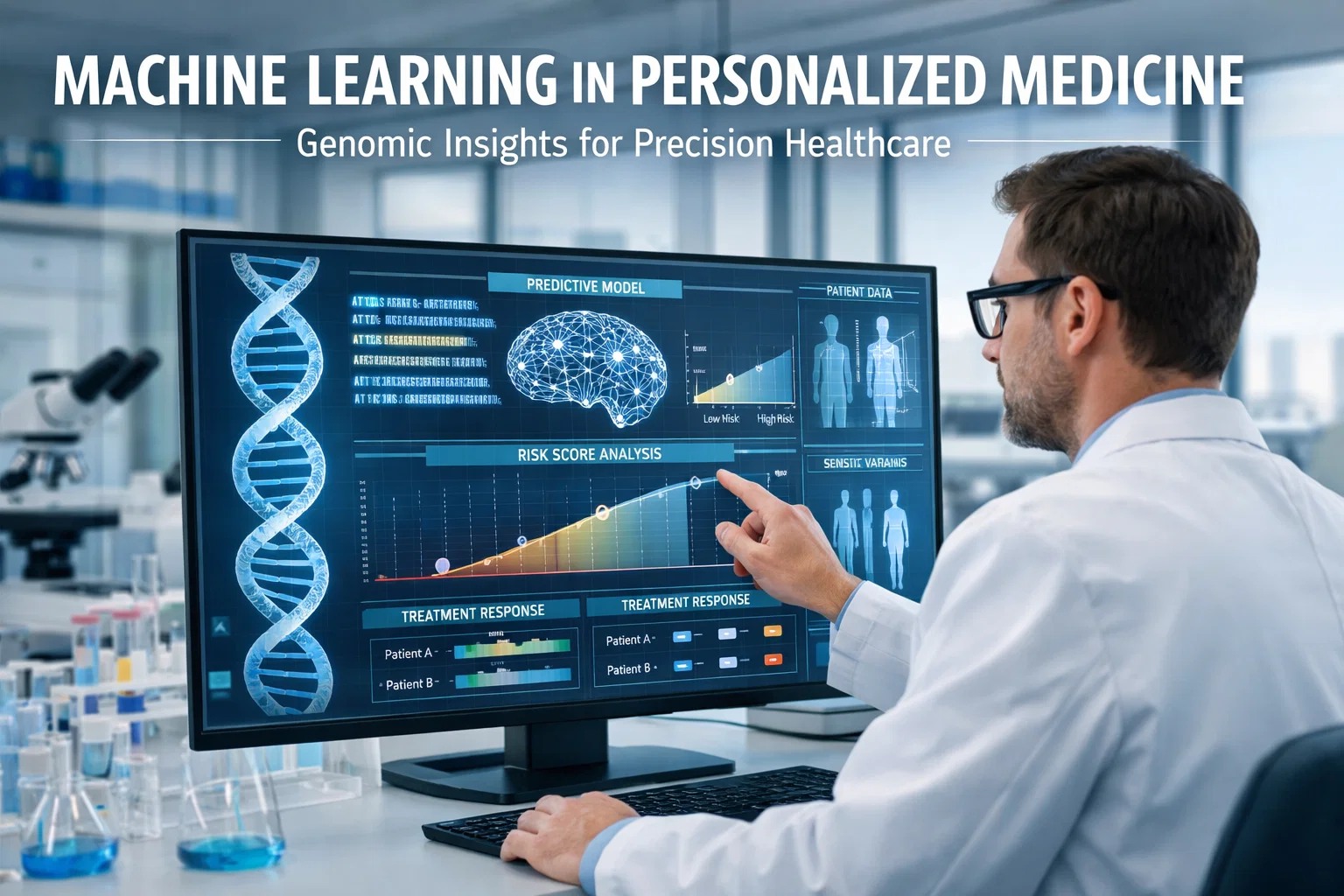
Genomic medicine is undergoing a seismic shift. What once required years of painstaking laboratory work can now be accomplished in hours, as artificial intelligence systems parse billions of base pairs with a precision no human team could match. From early cancer detection to the diagnosis of ultra-rare inherited conditions, AI is transforming raw genomic data into actionable clinical intelligence, making personalized therapies not just a research ambition, but an emerging clinical reality.
Unlock the Power of AI-Driven Genomic Research
Discover how intelligent platforms are accelerating precision medicine discovery and reshaping personalized care for oncology and rare diseases.
Why Genomic Data Demands AI-Scale Analysis
A single whole-genome sequence generates roughly 200 gigabytes of raw data. Multiply that across the hundreds of thousands of patient samples now flowing through research hospitals, biobanks, and clinical trial programs each year, and the resulting data ocean becomes practically incomprehensible to conventional analytical methods. Traditional bioinformatics pipelines, while powerful, were designed for an era when sequencing a single genome took months and cost millions of dollars. Today's landscape demands something fundamentally different, and platforms built for this scale already exist — sign up free for 15 days to see how modern biomedical workflow tools handle this complexity.
Machine learning algorithms, particularly deep neural networks trained on curated genomic databases, can identify meaningful patterns within this complexity at a scale and speed that redefines what is possible. Where a human researcher might spot correlations between a handful of genetic variants and a disease phenotype over the course of a career, an AI system can interrogate millions of variant-phenotype relationships simultaneously, surfacing associations that would otherwise remain hidden for decades. Want to see this in your own environment? Book a demo and we'll walk you through it.
How AI Models Decode the Language of DNA
Modern AI approaches to genomic research operate across several distinct but interconnected layers. Understanding how each layer contributes helps clarify why this technology is generating such transformative results across the precision medicine spectrum.
Variant Classification and Pathogenicity Prediction
Not every genetic variant causes disease. The human genome contains millions of single-nucleotide polymorphisms, insertions, deletions, and structural rearrangements, the vast majority of which are benign. AI classification models trained on curated variant databases can assess the likely pathogenicity of novel variants with a confidence that dramatically reduces the burden of manual clinical review. Tools like deep learning-based splicing predictors can even identify variants that affect RNA processing rather than protein coding sequences, a class of mutation historically difficult to characterize.
Multi-Omic Data Integration
Genomic sequence data alone provides an incomplete picture of disease biology. The most powerful AI platforms now integrate data from multiple molecular layers simultaneously: the genome, the transcriptome (which genes are active), the proteome (which proteins are being produced), and the epigenome (which genes are chemically silenced or activated). By learning relationships across these data types, machine learning models can build far richer disease models than any single data source would allow, leading to therapeutic targets that are both more specific and more durable.
Polygenic Risk Score Refinement
Many common complex diseases, including cardiovascular disease, type 2 diabetes, and schizophrenia, are influenced not by a single causative mutation but by thousands of common variants each contributing a small effect. Polygenic risk scores aggregate these contributions into a single predictive number. AI models are dramatically improving the accuracy of these scores by accounting for non-linear interactions between variants, ancestry-related differences in variant frequency, and environmental modifiers that earlier statistical approaches could not capture.
Structural Variant and Copy Number Analysis
Large-scale chromosomal rearrangements, duplications, and deletions play critical roles in cancer genomics and developmental disorders alike. Traditional algorithms for detecting these structural variants from sequencing data are prone to both false positives and false negatives. Deep learning architectures trained on validated structural variant call sets have demonstrated substantially improved sensitivity and specificity, particularly in noisy low-coverage sequencing scenarios where cost considerations make deep coverage impractical.
AI-Driven Biomarker Discovery: From Data to Drug Target
Biomarker discovery has historically been one of the most expensive and time-consuming phases of pharmaceutical development. Identifying the molecular signatures that distinguish responders from non-responders in a clinical trial, or that predict disease progression before symptoms appear, typically requires years of exploratory research followed by extensive validation studies. AI is compressing this timeline in ways that are beginning to reshape pipeline economics across the industry — sign up free for 15 days to see how AI-powered platforms are built for exactly this kind of research acceleration.
Natural language processing systems trained on the biomedical literature can synthesize findings from tens of thousands of published studies to surface candidate biomarker hypotheses that no individual research team could generate through manual review. Graph neural networks applied to protein interaction networks can identify hub proteins whose perturbation disrupts disease-relevant pathways while minimizing off-target effects. And reinforcement learning systems are now being used to actively guide experimental design, proposing the next most informative experiment to run based on accumulated evidence rather than researcher intuition alone.
AI systems analyze tumor mutational burden, microsatellite instability, copy number variation profiles, and somatic mutation signatures to match cancer patients to the targeted therapies and immunotherapy regimens most likely to produce a durable response. Liquid biopsy platforms powered by machine learning are extending this capability to circulating tumor DNA, enabling treatment monitoring and early resistance detection without repeated tissue sampling.
The average rare disease patient waits more than five years for a correct diagnosis. AI-powered phenotype-genotype matching platforms are dramatically reducing this diagnostic odyssey by correlating clinical features entered by clinicians with candidate causal variants identified from exome or genome sequencing, prioritizing the most likely pathogenic findings for physician review and substantially increasing diagnostic yield in previously unsolved cases.
Drug metabolism, efficacy, and adverse event risk are all influenced by genetic variation in enzymes, transporters, and drug targets. Machine learning models trained on pharmacogenomic databases can predict optimal drug selection and dosing for individual patients based on their genetic profiles, reducing trial-and-error prescribing, minimizing adverse reactions, and improving therapeutic outcomes across specialties from psychiatry to cardiology.
Large-scale biobank datasets linking genomic profiles to longitudinal health records are enabling AI systems to identify novel disease associations at a population level. These discoveries feed upstream into drug target identification and downstream into risk stratification tools that allow health systems to intervene preventively in high-risk individuals years before clinical disease onset, shifting the economics of chronic disease management from treatment toward prevention.
Precision Medicine in Oncology: The Most Advanced Frontier
Cancer genomics represents the most mature application domain for AI in genomic medicine, and for good reason. Tumors are defined by their genomic instability, and understanding the specific mutations driving a particular patient's cancer has direct therapeutic implications. The rise of targeted therapies designed to exploit specific oncogenic mutations has created an urgent clinical need for rapid, accurate tumor genome characterization, a need that AI is increasingly well-positioned to meet. Book a demo to understand how intelligent platforms are already supporting oncology teams in this space.
Foundation models pre-trained on massive multi-institutional genomic and clinical datasets are now capable of generating prognostic predictions and treatment recommendations that outperform traditional staging systems across multiple cancer types. In non-small cell lung cancer, AI analysis of tumor genomic profiles can identify EGFR, ALK, ROS1, and KRAS mutations that predict response to specific targeted agents. In breast cancer, machine learning-derived gene expression signatures are guiding decisions about chemotherapy in early-stage disease. And in hematologic malignancies, AI integration of cytogenetic, molecular, and clinical data is enabling risk stratification of unprecedented granularity.
| Research Capability | Traditional Methods | AI-Enhanced Approach |
|---|---|---|
| Variant Pathogenicity Assessment | Manual curation, weeks per gene | Automated, genome-wide, hours |
| Biomarker Discovery Timeline | 3–7 years per candidate | Months with AI-guided hypothesis generation |
| Rare Disease Diagnostic Yield | 25–35% in specialized centers | Up to 50–60% with AI phenotype-genotype matching |
| Multi-Omic Data Integration | Single data type per study | Simultaneous cross-layer integration |
| Drug Response Prediction Accuracy | Population-level estimates | Individual-level, variant-specific predictions |
| Literature Synthesis Speed | Months of manual review | NLP processing of 50,000+ papers in hours |
Challenges the Field Must Still Overcome
Despite its extraordinary promise, AI-driven genomic medicine faces a set of challenges that the field must address honestly if its potential is to be realized equitably and safely. Algorithmic bias is perhaps the most pressing concern. The overwhelming majority of genomic databases that have trained AI models to date were assembled from populations of European ancestry, creating systems that perform substantially less well for patients of African, Asian, South Asian, or admixed ancestry. Addressing this disparity requires deliberate investment in diverse biobank infrastructure and active efforts to include historically underrepresented populations in genomic research cohorts.
Interpretability remains another critical frontier. Clinical genomicists and oncologists cannot responsibly act on predictions they cannot interrogate or explain to patients. The drive toward explainable AI in genomic medicine is producing promising approaches, including attention-based neural architectures that highlight which genomic regions most influenced a prediction, but clinical-grade interpretability for complex multi-omic models remains an active area of development. Regulatory frameworks are also evolving to keep pace with the technology, with agencies working to establish standards for validating AI-generated genomic insights before they inform treatment decisions at scale.
The Road to Routine Personalized Genomic Therapy
The convergence of falling sequencing costs, growing biobank resources, maturing AI architectures, and expanding targeted therapy options is creating the conditions for personalized genomic therapy to transition from academic research centers to routine clinical practice. Several developments in particular are accelerating this trajectory.
Federated learning approaches now allow AI models to be trained across data from multiple institutions without requiring patient data to leave its originating environment, addressing the privacy and data governance concerns that have historically constrained collaborative genomic research. Foundation models for genomics, analogous to the large language models that have transformed natural language processing, are beginning to emerge, offering pre-trained representations of genomic sequence that can be fine-tuned for specific clinical applications with far less task-specific training data than earlier approaches required. And the integration of AI-generated genomic insights into electronic health record systems is creating clinical decision support workflows that surface actionable findings at the point of care rather than requiring clinicians to actively query separate research platforms. Your facility can be part of this shift — sign up free for 15 days and start building smarter biomedical workflows today.
Precision Medicine Is Advancing Faster Than Ever
The platforms enabling AI-driven genomic research are already transforming how leading institutions approach personalized therapy. Explore how intelligent analytics can accelerate discovery at your organization.
Frequently Asked Questions
How does AI analyze genomic data differently from traditional bioinformatics?
Traditional bioinformatics relies on rule-based algorithms and statistical models designed to detect specific, predefined patterns. AI approaches, particularly deep learning, learn directly from large datasets to identify complex, non-linear relationships that no researcher anticipated in advance. This makes AI especially powerful for discovering novel variant-disease associations, integrating multi-omic data types, and generating predictions in scenarios where prior biological knowledge is incomplete.
What types of diseases benefit most from AI-powered genomic research?
Cancer genomics has seen the most mature clinical translation, with AI informing tumor profiling, treatment selection, and resistance monitoring. Rare genetic diseases are a rapidly growing application area, where AI is improving diagnostic yield substantially. Complex polygenic conditions including cardiovascular disease, diabetes, and psychiatric disorders are benefiting from AI-refined risk prediction models. Pharmacogenomics applications span nearly every therapeutic area.
What is a polygenic risk score and how does AI improve it?
A polygenic risk score aggregates the small effects of thousands of common genetic variants to estimate an individual's inherited risk for a complex disease. Traditional score construction uses linear statistical methods that assume variants act independently. AI-based approaches capture non-linear interactions between variants, incorporate ancestral context, and integrate additional biological data layers, producing scores that more accurately predict risk across diverse populations.
Is patient data safe when used to train AI genomic models?
Privacy-preserving approaches including federated learning, differential privacy, and secure multi-party computation are increasingly standard in genomic AI research. Federated learning in particular allows models to be trained on data distributed across multiple institutions without patient-level data leaving its originating system, enabling collaborative research at scale while respecting data governance requirements and patient privacy protections.
How close is AI-guided personalized genomic therapy to routine clinical practice?
In oncology, AI-informed tumor genomic profiling is already standard of care at major cancer centers and is rapidly expanding into community oncology settings. Pharmacogenomic decision support integrated into prescribing workflows is operational at a growing number of health systems. Rare disease genomic diagnosis platforms are in active clinical use. Broader population-level genomic medicine remains largely in the research phase, though the infrastructure for clinical translation is advancing rapidly.
What is the biggest limitation of current AI genomic research platforms?
Ancestral diversity bias represents the most consequential current limitation. Most training datasets are dominated by individuals of European ancestry, meaning AI models perform less accurately for patients from other population groups. Interpretability, the ability to explain why a model made a specific prediction in clinically meaningful terms, is also an active research challenge. Regulatory frameworks for validating AI-generated clinical genomic insights are still maturing across major markets.