Healthcare systems in 2026 are under mounting pressure to deliver more with less — fewer resources, tighter margins, and rising patient volumes. Artificial intelligence-powered predictive analytics is rewriting the rules of hospital operations, transforming raw data into actionable foresight. From anticipating patient surges to optimizing nursing schedules, AI analytics platforms are helping healthcare leaders make decisions that are faster, smarter, and measurably safer. This isn't a distant promise — hospitals deploying predictive intelligence today are reporting double-digit gains in efficiency, compliance, and patient throughput. Sign up free to see how your facility can benefit today.
See how AI-powered analytics can transform your hospital operations with a personalized live demonstration.
What Is Predictive Analytics in Healthcare?
Predictive analytics in healthcare refers to the application of machine learning algorithms, statistical modeling, and real-time data processing to forecast future clinical and operational outcomes. Unlike traditional business intelligence tools that report on what has already happened, predictive platforms project what is likely to happen — and when — giving hospital administrators the lead time to intervene proactively.
Modern healthcare generates an enormous volume of structured and unstructured data: electronic health records, lab results, scheduling systems, supply chain logs, IoT device telemetry, and more. AI analytics engines ingest and synthesize these data streams to surface patterns invisible to human analysts working with conventional spreadsheets or dashboards. The result is a living operational intelligence layer that continuously refines its predictions as new data flows in.
Key Operational Areas Transformed by AI Predictive Analytics
Patient Flow Optimization
AI models analyze historical admission patterns, seasonal trends, and real-time census data to forecast patient volumes hours or days in advance. Hospitals use these forecasts to pre-position staff, open or consolidate units, and reduce emergency department boarding — improving both patient experience and throughput.
Workforce and Staffing Intelligence
Labor costs represent over 50% of most hospital budgets, yet traditional staffing relies heavily on historical averages and manager intuition. Predictive staffing tools correlate patient acuity forecasts with skill-mix requirements, generating optimized schedules that eliminate costly last-minute agency reliance while maintaining safe nurse-to-patient ratios.
Capacity Planning and Bed Management
Accurate bed forecasting prevents the cascade failures that follow unexpected capacity crunches — diverted ambulances, canceled elective procedures, and overwhelmed clinical staff. AI-driven capacity platforms provide 24–72 hour bed availability projections, enabling proactive discharge planning and inter-unit coordination before a crisis develops.
Supply Chain and Inventory Forecasting
AI analytics links clinical demand signals to procurement workflows, predicting consumption of pharmaceuticals, consumables, and medical supplies before shortages occur. This eliminates emergency orders, reduces waste from expiring stock, and protects care continuity during supply disruptions — a lesson many health systems learned painfully during the pandemic years.
Readmission and Deterioration Prevention
Predictive risk models continuously evaluate patient data to flag individuals at elevated risk of clinical deterioration or post-discharge readmission. These early-warning signals allow care teams to intensify monitoring, adjust treatment plans, or expedite discharge support services — reducing readmission penalties and improving outcomes simultaneously.
Revenue Cycle and Financial Performance
From predicting claim denials before submission to forecasting length-of-stay deviations that trigger cost overruns, AI analytics brings the same predictive intelligence to financial operations that it applies to clinical workflows — closing the loop between care delivery and economic sustainability.
The Business Case: Quantifying the Impact
Decision-makers evaluating AI analytics investments rightly demand hard numbers. Research from health systems that have deployed mature predictive platforms reveals a consistent pattern of measurable returns across multiple operational dimensions.
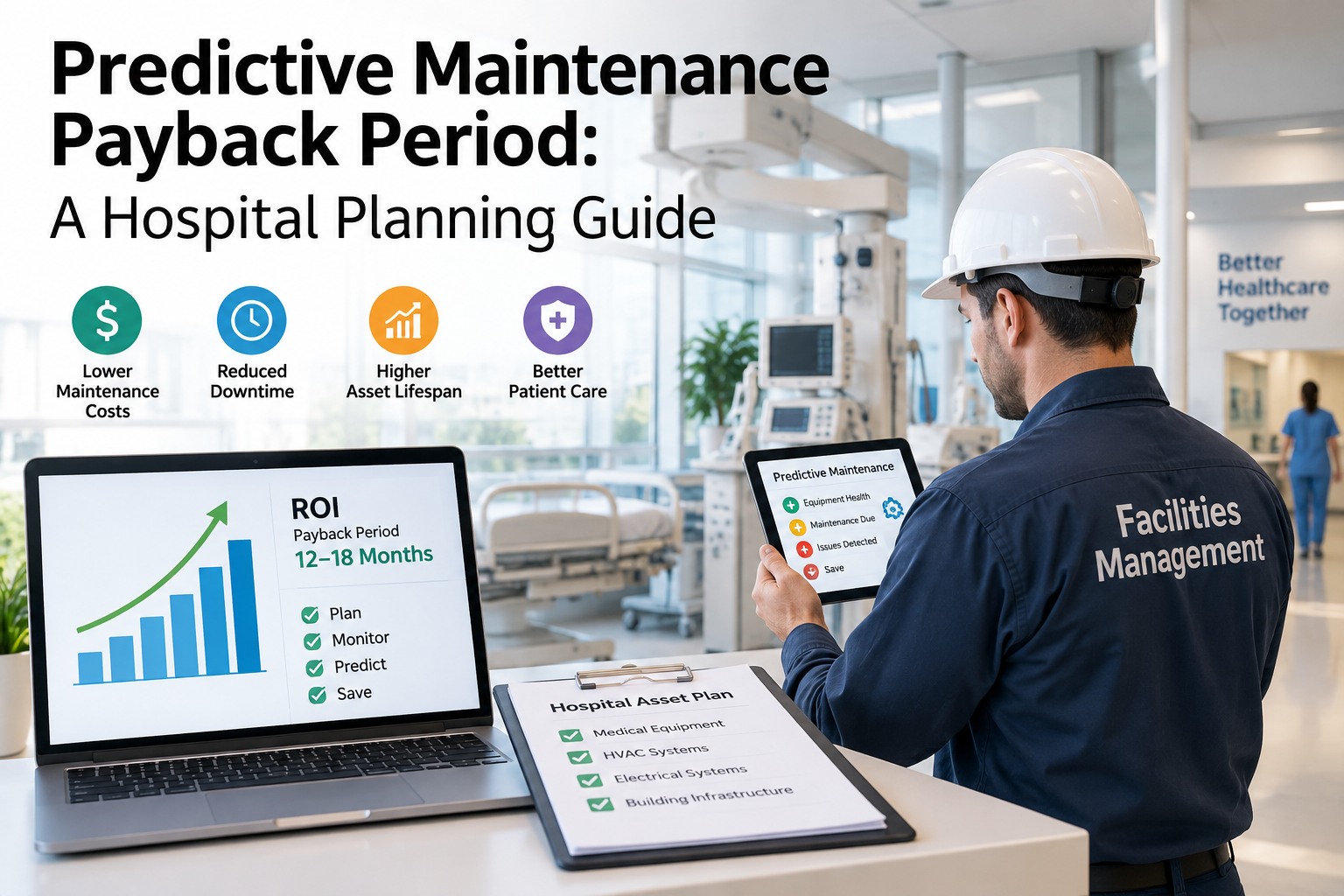
These figures reflect a convergence of savings streams: fewer unnecessary admissions, optimized labor deployment, reduced supply waste, lower readmission penalties, and accelerated revenue cycle performance. Importantly, ROI accrues faster than many technology investments — most health systems report positive returns within the first 12 months of full deployment. Book a demo to get a personalized ROI projection for your hospital.
How AI Predictive Analytics Platforms Work: A Technical Overview
Understanding the architecture of modern healthcare analytics platforms demystifies the technology and supports more informed vendor evaluation. At a high level, these systems comprise four interconnected components.
Overcoming Implementation Challenges
Despite compelling ROI potential, healthcare organizations frequently encounter obstacles when deploying AI analytics. Understanding these challenges in advance significantly improves implementation outcomes.
Predictive models are only as reliable as the data they consume. Incomplete, inconsistent, or siloed data significantly degrades forecast accuracy. Successful implementations begin with a data governance initiative — establishing definitions, ownership, and quality standards — before model training commences.
Technology solutions that bypass end-user engagement rarely sustain their initial performance gains. Effective change management — involving frontline staff in design, providing clear explanations of how predictions are generated, and demonstrating early wins — is as important as the technology itself.
Legacy EHR environments, proprietary scheduling systems, and fragmented departmental databases can complicate data pipeline development. Platforms with pre-built connectors for major EHR vendors and adherence to FHIR R4 standards substantially reduce integration timelines and associated costs.
AI models trained on historical data may perpetuate existing disparities in care delivery or resource allocation. Responsible AI governance frameworks — including regular bias audits across demographic subgroups and transparent model explainability — are non-negotiable components of ethical deployment.
Selecting the Right Predictive Analytics Partner
The healthcare analytics vendor landscape has matured considerably. Organizations evaluating platforms should assess five critical dimensions beyond feature checklists: interoperability with existing systems, deployment flexibility (cloud, on-premise, or hybrid), model explainability and regulatory compliance, demonstrated outcomes at comparable facilities, and the quality of post-implementation support.
Pilot programs focused on a single high-value use case — such as emergency department throughput or surgical scheduling optimization — provide a low-risk mechanism to evaluate platform performance with real organizational data before committing to enterprise-wide rollout. Vendors unable or unwilling to support structured pilots should be evaluated with appropriate skepticism.
Evaluation Checklist: 5 Questions to Ask Every Vendor
- Can you demonstrate outcomes at a facility with a similar size, payer mix, and EHR environment to ours?
- How does your platform handle model drift when patient population characteristics shift?
- What is your approach to explaining predictions to clinical end users in plain language?
- How does your data pipeline ensure HIPAA compliance and minimize PHI exposure in model training?
- What does your implementation and change management support model look like beyond go-live?
The Future Trajectory: Generative AI and Autonomous Operations
Predictive analytics represents the current leading edge of AI-driven hospital operations, but the trajectory points toward increasingly autonomous operational intelligence. Emerging capabilities include large language model integrations that synthesize clinical notes with operational data to surface nuanced risk signals, multimodal models that correlate imaging volume with radiology staffing needs in real time, and agentic AI systems that can execute low-risk operational decisions — such as initiating a discharge planning workflow — without human initiation.
The health systems best positioned for this next wave are those building robust data infrastructure and operational AI competency today. Early adopters of predictive analytics are accumulating the proprietary historical data, staff expertise, and organizational change capacity that will define competitive differentiation in the years ahead. The window for establishing first-mover advantage in AI-driven hospital operations is narrowing — sign up now to start building that advantage.
Ready to explore what predictive analytics can deliver for your specific operational challenges? Our team will map your highest-value use cases and model projected ROI for your facility.
Frequently Asked Questions
How is predictive analytics different from traditional hospital dashboards and reporting?
Traditional dashboards display historical data — what happened yesterday, last week, or last quarter. Predictive analytics uses machine learning to project what is likely to happen in the future, giving operational leaders actionable lead time rather than retrospective insight. The difference is the distinction between a rearview mirror and a windshield.
What data sources are required to deploy a healthcare predictive analytics platform?
At minimum, most platforms require access to ADT (admission, discharge, transfer) event data from the EHR, historical scheduling data, and basic supply chain records. More sophisticated use cases — such as clinical deterioration prediction — additionally require lab values, vital signs, and medication administration records. Platforms with FHIR-compliant APIs significantly reduce the technical complexity of data access.
How do AI analytics platforms maintain patient data privacy and HIPAA compliance?
Leading platforms employ data de-identification and pseudonymization techniques during model training, minimizing PHI exposure while preserving statistical validity. All data transmission is encrypted in transit and at rest. Business Associate Agreements (BAAs) formalize the compliance relationship between the health system and the analytics vendor. On-premise deployment options are available for organizations with heightened data residency requirements.
How long does it take to see meaningful results from a predictive analytics deployment?
Most implementations begin generating usable forecasts within 30–60 days of data pipeline activation, as initial models train on historical data. Operational impact — measured through metrics like reduced overtime, improved bed utilization, or lower readmission rates — typically becomes measurable within 3–6 months. Full organizational ROI realization generally follows a 12-month implementation arc as adoption deepens and models improve.
Can smaller community hospitals benefit from AI predictive analytics, or is it only viable for large health systems?
Predictive analytics delivers proportional value at any scale. Smaller facilities often realize faster implementation timelines and cleaner data environments that support rapid model accuracy gains. Cloud-based SaaS deployment models have also substantially reduced upfront capital requirements, making enterprise-grade analytics accessible to critical access hospitals and community health systems that would previously have been priced out of this technology category.