The modern hospital is under pressure from every direction — rising patient volumes, nursing shortages, burnout-driven turnover, and the constant push to do more with less. At the center of this operational crisis is a problem that has long resisted easy solutions: how do you get the right staff, in the right place, at the right time, every single shift? Machine learning is rapidly emerging as the definitive answer. By analyzing historical patterns, patient acuity data, seasonal trends, and real-time demand signals, ML-powered systems can forecast staffing needs with remarkable precision — replacing guesswork with data-driven certainty.
Why Traditional Hospital Staffing Falls Short
For most hospitals, staffing decisions are still made the old-fashioned way: a charge nurse reviews a spreadsheet, calls in part-time staff when things look busy, and scrambles to cover unexpected absences. Nurse managers spend hours each week on scheduling rather than patient care leadership. Float pools are managed reactively, agency spend balloons during surge periods, and staff morale suffers under inequitable shift assignments. These aren't isolated problems — they are systemic symptoms of a workforce management model that was never designed to handle the complexity of modern healthcare.
The consequences are measurable. Understaffed units experience higher patient-to-nurse ratios, which research consistently links to worse clinical outcomes and elevated mortality risk. Overstaffed shifts waste payroll budget and demoralize employees who could be deployed more meaningfully elsewhere. The financial toll is staggering: hospital labor costs represent 50 to 60 percent of total operating expenses, and poor scheduling efficiency can account for tens of millions in preventable annual waste at a mid-sized facility. Machine learning addresses this problem at the root — transforming workforce planning from a reactive administrative function into a strategic, predictive capability. If your hospital is ready to close the gap between reactive scheduling and intelligent workforce management, sign up for OxMaint and start your optimization journey today.
How Machine Learning Models Forecast Hospital Staffing Demand
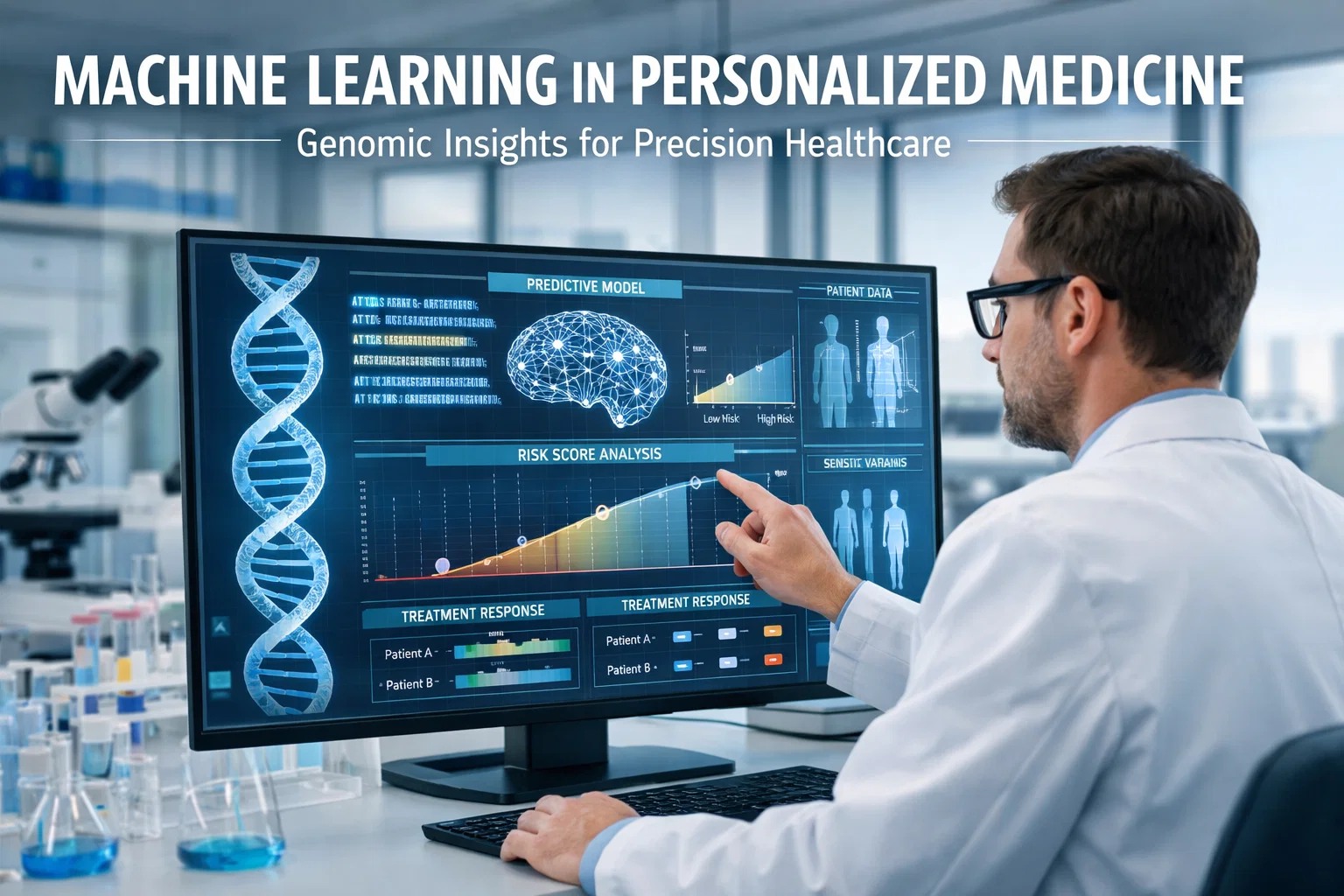
At the core of any ML-powered workforce optimization platform is a demand forecasting engine. Unlike simple historical averaging, machine learning models ingest dozens of variables simultaneously — including emergency department admission rates, seasonal illness trends, scheduled procedure volumes, day-of-week patterns, local event calendars, and even weather data that correlates with certain admission types. These models are trained on years of historical patient flow and staffing data, allowing them to identify complex, non-obvious patterns that human planners would never detect.
Modern forecasting architectures commonly use gradient boosting models, long short-term memory (LSTM) neural networks, and ensemble approaches that blend multiple predictive signals. These systems can produce unit-level staffing recommendations 14 to 28 days in advance, with accuracy that improves continuously as the model ingests more facility-specific data. Some platforms achieve demand forecast accuracy exceeding 92 percent, allowing nurse managers to build schedules with confidence rather than padding shifts with unnecessary buffer staff as insurance against uncertainty. To see this forecasting intelligence in action at your facility, book a demo with the OxMaint team.
The ML Workforce Optimization Pipeline
Key Applications of Machine Learning in Healthcare Workforce Management
Machine learning is not a single tool — it is a family of techniques applied across multiple dimensions of workforce planning. Healthcare organizations are deploying ML in increasingly sophisticated ways to address specific operational pain points, from reducing float pool costs to improving nurse satisfaction scores. Understanding these distinct applications helps hospital leadership identify where the highest-impact opportunities exist within their own operations.
Measurable Outcomes: What Hospitals Are Achieving
The operational case for machine learning in workforce management is supported by a growing body of documented outcomes from healthcare systems that have moved beyond pilot programs to enterprise-scale deployment. These results consistently demonstrate that the benefits extend far beyond simple cost reduction — they reach into clinical quality, staff satisfaction, and organizational resilience.
| Outcome Area | Improvement Range | Primary Driver |
|---|---|---|
| Overtime Cost Reduction | 30–40% | Proactive demand-matched scheduling |
| Agency Spend Reduction | 20–35% | Advance float pool pre-positioning |
| Nurse Turnover Decrease | Up to 25% | Equitable scheduling and burnout prevention |
| Schedule Build Time Savings | 60–80% | Automated schedule generation |
| Staff Utilization Improvement | 20–35% | Real-time redeployment recommendations |
| Demand Forecast Accuracy | 88–94% | Multi-variable ML forecasting models |
| Patient Satisfaction Scores | 8–15% improvement | Consistent optimal nurse-to-patient ratios |
Integrating Machine Learning with Existing Hospital Systems
One of the most common concerns among hospital operations leaders considering ML-based workforce tools is integration complexity. The good news is that modern platforms are designed with interoperability at their foundation. They connect to existing electronic health record (EHR) systems to pull patient census and acuity data, integrate with HR information systems (HRIS) for staff profiles and credential records, and sync with time-and-attendance platforms for real-time shift coverage visibility. This means hospitals do not need to replace their existing infrastructure — they extend it with an intelligent analytics and optimization layer. To explore how OxMaint integrates with your current systems, book a personalized demo with our implementation team.
Most enterprise-grade ML workforce platforms support HL7 FHIR and API-based integrations, enabling bidirectional data exchange with systems like Epic, Cerner, Workday, and Kronos. Implementation timelines for core functionality typically range from six to sixteen weeks depending on data readiness and integration complexity. The payback period for these investments is frequently measured in months rather than years, given the scale of labor cost inefficiencies that even modest improvements in scheduling accuracy can eliminate.
Addressing the Human Side of AI-Driven Scheduling
Technology alone does not transform a workforce. The most sophisticated ML scheduling platform will fail to deliver its potential if clinical staff perceive it as a tool that removes their agency and imposes algorithmic decisions on deeply personal work-life balance questions. Successful implementations treat machine learning as a decision-support system rather than a replacement for human judgment. Managers retain override capability, staff can submit preferences that the algorithm incorporates, and transparency into how recommendations are generated builds trust over time.
Leading healthcare systems invest in change management programs that run parallel to technical deployment. This includes educating nursing leadership on how to interpret and act on ML recommendations, creating feedback channels so staff can flag scheduling anomalies, and establishing governance processes that ensure the algorithm is continuously evaluated for equity and bias. When clinical staff understand that the system is optimizing for fair workload distribution and sustainable scheduling — not just cost minimization — acceptance rates rise substantially and the human-AI collaboration becomes genuinely productive.
The Road Ahead: Where ML in Healthcare Workforce Is Heading
The current generation of machine learning workforce tools is already delivering substantial value, but the trajectory of development points toward capabilities that will be even more transformative. Natural language interfaces will allow nurse managers to query staffing data and request schedule modifications conversationally. Reinforcement learning systems will optimize scheduling decisions not just for efficiency but for patient outcome metrics, creating a direct feedback loop between staffing patterns and clinical quality indicators.
Federated learning architectures will allow hospitals within health systems to share anonymized workforce pattern data across facilities without compromising privacy, building richer models that benefit from network-wide intelligence. And as genomic and wearable health data becomes more integrated into clinical workflows, acuity scoring models will become far more precise — enabling staffing allocations that anticipate patient deterioration before it manifests in observable clinical signs. The hospitals investing in ML workforce infrastructure today are not just solving today's staffing challenges. They are building the foundational capability for a fundamentally more efficient and resilient healthcare operation. Start building that capability now — sign up for OxMaint free and take the first step toward a smarter workforce.
Frequently Asked Questions
How does machine learning differ from traditional scheduling software for hospitals?
Traditional scheduling software automates rule-based processes — it enforces labor rules, tracks certifications, and builds schedules from templates. Machine learning goes fundamentally further by learning from historical data to predict future demand and proactively optimize staffing before problems occur. Instead of applying fixed rules, ML models continuously adapt their recommendations based on new data, improving accuracy over time in ways that rule-based systems cannot.
What data sources does ML workforce optimization require?
Effective ML workforce systems typically draw on patient census and admission history, acuity classification data, procedure and surgery schedules, staff HR records including certifications and tenure, historical absence and overtime records, and external factors like seasonal disease trends. The richer and cleaner the data, the more accurate the forecasting models become. Most platforms include data quality assessment tools to identify and address gaps before model training.
Is machine learning in hospital staffing compliant with labor regulations and union agreements?
Yes, when properly configured. Enterprise workforce optimization platforms allow hospitals to encode labor laws, collective bargaining agreement rules, mandatory rest period requirements, and overtime thresholds directly into the scheduling algorithm's constraint set. The ML model then optimizes within these boundaries, ensuring generated schedules are compliant by design rather than requiring manual compliance review after the fact.
How long does it typically take to see ROI from an ML workforce optimization deployment?
Most healthcare organizations begin seeing measurable financial returns within three to six months of full deployment. Early wins typically come from reductions in overtime and agency spend, which are among the largest and most immediate sources of labor inefficiency. Longer-term returns from turnover reduction and improved staff utilization typically materialize over 12 to 24 months as the models mature and operational practices align more fully with ML-generated recommendations.
Can smaller hospitals and clinics benefit from ML-based staffing, or is it only for large systems?
Hospitals of all sizes benefit from ML workforce optimization. Smaller facilities with tighter staffing margins and less flexibility to absorb scheduling errors often see proportionally higher impact from improved forecasting accuracy. Cloud-based SaaS platforms have made these capabilities accessible at price points appropriate for community hospitals and multi-site clinic networks, eliminating the need for large on-premises infrastructure investments.