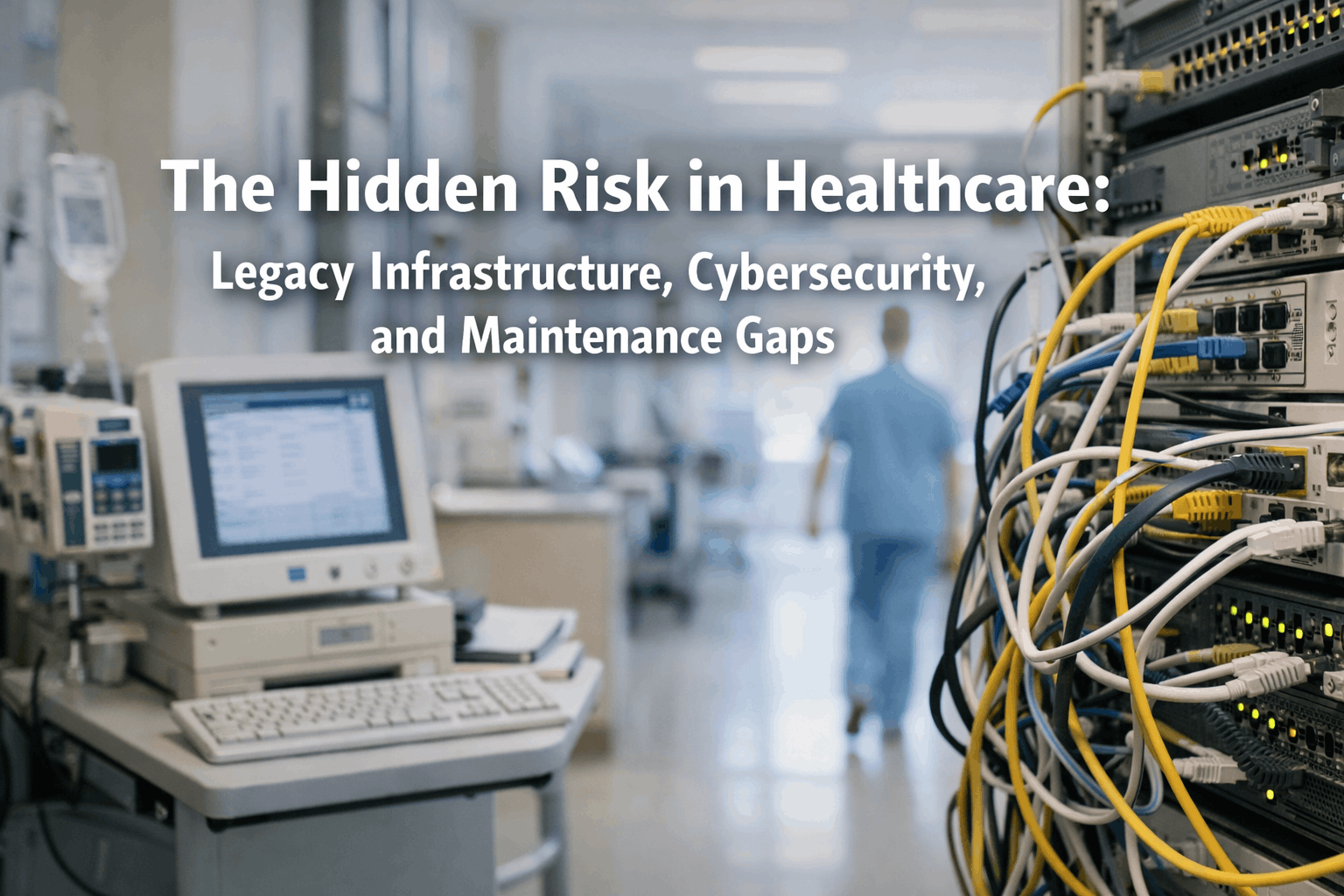
Healthcare organizations have become the most targeted sector in the global cybersecurity landscape. In 2023 alone, the healthcare industry reported more data breaches than any other sector — exposing over 133 million patient records according to the U.S. Department of Health and Human Services breach portal. The financial consequences are severe: the average cost of a healthcare data breach reached $10.93 million in 2023, more than double the cross-industry average. Behind every statistic is a deeper risk — compromised patient safety, disrupted care delivery, and irreversible damage to institutional trust. Artificial intelligence is now emerging as the most powerful defensive layer in modern healthcare cybersecurity — capable of detecting threats at machine speed, predicting attack patterns before damage occurs, and protecting the sensitive clinical data that digital health systems depend on. Sign up free to explore how intelligent automation supports healthcare security and operational resilience.
Protect Your Healthcare Systems with Intelligent Security
OxMaint helps healthcare organizations automate compliance workflows, monitor operational vulnerabilities, and reduce administrative risk — giving your security teams more time to focus on what matters most.
Why Healthcare Is the Most Targeted Sector in Cybersecurity
Healthcare organizations present a uniquely attractive attack surface for cybercriminals. Patient records contain a dense combination of personally identifiable information, insurance data, financial details, and sensitive medical history — making a single electronic health record worth significantly more on the dark web than a standard financial record. Medical devices, clinical workstations, EHR systems, and third-party vendor portals all create interconnected points of vulnerability that legacy security architectures were never designed to defend.
The consequences of a successful cyberattack extend far beyond data exposure. Ransomware attacks on hospital networks have directly delayed surgical procedures, disrupted medication administration, and forced emergency diversions that put patient lives at risk. A 2022 study published in JAMA Network Open found a statistically significant increase in patient mortality rates at hospitals that suffered ransomware attacks — a finding that fundamentally reframes cybersecurity as a patient safety issue, not merely an IT compliance challenge.
Encrypts hospital systems and patient records, demanding payment before restoring access. Healthcare accounts for over 25% of all ransomware attacks globally.
Credential-harvesting emails targeting clinical staff remain the most common initial access vector, exploiting high workload environments where vigilance is difficult to sustain.
Unauthorized access to patient records by employees — whether malicious or accidental — represents a significant compliance and liability risk under HIPAA enforcement.
Medical device vendors, billing platforms, and cloud service providers extend the attack surface beyond the hospital perimeter, creating supply chain security risks.
How Artificial Intelligence Transforms Healthcare Cyber Defense
Traditional cybersecurity approaches rely on rule-based detection systems — identifying known threats by matching patterns against established signatures. This approach is fundamentally inadequate in an environment where threat actors continuously evolve their techniques and where zero-day vulnerabilities can evade static detection entirely. AI-powered security platforms operate differently: they learn what normal looks like across a healthcare network and use that baseline to identify anomalies that may indicate an active threat, even when no known signature exists.
Machine learning models trained on healthcare-specific network behavior can process millions of events per second — analyzing login patterns, data access requests, network traffic flows, and system calls simultaneously to detect suspicious activity in real time. A physician accessing patient records from an unfamiliar device at an unusual hour, a workstation communicating with an unrecognized external server, or a bulk data export initiated outside standard clinical workflows — AI systems flag these behaviors within seconds, enabling security teams to respond before a breach escalates. Sign up free to see how OxMaint helps healthcare organizations deploy intelligent security and automate clinical compliance workflows.
Core AI Capabilities in Healthcare Cybersecurity
The application of artificial intelligence across the healthcare security stack spans multiple layers — from network monitoring and endpoint protection to identity governance and regulatory compliance. Understanding how each capability addresses specific vulnerabilities helps security leaders prioritize deployment and investment.
Behavioral Anomaly Detection
AI models continuously learn the behavioral baseline of every user, device, and application on the healthcare network. When behavior deviates from established patterns — unusual access times, atypical data volumes, unexpected geographic locations — the system generates alerts and can automatically restrict access pending investigation. This capability is particularly effective at detecting compromised credentials, insider threats, and early-stage ransomware activity.
Predictive Threat Intelligence
By aggregating threat intelligence from global healthcare security feeds, dark web monitoring, and vulnerability databases, AI platforms can predict which attack vectors are most likely to target a specific organization based on its technology stack, geography, and patient population. Predictive models allow security teams to proactively patch vulnerabilities and harden configurations before known exploitation campaigns reach their environment.
Automated Incident Response
Security orchestration platforms powered by AI can execute predefined response playbooks automatically when specific threat conditions are met — isolating compromised endpoints from the network, revoking active sessions, quarantining suspicious files, and generating incident reports — all within seconds of detection. Automated response dramatically reduces the time between initial breach detection and containment, limiting the blast radius of successful attacks.
Natural Language Processing for Phishing Detection
Modern phishing attacks targeting healthcare workers use sophisticated social engineering techniques that bypass simple keyword filters. AI-powered email security platforms apply natural language processing to analyze the full semantic context of inbound messages — detecting urgency manipulation, impersonation tactics, and malicious link structures with accuracy rates that exceed traditional filtering by a wide margin. Continuous model retraining ensures these systems adapt to evolving phishing techniques.
Medical Device Security Monitoring
Connected medical devices — infusion pumps, imaging systems, patient monitors, and remote diagnostic tools — represent one of the fastest-growing vulnerability surfaces in healthcare. Many devices run legacy operating systems that cannot be patched through standard methods. AI-powered network detection and response platforms can monitor device communication patterns, detect anomalous behavior that may indicate compromise, and enforce network segmentation policies that limit the lateral movement of attackers who gain device access.
HIPAA Compliance Monitoring and Audit Automation
Maintaining continuous HIPAA compliance across large healthcare organizations requires monitoring access logs, audit trails, and data handling practices at a scale that overwhelms manual review processes. AI-powered compliance platforms automate the continuous monitoring of protected health information access, generate real-time alerts for potential violations, and produce audit-ready reports that demonstrate regulatory compliance — reducing both compliance risk and the operational burden on security and privacy teams.
AI Security Capabilities at a Glance
The following comparison illustrates the key capabilities that differentiate AI-powered healthcare security platforms from traditional approaches, along with their primary clinical and operational impact.
| AI Security Capability | Traditional Approach | AI-Powered Advantage | Key Healthcare Application |
|---|---|---|---|
| Threat Detection | Signature-based matching against known threats | Behavioral analysis detects zero-day and novel attacks | Ransomware early warning before file encryption begins |
| Incident Response | Manual investigation and manual containment steps | Automated playbook execution within seconds of detection | Immediate isolation of compromised clinical workstations |
| Phishing Defense | Keyword and sender reputation filtering | NLP-based semantic analysis of message context and intent | Protection of clinical staff in high-workload environments |
| Compliance Monitoring | Periodic manual log review and spot audits | Continuous automated monitoring with real-time violation alerts | HIPAA access log surveillance across entire EHR ecosystem |
| Device Security | Static firewall rules and manual asset inventory | Dynamic behavioral monitoring of device communication patterns | Connected medical device anomaly detection and segmentation |
| Vulnerability Management | Scheduled scanning with manual prioritization | Risk-based prioritization using predictive threat modeling | Proactive patching aligned to active healthcare threat campaigns |
Building a Layered AI Security Architecture for Healthcare
Effective healthcare cybersecurity cannot rely on any single technology or control. The most resilient organizations build a layered defense architecture that integrates AI capabilities across the full security stack — from perimeter defense and endpoint protection through to identity governance and data loss prevention. Each layer addresses a distinct attack vector, and the combination creates defense-in-depth that significantly raises the cost and complexity of successful attacks.
Network Detection and Response
AI-powered network monitoring establishes baselines for all traffic patterns across clinical, administrative, and biomedical device networks. Continuous analysis identifies lateral movement, data exfiltration attempts, and command-and-control communications that indicate an active compromise — triggering automated segmentation responses to limit threat propagation.
Endpoint Detection and Response
AI agents deployed on clinical workstations, nursing stations, and administrative endpoints monitor process behavior, file system activity, and memory operations in real time. Malicious process chains — including fileless malware techniques that bypass traditional antivirus — are detected and terminated before they can execute their payload or establish persistence.
Identity and Access Intelligence
Machine learning models applied to identity governance analyze authentication patterns, privilege usage, and access request behavior across the entire user population. Anomalous access — including compromised credentials being used by threat actors — is flagged and can trigger step-up authentication requirements or automatic account suspension pending human review.
Data Loss Prevention and Classification
AI-powered DLP systems classify protected health information across structured and unstructured data stores — identifying where sensitive data lives, who is accessing it, and whether data movement patterns suggest unauthorized exfiltration. Automated policy enforcement prevents bulk PHI transfers to unapproved destinations and alerts privacy officers to potential HIPAA exposure events.
Security Operations Center Augmentation
AI-powered SIEM and SOAR platforms transform raw security event data into prioritized, contextualized alerts that security analysts can act on efficiently. By filtering noise, correlating events across multiple data sources, and providing recommended response actions, AI dramatically increases the operational capacity of healthcare security teams — enabling lean teams to effectively protect large, complex health system environments.
HIPAA, Regulatory Compliance, and AI Governance
Healthcare cybersecurity is not only a technical challenge — it is a regulatory imperative. The Health Insurance Portability and Accountability Act mandates specific safeguards for the protection of protected health information, and the consequences of non-compliance extend well beyond the cost of the breach itself. The Office for Civil Rights has significantly intensified HIPAA enforcement in recent years, with record settlement figures reflecting the severity of large-scale data exposures.
AI-powered compliance platforms help healthcare organizations maintain continuous HIPAA readiness by automating the monitoring functions that manual processes cannot sustain at enterprise scale. Access logs across EHR systems, medical imaging platforms, patient portals, and clinical communication tools generate hundreds of millions of audit events annually in large health systems — a volume that renders manual review practically impossible. AI systems can monitor every access event, flag anomalies in real time, and maintain audit-ready records that demonstrate compliance to regulators, auditors, and business partners.
The emergence of the HIPAA Security Rule's forthcoming updates, anticipated to include more prescriptive requirements around encryption standards, multi-factor authentication, and vulnerability management, will further elevate the compliance imperative for healthcare security teams. Organizations that have already deployed AI-powered security infrastructure will be substantially better positioned to demonstrate and maintain compliance with evolving regulatory requirements. Book a demo to explore how OxMaint supports HIPAA compliance monitoring and healthcare workflow governance at your organization.
Overcoming Key Challenges in Healthcare AI Security Deployment
Despite the compelling evidence for AI-powered cybersecurity, healthcare organizations face distinct challenges in deploying these technologies effectively. Understanding these barriers in advance allows security and IT leadership teams to build realistic implementation plans that address obstacles proactively.
Legacy infrastructure complexity remains the most pervasive challenge. Many hospitals operate clinical systems that are decades old — running operating systems that are no longer supported by vendors, unable to accept modern security agents, and integrated with medical devices whose firmware cannot be updated without regulatory reapproval. AI security deployments must account for this reality, using network-level controls and passive monitoring techniques to extend protection to assets that cannot host traditional endpoint agents.
Alert fatigue in security operations is a critical risk when AI systems are not properly tuned for the healthcare environment. Clinical networks generate enormous volumes of legitimate anomalous activity — clinicians working irregular shifts, accessing records from multiple devices, and interacting with dozens of systems during a single encounter. AI models must be trained on healthcare-specific behavioral baselines to reduce false positive rates to levels that security analysts can realistically manage without dismissing legitimate alerts.
Workforce skills gaps present a significant implementation barrier. Effective AI security operations require analysts who can interpret model outputs, tune detection thresholds, manage automated response playbooks, and evaluate the accuracy of predictive models over time. Healthcare organizations investing in AI security platforms must simultaneously invest in training and talent development programs that build the internal capabilities required to operate these systems effectively.
Vendor integration and interoperability in complex healthcare IT environments require careful planning. AI security platforms must integrate with EHR systems, clinical communication platforms, biomedical device networks, and cloud infrastructure — each with its own data formats, API standards, and security configurations. Engaging experienced healthcare IT security integrators during platform selection and deployment significantly reduces the risk of integration failures that limit effectiveness.
Strengthen Your Healthcare Security Posture Today
From compliance workflow automation to operational risk management, OxMaint helps healthcare organizations build resilient, audit-ready systems that protect patients, data, and institutional trust.
Frequently Asked Questions
How does AI improve cybersecurity in healthcare?
AI improves healthcare cybersecurity by enabling behavioral anomaly detection that identifies threats no signature-based system can recognize, automating incident response to reduce containment time, applying natural language processing to detect sophisticated phishing attacks, and continuously monitoring PHI access patterns for HIPAA compliance — all at a scale and speed impossible with manual processes.
What are the most common cybersecurity threats facing healthcare organizations?
Ransomware, credential phishing, insider threats, third-party vendor vulnerabilities, and connected medical device exploits represent the most prevalent and damaging threat categories facing healthcare organizations today. Ransomware in particular has demonstrated the capacity to directly disrupt patient care and has been linked to adverse clinical outcomes.
Is AI-powered cybersecurity HIPAA compliant?
Leading AI security platforms are designed with HIPAA compliance requirements built in — implementing end-to-end encryption, role-based access controls, comprehensive audit logging, and data residency policies. Healthcare organizations must execute Business Associate Agreements with all AI security vendors and verify that specific platform configurations meet their HIPAA obligations before deployment.
How does AI detect ransomware in healthcare networks?
AI-powered endpoint and network detection platforms identify ransomware activity through behavioral indicators that appear before file encryption begins — including rapid file access patterns, shadow copy deletion attempts, abnormal process spawning, and unusual network communications. Early behavioral detection enables automated containment responses that can stop ransomware before it encrypts critical clinical systems.
What is the ROI of investing in AI cybersecurity for hospitals?
Organizations that fully deploy AI-powered security capabilities reduce breach containment time by an average of 61% and lower the total cost of a security incident significantly. Beyond direct breach cost savings, AI security platforms reduce compliance audit costs, decrease security analyst workload through automation, and provide measurable improvements in threat detection accuracy that reduce operational disruption risk.
How long does it take to deploy AI security in a hospital environment?
Initial deployment of core AI security capabilities — network monitoring, endpoint detection, and email security — can typically be achieved within eight to sixteen weeks in a single facility. Full enterprise deployment across multi-site health systems, including integration with legacy clinical systems and medical device networks, generally requires six to eighteen months depending on infrastructure complexity.



.png)