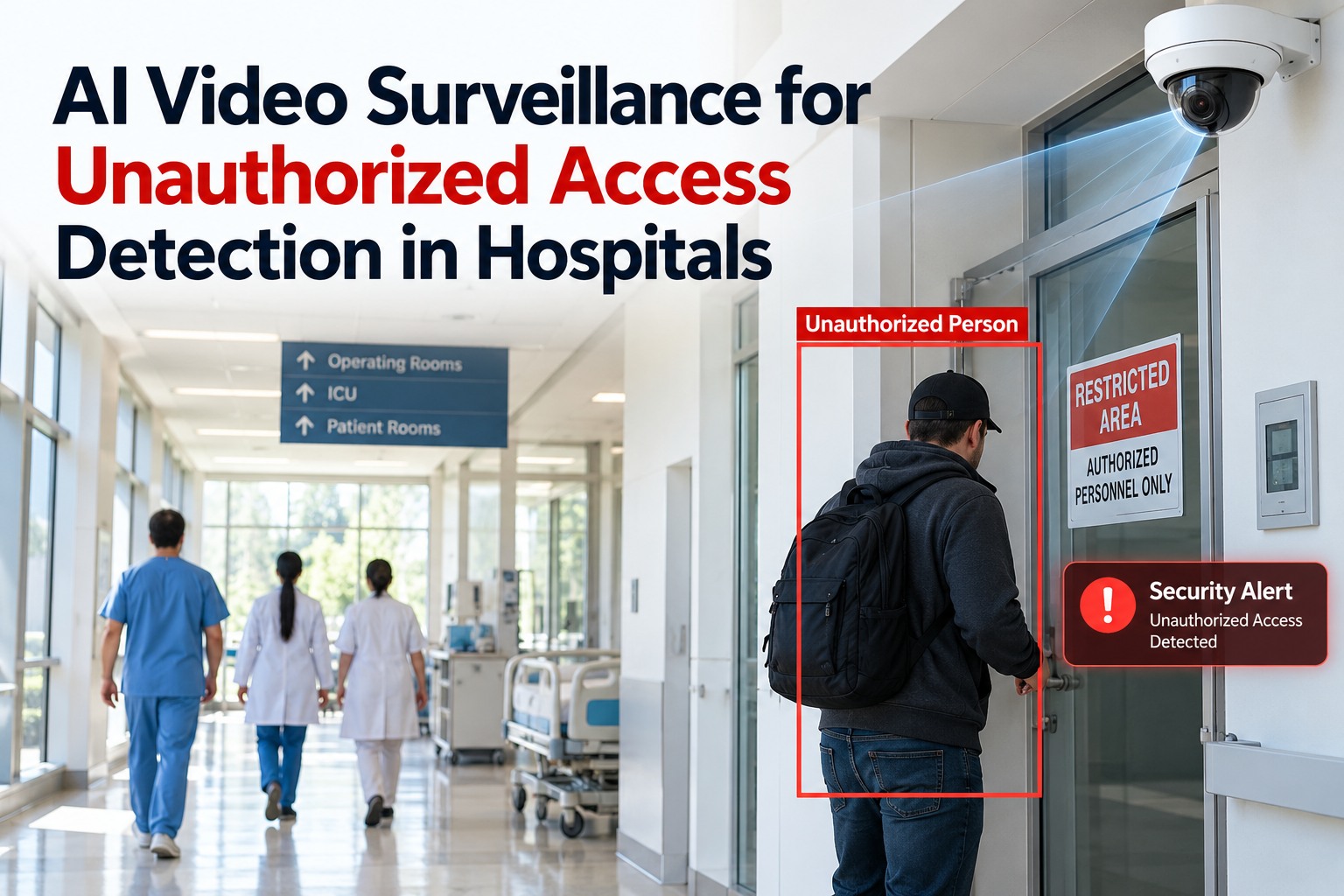
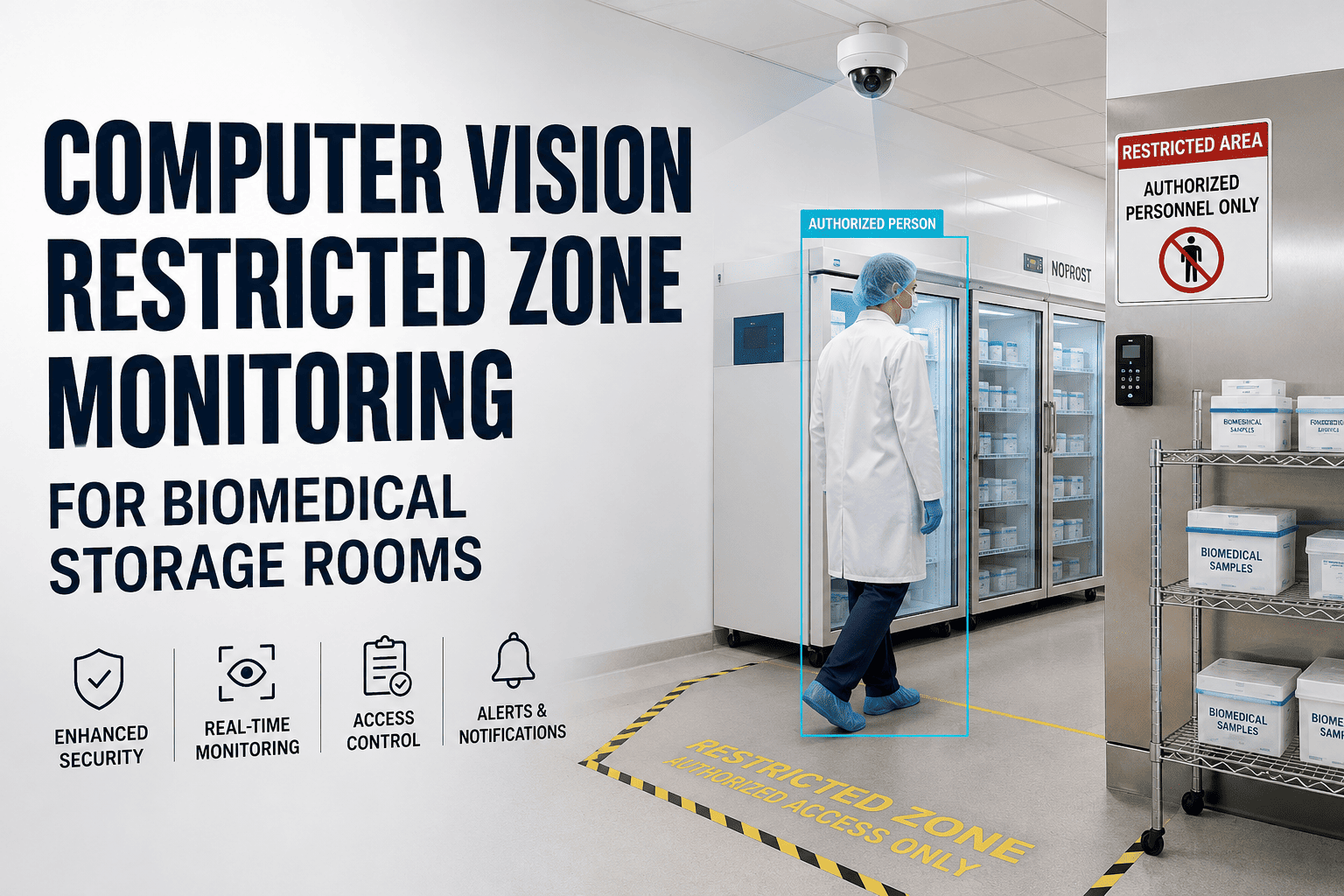
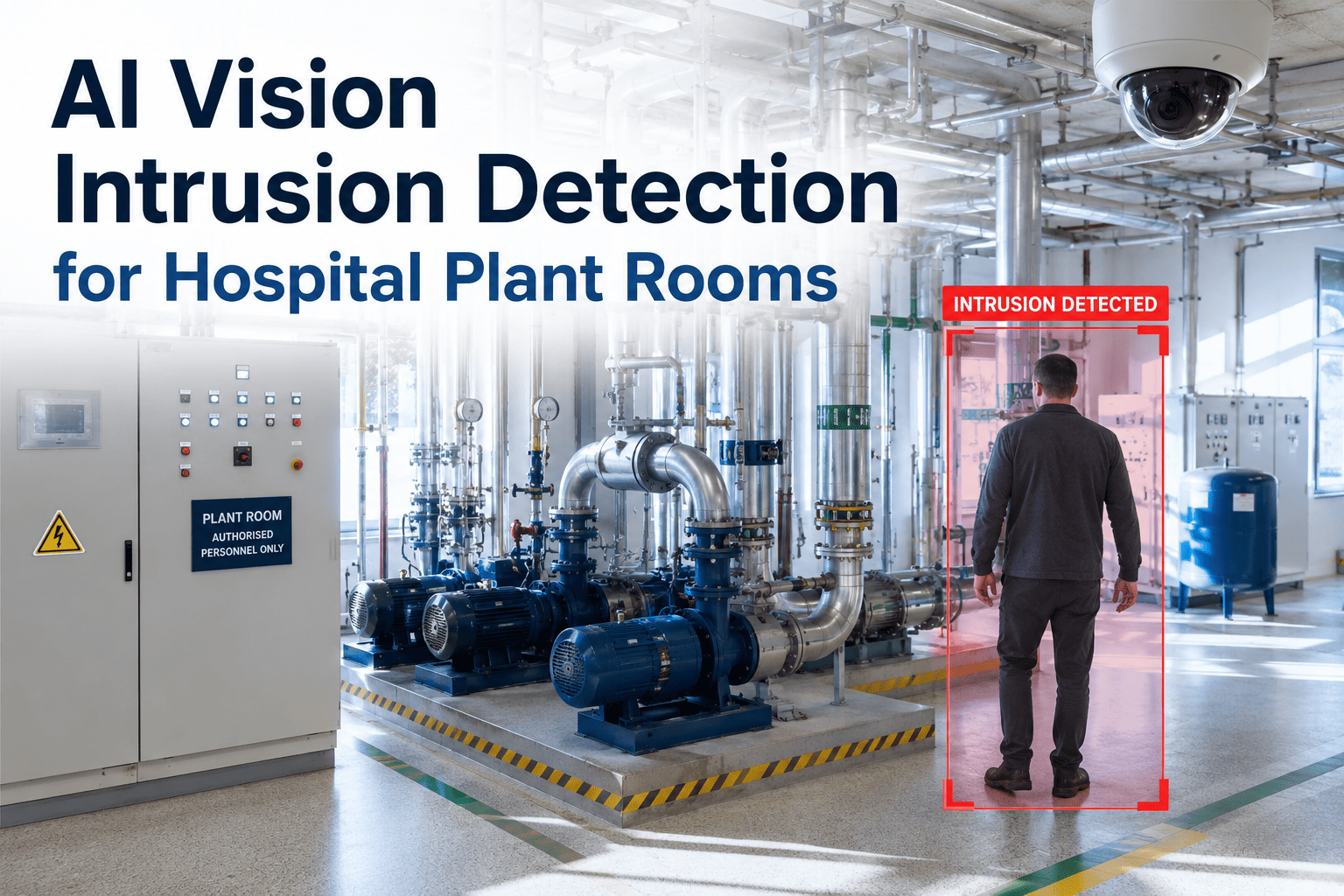
A hospital has dozens of doors that only the right people should walk through the pharmacy, the NICU, the OR suite, medical records, the loading dock after hours. Cameras watch them all, but no one can watch every feed at once, so an unauthorized entry is usually seen only later, on a recording, after something has already happened. AI video surveillance changes that: it watches every restricted zone continuously, recognises an access it shouldn't see, and raises a real-time alert the moment it happens. This page explains how that detection becomes a logged security incident and a tracked response in OXMAINT AI — or book a demo of security incident tracking in OXMAINT AI.
AI VIDEO SURVEILLANCE · UNAUTHORIZED ACCESS DETECTION · HOSPITAL SECURITY · 2026
AI Video Surveillance for Unauthorized Access Detection in Hospitals
An unseen entry to a restricted zone is a patient-safety risk and a security gap at once — and a bank of cameras no one is watching catches it only after the fact. OXMAINT AI is the AI-powered CMMS that turns a vision detection into a logged security incident and a tracked response — so an unauthorized access becomes a time-stamped alert, a documented incident, and a closed follow-up, not a surprise on yesterday's footage.
1 · Detect
2 · Alert
3 · Verify
4 · Respond & log
24/7
every restricted zone watched continuously, not only when someone is at the monitor
Real-time
alert at the moment of the event, not on a recording reviewed later
1
detection becomes one logged incident with a tracked, accountable response
PHI
patient privacy protected by design — detection without needless exposure
The Zones That Need Watching Most
Not every door is equal. A hospital's risk concentrates in a handful of restricted zones, each carrying a different consequence if the wrong person gets in. AI surveillance earns its place by watching these continuously. Start free and map your restricted zones in OXMAINT AI.
Pharmacy & Controlled Drugs
Diversion and theft risk — the highest-value restricted space in most facilities.
NICU & Pediatrics
Infant security and abduction prevention — access must be tightly controlled and watched.
Operating Room Suite
Sterile, staff-only corridors where an unauthorized presence is both a safety and a security breach.
Medical Records & Data Center
Physical access to patient information and IT infrastructure that must stay restricted.
Behavioral Health
Elopement and entry control where patient and staff safety depend on a secured perimeter.
Loading Docks & After-Hours Doors
The quiet entries where after-hours access most often goes unnoticed.
What the AI Is Watching For
Modern video analytics doesn't just record — it recognises patterns of access that signal a problem. These are the event types it flags, each turning a passive camera into an active sensor.
●Unauthorized Entry
A person enters a restricted zone without a matching credential or during restricted hours.
●Tailgating / Piggybacking
A second person slips through a secured door behind an authorised badge-in.
●Loitering at a Sensitive Door
Someone lingers near a restricted entrance longer than normal traffic would.
●After-Hours Access
Movement through a zone outside its approved operating window.
●Door Held or Forced Open
A secured door propped, held, or forced beyond its normal open time.
●Presence in a Staff-Only Area
A person detected in a space that should have no public or patient traffic.
From Detection to a Closed Incident
An alert that nobody acts on is just noise. The value is in the chain that follows — from the moment of detection to a verified, logged, and resolved incident. This is the loop OXMAINT AI runs around the detection. Book a demo of the alert-to-incident workflow in OXMAINT AI.
1Detect
The AI flags the access event at the restricted zone.
2Alert
A real-time alert reaches security with the clip and location.
3Verify
A person confirms it's real or dismisses a false flag.
4Respond
The response is dispatched and the action recorded.
5Log Incident
A time-stamped incident is raised with the evidence attached.
6Review & Close
Follow-up tracked to closure and the pattern trended.
Privacy by DesignDetection Without Needless Exposure
In a hospital, the footage itself is sensitive — it can contain patients and protected health information. Unauthorized-access detection has to protect privacy while it protects the building. These are the safeguards that keep the two aligned.
✓Purposeful placement — cameras on restricted entries and access paths, not on patient care areas where they aren't warranted.
✓Controlled footage access — who can view clips is itself restricted, logged, and role-based.
✓Retention limits — recordings and incident evidence kept only as long as policy requires, then cleared.
✓Detection over identity — the goal is flagging an access event, not building a profile of people moving through the building.
How OXMAINT AI Turns Alerts Into Accountable Incidents
OXMAINT AI is the AI-powered maintenance and operations platform that carries a security event from the alert to the closed, documented incident — the zone register, the incident log, the response work order and the audit trail on one platform. Put your restricted zones on it when you start free and build your incident workflow in OXMAINT AI.
Zone & Camera Register
Every restricted zone and its cameras as assets, with the access rules and responsible team on file.
Alert → Incident
A detection raises a time-stamped incident automatically, with the clip, zone and time attached.
Response Tracking
The dispatched response and every action recorded, so accountability is clear and provable.
Linked Work Orders
A faulty door, a failed lock or a blind-spot camera becomes a maintenance work order off the same event.
Audit-Ready Records
Signed, dated incident records retained and ready for security review or accreditation survey.
Incident Trending
Events trended by zone and time so the recurring weak point gets engineered out, not just responded to.
The Breach You See in Real Time Is the One You Can Stop.
Caught at the moment of access, an unauthorized entry is an alert, a verified incident, and a response on the record. Found on yesterday's footage, it's already happened. OXMAINT AI makes the detection actionable and the response accountable.
EXPERT REVIEW
Written for hospital security, facilities and operations teams. AI video analytics is a detection aid — it flags access events for human verification, and its outputs are probabilistic, so a person confirms or dismisses each alert before a response is taken. It works alongside, not in place of, physical access control, security personnel and established emergency procedures. Camera placement, footage handling and retention in a healthcare setting carry privacy and legal obligations under HIPAA and other regulations, which are the facility's responsibility to meet with its own counsel and policy. OXMAINT AI is a maintenance and operations management platform that logs the incident, tracks the response and raises related work orders — it is not an access-control system, a video management system, or a replacement for trained security staff.
Frequently Asked Questions
How is AI video surveillance different from regular cameras?
Regular cameras record for later review; AI video analytics interprets the feed in real time, recognising events like an unauthorized entry, tailgating or loitering and raising an alert the moment they happen. It turns a passive recording into an active sensor, so a problem is flagged as it occurs rather than discovered afterward.
Start free and connect detections to incidents in OXMAINT AI.
Does AI surveillance replace security staff or access control?
No. It's a layer on top of them. Access control decides who may open a door; security staff respond and make judgement calls; AI detection catches the events those systems miss — a tailgater, a propped door, an after-hours presence — and routes them for human verification. Every alert is confirmed by a person before a response is taken.
How does it protect patient privacy?
Through purposeful placement on restricted entries rather than patient care areas, role-based and logged access to footage, retention limits aligned to policy, and a focus on flagging access events rather than profiling people. In healthcare, camera handling carries HIPAA and other obligations that the facility meets with its own policy and counsel.
What restricted areas benefit most?
The highest-consequence zones — pharmacy and controlled-drug storage, NICU and pediatrics, the OR suite, medical records and data centers, behavioral health, and quiet after-hours entries like loading docks. These are where an unauthorized access carries the greatest safety, security or compliance consequence.
Why log a detection as an incident instead of just alerting?
An alert tells you something happened; an incident record shows what was done about it. Logging each verified detection as a time-stamped incident with the evidence and the response creates the accountability and the audit trail that security reviews and accreditation surveys expect.
Book a demo of incident logging in OXMAINT AI.
See the Access the Moment It Happens.
Run hospital access-detection on OXMAINT AI: a register of every restricted zone, real-time alerts from your video analytics turned into time-stamped incidents, a tracked response for each one, and a trend view of where the gaps keep appearing — so every unauthorized access is seen, verified and closed, with patient privacy protected throughout.