The ambulatory care market is projected to reach $1.5 trillion by 2034, with rehabilitation facilities leading this transformation in outpatient healthcare delivery. Yet behind every successful patient recovery story lies an often-overlooked foundation: the maintenance systems keeping parallel bars stable, therapy treadmills calibrated, and HVAC systems delivering the precise air quality that vulnerable patients require. For facility managers navigating Joint Commission standards, AAAHC accreditation requirements, and the daily pressure to maximize equipment uptime, the path from reactive chaos to proactive excellence demands more than good intentions—it requires a data-driven maintenance operating model designed specifically for the unique challenges of ambulatory rehab environments.
Ambulatory Care Facility Maintenance: The Ultimate Guide for Rehab Facilities
Rehabilitation facilities occupy a unique position in the healthcare ecosystem. Unlike acute care hospitals with their round-the-clock emergency protocols, or primary care clinics with their predictable patient flows, rehab facilities must balance the clinical precision of medical equipment with the physical demands of exercise machinery—all while maintaining the environmental controls necessary for immunocompromised patients recovering from surgery, stroke, or injury. This convergence of healthcare and fitness facility maintenance requirements creates challenges that traditional approaches simply cannot address.
Market Growth VisualizationThe financial stakes are equally compelling. U.S. hospitals lose an average of $7.5 million annually from inadequate medical equipment maintenance, with total downtime costs exceeding visible repair expenses by five to ten times when accounting for revenue loss, clinical disruption, and strategic impacts. For ambulatory rehab facilities operating on thinner margins than inpatient counterparts, every percentage point of equipment uptime improvement translates directly to patient throughput, revenue capture, and competitive positioning in an increasingly crowded marketplace.
Harden Healthcare Service Quality with Oxmaint CMMS
The transition from paper-based maintenance tracking to a comprehensive Computerized Maintenance Management System represents more than a technological upgrade—it fundamentally transforms how rehabilitation facilities approach patient safety, regulatory compliance, and operational excellence. Modern CMMS platforms like Oxmaint integrate mobile inspections, IoT sensor data, AI-powered analytics, and audit-ready documentation into a unified system that turns maintenance from a cost center into a strategic differentiator.
Equipment Ecosystem DiagramWhat distinguishes healthcare-grade CMMS implementation from generic maintenance software is the integration of risk scoring methodologies that align equipment criticality with patient safety implications. A malfunctioning treadmill in a commercial gym creates inconvenience; that same failure in a cardiac rehabilitation program potentially endangers lives. Oxmaint's risk-based prioritization ensures maintenance resources flow to the equipment categories where failure consequences extend beyond operational disruption to clinical outcomes.
Maintenance Impact CalculatorThe transition to proactive maintenance delivers measurable returns across multiple dimensions. Healthcare facilities deploying integrated predictive maintenance technologies achieve payback within eight to fourteen months through downtime reduction alone, with ongoing annual savings ranging from $800,000 to $2 million depending on facility size and equipment complexity. These aren't theoretical projections—they represent documented outcomes from organizations that have made the commitment to data-driven maintenance excellence.
CTA Section 1Designing a Data-Driven Program — A Healthcare Operating Model with Checklists
Building a maintenance program that satisfies Joint Commission Environment of Care standards, AAAHC accreditation requirements, and CMS Conditions of Participation while simultaneously optimizing equipment performance requires a systematic approach that integrates regulatory mandates with operational best practices. The framework below translates compliance obligations into actionable maintenance workflows that generate the audit trails surveyors expect while driving continuous improvement in equipment reliability.
Compliance FrameworkThe equipment classification system forms the foundation of any effective maintenance program. Class A critical equipment—including life-safety systems, therapeutic modalities used for patient treatment, and HVAC components maintaining required air quality—demands daily or weekly attention with documented inspections. Class B important equipment such as therapy treadmills, parallel bars, and exercise bikes requires weekly to monthly service intervals. Class C and D equipment follows quarterly or semi-annual schedules based on manufacturer recommendations and operational experience.
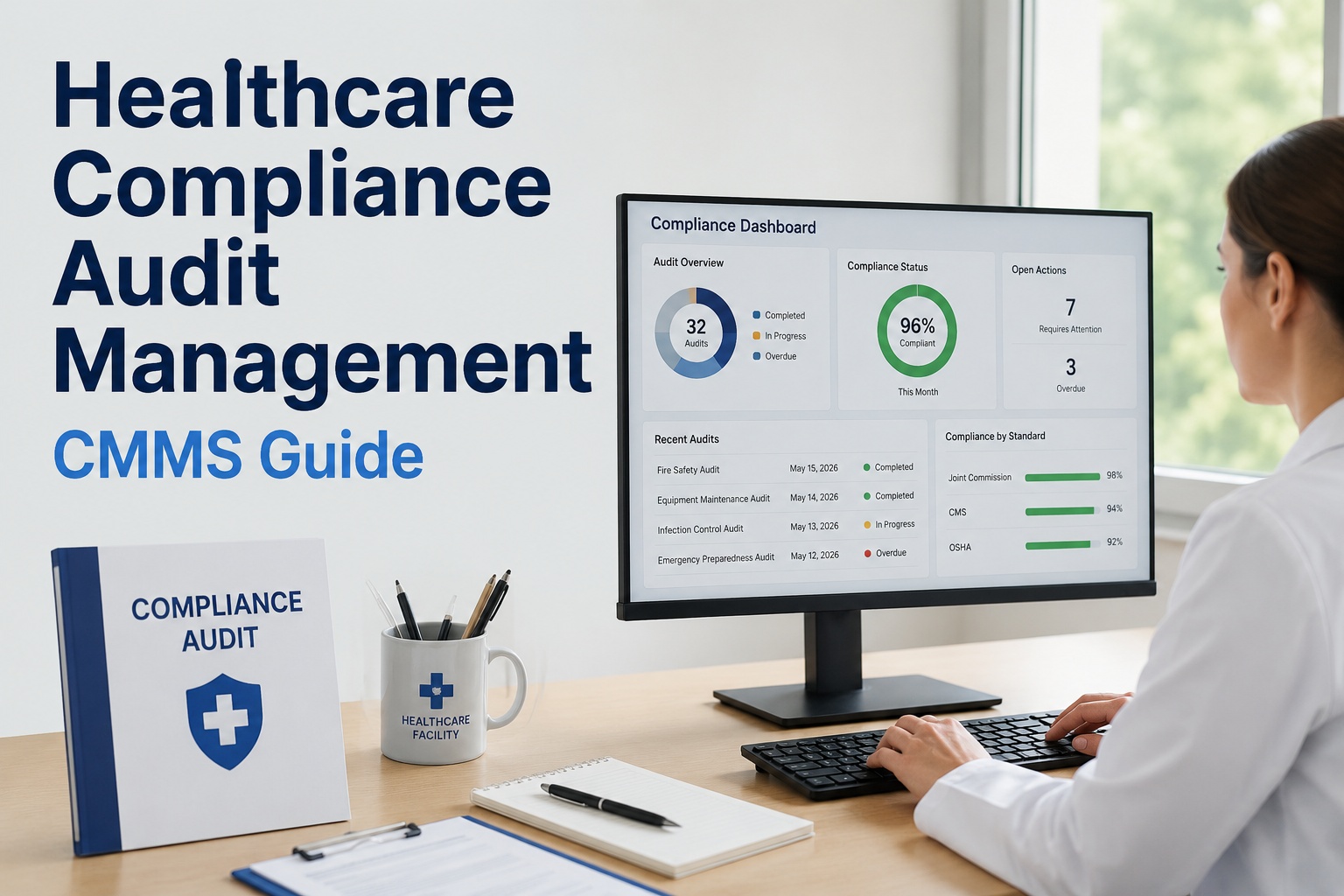
Maintenance Schedule MatrixMobile inspections transform how maintenance teams capture and document compliance activities. Rather than filling out paper forms that must later be transcribed—introducing delays and transcription errors that can doom audit outcomes—technicians using Oxmaint's mobile platform capture GPS-timestamped photos, complete digital checklists, and immediately sync data to the cloud-based system. This real-time documentation creates the unimpeachable audit trail that Joint Commission surveyors and AAAHC reviewers expect, while eliminating the hours previously spent preparing for inspections.
Implementation RoadmapThe integration of IoT sensors with CMMS platforms represents the frontier of healthcare maintenance excellence. Vibration sensors on treadmill motors detect bearing wear weeks before failure. Temperature monitors in therapeutic ultrasound units identify calibration drift before it affects treatment efficacy. Humidity sensors in storage areas ensure single-use supplies maintain their sterility. This sensor network, feeding real-time data into Oxmaint's analytics engine, enables the shift from calendar-based maintenance to condition-based interventions that maximize equipment life while minimizing unnecessary service costs.
KPI DashboardSpare parts planning completes the maintenance excellence picture. Nothing undermines a well-designed preventive maintenance program faster than discovering that the replacement belt for a therapy treadmill requires a three-week lead time from the manufacturer. Oxmaint's inventory management module tracks consumption patterns, establishes reorder points based on historical usage and lead times, and ensures critical spare parts remain available when needed. This proactive approach to inventory eliminates the emergency expediting fees and extended downtime that plague facilities without systematic parts management.
Expert Review: Industry Perspectives on Healthcare Maintenance Excellence
The convergence of aging infrastructure, advancing medical technology, and rising patient expectations creates unprecedented challenges for ambulatory rehab facility managers. Buildings designed decades ago struggle to accommodate modern equipment power requirements and air quality standards. Meanwhile, patients accustomed to consumer-grade service experiences expect facilities that are clean, comfortable, and equipped with the latest rehabilitation technology. Success requires not just maintaining what exists, but strategically upgrading infrastructure to support tomorrow's care delivery models.
Text Links SectionReady to transform your rehabilitation facility's maintenance operations? Start by exploring how leading healthcare organizations are achieving maintenance excellence. Visit Oxmaint's healthcare CMMS platform to see how digital work orders, mobile inspections, and automated compliance tracking work in practice. For facilities preparing for Joint Commission or AAAHC surveys, our healthcare compliance specialists can demonstrate how audit-ready documentation is generated automatically as part of daily maintenance workflows.
Healthcare maintenance managers seeking to benchmark their programs against industry leaders should consider scheduling a personalized facility assessment to identify quick wins and long-term improvement opportunities. Organizations ready to begin their digital transformation journey can create a free Oxmaint account and start building their equipment database immediately.
Conclusion: Building the Foundation for Patient-Centered Maintenance Excellence
The ambulatory care sector's explosive growth trajectory—from $882 billion in 2024 to a projected $1.5 trillion by 2034—signals that rehabilitation facilities embracing operational excellence today will capture disproportionate market share tomorrow. Equipment reliability, regulatory compliance, and patient experience are no longer independent variables to be optimized separately; they are interconnected outcomes flowing from a unified approach to facility maintenance that leverages data, technology, and systematic processes.
The transition from reactive maintenance chaos to proactive excellence requires commitment, but the path is well-documented. Start with a comprehensive equipment inventory. Implement digital work order management and mobile inspections. Build the audit trails that satisfy regulatory requirements while generating the insights needed for continuous improvement. Integrate IoT sensors as budgets allow, progressively shifting from calendar-based to condition-based maintenance. Measure what matters, celebrate progress, and never stop optimizing.
For rehabilitation facilities ready to begin this journey, Oxmaint CMMS provides the platform, the expertise, and the ongoing support needed to transform maintenance from a necessary cost into a competitive advantage. Patient outcomes improve when equipment performs reliably. Staff satisfaction increases when systems work as expected. Financial performance strengthens when downtime decreases and compliance costs decline. This is the promise of data-driven healthcare maintenance—and it is achievable today.
CTA Section 2