
Healthcare facility managers searching for CMMS software in 2026 face a market crowded with platforms that call themselves "healthcare-ready" but lack the Joint Commission documentation workflows, medical equipment tracking, and NFPA compliance scheduling that hospital operations actually require. This guide compares the top healthcare CMMS platforms across eight criteria that matter — compliance documentation, mobile adoption, medical equipment management, multi-site capability, and implementation timeline — so facility directors can make a defensible selection decision. OxMaint is built for healthcare infrastructure teams that need compliance documentation on demand, not six months after implementation. Book a 15-minute demo to see OxMaint applied to your specific healthcare facility type.
Best Healthcare CMMS Software: Comparison Guide for Hospitals & Health Systems
Joint Commission compliance, medical equipment tracking, AI capabilities, and implementation timelines — ranked across 8 criteria for hospital facility directors and health system operations leaders.
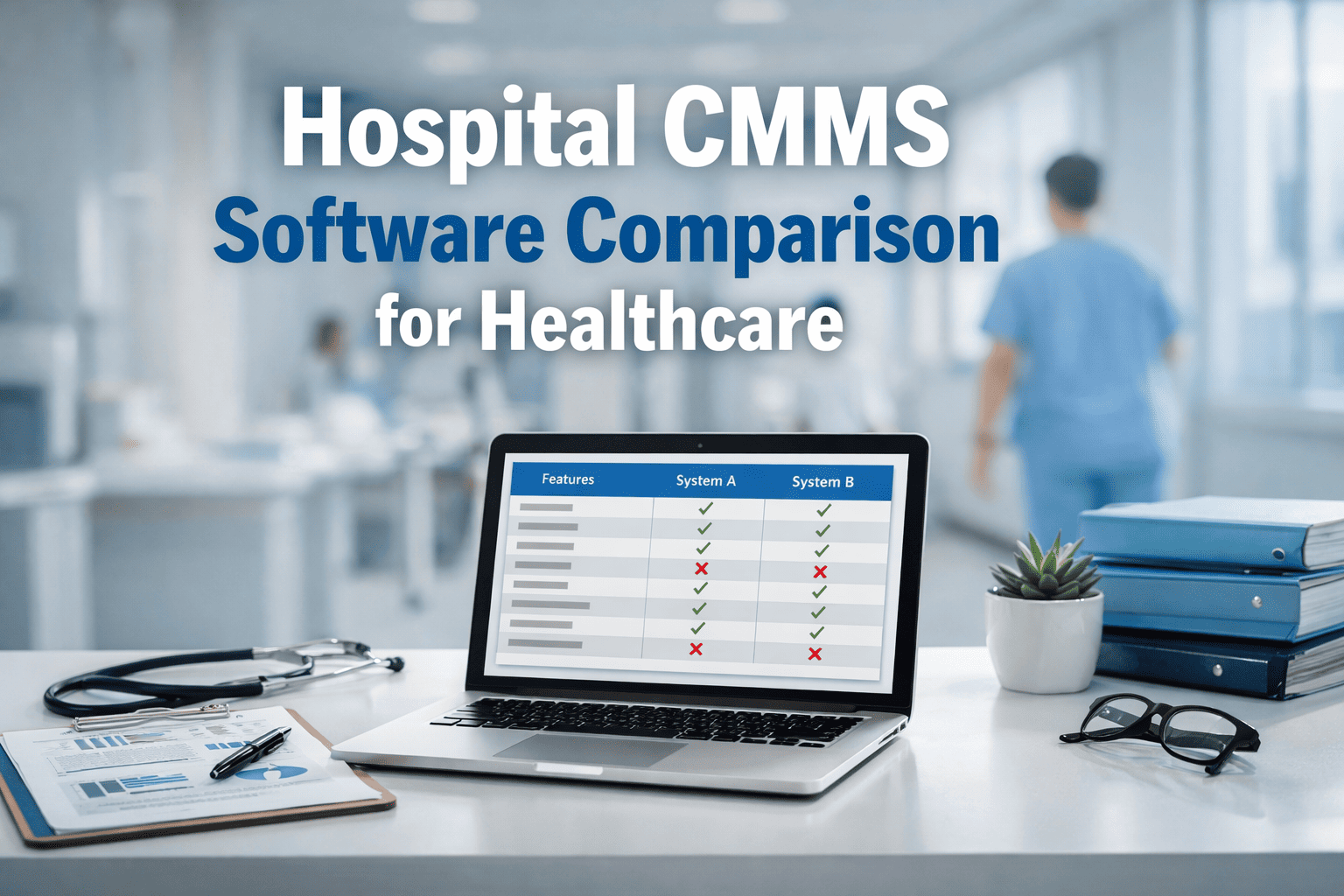
Healthcare CMMS Platform Comparison — 2026
| Platform | OxMaint | IBM Maximo | Accruent TMS | eMaint | Fiix | Limble CMMS | UpKeep | Infor EAM |
|---|---|---|---|---|---|---|---|---|
| Joint Commission Compliance | ||||||||
| EC.02 inspection documentation | Full | Full | Full | Partial | Partial | Partial | Partial | Full |
| NFPA 70E / 25 / 72 inspection schedules | Built-in | Configurable | Built-in | Configurable | Configurable | Manual | Manual | Configurable |
| Survey-ready audit report generation | < 2 min | Yes — complex | Yes | Export only | Export only | Not built-in | Not built-in | Yes |
| Medical Equipment & Asset Management | ||||||||
| Medical equipment PM tracking | Full | Full | Full — HTM specialist | Generic PM | Generic PM | Generic PM | Generic PM | Full |
| Biomedical device calibration records | Per device | Per device | Per device — specialist | Generic | Not built-in | Not built-in | Not built-in | Per device |
| Implementation & Adoption | ||||||||
| Time to first live work order | Same day | 3–6 months | 2–4 months | 2–4 weeks | 2–4 weeks | 1–2 weeks | 1–2 weeks | 4–8 months |
| Onboarding included in price | Yes — all plans | No — $50K+ | No — $20K+ | Partial | Partial | Yes | Yes | No — $100K+ |
| Mobile offline mode (technician app) | Full offline | Limited | Limited | Partial | Full | Full | Full | Limited |
| Scale & Integration | ||||||||
| Multi-site portfolio dashboard | Native | Native | Native | Add-on | Limited | Limited | Limited | Native |
| BAS/BMS integration (OPC-UA, MQTT) | Native | Native | Partial | API only | API only | Not built-in | API only | Native |
| AI predictive maintenance | Growing | Advanced | Limited | Not available | Basic | Not available | Not available | Advanced |
| Starting Price / month | Below avg | $25K+/yr | $15K+/yr | $600–$2K | $800–$3K | $300–$1K | $500–$2K | $30K+/yr |
Healthcare CMMS Platform Profiles — Strengths, Weaknesses, Best Fit
JC Compliance Docs · Medical Equipment PM · 30-Day Go-Live · Included Onboarding
Built for community hospitals, regional systems, and multi-site health networks that cannot afford a 6-month implementation or a $50K onboarding bill.
How to Choose — Healthcare CMMS Selection Criteria by Facility Type
The most common mistake I see healthcare facility directors make in CMMS selection is evaluating platforms on feature depth without evaluating implementation reality. A platform that scores perfectly on a feature checklist but takes 8 months to implement and requires $80,000 in professional services does not serve a 150-bed community hospital. The CMMS that is live in 30 days with 90% of technicians using it daily beats the enterprise platform that is still being configured when the next Joint Commission survey arrives. Select for adoption speed and compliance documentation first. You can add features as your programme matures.
Book a 15-Minute Demo — See OxMaint Applied to Your Healthcare Facility Type
JC compliance docs · Medical equipment PM · NFPA inspection schedules · Multi-site dashboard · Onboarding included. Go live in 30 days, not 6 months.
Healthcare CMMS — Common Questions
What CMMS features are specifically required for Joint Commission compliance?
Joint Commission Environment of Care requires: documented PM schedules for all life safety equipment with completion evidence; inspection records retrievable by asset, date, and inspector; fire door annual inspection records per door ID; NFPA 25/72 test records per device location; generator test logs with load data; and corrective action documentation for deficiencies with resolution dates. The most common finding is not missing equipment — it is documentation that cannot be retrieved during a survey. Sign in to see OxMaint's JC documentation capabilities.
How long does a healthcare CMMS implementation typically take?
Enterprise platforms (IBM Maximo, Infor EAM) typically require 6–18 months. Mid-market healthcare-specific platforms (Accruent TMS) typically require 2–4 months. Modern cloud CMMS platforms (OxMaint, Limble) can achieve full go-live in 30 days with structured rollout. For most community and regional hospitals, the 30-day timeline is achievable — the limiting factor is asset data entry and staff training speed, not software configuration complexity. Book a demo to walk through OxMaint's 30-day healthcare implementation plan.
Should a hospital use the same CMMS for facilities and biomedical engineering?
Using one platform for both is the recommended approach for most hospitals — it gives infection control, compliance, and administration a single source of truth for all equipment maintenance records. The practical constraint is that biomedical engineering has more specialised requirements (FDA device tracking, service contract management, AAMI standards) that not all CMMS platforms handle well. OxMaint covers both facility and medical equipment PM, with biomedical-specific fields configurable per device type. Sign in to see OxMaint's medical equipment management capabilities.
How do we evaluate CMMS technician adoption before committing to a platform?
The most reliable evaluation test: hand a maintenance technician (not an IT person) the mobile app on a phone they have never used before, and time how long it takes them to find a work order, add a photo, and close it without guidance. If this takes more than 3 minutes, adoption will fail in the field. Require a live mobile demo — not a laptop walkthrough of a mobile screenshot — and test it with an actual facilities technician during the evaluation process. Book a demo and bring a technician to test OxMaint mobile live.



.jpeg)
