
Healthcare systems across North America, Europe, and the Middle East face a common challenge: patients demand faster, more consistent communication — but administrative bandwidth has not kept pace with that demand. Over 75% of patients now prefer digital-first interactions for routine health queries, yet most hospital contact centers still rely on manual workflows that bottleneck under pressure. Conversational AI is changing that equation fundamentally. Want to see what this means for your operations? Start a free 30-day trial today or book a demo to explore smarter patient engagement and facility management in one platform.
Chatbots and Conversational AI in Healthcare
How AI-powered patient engagement tools are cutting wait times, reducing no-shows, and transforming how hospitals communicate — at scale, without adding headcount.
See AI-Powered Healthcare Operations in Action
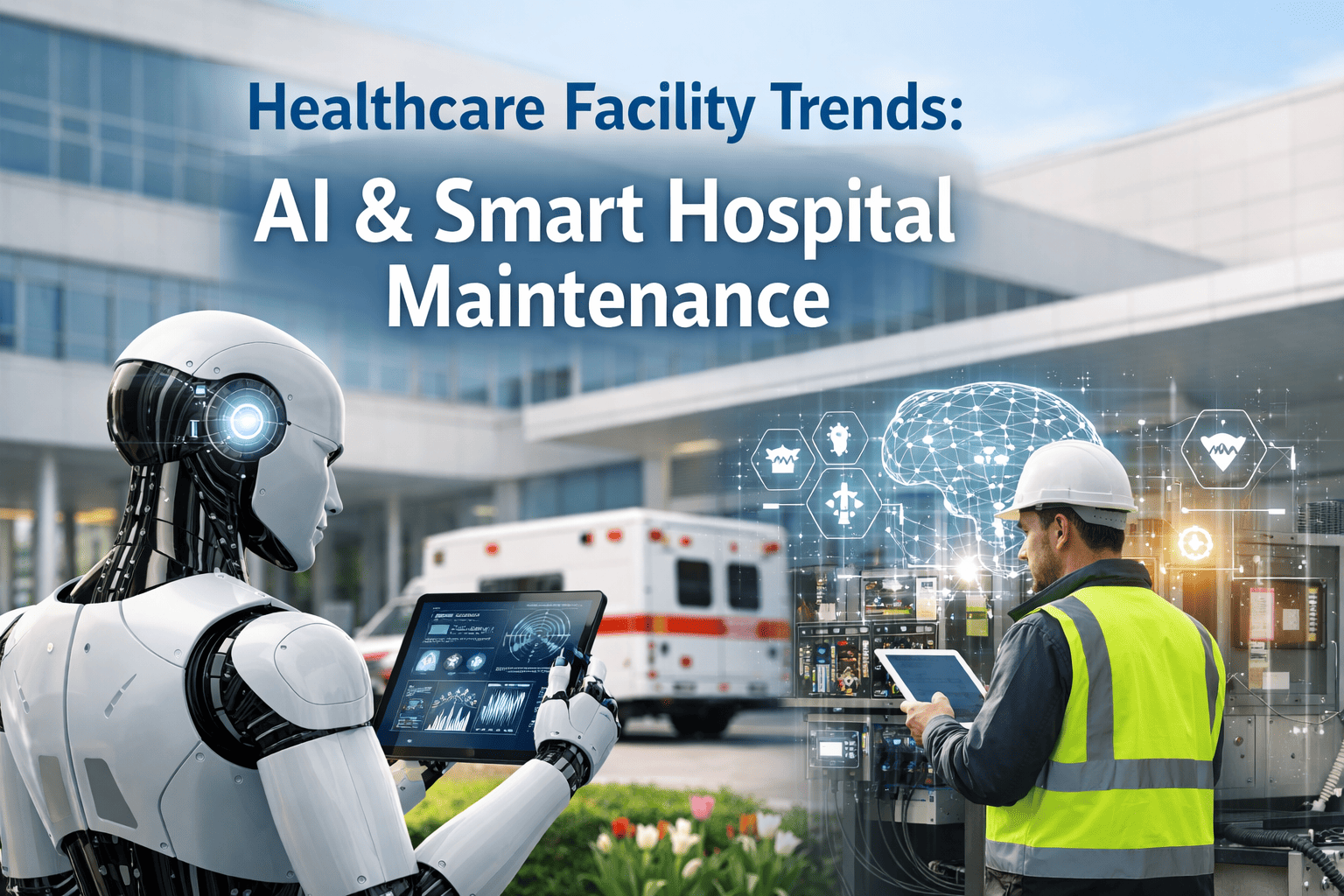
Oxmaint brings intelligent asset management and operational automation to healthcare facilities — the operational backbone every AI-forward hospital needs. From medical equipment maintenance to compliance-ready work orders, give your teams the tools to run smarter facilities and support chatbot-driven patient care without infrastructure gaps.
What Are Healthcare Chatbots?
Healthcare chatbots are AI-driven conversational interfaces deployed across hospital websites, patient portals, SMS platforms, and mobile apps. They use Natural Language Processing (NLP) and machine learning to understand patient intent, respond accurately, and trigger workflows — without human intervention at every step.
Unlike rigid FAQ bots of the past, modern conversational AI in healthcare is context-aware. It remembers prior interactions, escalates to human agents when appropriate, and integrates with Electronic Health Records, scheduling systems, and clinical workflows in real time. This is the infrastructure layer that allows healthcare organizations to scale patient communication without scaling headcount. For hospital administrators looking to modernize, the right starting point is to start a free trial and explore connected operational tools, or book a demo with our healthcare team to see the full platform in action.
6 Capabilities Driving Patient Engagement at Scale
Each capability addresses a specific patient communication gap — from intake through discharge and long-term follow-up care.
4 Patient Engagement Failures Costing Healthcare Dearly
Legacy communication systems are not just inefficient — they are actively harming patient outcomes and driving avoidable operational costs across every department.
How Oxmaint Powers the AI-Ready Healthcare Facility
Patient-facing AI chatbots only perform reliably when the operational infrastructure behind them is solid. Oxmaint provides the connected asset management layer that healthcare facilities need to run at the precision AI-driven operations demand. Ready to build that foundation? Start your free trial or book a demo to explore the full Oxmaint platform.
Traditional Patient Communication vs. AI-Powered Engagement
The gap between legacy communication and AI-driven engagement is not marginal — it is structural. Here is how the two approaches compare across every critical operational metric.
| Metric | Traditional Approach | AI-Powered Approach |
|---|---|---|
| Query Response Time | 20+ minute average hold time | Instant — 24/7, zero wait |
| Appointment Scheduling | Manual, phone-based, 5+ minute process | Automated self-service in under 90 seconds |
| No-Show Rate | ~30% industry average | Reduced by up to 40% with AI reminders |
| Staff Hours on Routine Queries | 25–40 hours per week per admin FTE | Reduced by 70% — staff focus on complex cases |
| Cost Per Interaction | $8–$15 per interaction | $0.50–$2 per automated interaction |
| Patient Satisfaction (CSAT) | Inconsistent, channel-dependent scores | +35% improvement in CSAT scores |
| Service Availability | Business hours only — 8 to 10 hours per day | 24/7/365 — no downtime, no holidays |
| Compliance Documentation | Fragmented, paper-based records | Full digital audit trail, HIPAA-ready |
The ROI of AI-Driven Patient Engagement
Numbers that facility managers, VPs of Operations, and CFOs use to build the business case internally.
Frequently Asked Questions
What is conversational AI in healthcare and how does it differ from a standard chatbot? +
Standard chatbots follow rigid decision trees — they respond to keywords, not intent. Conversational AI uses NLP and machine learning to understand the meaning behind a patient message, handle multi-turn conversations, and adapt responses based on full context. In healthcare, this means a patient can say "I need to move my Tuesday appointment" and the AI understands intent, checks the schedule, and confirms a new slot — without scripted menu navigation or staff involvement.
How do healthcare chatbots ensure patient data security and HIPAA compliance? +
Enterprise-grade healthcare chatbots are built on HIPAA-compliant infrastructure — end-to-end encryption, data residency controls, and audit-ready logging by default. Patient data is never stored in third-party training datasets. Vendors must provide a Business Associate Agreement and demonstrate SOC 2 Type II certification. Always verify your vendor compliance posture before any deployment, and run a pilot with de-identified data first.
Which hospital departments benefit most from AI chatbot implementation? +
Outpatient scheduling, emergency department triage support, pharmacy, billing, and post-discharge care coordination see the highest ROI. Departments with high inquiry volume and repetitive workflows — where speed and consistency matter more than nuanced clinical judgment — are the ideal starting points. Most hospitals deploy in one department first, validate results over 60 days, then scale system-wide.
How does Oxmaint complement AI chatbot deployment in a healthcare facility? +
Oxmaint manages the operational layer that chatbot-driven facilities depend on — medical equipment uptime, compliance documentation, preventive maintenance schedules, and multi-site asset visibility. When a chatbot confirms a patient's imaging appointment, Oxmaint ensures the imaging equipment is operational, calibrated, and fully compliant. It is the infrastructure that makes AI-forward healthcare reliably deliverable. To see how Oxmaint integrates with your healthcare operations, start your free 30-day trial or book a demo with our team today.
Run a Smarter, AI-Ready Healthcare Facility with Oxmaint
Oxmaint gives hospitals, health systems, and multi-site care networks the operational intelligence they need to support AI-driven patient engagement without infrastructure failures. Stop reacting to equipment breakdowns and compliance gaps. Start running on real-time data.
Trusted by facility managers across the USA, UK, Australia, UAE, and Germany. No heavy implementation fees. No lengthy onboarding. Up and running in days, not months.



.png)
.png)