.png)
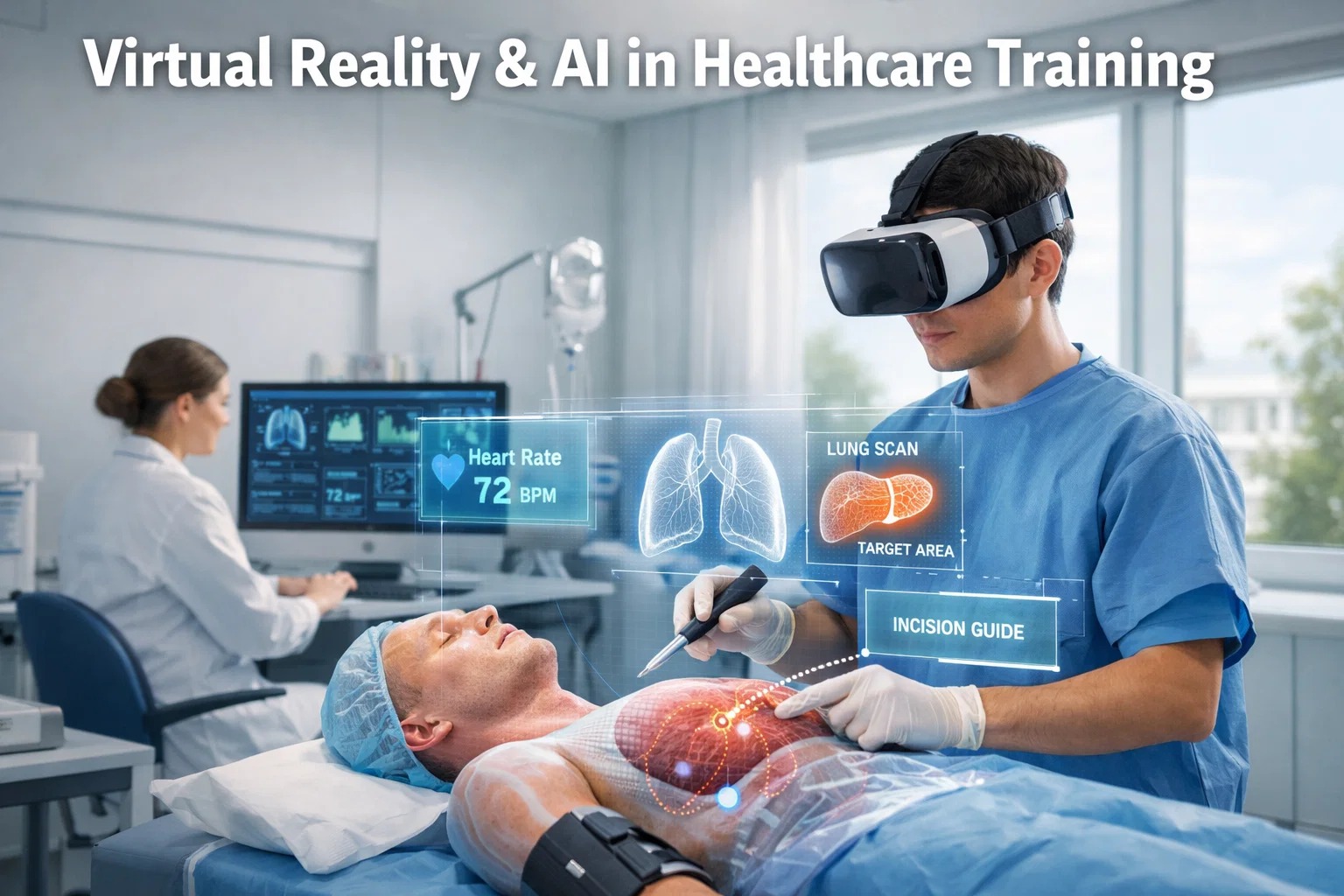
Healthcare has entered an era where clinicians can rehearse a surgery before making a single incision, where hospital administrators can model a capacity crisis before it happens, and where treatment protocols are tested on a virtual patient before they touch a real one. Digital twins — precise, data-driven virtual replicas of physical systems — are reshaping how medicine is planned, delivered, and improved. For facility and operations leaders in healthcare, this technology is no longer a distant concept. It is a live operational lever with measurable impact on outcomes, costs, and compliance. Ready to see how this transforms your operations? Start a free 30-day trial or book a demo to explore how Oxmaint supports digital twin-ready healthcare operations.
See Oxmaint in Action
Healthcare operations teams use Oxmaint to build the asset foundation that powers digital twin initiatives — from equipment condition scoring to predictive maintenance triggers.
What Is a Digital Twin in Healthcare?
A digital twin is a continuously updated virtual model of a physical entity — a patient's anatomy, a surgical procedure, a ward configuration, or an entire hospital system. Unlike static 3D models or one-time simulations, digital twins are living models fed by real-time data: imaging scans, IoT sensors, electronic health records, equipment telemetry, and operational logs.
In clinical settings, a patient digital twin can simulate how tissue will respond to a surgical approach, how a drug will metabolise given a patient's unique physiology, or how a radiation treatment plan will interact with surrounding anatomy. In hospital operations, a facility digital twin models patient flow, equipment availability, energy consumption, and staff load — allowing planners to stress-test scenarios before committing resources.
The Four Pillars of Healthcare Digital Twins
Effective digital twin deployment in healthcare rests on four interconnected capabilities. Miss one, and the model loses fidelity. Integrating all four produces a simulation environment accurate enough to drive clinical and operational decisions with confidence.
Where Healthcare Operations Break Without Digital Twins
Before digital twin adoption, surgical and operational planning in complex healthcare environments relies on experience, historical averages, and institutional judgment. That approach fails in predictable and costly ways. Understanding where operations leaders are getting hurt most helps frame the case for simulation-based decision-making.
Digital Twins in Surgery: From Planning to Execution
Surgical digital twins are already active in leading centres across the USA, UK, Germany, and UAE. The application spectrum ranges from pre-operative rehearsal to intraoperative guidance to post-operative outcome prediction — giving surgical teams a closed-loop simulation environment throughout the care episode.
How Hospital Digital Twins Optimise Operational Performance
Clinical twins get the headlines, but operational twins deliver the largest ROI for facility and operations managers. A hospital digital twin connects asset data, patient flow, staffing models, and energy systems into a single simulation environment — enabling planners to test decisions before implementing them. If your facility is ready to move toward this model, start a free trial of Oxmaint to build the asset data foundation your digital twin will depend on, or book a demo and we will walk you through the integration model.
How Oxmaint Powers the Asset Layer of Your Digital Twin
A digital twin is only as accurate as the data feeding it. For hospital and healthcare facility operations, the most critical data layer is equipment condition, maintenance history, and lifecycle status. Oxmaint provides the structured, real-time asset intelligence that makes operational digital twins viable and investor-grade.
Reactive Operations vs. Digital Twin-Enabled Operations
The operational gap between traditional facility management and digital twin-enabled management is not incremental — it is structural. The table below illustrates the difference across the dimensions that matter most to healthcare operations and finance leaders.
| Dimension | Reactive Operations | Digital Twin-Enabled |
|---|---|---|
| Equipment Failure Response | Wait for failure, then repair. Average cost 4.8x planned maintenance. | Predict failure windows from sensor data. Schedule intervention before failure occurs. |
| Surgical Planning | Review imaging, apply experience. Encounter unknowns intraoperatively. | Rehearse on patient-specific twin. Identify risk zones. Select optimal approach pre-operatively. |
| CapEx Decisions | Replace assets based on age or failure. High write-off risk, poor utilisation of remaining life. | Model replacement scenarios against condition data. Prioritise by risk-weighted ROI. |
| Capacity Planning | Respond to surges after they arrive. Staff overtime, delayed procedures, patient diversions. | Simulate surge scenarios in advance. Pre-position resources, adjust schedules proactively. |
| Compliance Preparation | Audit-driven reviews. Gaps found during inspection, reactive remediation. | Continuous simulation of compliance scenarios. Gaps identified and resolved before audits. |
| Treatment Planning | Protocol-based, population-average guidance. Limited personalisation for complex cases. | Patient-specific simulation of drug response, radiation dosing, and procedural outcomes. |
Digital Twin Adoption Across Key Healthcare Markets
Regulatory environment, infrastructure maturity, and investment priorities vary significantly across the markets where healthcare digital twins are gaining traction fastest. Understanding regional context helps operations and technology leaders benchmark their own adoption trajectory.
Measured Outcomes from Digital Twin Deployments
The business case for digital twins in healthcare is no longer theoretical. Across clinical and operational applications, measurable outcomes are documented across leading health systems globally. Explore these results, then start a free trial with Oxmaint to begin building the asset foundation that underpins your operational twin strategy, or book a demo to see how we help facilities at every stage of digital twin readiness.
Every operational digital twin depends on a clean, structured, real-time layer of asset information. Oxmaint gives healthcare facility teams the CMMS infrastructure to build that foundation — from full asset registries and condition scoring to predictive maintenance scheduling and investor-grade CapEx forecasting. Whether you are building a business case, running a pilot, or scaling across a multi-site portfolio, Oxmaint is built for the complexity healthcare operations demand.
Frequently Asked Questions
What data sources are needed to build a healthcare digital twin?
A functional healthcare digital twin requires integration across multiple data streams: electronic health records (EHR), medical imaging (CT, MRI, PET), IoT sensor outputs from clinical equipment, operational data from CMMS and asset management platforms, patient flow data, and staffing records. The most common gap in hospital digital twin projects is not clinical data — it is structured, reliable equipment condition and maintenance data. CMMS platforms like Oxmaint provide the asset intelligence layer that makes operational twins viable, feeding real-time condition scores, maintenance histories, and lifecycle forecasts into the simulation environment.
How is a digital twin different from a 3D surgical simulation or planning software?
Traditional 3D surgical planning software creates a static model from imaging data at a point in time. A digital twin is a dynamic, continuously updated replica that evolves with the patient's condition throughout their care episode. It ingests new data in real time — updated scans, lab results, intraoperative feedback — and recalibrates its predictions accordingly. The twin also enables bidirectional learning: outcomes from actual procedures feed back into the model, improving predictive accuracy for future cases. This live-loop capability is what distinguishes a true digital twin from a conventional planning tool.
What is the ROI case for hospital operational digital twins?
The ROI case for hospital operational twins is strongest in four areas: equipment downtime reduction (emergency repairs cost 4.8x more than planned maintenance), CapEx optimisation (condition-based replacement vs. age-based guesswork), energy efficiency (15–25% utility cost reduction), and capacity management (preventing avoidable bed crises and surgical delays). Facilities with structured CMMS data — full asset registries, maintenance histories, and condition scores — reach positive ROI on operational twin investments 60% faster than those starting from fragmented paper-based records. The asset management foundation is where the financial case begins.
How does Oxmaint support digital twin readiness for healthcare facilities?
Oxmaint provides the CMMS and asset management infrastructure that healthcare facilities need before a digital twin can function at operational scale. This includes a full asset registry with condition scoring across all equipment categories, preventive maintenance scheduling triggered by usage hours, cycles, or sensor thresholds, IoT and SCADA integration for real-time telemetry, and rolling 5–10 year CapEx forecasting models. Oxmaint is designed for multi-site healthcare portfolios — from single hospitals to national groups — and produces the structured, audit-ready data layer that operational twin platforms depend on. Implementation is fast, with no heavy onboarding fees or extended deployment timelines.