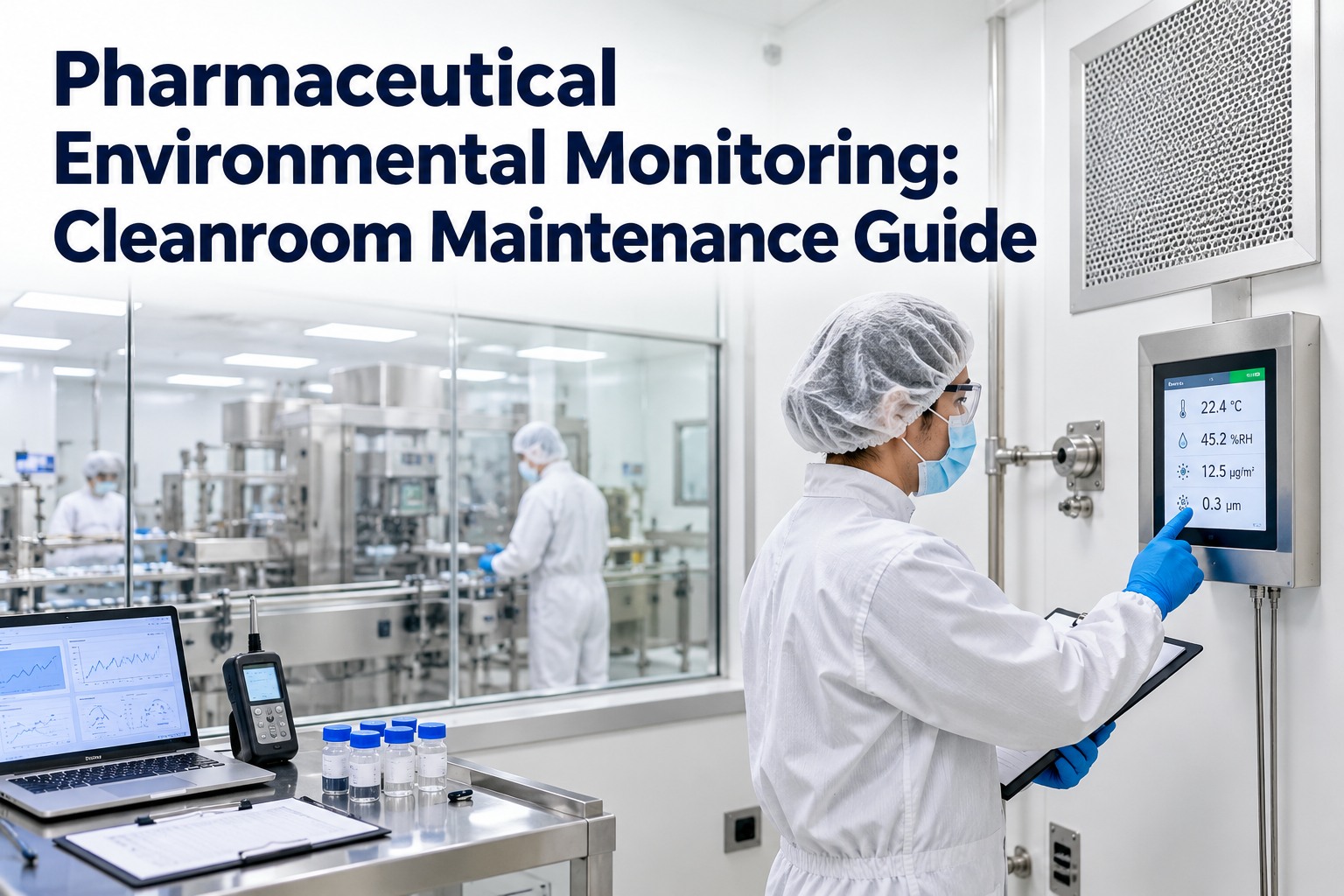
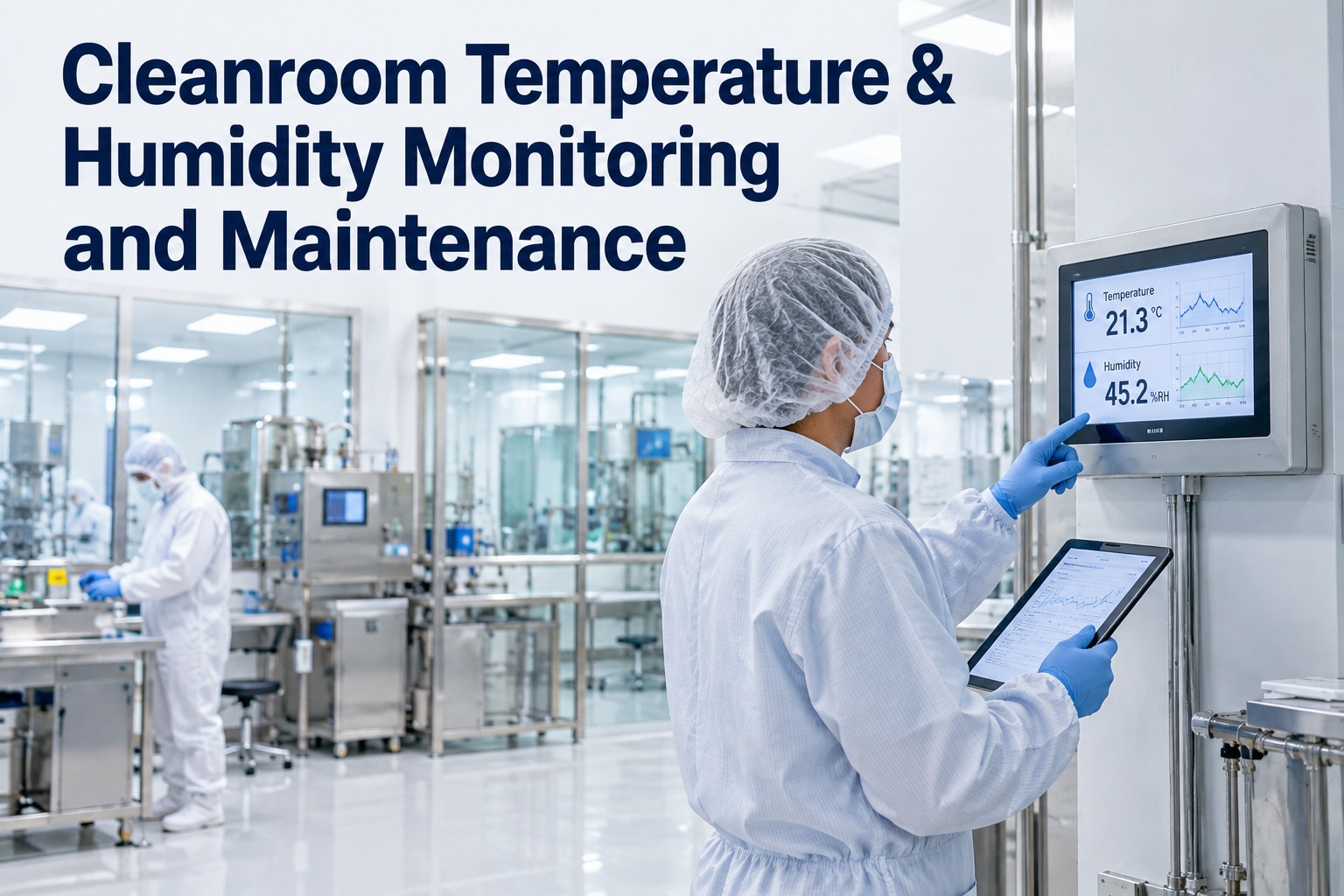
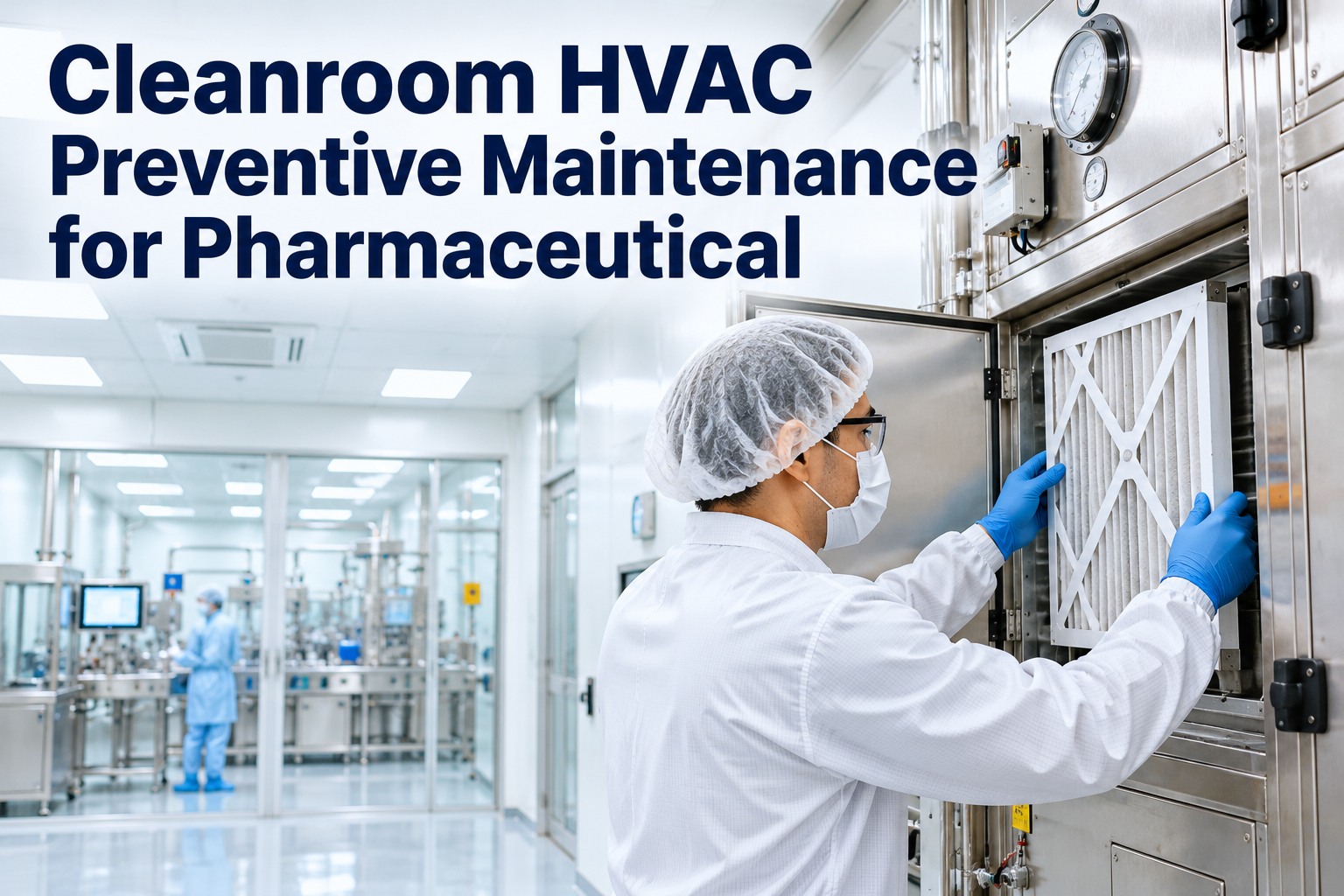
A cleanroom does not fail with a bang — it fails with a quiet alarm at 2 a.m., a pressure reading that is slowly sliding and a technician who has to decide in minutes whether product is at risk. What happens in the first hour decides whether the event is a short stoppage or a batch investigation. OXMAINT AI is the pharmaceutical maintenance management software that turns every HVAC alarm into a tracked response, repair and recovery record.
PHARMA CLEANROOM HVAC · FAILURE RESPONSE · HEPA · RECOVERY VERIFICATION · 2026
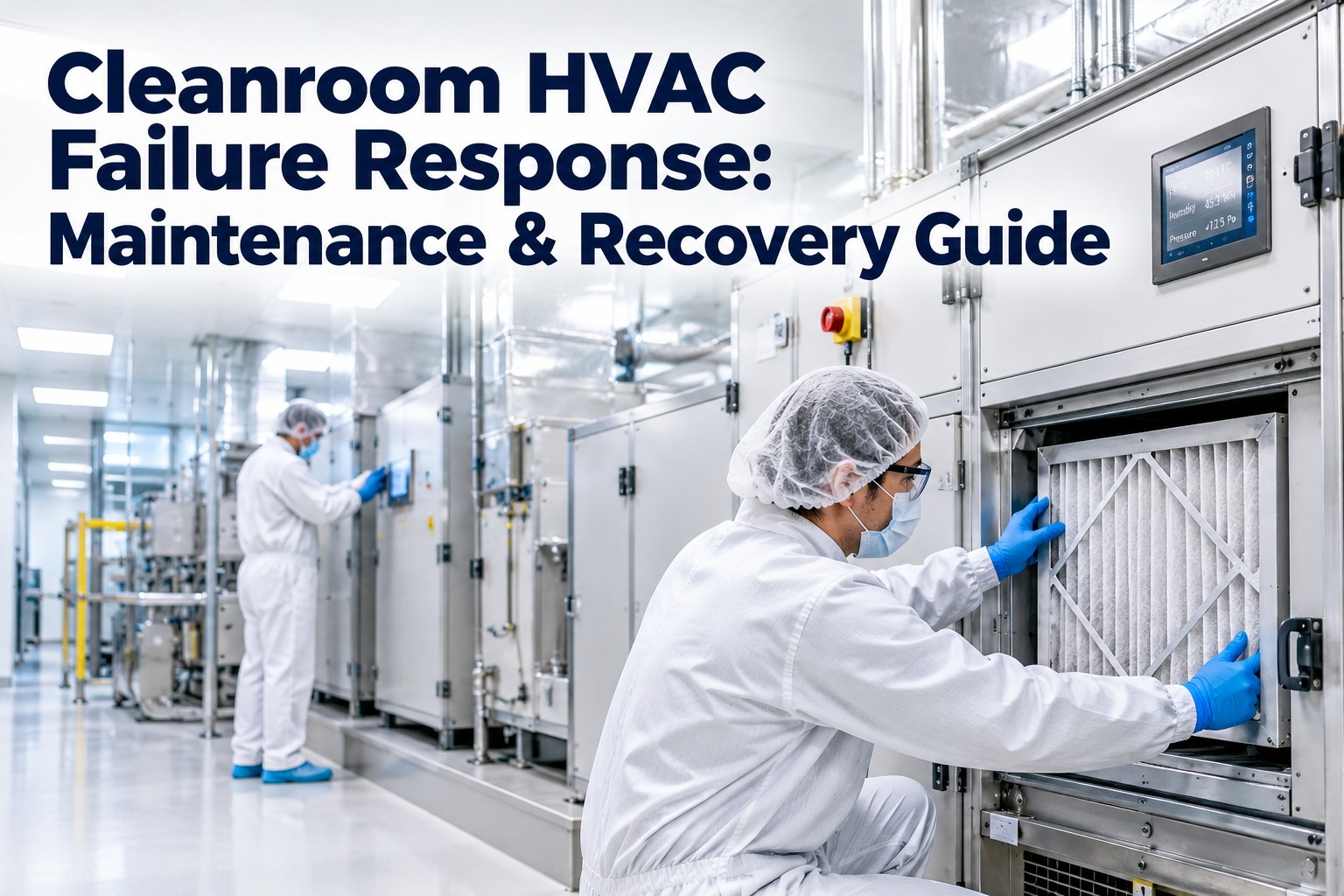
Cleanroom HVAC Failure Response: Maintenance & Recovery Guide
Know what to check in the first five minutes, which cause to suspect for each alarm, and what proof you need before the room is released. OXMAINT AI keeps the alarm, the corrective work order and the recovery evidence in one record.
Alarm response
Pressure cascade
HEPA inspection
Temperature and humidity
Recovery gates
10–15 Pa
positive pressure commonly held between adjacent rooms of different cleanliness (FDA aseptic processing guidance)
3,520
particles per cubic metre, 0.5 micron and larger, allowed at ISO 5 / Grade A at rest
15–20 min
recovery time often cited in WHO sterile-manufacturing guidance for a clean-up test
20+
air changes per hour cited for ISO 8 support areas (FDA aseptic processing guidance)
THE REAL RISK
Most cleanroom HVAC failures start as small drifts: a damper slowly sticking, a filter loading up, a sensor off by a few pascals. The teams that cope best are not the ones with the best luck — they are the ones with a written first response and records they can find at once.
What You Are Protecting: The Pressure Cascade
A cleanroom suite works like a staircase of air. Cleaner rooms sit at higher pressure, so air flows outward, never inward. Lose a step and contamination can walk in. Every HVAC failure response is really about rebuilding that staircase. Sign up free and put every room and air handler in one register.
ILLUSTRATIVE PRESSURE CASCADE · CLEANER = HIGHER PRESSURE
Bar heights are illustrative. Your validated set points and alarm limits come from your own qualification, and Annex 1 and FDA guidance describe the pressure steps expected between grades.
The Response Timeline: Alarm to Release
Write the sequence down before you need it. Here is a practical timeline you can adapt to your own procedures. Book a demo to see it built as a work order template.
0–5 MIN
Confirm and contain
Check the alarm is real, not a sensor fault. Record the time and the values. Stop product movement, keep doors closed and call the person on duty.
5–30 MIN
Find the likely cause
Check the air handler status, fans, dampers, filter pressure readings and any chilled-water or steam supply. Look for open doors, ceiling breaches and blocked returns.
30 MIN +
Raise the corrective work order
Open an urgent work order with the alarm data attached. Quality assurance starts its product impact assessment in parallel.
REPAIR
Fix and document
Repair or replace the failed part. Record parts, readings, photos and who did the work.
RELEASE
Verify recovery, then release
Run through the recovery gates below. Only quality assurance releases the room.
Symptom to Suspect: Where to Look First
Each alarm points to a short list of causes. Check the cheapest and fastest ones first. Start free and link each symptom to its asset history.
Symptom
Check first
Common causes
Work order to raise
Pressure differential falling
Doors closed, sensor reading, fan status
Loaded filters, stuck damper, fan or belt fault, leaking ceiling
Air handler and damper inspection
Pressure too high
Doors hard to open, return path
Blocked return, extract damper stuck closed
Return and extract path check
Temperature or humidity drift
Coil supply, reheat, humidifier status
Valve fault, coil fouling, sensor out of calibration
Coil, valve and sensor calibration
Particle count spike
Activity in the room, door events, gowning
Filter leak, loss of pressure, a seal failure
Filter integrity inspection
Low airflow or high filter pressure
Filter gauge readings, fan speed
Loaded pre-filter, blocked grille, drive fault
Filter change-out and fan check
Scroll sideways on a phone to see every column.
Alert, Action, Stop: Match the Response to the Reading
Not every excursion needs the same response. Three levels keep calls consistent across shifts. Book a demo and set your own levels per room.
ALERT
Watch closely
Record the value and time, inspect for obvious causes and check more often. Open a work order if the trend continues.
ACTION
Investigate and assess
Raise a corrective work order, call quality assurance, assess product at risk and consider limiting work in the room.
STOP
Suspend and escalate
Stop critical operations, secure product and bring in the HVAC engineer. Follow your continuity plan.
Levels are defined in your own qualification and contamination control strategy. Regulators such as the Massachusetts pharmacy board describe the same alert-then-action pattern for compounding rooms.
Turn the Next Alarm Into a Record You Are Proud Of.
Load your air handlers, filters and sensors into OXMAINT AI. When the alarm sounds, the work order, the history and the evidence are already in one place.
HEPA Filters After a Failure: What to Inspect
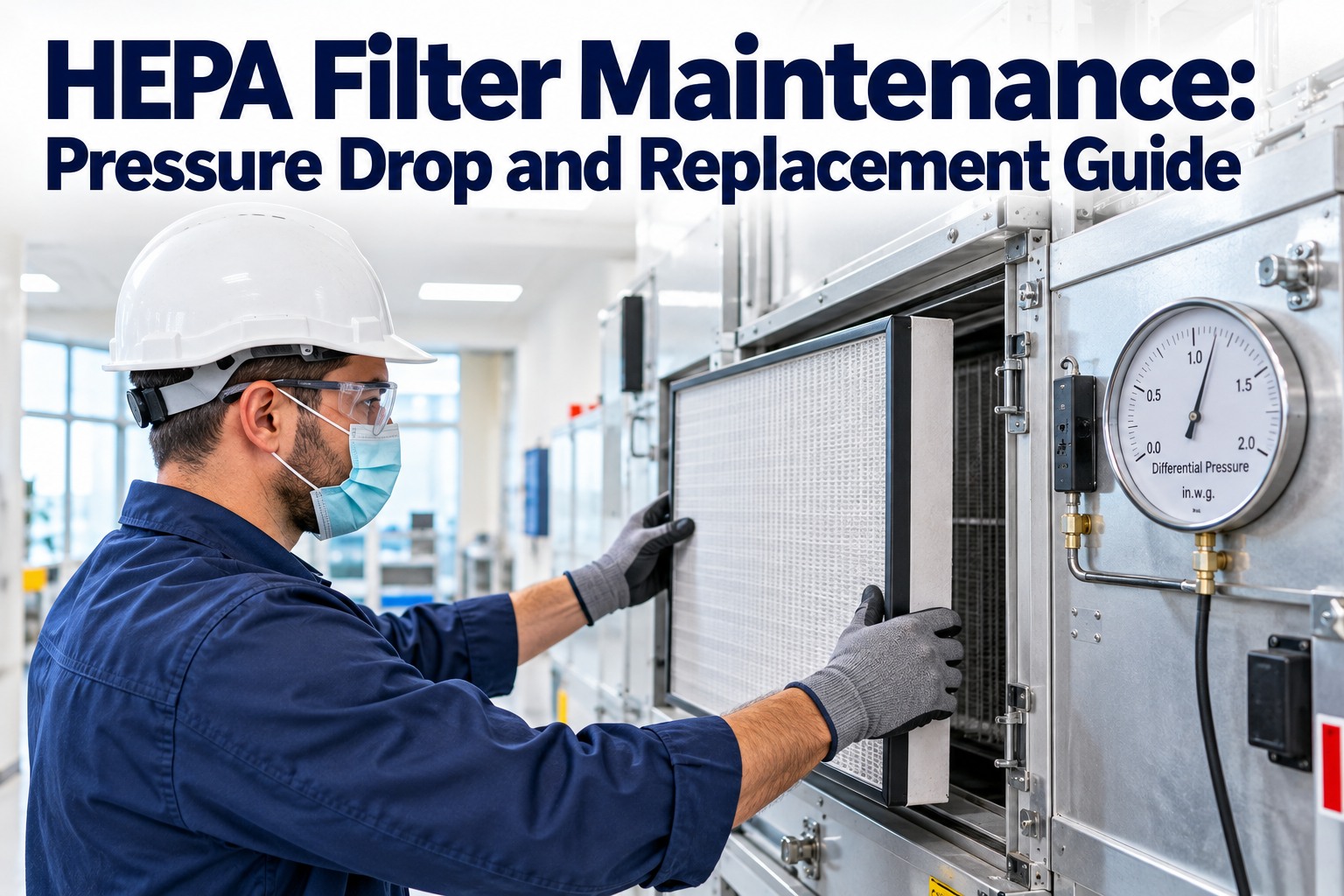
Filters are the last line of defence, so any pressure or airflow event deserves a filter check. Do not assume a good reading means an intact filter. Start free and schedule your filter tests.
1
Pressure across the filter
A reading well above or below normal points to loading or a breach.
2
Housing and seals
Look for damaged gaskets, bent frames and gaps at the ceiling grid.
3
Integrity test
An aerosol leak test and scan, guided by ISO 14644-3, finds pinholes a gauge never will.
4
Airflow and air changes
Confirm velocity and air change rates are back to the validated values.
Rule of thumb: after any filter replacement or suspected breach, test integrity before the room is released. Routine integrity test intervals are set in your contamination control strategy; Annex 1 practice is commonly every six months for Grade A and B.
The Recovery Gates: Six Checks Before Release
A room is not recovered because the alarm cleared. Make release depend on gates that someone has to sign. Book a demo to see sign-off steps on a work order.
1Root cause found and corrected
2Pressure cascade restored and holding
3Temperature and humidity in range
4Recovery time within the validated value
5Particle and environmental monitoring within limits
6Quality assurance review and release
After a serious event, many sites also keep tighter monitoring for a day or more. Follow your own procedure, and recertify equipment if the repair changes it.
Stop the Repeat: What Preventive Maintenance Catches
Most failures were visible days earlier in the trends. Put these on a schedule and the 2 a.m. alarm gets rarer. Sign up free and set up the schedules.
Pre-filter change-outs
Fan belts and drives
Damper actuators
Sensor calibration
Door seals and interlocks
Coil and drain cleaning
Backup power tests
Filter integrity tests
How OXMAINT AI Supports Cleanroom HVAC Response
OXMAINT AI is a CMMS that keeps the maintenance side of the response organised, traceable and quick to find. Book a demo and walk through a failure drill.
ASSETSRooms, units and filters on one map
Air handlers, dampers, sensors and filters linked to the rooms they serve.
ORDERUrgent work orders from alarms
Log an alarm event as a priority work order with the readings attached.
STEPSResponse checklists
Mobile first-response and recovery checklists with photos and sign-off.
PMPreventive schedules
Filters, drives, dampers and calibrations scheduled, with overdue flags.
HISTORYFailure history by asset
Spot repeat failures on one damper or unit before they become a pattern.
PROOFEvidence on hand
Reference a deviation number on the work order and find the record in seconds.
Questions Cleanroom Teams Ask
What should we do first when a cleanroom pressure alarm sounds?
How long should a cleanroom take to recover?
Each room has its own validated recovery time, measured at qualification. WHO sterile-manufacturing guidance is often cited at 15 to 20 minutes for a clean-up test, but your validated value is the one that counts.
Book a demo to track recovery tests.
When must a HEPA filter be integrity tested?
At installation, on a routine schedule, and after any replacement or suspected breach. Your contamination control strategy sets the interval.
Schedule the tests in OXMAINT AI.
Who decides whether product is affected?
Can a CMMS monitor pressure and particles live?
A CMMS manages the maintenance response and records. Live monitoring stays with your building management and environmental monitoring systems, and alarms from them can drive work orders.
Start free and map your alarm points.
Be Ready Before the Alarm Sounds — With OXMAINT AI.
One register for every air handler, filter and sensor, a response checklist that people actually use and recovery evidence you can hand to quality in minutes.