Hospitals and health systems are under relentless financial pressure. Margins have compressed to historic lows, labor costs continue to climb, and reimbursement models are shifting toward outcomes rather than volume. In this environment, artificial intelligence is emerging as the most powerful lever healthcare organizations have to drive meaningful, sustainable cost reduction without compromising care quality. From predictive supply chain management to intelligent staffing optimization, AI is fundamentally changing how health systems find and eliminate waste, reallocate resources, and build the operational infrastructure that value-based care demands. Sign up free to see how OxMaint puts AI-driven cost optimisation to work for your facility from day one.
Ready to cut operational waste and boost financial performance?
Join healthcare organizations already using OxMaint to automate operations, eliminate inefficiencies, and build a data-driven foundation for value-based care success.
The Scale of Healthcare Waste: Why AI Cost Optimisation Is No Longer Optional
The numbers are staggering. The National Academy of Medicine estimates that the United States alone wastes over one trillion dollars annually in healthcare spending, representing roughly 25 percent of total health expenditure. This waste is not abstract — it lives in overstocked supply rooms, in preventable readmissions, in inefficient surgical scheduling, in administrative processes that require three people to accomplish what a single automated workflow could handle in seconds. Globally, the World Health Organization estimates that 20 to 40 percent of all healthcare spending contributes no health value whatsoever.
Traditional cost reduction approaches in healthcare have relied on blunt instruments: across-the-board budget cuts, workforce reductions, and service line consolidations that often trade short-term savings for long-term capability gaps. AI-driven cost optimisation operates differently. It identifies specific, evidence-backed inefficiencies at the level of individual workflows, individual assets, and individual patient pathways, enabling health systems to extract maximum value from existing resources rather than simply doing less with less.
The shift is also structurally tied to value-based care. As CMS expands alternative payment models and payers increasingly tie reimbursement to quality metrics and total cost of care, hospitals that cannot optimise their cost structures while maintaining or improving outcomes face an existential financial threat. AI provides the analytical infrastructure that makes simultaneous cost reduction and quality improvement operationally achievable rather than aspirationally appealing.
Where AI Finds the Largest Cost Reduction Opportunities in Healthcare
Supply costs represent 25 to 30 percent of hospital operating budgets. AI-powered demand forecasting reduces excess inventory carrying costs by 15 to 30 percent while eliminating the emergency procurement premiums triggered by stockouts. Predictive models align procurement timing with actual utilization patterns rather than static par levels that drift out of sync with clinical reality.
Labour accounts for 50 to 60 percent of total hospital costs. AI scheduling platforms match staffing levels to predicted patient volumes with precision that manual scheduling cannot achieve, reducing overtime costs by 20 to 35 percent and eliminating the costly last-minute agency staff fill-in that inflates labour budgets across nursing, pharmacy, and ancillary services.
Hospital readmissions cost the US healthcare system over 26 billion dollars annually. AI risk stratification models identify patients with high readmission probability before discharge, enabling targeted intervention programs that reduce 30-day readmission rates by 15 to 25 percent and shield hospitals from CMS penalty exposure under the Hospital Readmissions Reduction Program.
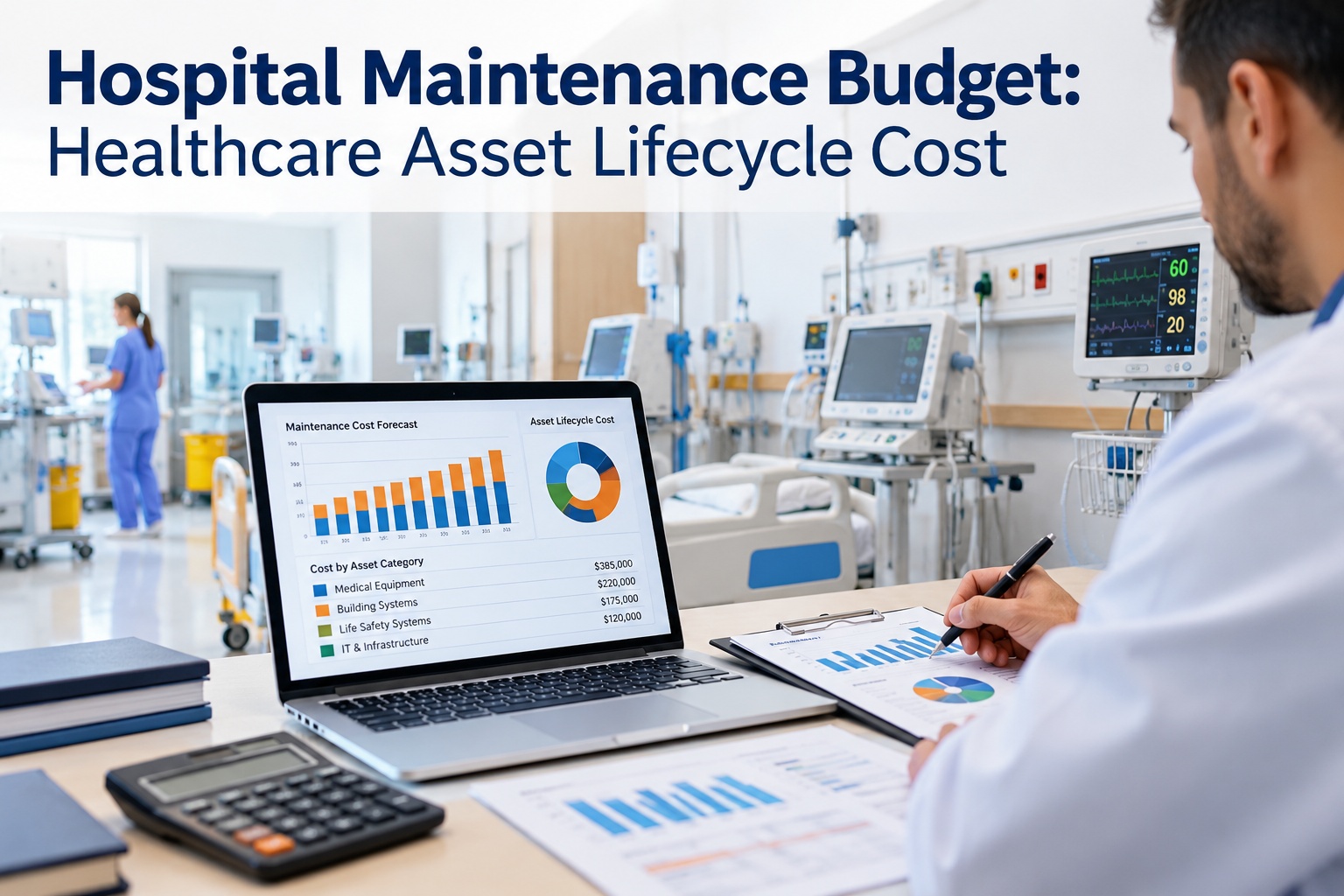
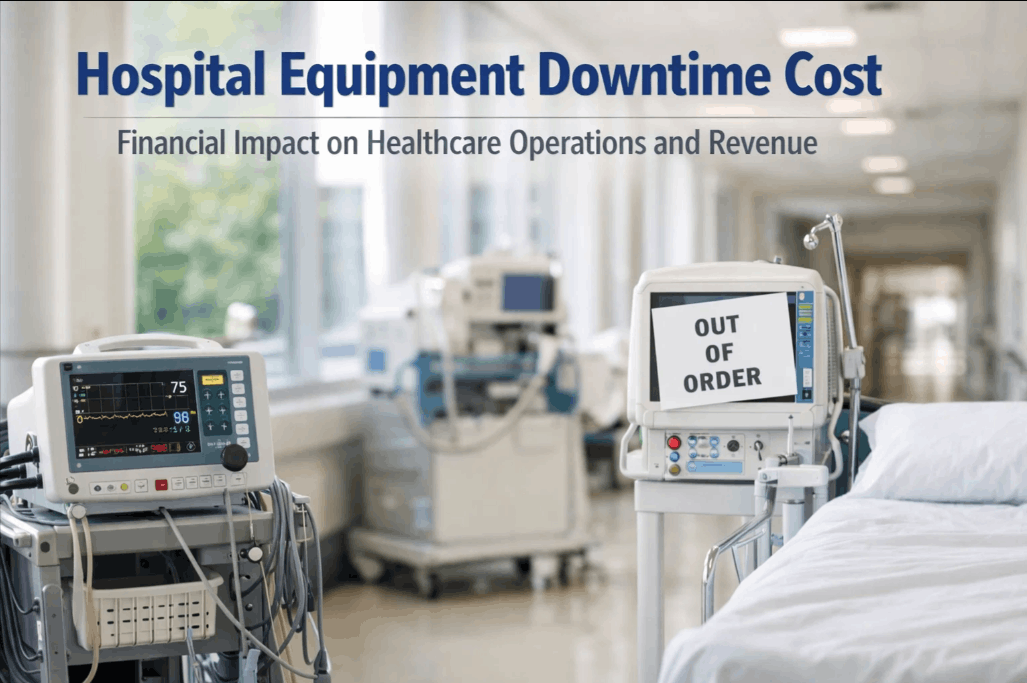
Unplanned equipment downtime in hospitals generates direct repair cost premiums two to three times higher than scheduled maintenance, while secondary costs from disrupted procedures, staff overtime, and patient care delays multiply the financial impact. AI-driven predictive maintenance platforms reduce emergency repair costs by 20 to 40 percent and extend asset life by 20 to 35 percent.
AI-Powered Predictive Analytics: From Reactive Spending to Proactive Resource Allocation
The fundamental economic problem in hospital operations is that resource allocation decisions are made with incomplete information. Staffing grids are built on historical averages that do not reflect the day-to-day variability of patient arrivals, acuity shifts, and seasonal demand patterns. Equipment maintenance schedules are set at fixed intervals that over-maintain some assets while missing early failure signals in others. Supply orders are placed against static par levels that do not account for upcoming surgical volumes, seasonal illness patterns, or changes in clinical protocols.
Predictive analytics powered by machine learning transforms each of these decision points by replacing historical averages with dynamic, forward-looking forecasts derived from the actual patterns embedded in clinical, operational, and financial data. In workforce planning, AI models trained on historical census data, seasonal admission patterns, procedure volumes, and even weather and epidemiological trends can forecast daily patient volumes with sufficient accuracy to allow shift-level staffing adjustments that eliminate both the cost of over-staffing and the quality risk of under-staffing. Book a demo to see how OxMaint's predictive analytics platform works in a live healthcare environment.
Predictive Maintenance: Eliminating the Most Expensive Category of Repair
In hospital facilities management, predictive analytics represents the clearest financial case for AI investment. Emergency equipment failures in critical clinical environments carry costs that extend far beyond the repair invoice. A failed steriliser disrupts surgical schedules, generating cascading costs across multiple service lines. A ventilation failure in a negative-pressure isolation room creates infection control risk and potential regulatory exposure. An unplanned elevator outage in a facility without adequate service lift redundancy may require patient care relocations that consume staff time and create safety risks.
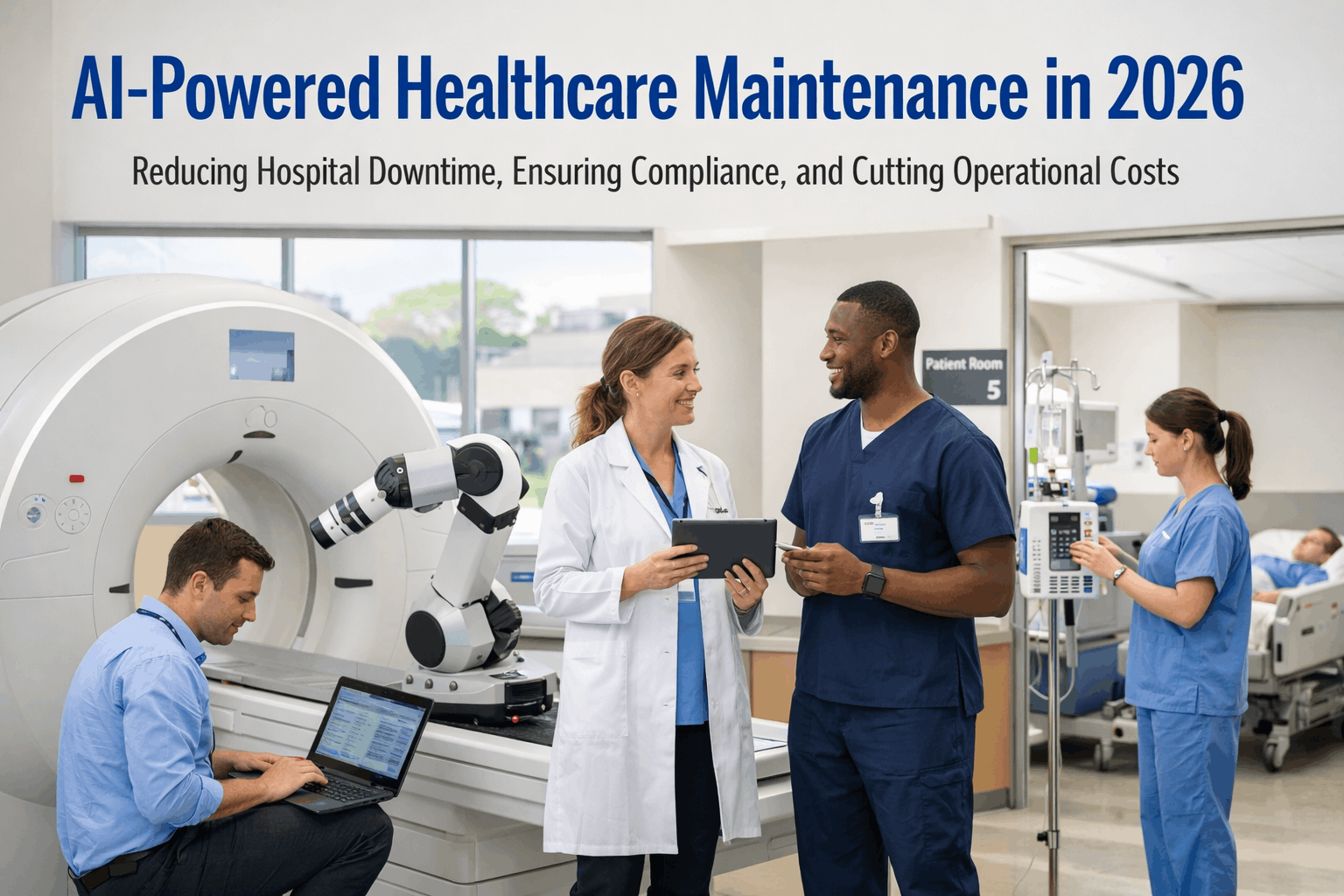
AI-driven predictive maintenance platforms integrate IoT sensor data from critical equipment — monitoring vibration signatures, thermal patterns, power consumption anomalies, and runtime trends — and apply machine learning models to identify the specific signature patterns that precede failures days or weeks before they occur. Maintenance teams receive condition-based alerts that allow interventions during planned downtime windows rather than emergency responses during clinical operations. Platforms like OxMaint deliver these predictive capabilities alongside automated preventive maintenance scheduling, work order management, and compliance documentation in a single healthcare-specific system.
Revenue Cycle Optimisation Through AI
Cost optimisation in healthcare is inseparable from revenue cycle performance. Claim denials, undercoding, and delayed reimbursement are as damaging to hospital financial health as operational overspending. AI applications in revenue cycle management use natural language processing to analyse clinical documentation and identify coding gaps that result in undercapture of legitimate revenue, while denial prediction models flag claims likely to be rejected before submission, allowing pre-emptive correction that reduces denial rates by 15 to 30 percent.
Prior authorisation automation represents another high-impact AI application in the revenue cycle. Manual prior authorisation processes consume significant clinical and administrative staff time while creating care delays that themselves generate cost — in extended stays, in delayed procedures, and in the patient dissatisfaction that affects volume and reputation. AI automation reduces prior authorisation processing time by 50 to 70 percent while improving approval rates through better documentation packaging.
Key AI Applications Driving Healthcare Cost Reduction in 2026
Machine learning models predict patient volume, case mix, and acuity patterns to align staffing, supply procurement, and capacity planning with actual demand rather than static historical baselines.
IoT sensor integration and anomaly detection algorithms identify equipment failure signatures weeks in advance, shifting repair costs from emergency premiums to scheduled maintenance rates.
AI-powered order appropriateness tools reduce unnecessary diagnostic testing and treatment variation, cutting per-episode costs by 8 to 15 percent without adverse clinical outcomes.
Discharge risk stratification enables targeted post-acute care interventions that reduce 30-day readmission rates and protect hospital reimbursement under penalty-linked payment programs.
NLP-driven coding assistance, denial prediction, and prior authorisation automation reduce revenue leakage and administrative cost while accelerating days in accounts receivable.
AI bed management and patient flow optimisation reduce length of stay, improve surgical schedule utilisation, and increase capacity without additional capital investment in physical infrastructure.
Value-Based Care and AI: Building the Analytical Infrastructure That Outcomes-Based Payment Requires
Value-based care models — from Accountable Care Organisations and bundled payments to Medicare Advantage risk contracts — require healthcare organisations to manage the total cost of care across patient populations while meeting quality benchmarks that determine reimbursement levels. This is analytically demanding work that traditional reporting infrastructure cannot support. Claims data lags reality by months. EHR data is siloed across systems. Population health trends are invisible without the aggregation and analytical processing that most hospital IT environments cannot perform at scale.
AI platforms built for value-based care analytics ingest claims data, clinical data, social determinants of health, pharmacy records, and patient-reported outcomes into unified analytical models that give care management teams the population-level visibility they need to intervene early, manage chronic conditions proactively, and route high-risk patients to the right care settings before crisis events drive up cost. Health systems participating in advanced alternative payment models that have deployed AI-driven population health platforms report total cost of care reductions of 8 to 15 percent within 24 months of deployment, driven primarily by reductions in avoidable ED utilisation, preventable admissions, and low-value specialty referrals.
Operational Efficiency: Where Every Percentage Point Matters
Beyond the headline applications of predictive analytics and population health, AI delivers compounding cost benefits through operational efficiency improvements that individually appear modest but aggregate to significant financial impact. Operating room utilisation optimisation using AI scheduling algorithms consistently increases surgical throughput by 10 to 20 percent in facilities where manual scheduling leaves gaps between cases and underutilises premium surgical time. Each percentage point of OR utilisation improvement in a high-volume surgical programme translates to hundreds of thousands of dollars in additional margin on already-scheduled cases.
Pharmacy cost management is another domain where AI delivers outsized value relative to implementation complexity. AI-powered medication dispensing and inventory management platforms reduce medication waste by 20 to 30 percent, identify substitution opportunities for high-cost therapeutics, and flag dosing patterns that suggest potential avoidable adverse events — each of which generates treatment costs that dwarf the cost of prevention. In facilities with annual drug spend exceeding 50 million dollars, a 10 percent reduction in pharmacy waste alone generates five million dollars in annual savings.
Energy management through AI optimisation of building systems represents a category of cost reduction that often escapes attention in clinical settings but delivers consistent 15 to 25 percent reductions in utility costs across health system campuses. AI-driven building management systems learn occupancy patterns, seasonal load profiles, and equipment efficiency curves to optimise HVAC, lighting, and power distribution in real time, reducing one of the largest non-labour operating costs in facility management. Sign up free to explore how OxMaint helps healthcare facilities unlock these operational efficiency gains from a single unified platform.
Implementing AI Cost Optimisation: A Practical Framework for Health System Leaders
The gap between AI's potential in healthcare cost management and actual realised value is wide, and it is almost entirely explained by implementation quality rather than technology capability. Health systems that deploy AI tools without clear use case prioritisation, without change management investment, and without the data infrastructure to support model accuracy consistently underperform relative to benchmarks. Those that approach AI deployment with structured implementation frameworks reliably achieve and exceed projected returns.
The most effective implementation frameworks begin with a data readiness assessment. AI models are only as accurate as the data they are trained on, and most hospital environments have significant data quality issues — inconsistent coding, incomplete clinical documentation, siloed systems with limited interoperability — that must be addressed before model deployment. A six to twelve week data infrastructure investment prior to AI tool deployment typically doubles the financial return realised in the first year by ensuring models are trained on clean, comprehensive, representative datasets.
Change Management: The Underestimated Driver of AI ROI
Technology implementation in healthcare fails not because of software limitations but because clinical and operational staff lack the training, context, and incentive alignment to integrate new tools into existing workflows. AI cost optimisation tools that generate accurate predictions but are ignored by the teams they are built to support deliver zero financial value. Investment in role-specific training, clear communication of how AI recommendations should be acted upon, and feedback loops that allow clinicians and operations teams to report model inaccuracies and drive continuous improvement are all prerequisites for realising projected returns.
Governance structures matter equally. AI tools that make recommendations about staffing, procurement, maintenance, or care management must operate within clear accountability frameworks that define who is responsible for acting on AI outputs, how disagreements between AI recommendations and clinical or operational judgment are resolved, and how model performance is monitored and reported over time. Without governance, even technically excellent AI deployments drift toward underutilisation as early enthusiasm fades and accountability diffuses. Book a demo to see how OxMaint's implementation specialists help healthcare teams build the governance frameworks and change management structures that maximise AI ROI.
Start Eliminating Operational Waste With AI-Driven Maintenance
OxMaint gives healthcare facilities teams predictive maintenance, automated PM scheduling, compliance tracking, and real-time asset analytics — all in one platform built for healthcare cost optimisation.
Frequently Asked Questions
Key questions from healthcare executives, CFOs, and operations leaders exploring AI-driven cost optimisation strategies.
How does AI reduce costs in healthcare organisations?
AI reduces healthcare costs by replacing reactive, intuition-driven resource allocation with data-driven, predictive decision-making across supply chain, workforce scheduling, equipment maintenance, revenue cycle, and patient flow management. By identifying inefficiencies at the workflow level and automating high-frequency operational decisions, AI enables health systems to extract more value from existing resources without requiring additional capital investment or headcount.
What is the ROI timeline for AI healthcare cost optimisation?
Most AI healthcare cost optimisation tools deliver measurable ROI within six to eighteen months of full deployment. Predictive maintenance and scheduling optimisation tools tend to show returns earliest, often within the first quarter post-deployment. Revenue cycle and population health AI applications typically require six to twelve months before sufficient data accumulates to demonstrate statistically significant improvements in denial rates or readmission outcomes.
How does AI support value-based care financial performance?
AI supports value-based care financial performance by enabling the population-level analytics, risk stratification, and care management targeting that alternative payment models require. AI platforms can identify high-risk patients before crisis events drive avoidable utilisation, optimise care pathway adherence to reduce total episode cost, and monitor quality metrics in real time to protect performance-linked reimbursement levels under accountable care and bundled payment contracts.
What data infrastructure does AI healthcare analytics require?
Effective AI healthcare analytics requires interoperable access to clinical data from EHR systems, operational data from facility management and supply chain platforms, financial data from billing and claims systems, and where applicable, sensor data from IoT-enabled medical and building equipment. A healthcare data warehouse or integrated data platform that normalises data from disparate source systems is a prerequisite for most advanced AI applications, though some tools — particularly predictive maintenance platforms — can operate effectively on narrower data inputs.
Can smaller hospitals and community health systems benefit from AI cost optimisation?
Yes. While large health systems have historically had greater resources to invest in enterprise AI platforms, cloud-based SaaS delivery models have dramatically reduced the implementation cost and technical complexity of AI-powered operational tools. Community hospitals and critical access facilities can deploy predictive maintenance, scheduling optimisation, and revenue cycle AI tools at accessible price points, with implementation timelines measured in weeks rather than months, and financial returns that are proportionally comparable to those achieved by larger systems.
How does AI healthcare cost optimisation affect clinical staff?
Well-implemented AI cost optimisation tools reduce administrative burden on clinical staff rather than increasing it. Automated documentation, AI-assisted scheduling, and predictive supply management eliminate the low-value administrative tasks that consume clinical time without contributing to patient care. Staff response is consistently more positive when AI tools demonstrably reduce friction in daily workflows and when implementation includes adequate training and clear communication about how AI recommendations are meant to support rather than replace clinical judgment.
What is the most impactful first AI use case for healthcare cost reduction?
For most healthcare organisations, predictive maintenance and equipment lifecycle management represents the highest-return, lowest-complexity entry point into AI-driven cost optimisation. The data requirements are narrower than clinical AI applications, implementation timelines are measured in weeks, the financial case is directly measurable through repair cost and downtime metrics, and the compliance documentation benefits create immediate value independent of predictive model accuracy. Health systems that begin with facilities and operational AI typically build the data infrastructure, change management capability, and organisational confidence in AI-driven decision-making that then accelerates successful deployment of more complex clinical and financial AI applications. Start your free 15-day OxMaint trial to see how predictive maintenance and operational AI work in a healthcare environment from day one.