Every square foot of a modern hospital is a system — HVAC keeping operating theatres sterile, elevators moving patients between floors, infusion pumps delivering precise medication doses, MRI machines cycling through thousands of scans a year. Until recently, these systems operated in isolation, maintained reactively, and monitored by humans walking rounds with clipboards. That era is ending. Smart hospitals — facilities where IoT sensors, artificial intelligence, and digital twin technology converge into a single operational nervous system — are redefining what healthcare infrastructure is capable of. Want to see how intelligent asset management works inside a live hospital environment? Start a free trial or book a demo with our healthcare operations team.
Oxmaint connects your equipment data, maintenance schedules, and CapEx planning into one platform built for modern healthcare operations teams.
What Is a Smart Hospital?
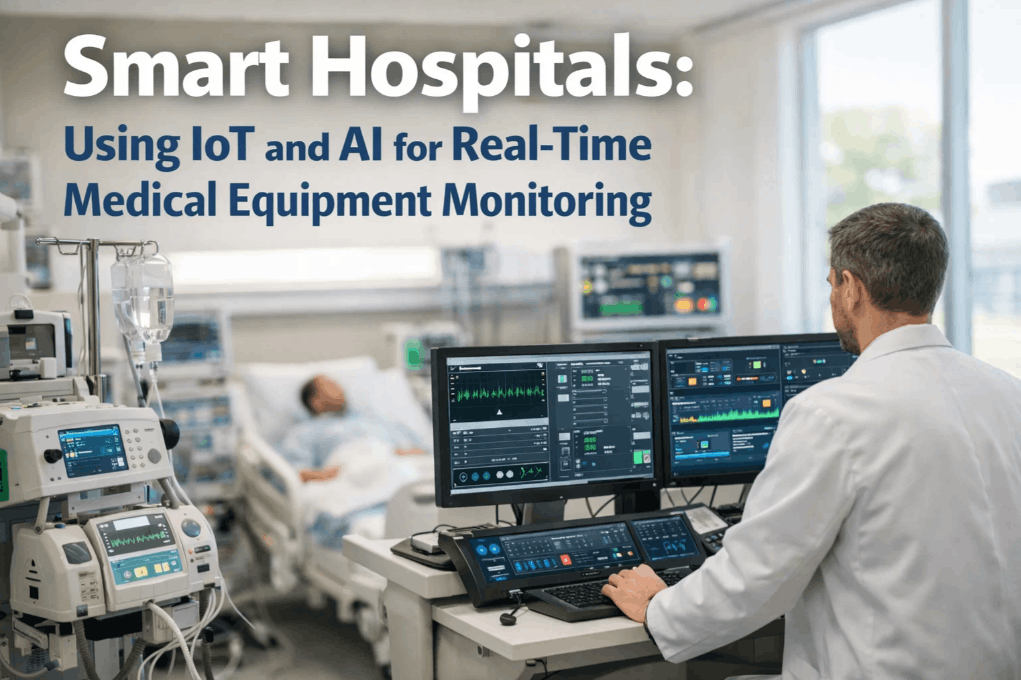
A smart hospital is a healthcare facility where physical infrastructure — buildings, equipment, utilities, and clinical systems — is connected through a unified data layer. Sensors embedded in assets stream real-time telemetry. AI algorithms process that telemetry to detect anomalies, predict failures, and optimize operations. Digital twins — virtual replicas of physical systems — let facility managers simulate scenarios before acting on them in the real world.
This is not incremental improvement. It is a structural shift in how hospitals operate. Where traditional facilities management reacts to failures after they happen, a smart hospital anticipates them. Where legacy systems generate paper work orders, smart hospitals generate data-driven maintenance triggers tied directly to asset condition. The result: safer patient environments, lower operating costs, and infrastructure that scales with demand rather than against it.
Why Legacy Hospital Infrastructure Is a Liability
Most hospitals — even recently constructed ones — were designed around disconnected infrastructure. HVAC systems report faults to building management software that nobody monitors in real time. Medical equipment maintenance is scheduled by manufacturer calendar, not by actual usage or condition. Work orders are generated by staff complaints, not sensor alerts. This reactive posture is not just inefficient — it is a clinical and financial risk.
These are not abstract challenges. They represent measurable cost, compliance exposure, and patient safety risk in every quarter that a hospital operates without intelligent infrastructure management. Facilities that have moved to connected, AI-driven operations consistently report 25 to 40 percent reductions in unplanned maintenance spend within the first 18 months. If you are still running reactive maintenance across your hospital portfolio, start a free trial and benchmark where you stand today.
The IoT Architecture Behind Smart Hospitals
A smart hospital's IoT infrastructure operates across five interconnected layers. Understanding this architecture is essential for facility managers evaluating technology investments — and for operations directors building a business case for connected infrastructure upgrades.
The most critical design decision in smart hospital IoT architecture is interoperability. Facilities that invest in proprietary sensor ecosystems locked to a single vendor create long-term maintenance debt and reduce flexibility. Open-protocol architectures — MQTT, BACnet, Modbus, OPC-UA — allow hospitals to integrate best-in-class sensor hardware with best-in-class analytics platforms independently. Oxmaint is designed to integrate with existing IoT infrastructure across all major industrial and building management protocols, meaning your sensor investment is not lost when you upgrade your CMMS layer.
How Digital Twins Work in Healthcare Facilities
A digital twin is a continuously updated virtual model of a physical asset or system — synchronized with real-world sensor data so that the virtual and physical states mirror each other at all times. In a hospital context, digital twins operate at multiple scales simultaneously.
The transformative power of digital twins is not in the visualization — it is in the simulation. A facilities director who can model the downstream impact of deferring a $180,000 chiller replacement for 18 months — in terms of energy cost, maintenance risk, and operating theatre availability — makes a fundamentally better capital decision than one relying on an aging maintenance log and intuition. Book a demo to see how Oxmaint surfaces digital twin-grade asset intelligence without a multi-year implementation project.
Reactive Hospital Operations vs Smart Hospital Operations
| Operational Dimension | Reactive Legacy Facility | Smart IoT-Connected Hospital |
|---|---|---|
| Equipment Failure Response | Discovered after failure; emergency repair dispatched | Predicted 7–14 days in advance; planned intervention scheduled |
| Maintenance Scheduling | Calendar-based; not tied to actual usage or condition | Condition-based triggers from real-time sensor telemetry |
| Compliance Documentation | Paper logs; manual reconciliation at inspection time | Audit-ready digital records with timestamps and technician signatures |
| Energy Management | Fixed schedules regardless of occupancy | Occupancy-responsive, AI-optimized — saves 22–28% on energy spend |
| CapEx Planning | Gut instinct and manufacturer end-of-life dates | 5–10 year rolling forecasts from actual asset condition scores |
| Multi-Site Visibility | Siloed systems; no portfolio-level view | Unified dashboard across all campuses and asset classes |
| Downtime Cost | 4.8x higher than planned maintenance per incident | 40% reduction in unplanned downtime within 18 months of deployment |
| Technician Productivity | Reactive dispatching; time lost locating fault sources | Pre-diagnosed work orders with fault codes; parts pre-staged |
How Oxmaint Powers Smart Hospital Asset Management
Oxmaint is the operational layer that connects your IoT sensor data, maintenance teams, and capital planning into a single platform — purpose-built for multi-site healthcare and commercial facility portfolios. Here is how each capability maps to the smart hospital challenge.
The healthcare facilities teams that see the fastest ROI with Oxmaint are those managing 50 or more major assets across multiple buildings — where the coordination overhead of manual systems has already become a measurable cost. Implementation takes days, not months. There are no heavy onboarding fees, no custom development requirements, and no long-term lock-in. Start a free trial and have your first assets registered in your first session, or book a demo and we will walk through your specific asset portfolio live.
What Smart Hospital Infrastructure Delivers in Numbers
Smart Hospital Technology: Common Questions
What types of hospital equipment can be connected to an IoT monitoring system?
IoT monitoring can be applied to virtually any asset class in a hospital environment. Clinical equipment — imaging systems (MRI, CT, X-ray), ventilators, infusion pumps, surgical lights, and patient monitoring systems — can be connected via HL7 interfaces or direct sensor attachment. Building infrastructure — HVAC units, chillers, boilers, air handling units, electrical switchgear, elevators, and water treatment systems — connects through BACnet, Modbus, or SCADA protocols. The prioritization decision should be based on asset criticality, replacement cost, and failure impact on patient care — most facilities begin with the 20 highest-criticality assets and expand from there.
How long does it take to implement smart hospital IoT and CMMS infrastructure?
The timeline depends heavily on the maturity of existing infrastructure and the scope of integration required. A CMMS platform like Oxmaint can be fully operational — with asset registries, PM schedules, and work order workflows live — within days to two weeks for a single-site facility. IoT sensor hardware installation and network integration typically adds four to twelve weeks depending on the number of assets and building access constraints. Full digital twin capability, if pursued, requires six to eighteen months of sensor data collection before models achieve production accuracy. Most facilities achieve meaningful operational improvements within the first 90 days.
How does predictive maintenance differ from preventive maintenance in a hospital context?
Preventive maintenance is time or usage-based — a chiller is serviced every 2,000 operating hours regardless of its actual condition. Predictive maintenance is condition-based — sensors monitoring vibration, temperature, and current draw on that same chiller detect an anomaly at hour 1,600 and trigger a service call before failure occurs. In hospitals, the distinction is clinically significant: a preventive maintenance program keeps equipment from degrading on average, while predictive maintenance prevents specific failures that would disrupt specific services at specific times. Predictive approaches typically cost 20 to 30 percent less in total maintenance spend while delivering higher equipment availability than time-based PM programs.
What regulatory frameworks does smart hospital technology need to comply with?
Healthcare facilities operate under layered regulatory environments that vary by region. In the USA, OSHA, The Joint Commission (TJC), and CMS conditions of participation govern equipment maintenance documentation and life-safety systems. In the UK, CQC regulations and NHS ERIC standards apply. In Australia, NSQHS Standards cover clinical equipment risk management. In the UAE, HAAD and DHA frameworks govern healthcare facility compliance. Any smart hospital platform must support audit-ready documentation, digital signature capture, and maintenance history retrieval formatted to satisfy these frameworks. Oxmaint is designed with audit-ready documentation as a core output — not a reporting module added later.
Bring IoT Intelligence and Predictive Maintenance to Every Asset in Your Portfolio
Oxmaint gives healthcare facility teams the asset registry, IoT integration, condition-based maintenance, and CapEx forecasting they need to run smarter, more resilient operations — without a year-long implementation project or seven-figure consulting fees.

.png)