The healthcare landscape is undergoing a seismic shift. As hospitals race to become "smart hospitals"—connected, data-driven ecosystems—the spotlight is turning to predictive maintenance for medical equipment as the critical infrastructure layer that makes intelligent healthcare possible. Unlike traditional reactive maintenance that waits for equipment to fail, predictive maintenance leverages AI, IoT sensors, and advanced analytics to anticipate failures before they occur, ensuring 99.5% equipment uptime while delivering ROI within 10-16 months. With the global IoT in healthcare market projected to reach $594.5 billion by 2035 and healthcare predictive maintenance creating $42 billion in annual economic impact, this technology isn't just improving operations—it's redefining what's possible in patient care. This guide explores how predictive maintenance serves as the nervous system of smart hospitals, transforming medical equipment from cost centers into strategic assets that save lives and millions in operational costs.
The $42 Billion Opportunity: Why Smart Hospitals Can't Ignore Predictive Maintenance
Discover how leading health systems achieve 99.5% equipment uptime using AI-powered predictive analytics—preventing MRI failures that cost $4,000 per day and eliminating emergency repairs that disrupt critical patient care.
See your smart hospital transformation roadmap in under 10 minutes
Book Your Smart Hospital AssessmentFrom Reactive to Predictive: The Smart Hospital Evolution
Smart hospitals represent the convergence of physical infrastructure, digital technology, and intelligent workflows. At their core lies a fundamental transformation in how medical equipment is managed—shifting from calendar-based maintenance schedules to condition-based, AI-driven predictive models that monitor equipment health in real-time.
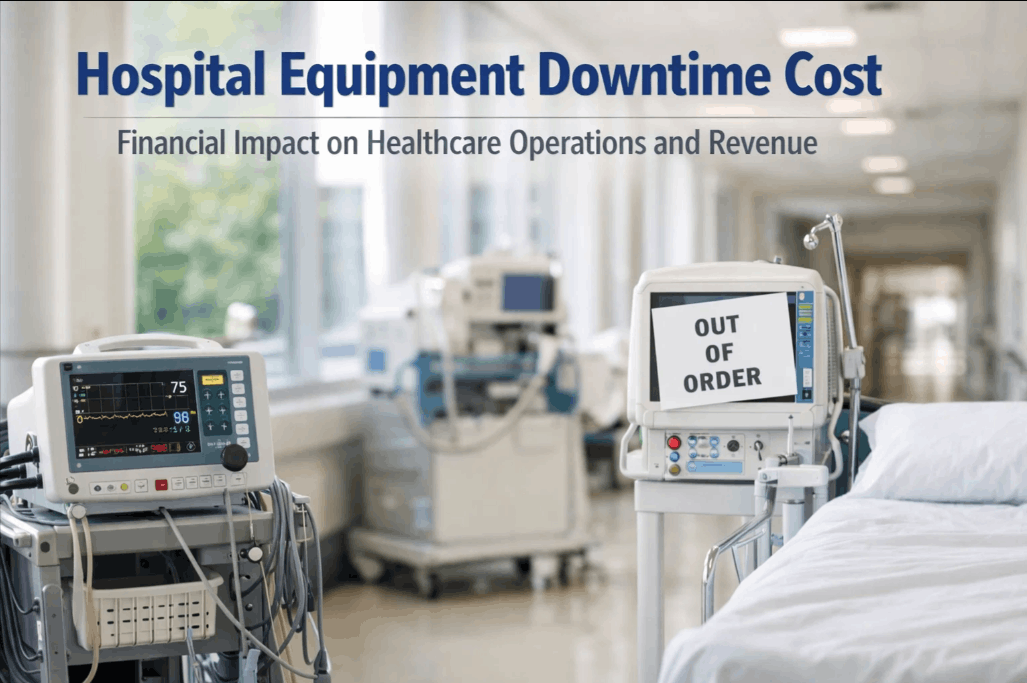
The economic case is compelling. Healthcare predictive maintenance delivers $42 billion in annual global economic impact, with hospitals achieving ROI 10-16 months faster than other industries. A single day of MRI downtime costs approximately $4,000 in lost revenue, while GE Healthcare's predictive platform has demonstrated adding 4.5 days of uptime per MRI annually—a 40% reduction in unplanned downtime that translates to hundreds of thousands in protected revenue per machine.
This transformation is driven by three technological pillars:
Machine Learning Analytics
Deep neural networks analyze equipment performance patterns, identifying subtle anomalies 2-4 weeks before failure occurs
IoT Sensor Networks
Wireless vibration, temperature, and performance sensors provide continuous real-time monitoring of critical medical assets
Real-Time Location Systems
RFID and RTLS technology track equipment location, utilization rates, and maintenance history across smart hospital networks
The market momentum is undeniable. The IoT in healthcare market is growing at 23.85% CAGR, driven by smart hospital initiatives that prioritize predictive maintenance as essential infrastructure. Sign up today to explore how Oxmaint's AI-powered platform integrates these technologies for your facility.
How Predictive Maintenance Powers Smart Hospital Operations
Smart hospitals leverage predictive maintenance across four critical operational domains, each delivering measurable improvements in patient care and financial performance:
1. Critical Equipment Uptime Assurance
Medical equipment failures don't just cost money—they risk lives. Predictive maintenance systems monitor high-value assets like MRI machines, CT scanners, ventilators, and infusion pumps 24/7, analyzing vibration patterns, thermal signatures, and operational parameters to detect degradation before it causes failure.
A recent implementation at a major health system demonstrated how wireless sensors installed in under 5 minutes per asset caught five critical failures during a 4-month pilot, preventing $405,500 in downtime costs across just 234 assets. At scale, this translates to $6.5 million in annual savings through a 20,000-sensor deployment. Book a demo to see real-time equipment monitoring in action.
2. Intelligent Asset Utilization
Smart hospitals use predictive data to optimize equipment deployment. By analyzing utilization patterns alongside maintenance needs, hospitals can right-size their asset inventory—often discovering 15-20% redundant equipment that can be redeployed or retired. RFID-enabled asset tracking ensures critical devices are located instantly, reducing "hoarding" behavior where departments hide equipment due to availability fears.
3. Automated Compliance & Documentation
Regulatory requirements from Joint Commission, FDA, and CMS demand meticulous maintenance records. Predictive maintenance platforms automate documentation, creating time-stamped audit trails for every calibration, inspection, and repair. This reduces compliance preparation from weeks to hours while ensuring 100% inspection completion rates—critical for maintaining accreditation and avoiding penalties.
4. Energy & Sustainability Optimization
Poorly maintained medical equipment consumes 20-30% more energy. Smart hospitals use predictive analytics to optimize HVAC systems, lighting, and medical device energy consumption based on real-time occupancy and operational needs. One facility achieved 28% energy cost reduction ($470,000 annually) through automated calibration alerts and efficiency monitoring.
Transform Your Hospital into a Smart Facility Today
Join leading health systems using Oxmaint's predictive maintenance platform to achieve 99.5% equipment uptime and 10x ROI within 18 months
The Technology Stack: Building Your Predictive Maintenance System
Implementing predictive maintenance in smart hospitals requires an integrated technology ecosystem. Here's how the components work together:
Edge Computing Sensors
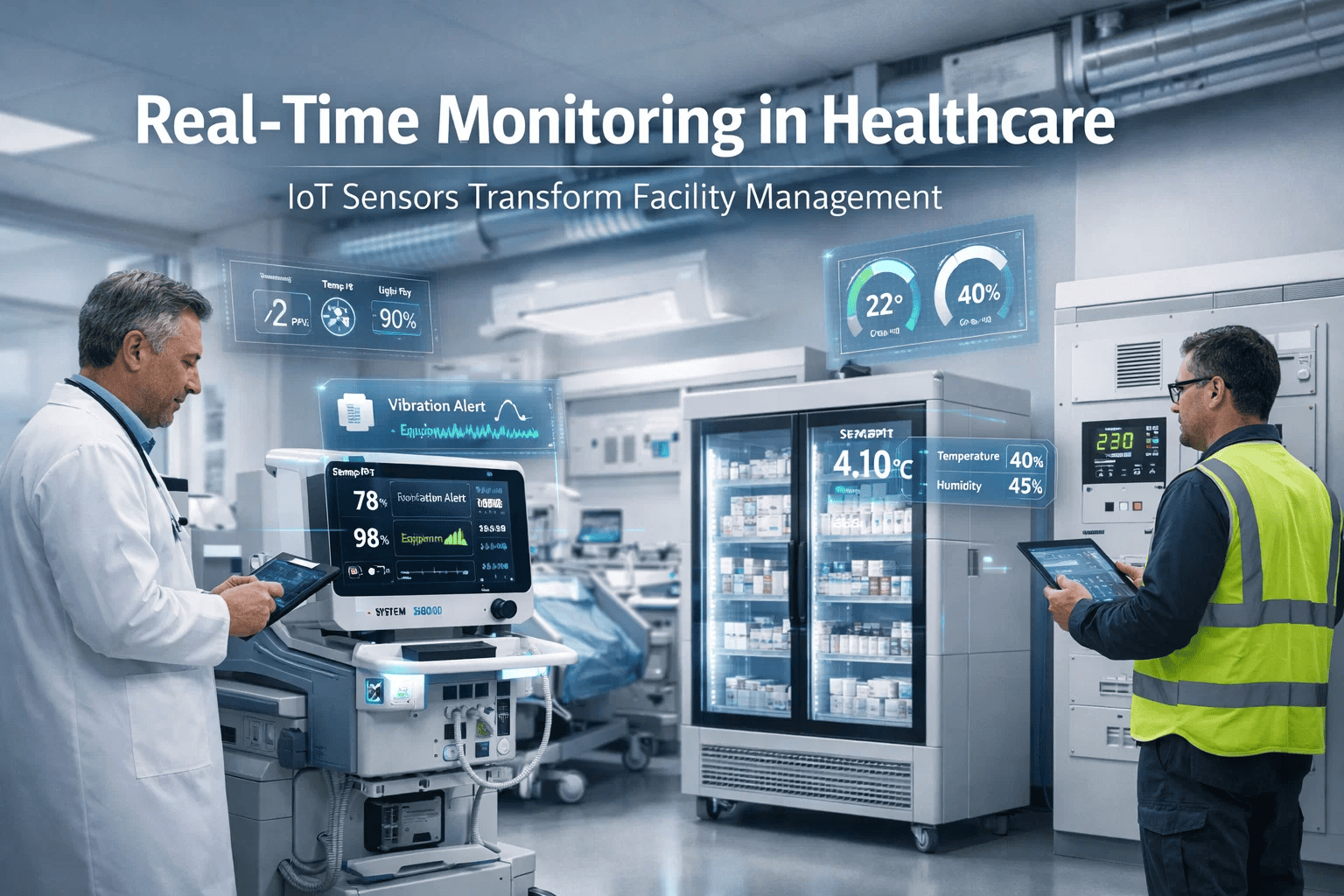
Wireless IoT sensors capture vibration, temperature, acoustic, and electrical data directly from medical equipment. These glue-mounted devices install in minutes without wiring or production interruption, transmitting data securely to cloud-based analytics platforms via hospital Wi-Fi networks.
AI Analytics Engine
Machine learning algorithms analyze sensor data against baseline performance models, detecting anomalies that human inspection would miss. These systems learn normal operating patterns for each asset, identifying subtle deviations that indicate impending failure 2-4 weeks in advance with 95%+ accuracy.
Digital Twin Modeling
Advanced platforms create virtual replicas of physical medical equipment, simulating performance under various conditions. GE Healthcare's OnWatch platform, deployed at 1,500+ US sites, uses digital twin technology to predict MRI component failures before they occur, scheduling maintenance during low-demand periods.
Integrated Command Centers
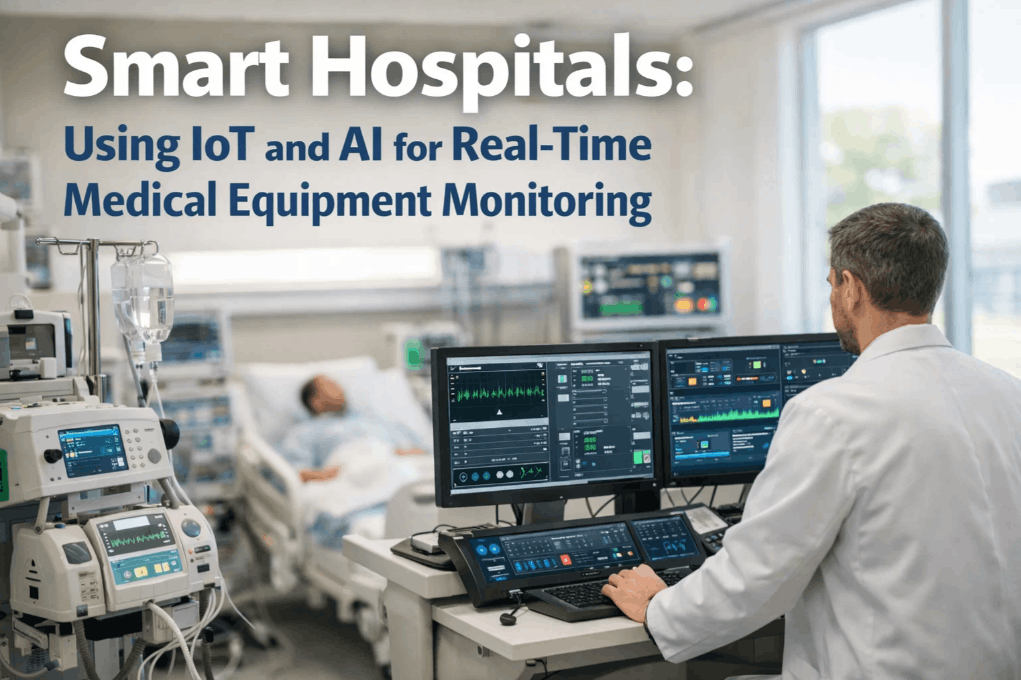
Smart hospitals deploy centralized command centers that aggregate predictive maintenance alerts with patient flow data, staffing schedules, and supply chain information. Genpact's AI-Driven Smart Command Center in Japan exemplifies this approach, transforming equipment service operations through predictive maintenance and cloud-based efficiency improvements.
Real-World Impact: Case Studies from Smart Hospital Leaders
The transition to predictive maintenance isn't theoretical—leading health systems are already documenting transformative results:
NHS Foundation Trust: Real-Time Asset Intelligence
The UK's NHS Foundation Trust implemented trackable IoT tags on all essential medical equipment, integrated with their Wi-Fi network and centralized management platform. This smart hospital solution enables seamless real-time tracking of assets, minimizing delays in patient care by ensuring critical equipment is always locatable and available. The system reduced operational costs while improving equipment utilization rates across multiple facilities.
Cleveland Clinic: World's Best Smart Hospital
Named the world's best smart hospital by Newsweek and Statista, Cleveland Clinic integrates predictive maintenance with telemedicine, ambient listening for documentation, and AI-powered drug discovery. Their smart hospital infrastructure ensures critical diagnostic equipment maintains maximum uptime, supporting both patient care and cutting-edge research initiatives.
These implementations share common success factors: executive sponsorship, phased rollout starting with high-value assets, and integration with existing hospital information systems. Sign up now to access our smart hospital implementation playbook.
The Financial Architecture: Understanding Smart Hospital ROI
Predictive maintenance in smart hospitals delivers returns through multiple value streams that compound over time:
Direct Cost Savings
- 25-30% reduction in maintenance costs
- 70-75% fewer emergency repairs
- 40% decrease in service calls
- 20-30% lower energy consumption
Revenue Protection
- 99.5% equipment uptime vs. 94% traditional
- $4,000/day MRI availability protection
- 50% reduction in OR delays
- Zero revenue loss from critical failures
Capital Optimization
- 20-30% extension of asset lifespan
- $500K+ deferred replacement costs per unit
- 15-20% reduction in redundant inventory
- Data-driven capital planning accuracy
For a clinical analyzer costing $500,000 generating $200,000 annual revenue, predictive maintenance can reduce unexpected failure costs by 50% ($25,000 saved annually) while deferring replacement by one full cycle over 5 years ($100,000/year capital preservation). With implementation costs of $100,000 and $10,000 annual operating costs, the net benefit reaches $115,000 yearly after the first year—delivering 10x ROI over the asset lifecycle. Book a demo to calculate your specific ROI.
Implementation Roadmap: From Legacy to Smart Hospital
Transitioning to predictive maintenance doesn't require ripping and replacing existing infrastructure. Modern platforms integrate with legacy equipment through non-invasive sensors and API connections:
Phase 1: Foundation (Months 1-3)
Deploy wireless sensors on critical high-value assets (MRI, CT, cath lab equipment). Establish cloud-based data aggregation and baseline performance modeling. Sign up to begin your sensor deployment planning.
Phase 2: Intelligence (Months 4-6)
Activate AI analytics engines to begin pattern recognition. Integrate with CMMS and EHR systems for workflow automation. Train clinical engineering teams on predictive alert protocols.
Phase 3: Optimization (Months 7-12)
Expand sensor networks to secondary equipment. Implement digital twin modeling for complex assets. Establish predictive maintenance command center operations.
Phase 4: Ecosystem (Year 2+)
Connect predictive maintenance data with supply chain, capital planning, and clinical operations. Achieve fully integrated smart hospital infrastructure.
Frequently Asked Questions
How does predictive maintenance differ from preventive maintenance in smart hospitals?
Preventive maintenance follows fixed schedules (time-based), while predictive maintenance uses real-time data and AI analytics to service equipment only when condition monitoring indicates actual need. This eliminates unnecessary maintenance, reduces costs by 25-30%, and prevents unexpected failures that scheduled maintenance might miss.
Can predictive maintenance work with older medical equipment?
Yes. Wireless IoT sensors can be attached to legacy equipment without modification, capturing vibration, temperature, and electrical data. These non-invasive sensors transmit data to cloud-based AI platforms that analyze performance regardless of equipment age. Most smart hospital implementations include mixed fleets of new and legacy assets.
What is the typical implementation timeline for a 500-bed hospital?
Initial deployment covering critical assets (MRI, CT, lab equipment) takes 3-4 months. Full-facility rollout including secondary equipment extends to 12-18 months. However, ROI typically becomes positive within 90 days of initial deployment as emergency repairs decrease and uptime improves.
How do predictive maintenance systems integrate with existing hospital IT infrastructure?
Modern platforms offer API-first architecture connecting to EHR systems, building management systems, and existing CMMS through HL7 FHIR and other healthcare standards. Cloud-based deployment requires minimal on-premise infrastructure, and most integrations complete within 2-4 weeks without disrupting clinical operations.
What cybersecurity measures protect predictive maintenance data?
Smart hospital predictive maintenance platforms employ end-to-end encryption, multi-factor authentication, blockchain-based data logging, and strict access controls compliant with HIPAA 2.0. Edge computing processes sensitive data locally when possible, transmitting only anonymized analytics to cloud platforms.
How does predictive maintenance impact patient safety specifically?
By ensuring critical equipment like ventilators, infusion pumps, and surgical devices operate reliably, predictive maintenance eliminates mid-procedure failures that could harm patients. Early alerts allow biomedical engineers to address issues before they affect clinical care, while automated compliance tracking ensures all safety inspections are completed on schedule.
Build Your Smart Hospital Future Today
The smart hospital revolution is here. Don't let equipment failures dictate your patient care quality. Join 200+ leading healthcare facilities using Oxmaint's predictive maintenance platform to achieve 99.5% uptime and transform maintenance from a cost center into a competitive advantage.
14-day free trial. Full platform access. Smart hospital implementation guide included.


.png)