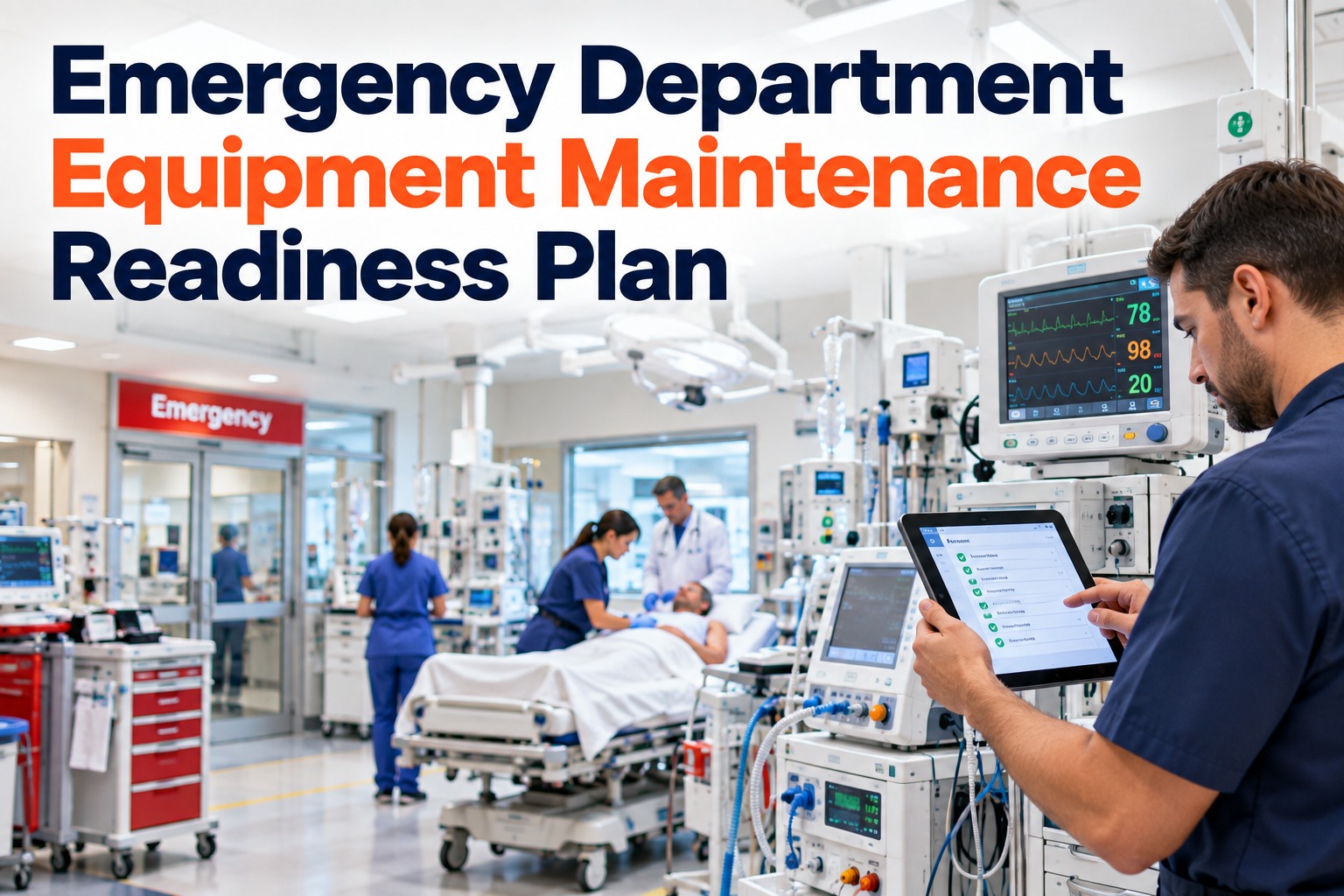
In an emergency department, "maintenance readiness" has a very specific meaning: the defibrillator charges, the ventilator delivers, the crash cart is complete — the instant a code is called. There's no second attempt and no downtime window. Yet equipment failures are tied to a significant share of hospital adverse events, and skipped inspections are how an incomplete crash cart gets discovered mid-resuscitation. A readiness plan turns that risk into a routine: every critical asset verified on a defined cadence, every check documented. OXMAINT AI is the maintenance management software that schedules those checks, alerts on what's overdue, and keeps the survey-ready record the Joint Commission expects.
Healthcare Facilities · Emergency Department · Equipment Readiness
Emergency Department Equipment Maintenance Readiness Plan
Readiness is the difference between equipment that's "usually fine" and equipment that's verified working before the shift starts. OXMAINT AI puts every ED asset — defibrillators, ventilators, monitors, pumps, crash carts — on a tiered inspection cadence, flags anything overdue in real time, and captures the timestamped record that keeps you survey-ready and reduces reactive, last-minute repairs.
7 asset classes
the critical equipment an ED must keep ready
Pre-shift
the tier that matters most — verified before use
EC.02.04.01
Joint Commission standard for equipment records
< 60 sec
survey-ready compliance report on demand
Why Reactive Maintenance Is a Patient-Safety Problem Here
In most facilities, a late repair costs money. In an emergency department, a device that fails at the moment of need is a sentinel-event risk. That's why an ED can't run on fix-it-when-it-breaks — readiness has to be verified before the equipment is needed, not discovered when it isn't there. Start free and shift your ED from reactive to ready with OXMAINT AI.
REACTIVE / PAPER CHECKS
The Risk You Carry
- An incomplete crash cart found during a code
- A defibrillator that fails its first charge
- Skipped inspections with no one accountable
- Missing records that fail a Joint Commission survey
- Last-minute reactive repairs under pressure
READINESS PLAN / OXMAINT AI
What Changes
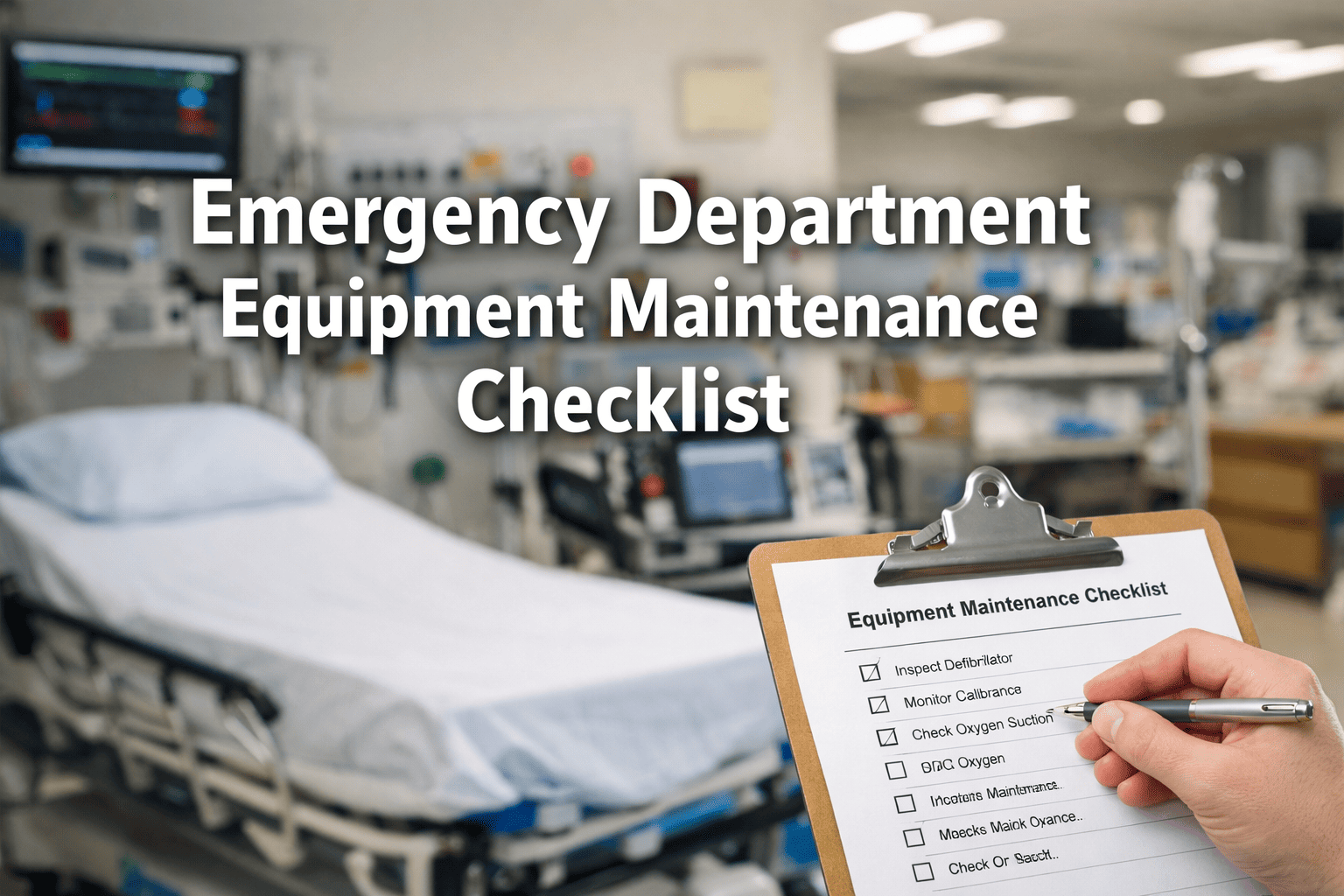
- Crash carts verified complete and sealed each shift
- Life-support devices checked before they're needed
- Every inspection assigned, tracked, and signed
- Timestamped records ready for any surveyor
- Failures caught on a schedule, not in a crisis
The Readiness Cadence — Four Tiers
ED readiness isn't a once-a-year PM. It's layered: fast pre-shift checks that confirm the device is ready right now, up to deep biomedical calibration by qualified engineers. Each tier catches a different kind of failure. Book a demo to set each tier's cadence in OXMAINT AI.
PRE-SHIFT / DAILY
Ready Right Now
Crash carts, defibrillators, ventilators, monitors and suction checked and confirmed operational before the shift relies on them.
WEEKLY
Deeper Verification
Ventilator circuit checks, imaging operational verification and other functional tests beyond the daily glance.
MONTHLY
Full Equipment Check
Comprehensive checks across all major devices — the structured sweep that catches slow drift and wear.
BIANNUAL / ANNUAL
Biomedical PM & Calibration
Full preventive maintenance and calibration by qualified biomedical engineers, with certified records.
The Worst Time to Learn a Device Failed Is During the Code.
Every skipped pre-shift check is a bet that the equipment will hold. OXMAINT AI removes the bet — each critical asset is scheduled, assigned and flagged the moment a check is missed, so a gap is closed before a patient depends on it.
The Critical ED Assets to Keep Ready
A readiness plan covers the specific devices a resuscitation depends on — each with its own failure mode and its own check. These are the assets OXMAINT AI tracks by the tier above. Sign up free and register every critical asset in OXMAINT AI.
Crash Carts & Defibrillators
Tamper seals intact, medications in date, pads functional, defibrillator charging on demand.
Mechanical Ventilators
Tidal volume delivery, pressure settings and circuit integrity verified before and between uses.
Cardiac Monitors
Waveform display, alarm thresholds and lead integrity confirmed so no reading is missed.
IV Infusion Pumps
Dose-error-reduction software current and occlusion detection working to prevent medication errors.
Portable X-Ray
Radiation output, beam collimation and mechanical function checked for safe, accurate imaging.
Suction Systems
Vacuum pressure, tubing condition and collection canisters ready for immediate airway management.
Point-of-Care Lab
Quality-control runs current and calibration status verified for trustworthy bedside results.
One register, every device
Each asset carries its own cadence, history and records — so nothing critical falls outside the plan.
The Documentation a Survey Demands
Joint Commission standard EC.02.04.01 doesn't just expect the work done — it expects written evidence of every inspection, with the technician, date and time, plus any corrective action. Missing records alone can trigger a Requirement for Improvement. OXMAINT AI captures it automatically. Book a demo of survey-ready documentation.
✓
Every inspection recorded — no gaps, no unlogged checks.
✓
Technician, date & time — who verified the device and when.
✓
Corrective actions — what was found and what was done about it.
✓
Tamper-proof timestamps — records that hold up under survey scrutiny.
✓
Report in under a minute — the full compliance picture on demand.
How OXMAINT AI Keeps the ED Ready
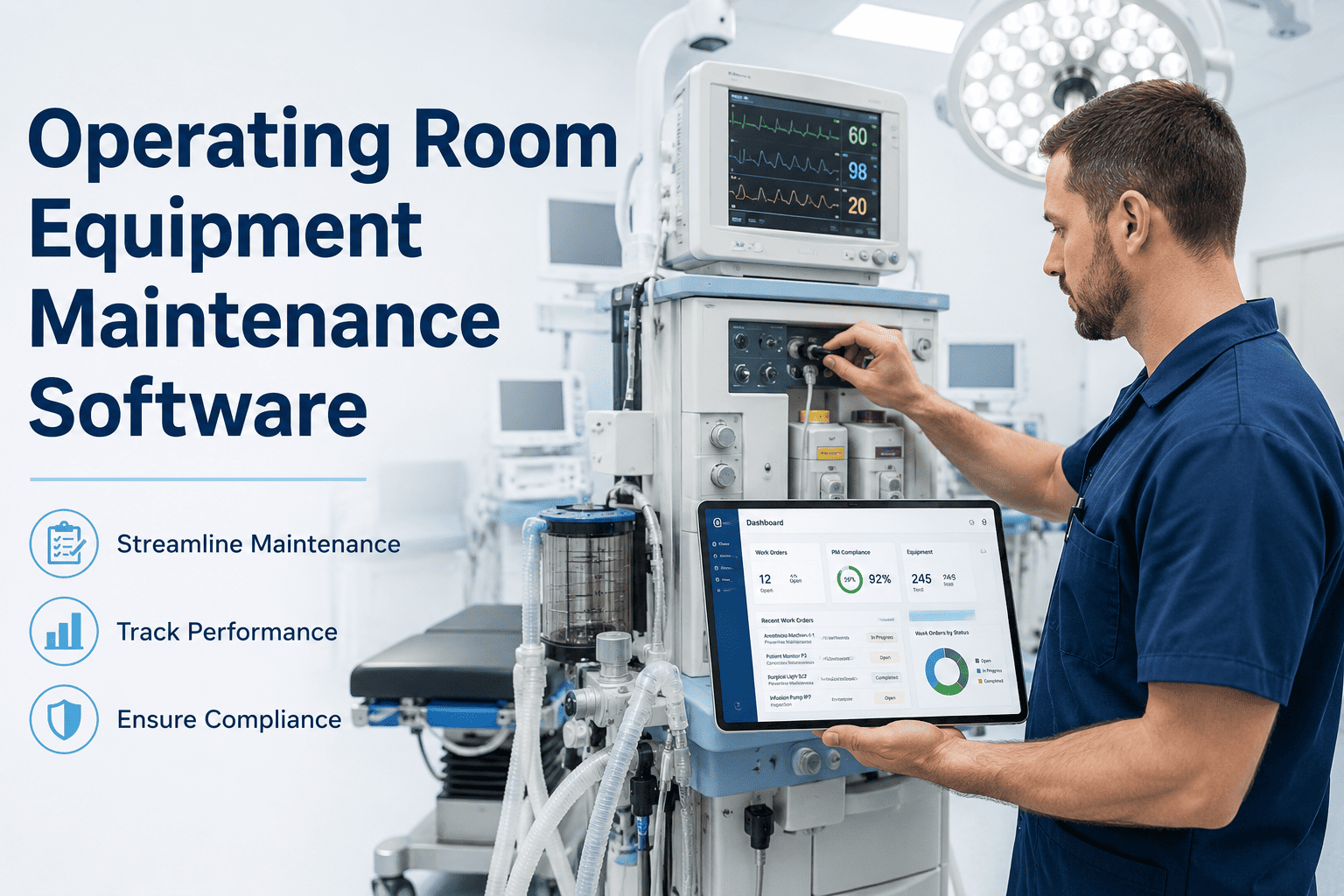
The plan is only as good as its execution — and in a busy ED, execution fails when it depends on memory. OXMAINT AI automates the readiness program end to end. Start free and run your readiness plan in OXMAINT AI.
Tiered PM Scheduling
Pre-shift to annual biomedical intervals assigned per asset, with work raised automatically.
Overdue Alerts
A missed check flags immediately to the responsible team — before a device is needed.
Digital Inspection Checklists
Crash-cart and device checks completed and signed on a phone or tablet at the bedside.
Tamper-Proof Records
Timestamped, technician-signed logs built for EC.02.04.01 evidence.
Biomedical Work Orders
Calibration and PM routed to qualified engineers with certificates attached.
Real-Time Readiness Dashboard
See at a glance which assets are ready, due or overdue across the department.
Frequently Asked Questions
What is an ED equipment maintenance readiness plan?
A structured program that verifies every critical device — defibrillators, ventilators, monitors, pumps, crash carts — on a defined cadence and documents each check, so equipment is ready the moment it's needed.
Start free and build yours in OxMaint.
Why isn't annual PM enough for an ED?
Because readiness has to be confirmed before every shift, not once a year. Pre-shift and daily checks catch the completeness and function issues an annual PM can't — like a crash cart that was used and not restocked.
Book a demo of tiered scheduling.
What does Joint Commission require for records?
Standard EC.02.04.01 calls for written evidence of every inspection — technician, date and time — plus documented corrective actions. Missing records alone can lead to a Requirement for Improvement.
Sign up free and capture compliant records.
Does this apply beyond the ED?
Yes — the same readiness approach fits the OR, ICU, clinics and general hospital facility management, wherever equipment reliability is tied to patient safety and accreditation.
Book a demo for your facility.
How does a CMMS reduce reactive maintenance?
Ready Before the Code, Not Discovered During It.
An emergency department equipment readiness plan turns "we think it works" into "we verified it works," on a cadence and on the record. OxMaint maintenance management software schedules every check, alerts on every gap, and holds the survey-ready documentation — so critical equipment performs when a life depends on it, and your next accreditation survey is never a scramble.