
Hospitals operate under relentless pressure — aging infrastructure, shrinking budgets, staffing shortfalls, and an unforgiving mandate to deliver safe, uninterrupted care. Amid these challenges, generative AI is emerging as a transformative force inside healthcare operations, not as a distant promise but as a deployable technology already reshaping how facility teams manage work orders, coordinate maintenance schedules, and extend the lifespan of critical assets. Where traditional systems respond to problems after they surface, generative AI anticipates them, automates the administrative burden surrounding them, and continuously learns from outcomes to improve future decisions.
See how AI-powered maintenance automation works in real hospital environments.
The Operational Crisis Hiding in Plain Sight
Healthcare facility managers juggle thousands of assets — HVAC systems, medical gas lines, elevator banks, sterilization equipment, electrical infrastructure — each with its own maintenance rhythm and failure profile. The administrative overhead alone is staggering: tracking work orders, scheduling technicians, sourcing parts, documenting compliance, and reporting upward. Studies consistently show that facility teams in mid-to-large hospital campuses spend 30 to 40 percent of their working hours on administrative coordination rather than actual maintenance execution. This is not inefficiency born of laziness — it is the structural consequence of managing complexity with tools designed for simpler environments.
Reactive maintenance compounds the problem. When a chiller fails unexpectedly or a biomedical device triggers an alarm, the response becomes chaotic: emergency vendor calls, expedited parts procurement, temporary workarounds, and incident documentation completed under stress. Each reactive episode consumes disproportionate resources and introduces safety risk. Generative AI targets this specific dysfunction — automating the cognitive and administrative work of operations so that humans can focus on execution and judgment.
How Generative AI Automates Work Order Management
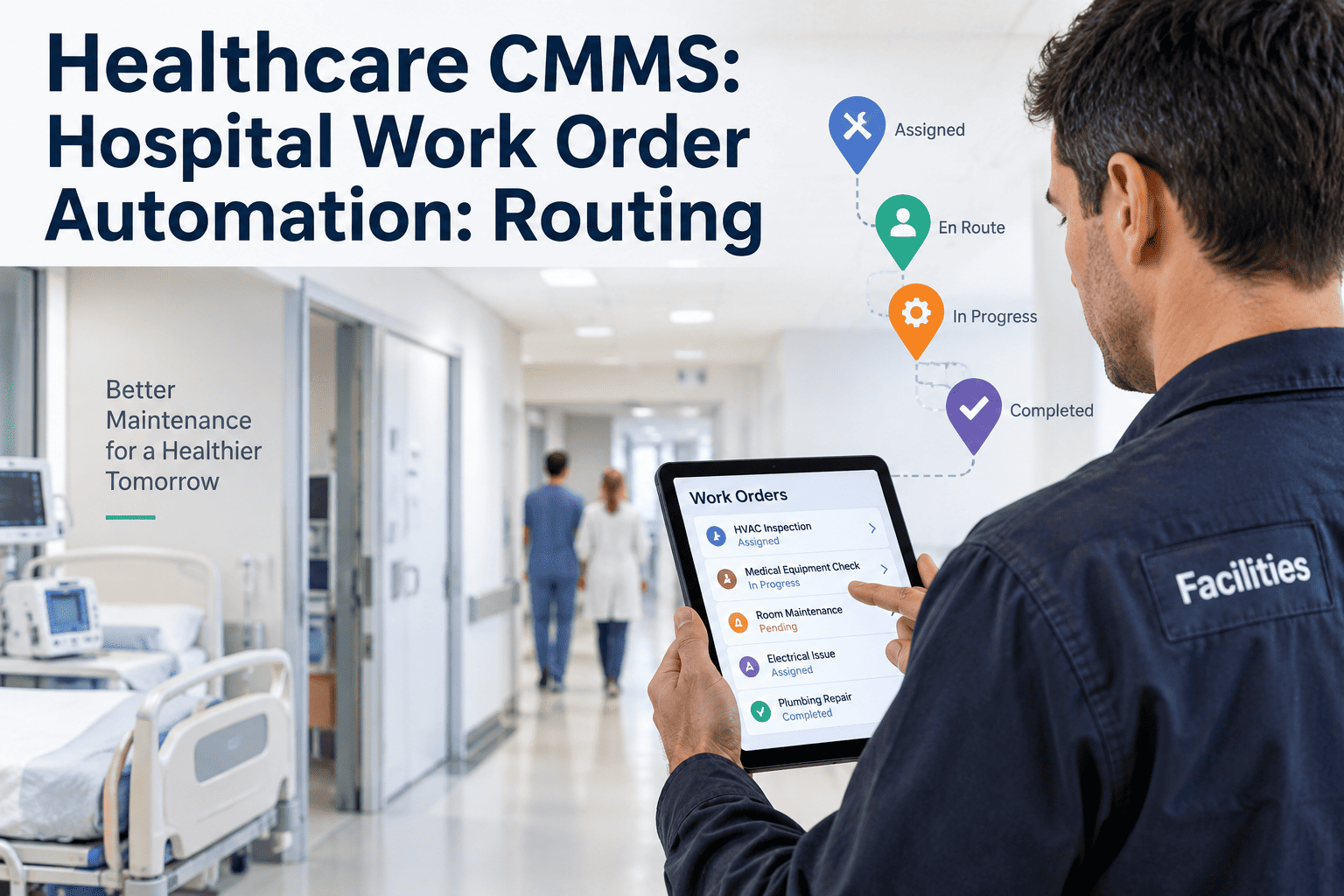
Traditional computerized maintenance management systems (CMMS) require human input at nearly every step: a technician notices an anomaly, files a report, a supervisor reviews it, a work order is created, a technician is assigned, parts are ordered, and the job is scheduled. Each handoff introduces delay and the potential for information loss. Generative AI collapses this chain by automating the translation from signal to action.
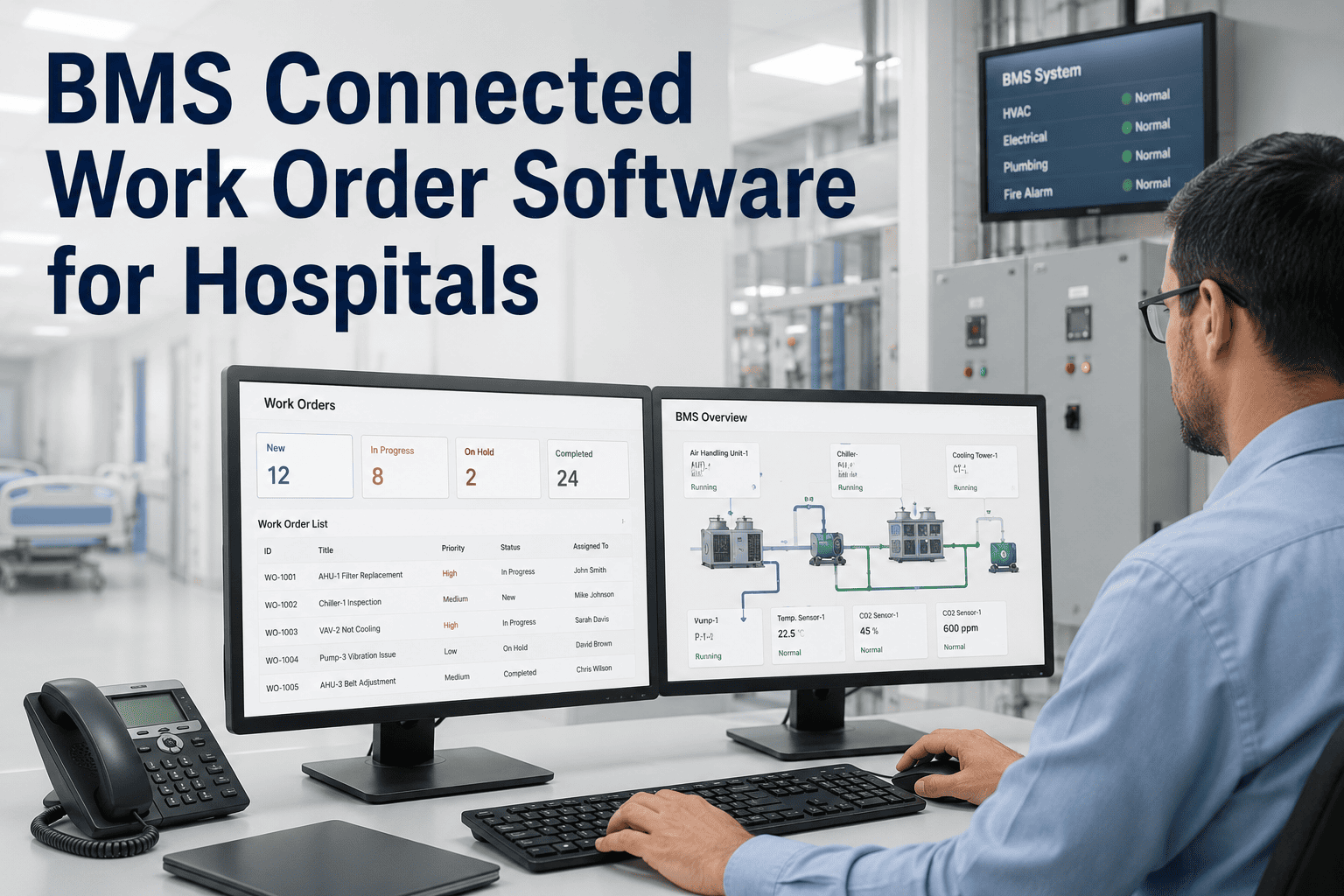
Modern AI platforms integrated with IoT sensor networks and building automation systems can detect equipment anomalies, generate natural-language work order descriptions, classify the urgency and asset type, identify the appropriate technician based on skill set and current workload, and trigger parts procurement requests — all without human initiation. The work order that emerges is not a vague alert but a structured, contextualized task with diagnostic history, asset maintenance records, and recommended resolution steps pulled from institutional knowledge bases and manufacturer documentation.
AI-Driven Work Order Lifecycle
Signal Detection
IoT sensors and BAS systems stream real-time operational data across all monitored assets, flagging statistical deviations from established baselines.
AI Interpretation
Generative AI analyzes the anomaly in the context of asset history, maintenance records, and failure pattern libraries to determine root cause probability and urgency tier.
Automated Work Order Generation
A complete, contextualized work order is created with diagnostic detail, recommended corrective action, required parts list, and compliance documentation requirements.
Intelligent Assignment & Scheduling
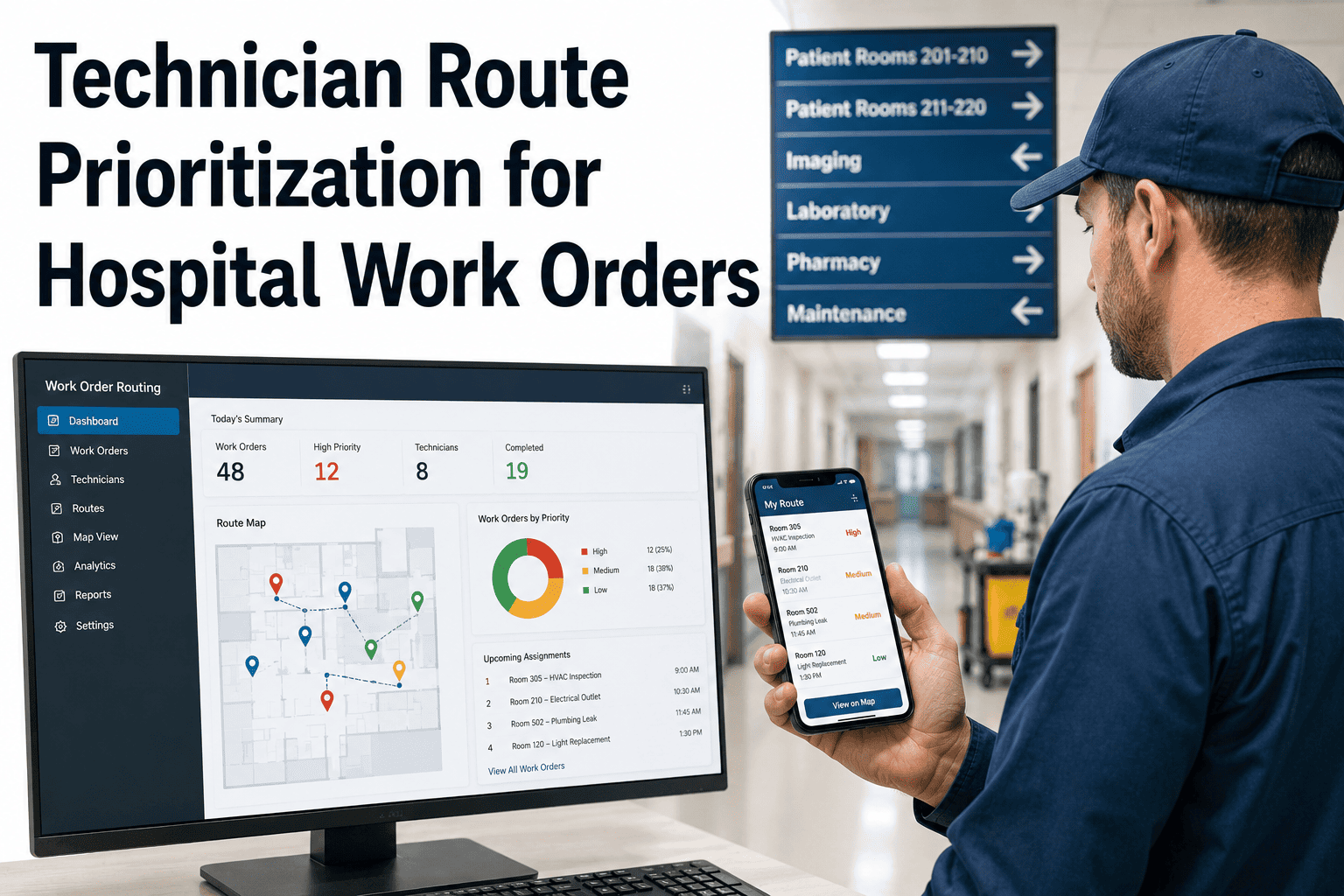
The system matches the work order to the optimal technician based on certification, availability, and proximity, then schedules the intervention within the maintenance calendar.
Outcome Learning
Completed work order outcomes feed back into the AI model, continuously improving diagnostic accuracy and scheduling efficiency over time.
Intelligent Maintenance Planning Beyond Calendars
Calendar-based preventive maintenance is better than running equipment to failure, but it remains a blunt instrument. Servicing a compressor every 90 days regardless of its actual operating hours, load conditions, or performance trends wastes technician time and replacement parts while still missing faults that develop between scheduled visits. Generative AI replaces the static calendar with a dynamic, condition-based planning engine that continuously re-evaluates maintenance priorities across the entire asset portfolio.
These systems ingest multiple data streams simultaneously — vibration signatures, thermal imaging outputs, energy consumption curves, runtime hours, ambient conditions, and historical failure data — and produce maintenance recommendations that reflect actual equipment condition rather than elapsed time. A chiller operating under heavier-than-normal load during a summer heat event receives an earlier inspection flag. A rarely-used backup generator in excellent condition has its scheduled service deferred, freeing technician capacity for higher-priority assets. The result is a maintenance plan that is simultaneously more responsive and more efficient than any calendar could produce.
Maintenance Planning: Traditional vs. AI-Driven
Fixed schedules, variable results
- Services components regardless of condition
- Misses faults between scheduled visits
- Difficult to reprioritize dynamically
- High administrative coordination burden
- Limited learning from past outcomes
Threshold alerts, manual review
- Responds to predefined sensor thresholds
- Reduces some emergency failures
- Requires manual work order creation
- Static rules miss complex failure patterns
- Limited cross-asset optimization
Dynamic, self-improving intelligence
- Condition-based prioritization across all assets
- Automated work order generation and dispatch
- Continuous learning from outcome data
- Portfolio-level resource optimization
- Natural language reporting and documentation
Key Hospital Asset Categories AI Transforms
Generative AI does not apply a one-size-fits-all approach to hospital assets. Different equipment categories carry different failure consequences and maintenance profiles. AI systems in healthcare operations account for this variance, applying appropriate monitoring depth and maintenance logic to each category.
Continuous monitoring of air handling units, chillers, VAV boxes, and building automation sensors. AI detects pressure differentials, filter loading rates, and motor degradation signals to protect sterile environments and comply with Joint Commission air quality standards.
AI monitors transformer load curves, UPS battery health, generator test outcomes, and switchgear performance. Predictive scheduling ensures backup power systems remain operationally ready without excessive testing that accelerates component wear.
Pressure monitoring across oxygen, nitrogen, and vacuum systems feeds AI models trained on leak signatures and compressor wear patterns. Early detection prevents both patient safety incidents and costly emergency shutdowns of surgical suites.
AI integrates biomedical device utilization data with manufacturer maintenance protocols to generate calibrated service schedules that reflect actual usage intensity rather than arbitrary time intervals, extending equipment lifespan and reducing unnecessary downtime.
Flow rate analysis, temperature monitoring in hot water systems, and Legionella risk modeling allow AI to flag waterborne pathogen risk and schedule preventive flushing and treatment before regulatory thresholds are breached.
Elevator and lift systems generate rich operational telemetry. AI identifies door mechanism degradation, motor load anomalies, and brake wear patterns, prioritizing service for units serving critical care floors where downtime has direct patient impact.
Generative AI and Regulatory Compliance Documentation
Healthcare facilities operate under dense regulatory frameworks — The Joint Commission, CMS Conditions of Participation, NFPA 99, state health department requirements — each demanding meticulous maintenance documentation. Compliance failures carry severe consequences: plan of correction requirements, public disclosure, and in extreme cases, Medicare and Medicaid reimbursement risk. Traditional documentation processes rely on technicians completing paper logs or CMMS entries manually after each intervention, creating gaps, inconsistencies, and audit vulnerabilities.
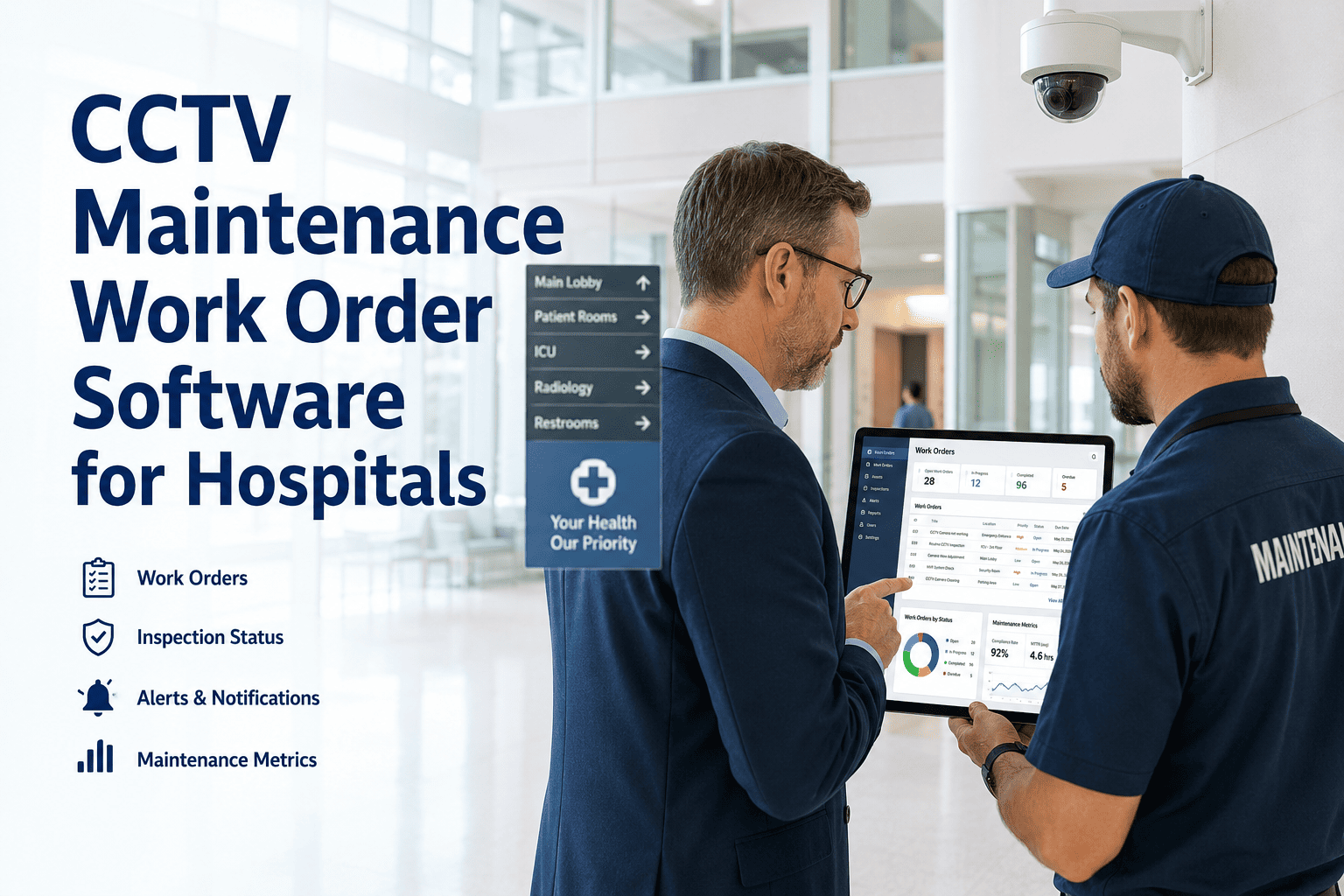
Generative AI fundamentally restructures this dynamic. When AI automates work order creation and tracks completion, it simultaneously generates structured compliance records that map directly to regulatory requirements. Natural language generation capabilities allow these systems to produce audit-ready documentation — maintenance logs, corrective action records, equipment lifecycle reports — in formats aligned with specific regulatory standards. What previously required dedicated compliance coordinators and hours of record compilation becomes an automatic output of the maintenance workflow itself. Sign up for OxMaint to explore how automated compliance documentation integrates with your existing reporting requirements.
How OxMaint Delivers Generative AI for Hospital Operations
OxMaint provides the integrated platform that brings generative AI capabilities into the operational reality of healthcare facility management. The platform connects IoT sensor data, building automation systems, and asset management databases into a unified intelligence layer. When AI detects a maintenance signal — whether from a sensor anomaly, a usage threshold, or a risk model output — OxMaint automatically generates a fully contextualized work order, routes it to the right technician, triggers parts procurement where needed, and initiates the compliance documentation trail. Facility managers gain a single dashboard view across all assets, all buildings, and all maintenance activity in real time.
The platform's natural language interface allows facility staff to query asset status, maintenance history, and pending work orders conversationally — asking questions like "which HVAC units are at highest failure risk this month" or "show me all overdue preventive maintenance in the surgical wing" and receiving structured, actionable answers. This removes the technical barrier that has historically kept powerful maintenance intelligence locked inside systems that only specialists could navigate.
Bring Generative AI to Your Hospital Operations
Automate work orders, optimize maintenance planning, and protect patients with intelligent infrastructure management — all in one platform.
Frequently Asked Questions
What is generative AI in the context of hospital operations and maintenance?
Generative AI in hospital operations refers to AI systems that can automatically create work orders, maintenance plans, compliance documentation, and operational reports by processing data from IoT sensors, building automation systems, and asset management platforms. Unlike traditional rule-based systems that simply trigger alerts, generative AI produces structured, contextual outputs — natural-language work order descriptions, risk-prioritized maintenance schedules, and audit-ready compliance records — that directly integrate into operational workflows without requiring manual human translation.
How does AI work order automation differ from traditional CMMS work order management?
Traditional CMMS platforms require human observation, manual data entry, and supervisor review before a work order is created and assigned. AI work order automation compresses this entire chain into an automated process: sensor signals are interpreted, work orders are generated with full diagnostic context, technicians are assigned based on skills and availability, and parts procurement is initiated — all without human initiation. The resulting work orders are richer in diagnostic detail and consistently formatted, reducing troubleshooting time and improving first-visit resolution rates.
Can generative AI integrate with existing hospital building automation systems?
Yes. Modern AI maintenance platforms like OxMaint are designed to integrate with existing BAS infrastructure, CMMS platforms, and IoT sensor networks without requiring wholesale system replacement. APIs and middleware connectors allow AI layers to ingest data from legacy systems alongside newer sensor deployments, creating a unified operational picture that enhances existing investments rather than displacing them. Most healthcare facilities can achieve meaningful AI integration within 8 to 12 weeks of implementation initiation.
How does AI-driven maintenance planning support Joint Commission compliance?
AI maintenance platforms automatically generate and store structured compliance documentation as a byproduct of normal maintenance workflows. Every work order completion, every inspection outcome, and every corrective action produces a timestamped, formatted record that maps to Joint Commission Environment of Care and Life Safety standards. Facilities can generate audit-ready reports on demand, demonstrate preventive maintenance completion rates, and produce corrective action documentation with complete asset history — eliminating the manual compilation work that consumes compliance coordinators before every survey.
What is the typical ROI timeline for implementing AI work order automation in hospitals?
Most healthcare facilities implementing AI-driven maintenance automation report measurable ROI within 12 to 24 months. Early financial returns typically come from reduced emergency repair costs, lower parts expenditure through condition-based purchasing, and decreased technician overtime from reactive response. Longer-term savings accumulate through extended asset lifespan, reduced energy consumption from optimized equipment performance, and lower compliance coordination costs. Large hospital campuses with complex infrastructure portfolios often see the fastest ROI due to the volume of maintenance activity AI can optimize.
Is patient data at risk when connecting hospital infrastructure to AI monitoring platforms?
AI maintenance platforms operate entirely on facility infrastructure networks, monitoring mechanical and environmental data — temperatures, pressures, vibration frequencies, energy consumption — with no connection to clinical systems or patient health records. OxMaint employs enterprise-grade encryption, role-based access controls, and healthcare-aligned cybersecurity practices. The sensor and automation data these systems process is operational telemetry, not clinical information, and is managed under separate network architecture from EMR and patient data systems.

.jpg)
