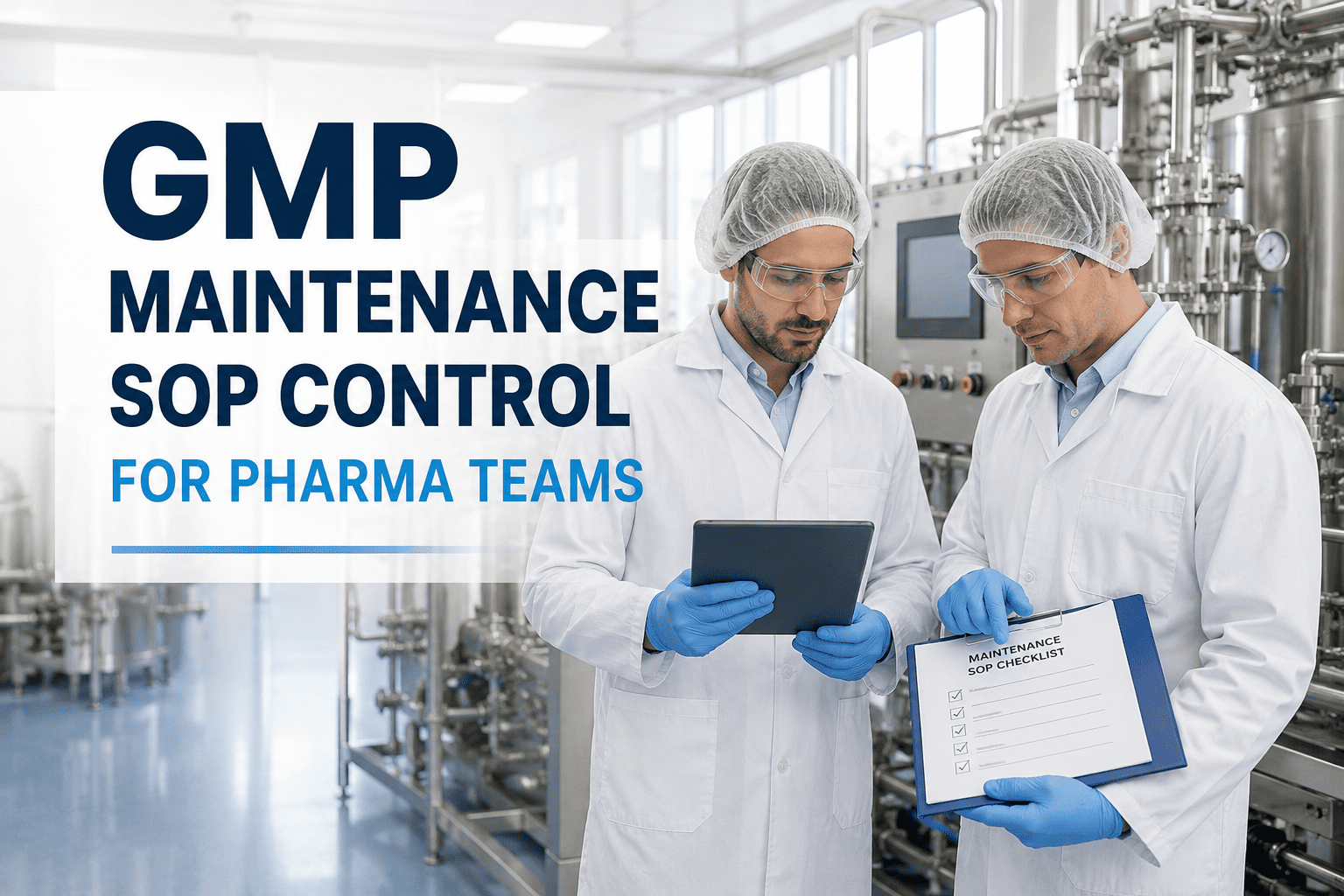
Pharmaceutical maintenance SOPs are not administrative documents — they are quality records that define how GMP-critical work must be performed, who is qualified to perform it, and what evidence must be captured when it is done. When an FDA or Health Canada inspector reviews a maintenance SOP, they are evaluating whether the document controls the work or simply describes it. The difference between those two outcomes determines whether your facility leaves an inspection with zero observations or with a document control citation. See how OxMaint manages GMP SOP control across your entire maintenance program.
01
Version Control
Every revision tracked with author, approver, change reason, and effective date
02
Technician Steps
Step-by-step instructions with decision points, acceptance values, and safety notes
03
Sign-Off Proof
Mandatory e-signature by performing technician and independent verifier at completion
04
Audit Proof
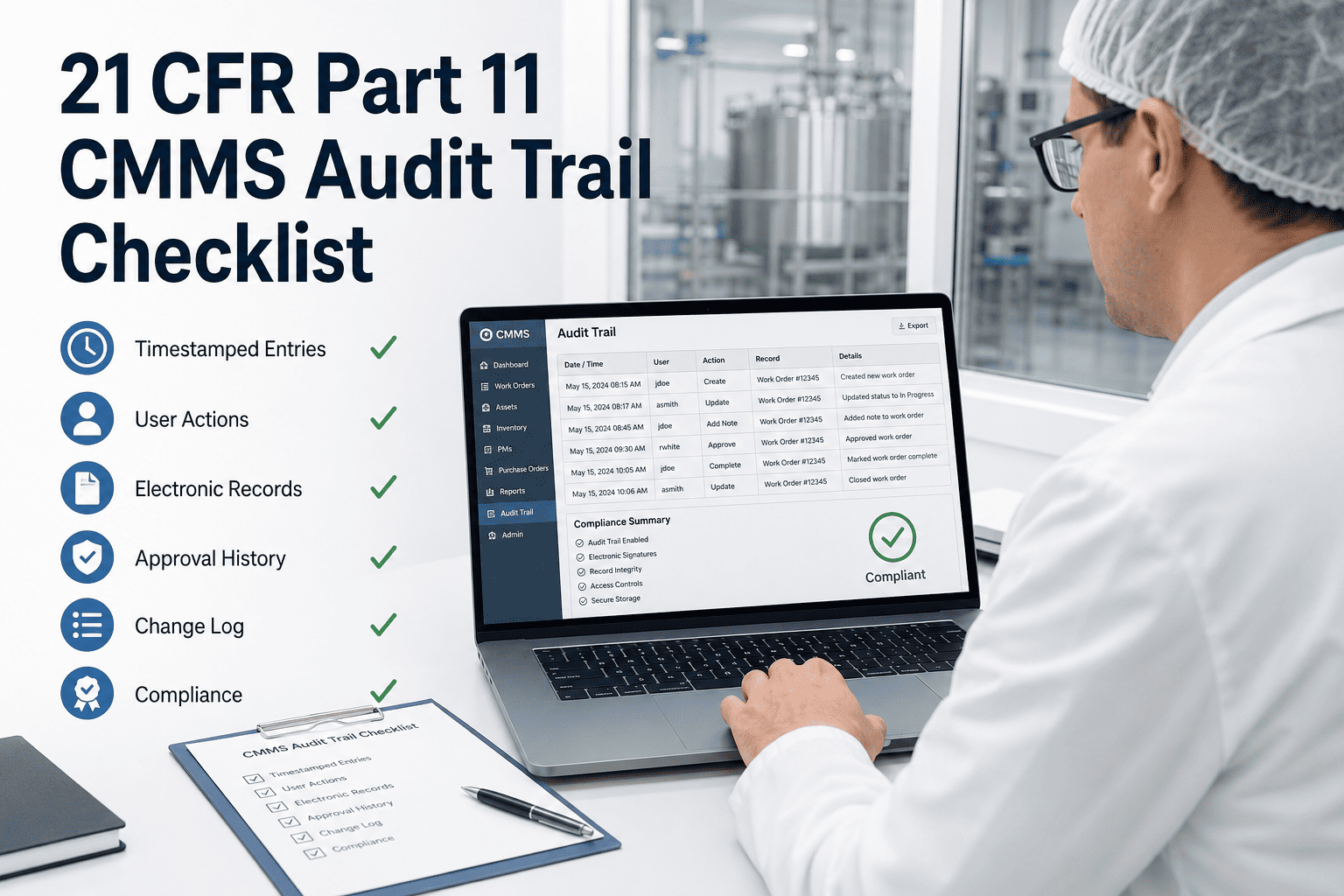
Immutable record showing which SOP version was used for each maintenance event
What Makes a GMP Maintenance SOP Different from a Standard Procedure
A GMP maintenance SOP carries regulatory weight that a standard operating procedure in a non-regulated industry does not. Every element of the document — the title, scope, responsibility assignments, step instructions, acceptance criteria, and sign-off requirements — is subject to review by regulators and must demonstrate that the procedure controls the work in a way that protects product quality. Maintenance SOPs in pharma must include technician-level step instructions, not just high-level task descriptions, so that a trained technician can follow the procedure without supervisor guidance and produce a consistently compliant result.
- General task descriptions without step numbers
- No acceptance criteria or pass/fail values
- Single approval signature, no verification requirement
- No version number or effective date on the document
- Printed from an uncontrolled source — may be outdated
- No training record requirement referenced
- Numbered step-by-step technician instructions
- Quantitative acceptance criteria at each critical step
- Performing and verifying personnel sign-off required
- Version number, revision date, and superseded version listed
- Accessible only through validated document control system
- Training matrix confirms technician qualification before use
GMP SOP Lifecycle: From Draft to Retirement
| Lifecycle Stage |
Required Evidence |
GMP Risk if Missing |
| Draft and Review |
Subject matter expert review signature with date |
Procedure may contain errors |
| Approval |
QA approval signature, effective date assigned |
Unapproved procedure in use |
| Training |
Training records for all assigned technicians before use |
Unqualified personnel performing GMP work |
| Effective Use |
Version number visible on point-of-use copy |
Technician may be using superseded version |
| Periodic Review |
Review completion record at defined interval (typically 2–3 years) |
Procedure may not reflect current equipment or regulatory standard |
| Retirement |
Supersession record, old copies removed from use |
Retired procedure may still be used on the floor |
SOP CONTROL FOR PHARMA
Version-Controlled SOPs Linked to Every Work Order — No Printed Copies, No Outdated Procedures
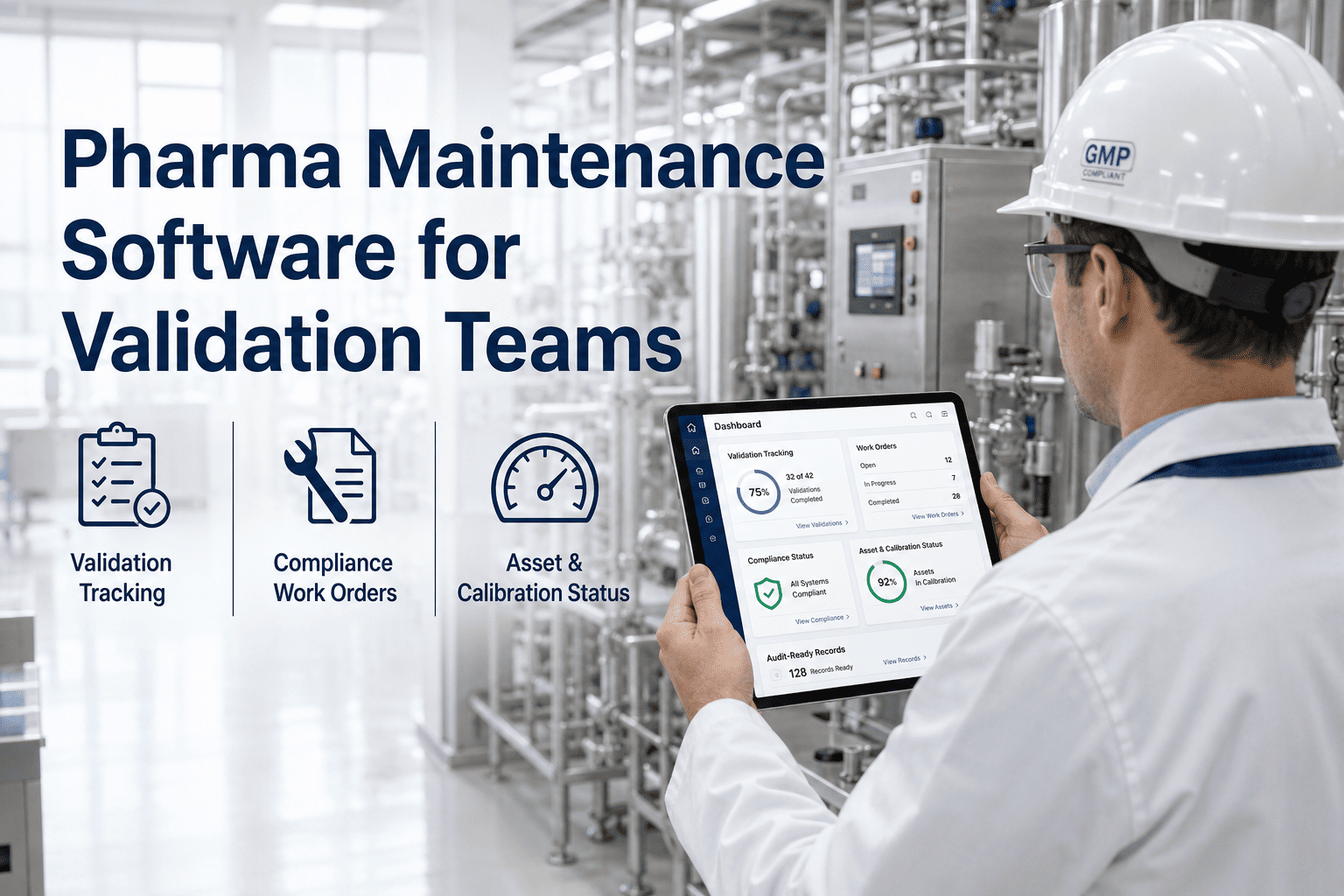
OxMaint links the current approved SOP version to each maintenance work order. Technicians access only the live procedure, and every completion record captures the exact version used.
Proving Procedures Were Followed: The Sign-Off Chain
The most common document control deficiency found during pharmaceutical maintenance audits is not a missing SOP — it is the inability to prove that the approved SOP was the one actually used when the work was performed. Paper-based systems create a documentation gap between the approved procedure in the document management system and the version physically present at the point of maintenance. A compliant sign-off chain closes this gap by capturing the exact procedure version used, the time the work was performed, and the identities of both the performing and verifying personnel.
1
Technician opens work order — current SOP version auto-attached from document control system
2
Technician confirms SOP version number before starting work — timestamped acknowledgment captured
3
Technician completes each required field and observation per SOP step instructions
4
Technician applies e-signature at completion — name, credential, and timestamp recorded
5
Independent verifier reviews findings, applies second e-signature — work order locked against further editing
Expert Review
Priya Nair, M.Pharm
Pharmaceutical Quality Assurance Director — Oral Solid Dosage and API Manufacturing, 20 Years
"When I review maintenance SOPs during internal audits, the first two questions I ask are: can you show me the training record for the technician who used this procedure, and can you show me the work order that references this specific SOP version? If either answer requires more than two minutes to produce, that is a documentation control problem. The beauty of a digital system is that both answers are one search away. That immediacy is what inspection-ready looks like."
Frequently Asked Questions
How frequently should GMP maintenance SOPs be reviewed and updated?
GMP maintenance SOPs should be reviewed on a defined periodic cycle, typically every two to three years or whenever a trigger event occurs such as a related CAPA, a regulatory guidance update, an equipment modification, or a process change that affects the maintenance activity. The review must be documented with an approver signature and effective date even if no changes are made — a documented conclusion that no revision is needed is itself a required GMP record. Many facilities use their document management system to generate automated review notifications 60 to 90 days before each SOP's review due date. Overdue periodic reviews are a document control deficiency that FDA and Health Canada inspectors will cite during audits.
See OxMaint's SOP version tracking features.
Can maintenance technicians deviate from an approved SOP during an emergency repair?
No. Deviations from approved maintenance SOPs during GMP work — even emergency repairs — must be documented as procedure deviations and approved through the quality system before or, in a genuine emergency, immediately after the deviation occurs. Undocumented procedure deviations are a GMP compliance violation regardless of the urgency of the situation. Facilities should have a pre-approved emergency maintenance procedure that addresses the most common emergency scenarios and defines the documentation requirements. Any step taken outside of any approved procedure must generate a deviation record with a justification, an impact assessment, and a CAPA if required. Routine use of emergency procedures to circumvent standard SOP requirements is itself a GMP finding.
What is required when an SOP is revised and technicians have been trained on the previous version?
When an SOP is revised and a new version becomes effective, all personnel assigned to that procedure must be retrained on the new version before they can perform the activity under the updated procedure. The training records for the new version must capture the effective date of the revision, the training method used, the trainer's identity, and a confirmation that the trainee understood the changes. Expired training records — training completed on an older SOP version that has since been superseded — do not satisfy GMP qualification requirements for the current version. Facilities with many SOPs should use a training matrix system that automatically flags retraining requirements when a new SOP version is approved.
Book a demo to see training matrix management in OxMaint.
How do you prevent outdated SOP versions from being used on the production floor?
The most reliable method is to eliminate all paper-based SOP distribution and require technicians to access procedures only through a validated electronic document management system or CMMS that always serves the current approved version. When paper is unavoidable — for cleanroom environments or equipment without nearby digital access — a controlled-copy distribution system must be in place with numbered copies issued to specific locations, a destruction procedure for superseded copies, and a reconciliation process that confirms all old copies are retrieved when a new version is approved. Facilities that use both paper and digital systems must ensure the two systems are synchronized and that the effective date and version number on any accessible paper copy matches the approved version in the electronic system.