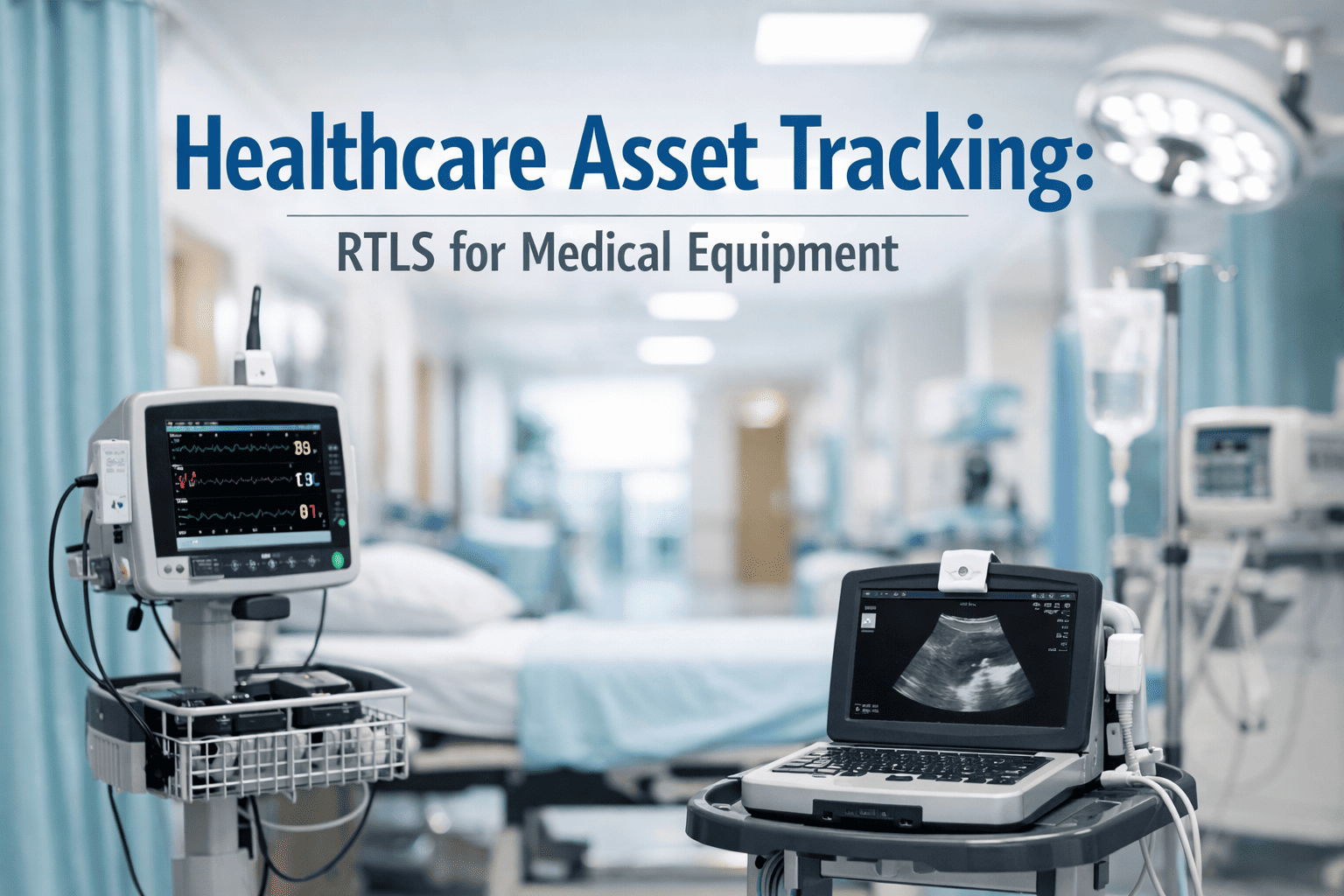
Hospitals lose an average of 11 percent of their movable medical equipment on any given day — not to theft, but to location uncertainty. When an IV pump is three floors from where it is needed, a nurse spends 23 minutes locating a replacement. Multiplied across a 400-bed facility, that is a documented $1.1 million in annual clinical labor lost to equipment search. Oxmaint's real-time asset tracking platform — combining RTLS, BLE beacons, RFID, and AI utilization analytics — eliminates the search, reduces equipment over-purchasing, and delivers the audit trail your HTM team, Joint Commission surveyor, and CFO all require from a single platform. Book a demo to see Oxmaint RTLS configured for your hospital's asset categories and department layout.
Healthcare asset tracking at the enterprise level requires four integrated capabilities: real-time location visibility (RTLS, BLE, RFID), utilization analytics that separate available from in-use from lost inventory, preventive maintenance scheduling tied to each device's usage cycle, and an audit-ready record for Joint Commission EC standards and HTM documentation requirements. Oxmaint delivers all four from a single platform — deployed in 6 to 8 weeks without a capital infrastructure project.
The Four Asset Management Failures That Drive Hospital Capital Waste
Each failure has a measurable financial consequence. Each is solved by closing the gap between physical equipment location and the digital record that should reflect it. Book a demo to quantify the cost of each failure mode at your facility.
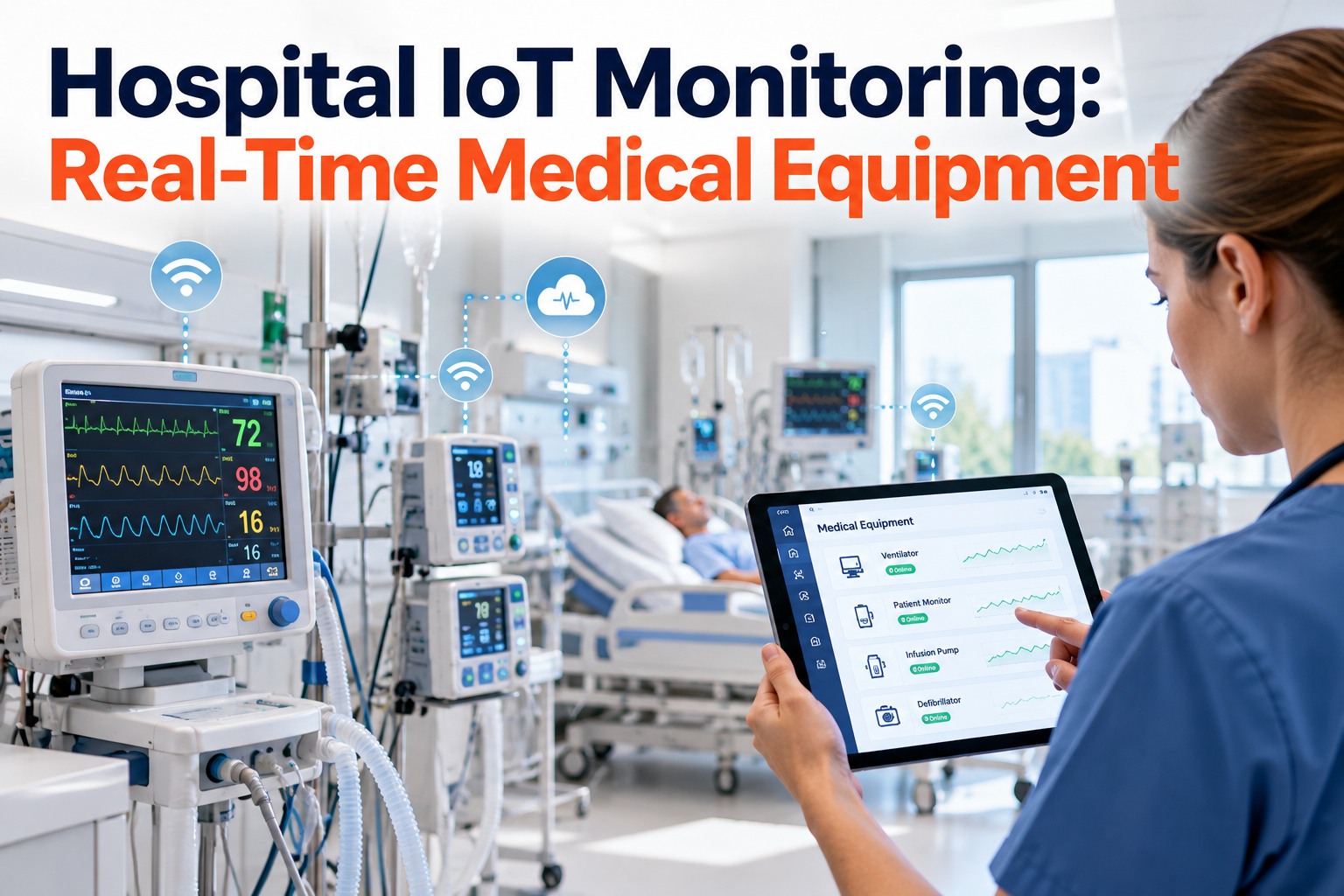
IV pumps, infusion systems, portable monitors, and wheelchairs are the most frequently lost categories. Without real-time location, nurses default to hoarding — keeping equipment in rooms longer than needed to avoid the search cycle on the next shift. Oxmaint RTLS tags provide room-level and zone-level location on a live floor map, updated every 30 to 90 seconds via BLE beacon triangulation.
Department heads submit equipment purchase requests based on availability complaints — not utilization data. In the absence of real-time tracking, a hospital may carry 40 percent more IV pumps than clinical demand requires, with the excess sitting in EVS closets or soiled utility rooms. Oxmaint utilization analytics show actual usage rates by asset category and department, replacing opinion-driven purchasing with data-driven capital planning.
Joint Commission EC.02.04.01 requires documented preventive maintenance on a defined interval for every device in the equipment management program. Recall response requires physical location of affected devices within hours. Without asset tracking, HTM teams conduct manual floor sweeps — taking days to locate a recalled device and exposing the hospital to citation if PM intervals slip without documented cause. Oxmaint integrates PM scheduling with real-time location so recalled or overdue devices are found in minutes, not days.
Hospitals renting portable equipment on short-term contracts often pay rental fees for devices that have been returned to storage without a return authorization — effectively paying rent on equipment already on-site. Oxmaint's rental fleet module tracks leased versus owned assets in the same platform, automatically flagging rental equipment that has exceeded its authorized duration and triggering return workflow before the next billing cycle.
Real-Time Location. Utilization Intelligence. PM Compliance — One Platform.
Oxmaint connects BLE beacons and RFID readers to a live hospital floor map — with PM scheduling, utilization analytics, and Joint Commission audit exports built in. Book a demo to see your top asset categories tracked live.
Technology Selection: RTLS vs RFID vs BLE for Hospital Assets
No single tracking technology is optimal for every asset category. Oxmaint supports all three — and selects the right technology per asset class based on required location precision, tag cost, and infrastructure investment.
| Technology | Location Precision | Best Asset Categories | Infrastructure Required | Tag Cost Range |
|---|---|---|---|---|
| Active RTLS (IR/UWB) | Room-level to sub-meter — highest precision available in hospital environments | High-value portable equipment: ventilators, portable ultrasound, defibrillators, infusion pumps | Ceiling-mounted readers or IR panels per room — significant infrastructure investment | $25 to $80 per tag |
| BLE Beacons (Active) | Zone-level (20 to 50 meter radius) — sufficient for department and floor-level tracking | IV pumps, wheelchairs, portable monitors, crash carts, stretchers, patient lifts | BLE gateway per department or floor — lower infrastructure cost than RTLS | $8 to $25 per tag |
| Passive RFID | Choke-point detection — location known when asset passes a reader portal | Surgical instruments, linen, small consumables, supply cart inventory | RFID reader portals at department entrances and OR supply rooms | $0.10 to $2 per tag |
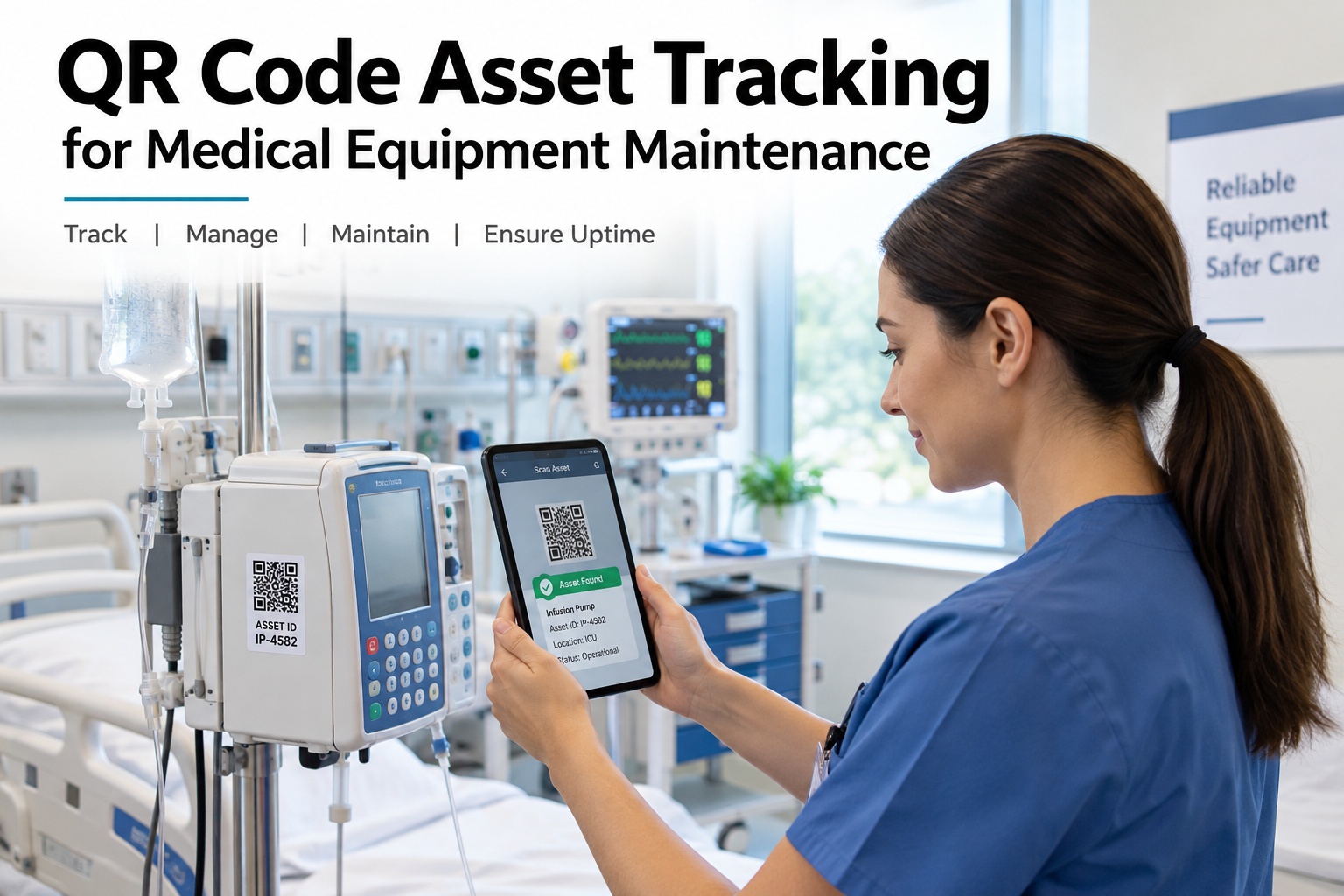
| QR / Barcode (Manual) | Last-scanned location — updated only when technician performs scan | Large fixed equipment, low-movement assets, PM-tracked devices with stable location | No infrastructure — mobile device scan only | Near zero per asset |
Oxmaint Deployment Roadmap — Hospital Asset Tracking
Every tracked asset category registered in Oxmaint with technology assigned per category — BLE for movable assets, RFID for choke-point flow, QR for fixed PM-tracked equipment. Joint Commission equipment management inventory aligned to Oxmaint asset register.
BLE gateways installed per floor zone. RFID portals activated at department entrances. Tags applied to physical devices. Oxmaint floor map configured with department zones and room overlays. Location data validated against physical floor walks. Book a demo to see the live floor map for your layout.
Utilization dashboards showing availability rates, dwell times, and idle inventory by department. PM work orders linked to live location — technicians dispatched to current device position. Recall response workflow surfaces affected devices within minutes of notification.
EC.02.04.01 documentation exportable for Joint Commission survey preparation. Capital planning reports show actual versus perceived equipment shortages per department. Rental fleet return workflow active with billing cycle alerts.
Asset Tracking Performance Benchmarks — Hospital Operations
Client Results — Hospitals Using Oxmaint Asset Tracking
From 3-Day Recall Response to 4 Hours — From $1.1M Labor Loss to Near Zero
The financial case for hospital asset tracking closes in the first capital cycle. Oxmaint deploys in 6 to 8 weeks without an IT project. Book a demo to see the ROI model for your bed count and tracked asset volume.
Platform Capabilities
Live floor map updated every 30–90 seconds. Zone-level and room-level precision selectable per asset category. Location alerts when high-value devices leave authorized zones.
Usage rates by asset category, department, and time-of-day. Idle inventory identification. Capital planning reports that replace purchase request opinion with utilization evidence.
Preventive maintenance work orders dispatched to a device's current location — not its last logged address. Joint Commission EC.02.04.01 compliance records generated automatically per device.
Recall notifications matched against Oxmaint asset registry instantly — affected devices surfaced on the floor map within minutes. Response audit trail generated for FDA documentation requirements.
Owned and leased assets tracked separately in the same platform. Rental duration alerts triggered before billing cycle renewal. Return authorization workflow eliminates phantom rental charges.
Joint Commission survey packages assembled in under 2 hours. Complete PM history, inspection records, and equipment disposition logs exportable per device for any accreditation review.
Frequently Asked Questions
Stop Losing $1.1M a Year to Equipment Search — Deploy in 6 Weeks
Real-time asset location, utilization analytics, PM compliance, and Joint Commission audit documentation — live across your hospital in 6 to 8 weeks, no EHR integration required for deployment. Book a demo with your HTM director or VP of Operations and see Oxmaint configured for your top asset categories and facility layout.