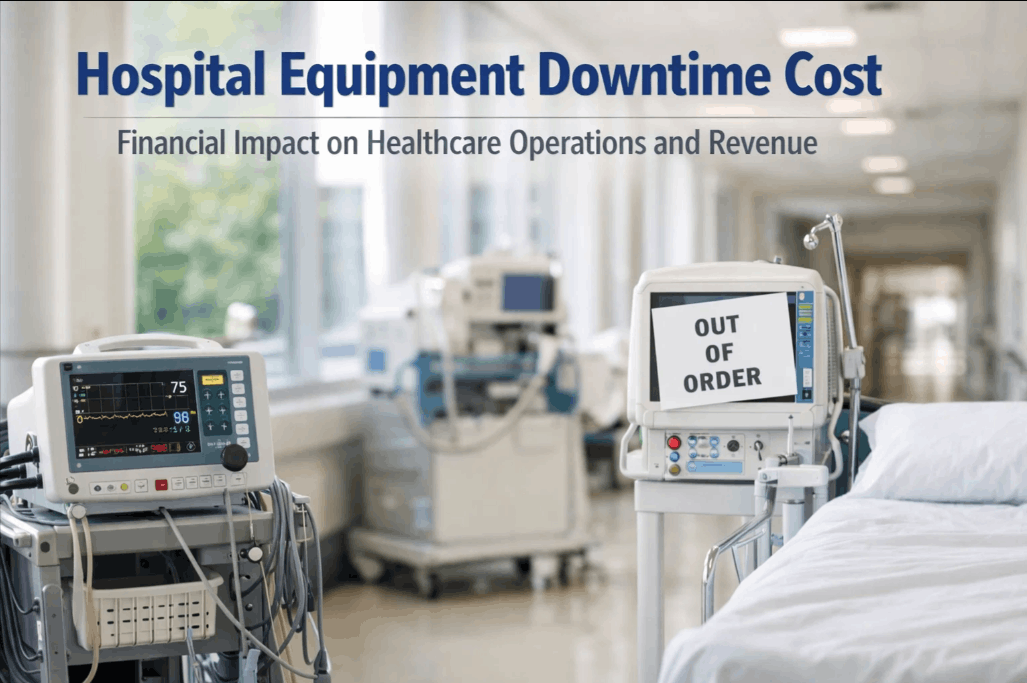
Every hospital finance team knows the line item for maintenance repair spend. What they rarely see is the full cost — because most of the financial damage from reactive maintenance never appears on a maintenance budget. It appears in clinical revenue loss, staff overtime, liability reserves, regulatory penalty provisions, and the compounding cost of assets degrading faster than they should because nobody was maintaining them systematically. The 15 costs detailed in this analysis are all real, all measurable, and all preventable with a structured preventive maintenance programme supported by CMMS automation. OxMaint's healthcare CMMS prevents each of them — not by eliminating all equipment failures, but by converting unmanaged reactive risk into managed, scheduled, and cost-controlled maintenance events.
Blog · Healthcare · Hospital Maintenance · 2026
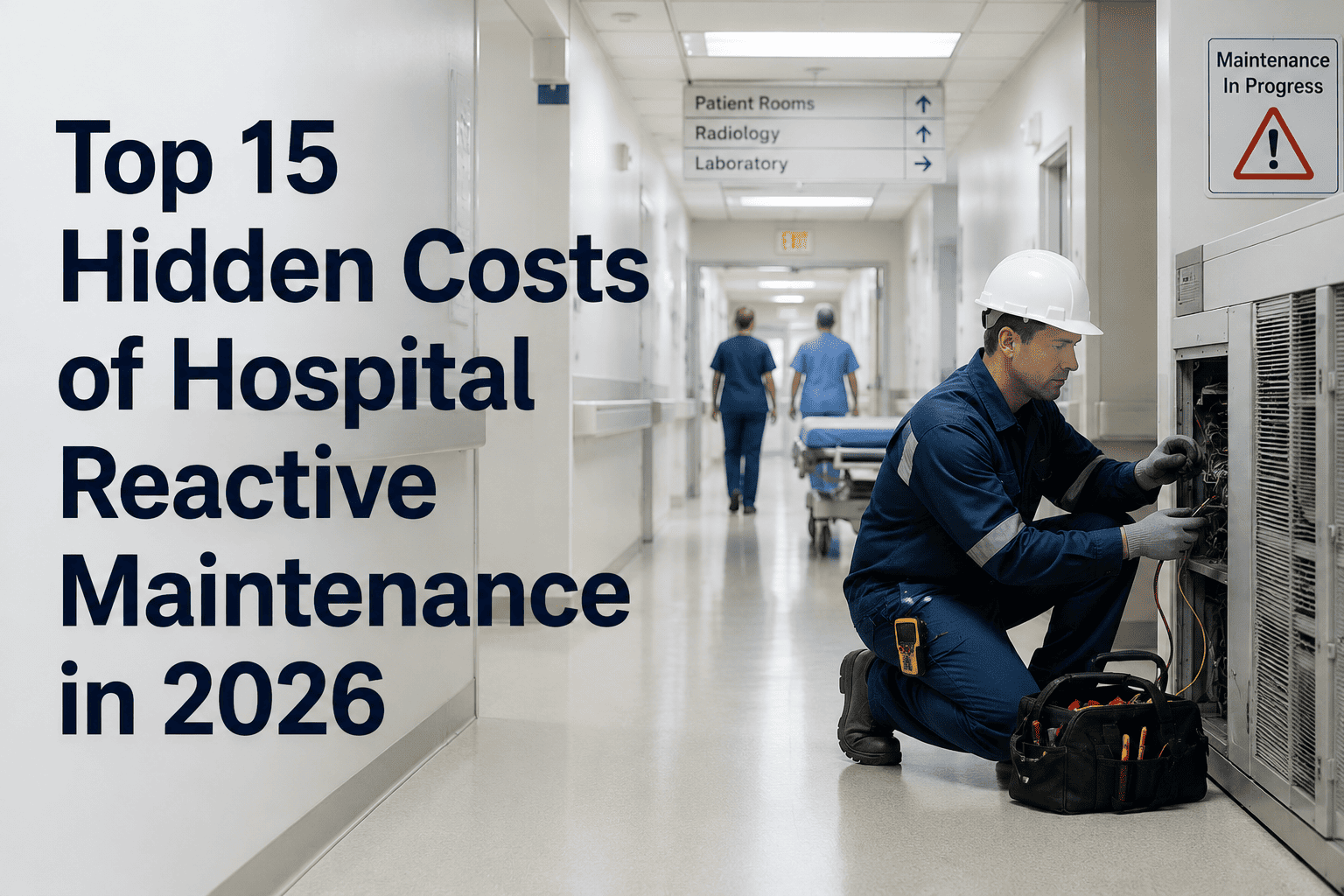
Top 15 Hidden Costs of Hospital Reactive Maintenance in 2026
Staff Burnout · Revenue Loss · Liability Exposure · Regulatory Penalties · Asset Degradation · Emergency Procurement — and How Preventive CMMS Eliminates Each
3–5×
higher total cost of reactive vs preventive maintenance when all hidden costs are included
$2M+
annual savings achievable in a 300-bed hospital through structured PM and CMMS deployment
68%
of TJC citations involve documentation failures — all driven by reactive maintenance culture
The 15 Hidden Costs — Categorised and Quantified
Category 1 — Direct Financial Costs
01
Emergency Repair Premium Rates
Cost premium: 2.4–4× standard rate
Emergency contractor callout rates, after-hours labour premiums, and expedited service fees consistently run 2.4–4× the cost of the same repair performed as planned maintenance. A $4,000 chiller bearing replacement becomes a $12,000–$16,000 emergency event with the same parts and the same technician — the only variable is timing.
CMMS Fix: PM scheduling catches bearing wear 4–8 weeks early. Planned repair at standard rates.
02
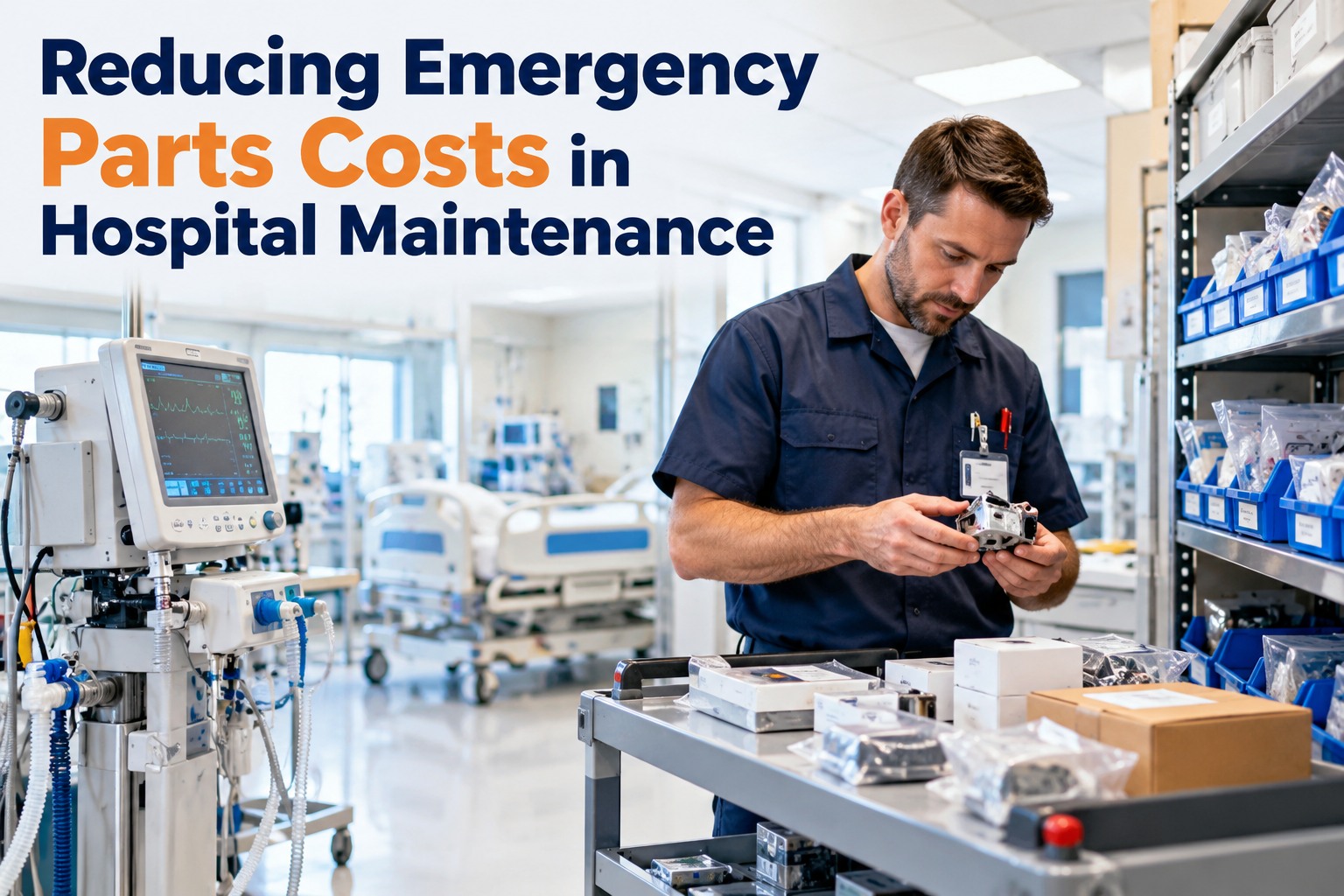
Emergency Parts Procurement
Cost premium: 35–65% above standard
Emergency parts orders bypass normal procurement cycles — triggering expedited freight, premium supplier pricing, and the cost of purchasing from secondary suppliers when primary inventory is depleted. Hospitals running reactive maintenance report emergency parts premiums consuming 18–25% of their total parts budget annually.
CMMS Fix: Planned PM allows parts pre-ordered at standard rates through approved procurement channels.
03
Temporary Equipment Hire
$800–$8,000/day for critical equipment
When critical HVAC, power, or medical equipment fails and repair timelines extend, hospitals hire temporary equipment to maintain clinical operations. Temporary chiller hire for a summer AHU failure runs $3,000–$8,000 per day. A five-day repair window becomes a $15,000–$40,000 line item that never appears in the maintenance budget.
CMMS Fix: Condition monitoring predicts HVAC failures before summer peak — planned replacement eliminates hire requirement.
04
Accelerated Asset Replacement
20–40% shorter asset lifespan
Assets running without structured PM degrade 20–40% faster than their design life. A chiller with a 20-year design life managed reactively typically requires major overhaul or replacement at 12–15 years. Across a hospital's mechanical plant, this compresses the capital replacement cycle by 5–8 years — adding $400K–$2M to CapEx planning requirements per decade.
CMMS Fix: Structured PM extends asset life to or beyond design specification — deferring capital expenditure.
Category 2 — Clinical Revenue Loss
05
Imaging Suite Downtime
$3,000–$8,000 lost revenue per hour
An MRI or CT unit generating 8–12 procedures per day at $400–$800 average revenue per procedure produces $3,200–$9,600 in daily clinical revenue. An unplanned 3-day downtime event — driven by a compressor failure that PM would have caught 6 weeks earlier — costs $9,600–$28,800 in lost procedures, plus rescheduling overhead, patient satisfaction impact, and referring physician relationship damage.
CMMS Fix: Predictive monitoring on imaging equipment mechanical systems flags degradation 4–12 weeks before failure.
06
OR Suite Environmental Failure
$15,000–$60,000 per cancelled session
Operating room HVAC failures — positive pressure loss, temperature excursion, or air exchange count drop below code minimum — mandate case cancellation and decontamination protocols before reoccupancy. A cancelled 8-case surgical session generates $15,000–$60,000 in lost contribution margin, plus surgeon and anaesthesiology rescheduling costs and potential transfer of scheduled patients to competing facilities.
CMMS Fix: Critical area HVAC on highest-frequency PM with condition monitoring and immediate escalation protocol.
07
Procedure Room Backlog
Revenue deferred indefinitely
Equipment failures in procedure rooms create backlogs that are rarely fully recovered. Rescheduled patients frequently seek alternative providers — particularly for elective procedures where the relationship with the facility is not established. A two-week procedure backlog from a single equipment failure can result in 15–25% of affected patients not rescheduling within the quarter.
CMMS Fix: PM compliance keeps procedure room equipment at full availability — eliminating the backlog trigger event.
Category 3 — Compliance and Liability
08
TJC Condition-Level Findings
$50K–$500K per finding in remediation
A Joint Commission Condition-Level finding — triggered by systematic PM documentation failures or life-safety system inspection gaps — initiates an Immediate Threat to Life review, mandatory corrective action plans, follow-up focused surveys, and in severe cases, reimbursement risk. The direct remediation cost for a single Condition-Level finding averages $50K–$500K excluding legal fees and staff time.
CMMS Fix: Automated PM scheduling and compliance documentation eliminates the documentation gaps that trigger findings.
09
Patient Harm Liability
$200K–$5M+ per claim
Equipment failure that contributes to patient harm — an infusion pump malfunction, a ventilator alarm failure, a temperature excursion in a sterile processing department — creates liability exposure that dwarfs the entire annual maintenance budget. When the plaintiff's attorney demonstrates that the equipment had no documented PM history, the defence position is materially weakened.
CMMS Fix: Individual device PM records with timestamps and technician identity create a defensible maintenance trail.
10
CMS Conditions of Participation Deficiency
Reimbursement suspension risk
CMS Conditions of Participation deficiencies in the Physical Environment CoP — driven by systematic maintenance programme failures — can trigger termination from Medicare and Medicaid participation for facilities that fail to demonstrate corrective action. For a hospital with $80M+ in annual Medicare reimbursement, the financial exposure from a sustained participation threat exceeds any maintenance budget by orders of magnitude.
CMMS Fix: AEM programme documentation and compliance dashboards demonstrate systematic maintenance programme for CMS review.
See Which Hidden Costs Are Accumulating in Your Hospital Right Now
OxMaint's healthcare maintenance assessment maps your current reactive maintenance exposure against these 15 cost categories — quantified in dollar terms for CFO and board-level reporting.
Category 4 — Operational and People Costs
11
Clinical Engineering Staff Burnout
$80K–$140K per technician replacement
Biomedical technicians in reactive environments report significantly higher burnout rates — driven by constant emergency response, after-hours callouts, and the professional dissatisfaction of never having time for systematic work. Replacement cost for a certified biomedical technician runs $80K–$140K including recruiting, onboarding, and the 6–12 month productivity gap while the replacement builds site knowledge.
CMMS Fix: Structured PM schedules convert reactive firefighting into planned, satisfying technical work — measurably improving retention.
12
Nursing and Clinical Staff Overtime
$45–$90/hour premium
Equipment failures that extend clinical procedures or create workaround workflows generate downstream overtime for nursing and clinical staff. An OR delay from a faulty instrument washer extends the surgical team's shift and triggers overtime billing. These costs never appear in the maintenance budget — but they are directly caused by maintenance failures.
CMMS Fix: Equipment reliability eliminates the clinical workflow disruptions that generate indirect overtime costs.
13
Infection Control Remediation
$15K–$200K per event
HVAC failures in clinical areas — positive pressure loss in isolation rooms, temperature excursions in sterile processing, or cooling tower Legionella events — trigger mandatory infection control investigations, environmental sampling, clinical surveillance, and potential patient notification programmes that cost $15K–$200K per event before any patient harm occurs.
CMMS Fix: Cooling tower water management and critical area HVAC monitoring are highest-frequency PM categories in OxMaint healthcare.
14
Energy Waste from Degraded Equipment
15–30% above optimal consumption
Equipment running without PM degrades in efficiency before it degrades in function. A hospital chiller at 80% PM compliance runs 15–25% above its design kW/ton rating — adding $40,000–$120,000 to annual energy costs for a single major chiller that is still functioning but no longer efficient. This cost is invisible until AI energy monitoring benchmarks actual versus expected efficiency.
CMMS Fix: OxMaint energy monitoring flags efficiency degradation and generates PM work orders before energy waste compounds.
15
Reputational and Patient Satisfaction Loss
HCAHPS score impact · Star rating risk
Facility failures that affect patient comfort — HVAC faults in patient rooms, hot water system failures, lighting issues in care areas — drive HCAHPS survey responses that directly affect value-based purchasing bonuses and CMS star ratings. A 1-point reduction in HCAHPS overall rating correlates to a 0.5–1.2% reduction in value-based purchasing payment — representing $200K–$600K annually for a mid-size hospital.
CMMS Fix: Patient area equipment on highest PM frequency. Guest comfort failures eliminated before they reach survey responses.
Total Hidden Cost Summary — 300-Bed Hospital Running Reactive Maintenance
| Cost Category | Annual Exposure Range | Preventable with CMMS |
|---|
| Emergency repair premiums + parts | $320K–$680K | 90%+ |
| Clinical revenue loss (imaging + OR) | $280K–$800K | 70–85% |
| Compliance remediation + legal | $150K–$600K | 80%+ |
| Labour inefficiency + overtime | $180K–$400K | 60–75% |
| Energy waste from degraded equipment | $80K–$200K | 85%+ |
| Accelerated CapEx (shortened asset life) | $120K–$350K | 60–80% |
| Total identifiable hidden cost | $1.1M–$3.0M / year | Avg 75% preventable |
"
When I work with hospital CFOs on maintenance programme financial analysis, the conversation always starts the same way — they show me their maintenance budget and tell me it is already tight. My first question is always whether that budget includes the cost of the OR case that was cancelled last quarter because the instrument washer went down, or the cost of the infection control investigation after the cooling tower event, or the overtime bill that went to nursing when the patient room HVAC failed on a Wednesday night. In every case, those costs are sitting in a different budget line — clinical operations, risk management, facilities — and nobody has mapped them back to the maintenance failure that caused them. When we do that mapping exercise properly, the true cost of reactive maintenance is consistently 2.8 to 4.2 times what the maintenance budget shows. That is the number that justifies CMMS investment in a single board presentation — and OxMaint is the platform that makes the before-and-after comparison visible.
Robert Kinsley, CPA, FHFMA, CHFP
Healthcare Finance and Operations Consultant · 24 Years Hospital CFO Advisory · Fellow of the Healthcare Financial Management Association · Certified Healthcare Financial Professional · Specialist in hospital operational cost analysis, maintenance programme ROI, and CMMS business case development for health systems and independent hospitals
Frequently Asked Questions
How do we calculate the true cost of reactive maintenance in our hospital — and present it to the CFO?
The most effective approach is to pull three data sets simultaneously: the maintenance work order history (emergency vs planned ratio and cost per event), the facilities-related clinical events log (OR cancellations, equipment downtime periods, infection control events), and the regulatory record (TJC findings, CMS deficiencies, corrective action costs). Map each clinical event and regulatory finding to the maintenance failure that caused or contributed to it, then apply the cost ranges in this analysis to build a total exposure figure.
Book a demo to see OxMaint's maintenance cost analysis report format. CFOs respond most strongly to the clinical revenue loss and compliance penalty components — which are typically 2–3× the size of the direct maintenance cost savings — because they map directly to the P&L lines that board members and finance committees review every quarter.
What is a realistic timeline to see measurable reduction in these hidden costs after deploying OxMaint?
Emergency repair premium costs typically begin declining within 60–90 days as PM compliance rises and overdue maintenance is caught up. Clinical revenue protection improvements — from imaging and OR equipment reliability — emerge within 3–6 months as the PM programme matures and condition monitoring begins flagging degradation in advance. Compliance cost reductions are visible from the first TJC or CMS survey or desk audit after go-live.
Start a free trial to begin tracking your baseline metrics from day one. Energy savings from equipment efficiency restoration typically appear in months 2–4 as PM-driven cleaning, calibration, and tuning corrects the accumulated inefficiency of deferred maintenance — and these savings persist as long as the PM programme is maintained, compounding the ROI year over year.
Which of the 15 hidden costs should a hospital prioritise first when making the case for CMMS investment?
The three costs with the highest immediate impact and clearest quantification for CFO presentation are: emergency repair premium reduction (Cost 1 and 2 — direct, measurable, and typically the largest line in the maintenance budget), imaging and OR downtime prevention (Costs 5 and 6 — maps directly to revenue that the CFO already tracks), and TJC compliance remediation avoidance (Cost 8 — resonates strongly with risk management and legal counsel who understand the exposure).
Book a demo and we will help you build a quantified case from your facility's actual data. Together these three cost categories typically represent 65–75% of the total hidden cost exposure — and are sufficient to justify CMMS investment on financial grounds alone, before the staff retention, energy, and HCAHPS benefits are added to the business case.
OxMaint · Hospital Preventive Maintenance
Stop Paying the Hidden Price of Reactive Maintenance.
OxMaint's healthcare CMMS prevents the 15 costs in this guide — through structured PM scheduling, biomedical device tracking, compliance automation, and real-time maintenance analytics that give hospital CFOs full financial visibility.