
Healthcare facility managers walk a tightrope every day — balancing operational efficiency with the stringent demands of regulatory compliance. When it comes to HIPAA, most attention naturally focuses on electronic health records, billing systems, and clinical workflows. But there is a growing and often overlooked compliance frontier: maintenance data. As hospitals increasingly deploy Computerized Maintenance Management Systems (CMMS) that intersect with patient care environments, understanding exactly where HIPAA obligations begin — and how to meet them — has become a non-negotiable responsibility for facility and biomedical teams.
Does HIPAA Actually Apply to Maintenance Data?
This is the question that trips up even experienced healthcare administrators. HIPAA's Privacy Rule and Security Rule govern Protected Health Information (PHI) — any data that can be used to identify a patient and is connected to their health status, care, or payment. At first glance, maintenance logs for an HVAC system or a fire suppression inspection seem far removed from that definition. But the reality is more nuanced.
Consider these scenarios: a CMMS that logs which infusion pump serviced a patient in Room 412, a maintenance record tied to a specific dialysis machine used during a named patient's treatment, or a repair log that references equipment failures during a documented clinical procedure. In each case, maintenance data intersects with patient-identifiable information, creating a PHI nexus that falls squarely under HIPAA jurisdiction. Facility managers who assume their maintenance systems exist in a compliance-free zone are taking on significant regulatory and legal exposure. Book a demo to see how Oxmaint keeps your maintenance data HIPAA-compliant from day one.
The Three HIPAA Rules Every Facility Manager Must Understand
HIPAA compliance in a maintenance context is not a single checkbox — it operates across three distinct regulatory frameworks, each with specific implications for how facility teams manage, store, and share operational data.
Where Maintenance Data and PHI Intersect: Real-World Examples
Understanding the abstract principles of HIPAA compliance is useful. Understanding exactly where maintenance data becomes PHI — with concrete examples from daily hospital operations — is what enables facility managers to build genuinely compliant workflows.
| Maintenance Data Type | PHI Risk Level | Why It Matters | Compliance Action Required |
|---|---|---|---|
| Infusion pump service log linked to patient room/bed | High | Room/bed + date may identify patient | Encrypt record; restrict access; BAA required |
| Ventilator PM record with ward and timestamp | High | ICU timestamp + equipment ID can correlate to patient | Role-based access; audit trail; vendor BAA |
| HVAC inspection log for general maintenance areas | Low | No patient-identifiable context | Standard data security practices sufficient |
| Dialysis machine calibration record with patient encounter reference | High | Direct link between device and named patient treatment | Full ePHI protections; documented disclosure policy |
| Elevator maintenance log | Low | No clinical context or patient data | Standard operational security |
| Surgical tower service record with OR scheduling cross-reference | Medium | OR schedule data may contain patient identifiers | Segregate patient data from maintenance record; access controls |
Business Associate Agreements: The Contract Behind Compliance
One of the most frequently overlooked HIPAA obligations in the maintenance context is the Business Associate Agreement (BAA). Under HIPAA, any vendor that creates, receives, maintains, or transmits PHI on behalf of a covered entity is classified as a Business Associate — and must sign a BAA that formally defines their HIPAA responsibilities.
This means that if your CMMS platform stores maintenance records that contain or could be associated with PHI, your CMMS vendor is a Business Associate. Operating without a signed BAA exposes your organization to HIPAA penalties that begin at $100 per violation for unknowing violations and scale to $1.9 million per violation category per year for willful neglect. When evaluating CMMS platforms for healthcare deployment, the availability of a HIPAA BAA should be a mandatory procurement criterion — not an afterthought.
Facility managers should also audit their existing vendor relationships. Third-party contractors who receive work orders through your CMMS — plumbers, electricians, biomedical equipment service vendors — may also require BAA coverage if those work orders contain patient-contextual information. A comprehensive vendor compliance review, conducted annually, is considered best practice under HIPAA's administrative safeguards requirements.
Technical Safeguards: What a HIPAA-Compliant CMMS Must Deliver
The HIPAA Security Rule's technical safeguards requirements are specific and demanding. For a CMMS to operate in a healthcare environment where PHI may be present, it must implement a defined set of technical controls — and facility managers need to be able to verify those controls are in place before deployment and during ongoing operations.
Building a HIPAA-Compliant Maintenance Audit Trail
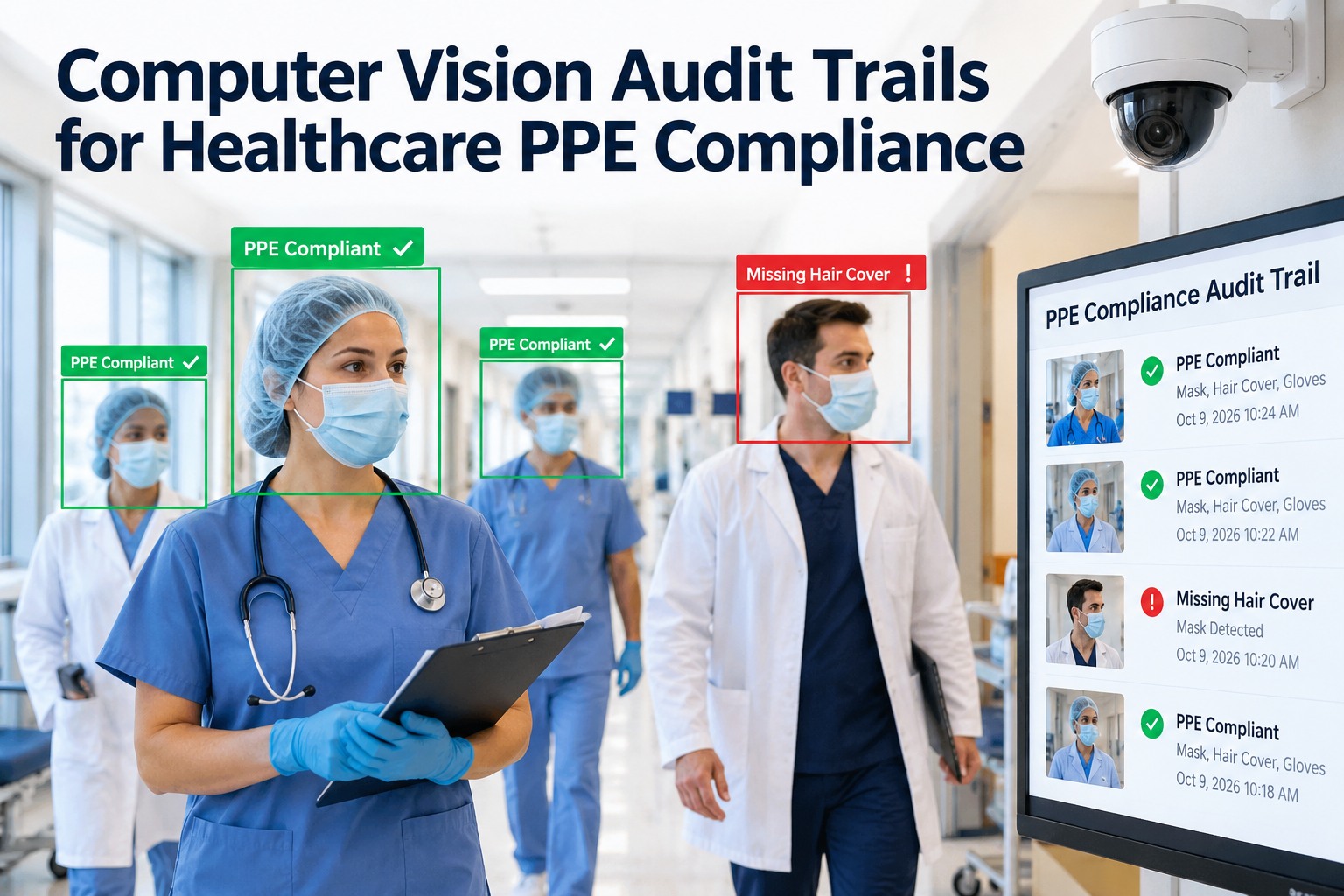
The audit trail is the single most powerful tool a healthcare facility manager has in both preventing HIPAA violations and demonstrating compliance when questions arise. A properly maintained audit trail answers three questions that regulators, legal counsel, and risk managers will ask after any incident: What data was accessed? By whom? And when?
For maintenance operations, this means your CMMS must capture far more than work order completion timestamps. A HIPAA-grade audit trail for maintenance data includes the complete lifecycle of every record: creation, modification, access, export, deletion, and any failed access attempts. It must identify the specific user account behind each action — not just a role or department — and store those logs in a format that is immutable, meaning users cannot alter or delete their own audit history.
Equally important is the retention window. HIPAA requires covered entities to retain documentation related to their security policies and procedures for six years from the date of creation or last effective date. While this requirement technically applies to policies rather than operational logs, OCR investigations frequently request multi-year audit trails as evidence of consistent compliance practice. Facility managers should configure their CMMS audit log retention to align with this six-year standard as a defensible baseline.
Administrative Safeguards: Policies, Training, and Workforce Management
HIPAA compliance is never solely a technology problem — it is equally an organizational and human resources challenge. The Security Rule's administrative safeguards require covered entities to implement a comprehensive set of policies and procedures governing how ePHI is managed, who has access to it, and how workforce members are trained to protect it.
For facility and biomedical teams, this translates into several concrete operational requirements. First, a formal risk analysis must be conducted — and documented — identifying the specific ways maintenance operations could expose PHI. This risk analysis must be updated whenever significant operational or technology changes occur, including the deployment of a new CMMS platform or integration with additional clinical systems. Second, workforce HIPAA training must explicitly include maintenance staff who interact with systems containing patient-contextual data. It is no longer sufficient to limit HIPAA training to clinical and administrative personnel. Third, a documented sanction policy must exist for workforce members who violate HIPAA requirements — including accidental PHI disclosures through maintenance communication channels such as work order notes or email-based dispatch.
HIPAA Compliance During Vendor and Contractor Access
One of the highest-risk moments for PHI exposure in a healthcare facility is when external vendors and contractors receive access to physical spaces, equipment, or digital systems. Biomedical service technicians, facilities contractors, and third-party CMMS support personnel may all encounter PHI in the course of their work — and their access must be governed by formal compliance protocols. Sign up free to see how Oxmaint structures compliant vendor access workflows from day one.
Best practice requires that facility managers establish a formal contractor onboarding process that includes HIPAA awareness briefing for all personnel who will access clinical areas or maintenance systems, execution of BAAs for all Business Associates before access is granted, and documented access controls that limit contractors to the minimum necessary data for their specific work scope. Work orders issued through a CMMS to external contractors should be reviewed to ensure they contain no patient-identifiable information beyond what is strictly required — a principle known in HIPAA practice as the Minimum Necessary Standard. Book a demo and configure compliant contractor access controls in minutes.
When contractors complete their work and their system access is terminated, that deprovisioning event should itself be logged in the CMMS audit trail. Former contractor accounts with persistent access to healthcare CMMS systems represent a documented source of HIPAA breaches and must be eliminated through formal offboarding workflows. Oxmaint's role-based access management enables facility teams to provision and deprovision contractor access with full audit logging at every step.
Incident Response: What to Do When Maintenance Data Is Compromised
Despite best efforts, security incidents happen. HIPAA's Breach Notification Rule requires covered entities to act quickly, decisively, and transparently when a breach of unsecured PHI occurs. For facility managers, understanding the incident response obligations before an incident happens is the difference between a managed compliance response and an organizational crisis.
The first step following any suspected HIPAA breach involving maintenance data is to conduct a four-factor risk assessment to determine whether the incident constitutes a reportable breach. This assessment evaluates the nature and extent of the PHI involved, who accessed it and under what circumstances, whether the PHI was actually acquired or viewed, and the extent to which the risk to the PHI has been mitigated. If this assessment cannot exclude a low probability of PHI compromise, the incident is presumed to be a reportable breach and notification obligations are triggered.
Notification timelines are strict: affected individuals must be notified without unreasonable delay and no later than 60 days after discovery. The Secretary of HHS must be notified — smaller breaches can be batched annually, but breaches affecting 500 or more individuals in a single state require immediate notification. A robust CMMS with comprehensive audit logging significantly accelerates the investigation phase by providing the precise data access history needed to scope the breach accurately and quickly.
HIPAA compliance in healthcare maintenance is not a peripheral concern — it is a core operational discipline that intersects directly with patient privacy rights, institutional liability, and regulatory standing. Facility managers who proactively build HIPAA-aligned data practices into their CMMS workflows, vendor relationships, and workforce training programs will find themselves far better positioned for the audits, investigations, and compliance scrutiny that define the modern healthcare regulatory environment. The investment required is real, but the alternative — discovered non-compliance at the worst possible moment — carries consequences that no facility budget can easily absorb. Start your free trial with Oxmaint to experience a CMMS built from the ground up for healthcare compliance demands.


.jpg)
