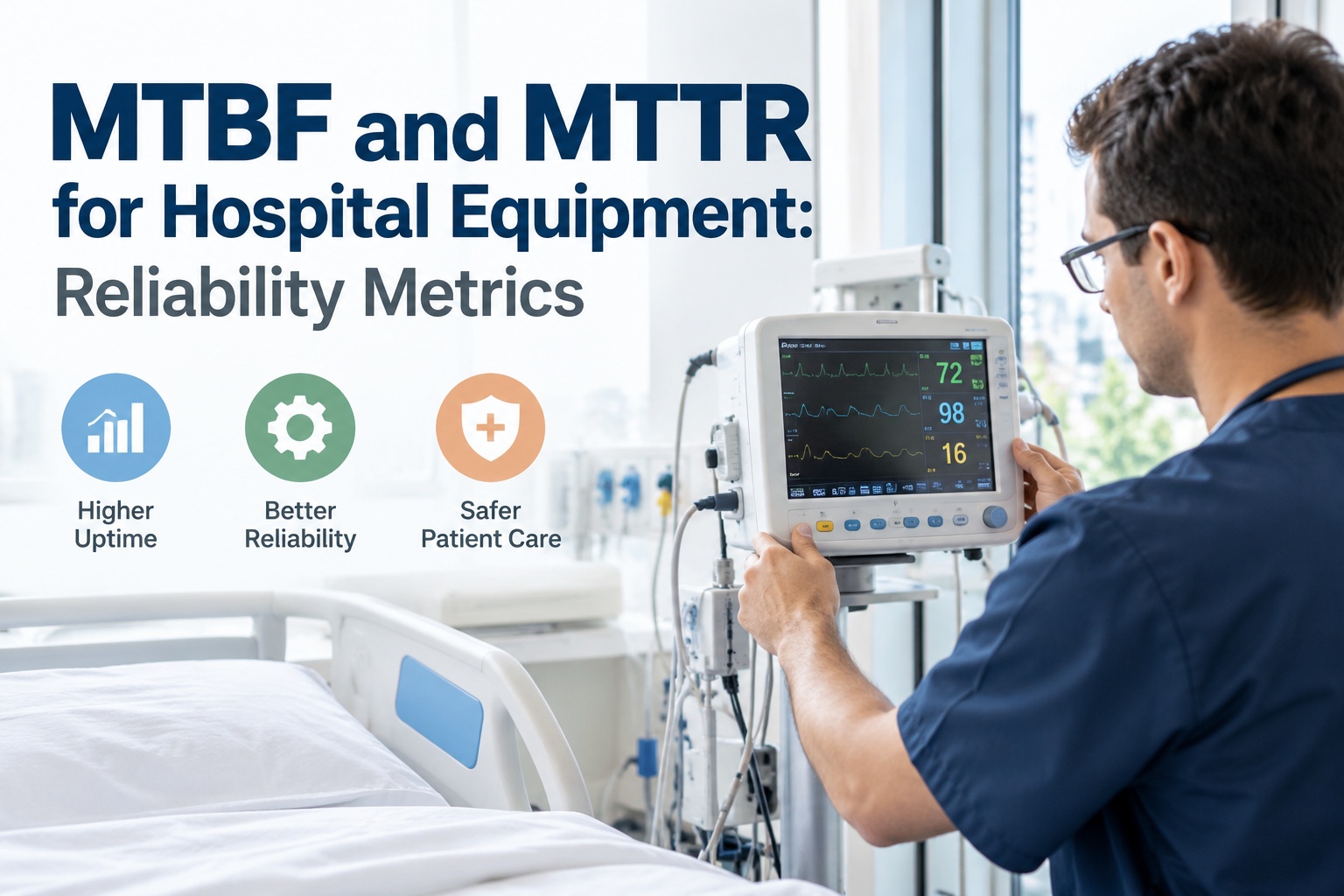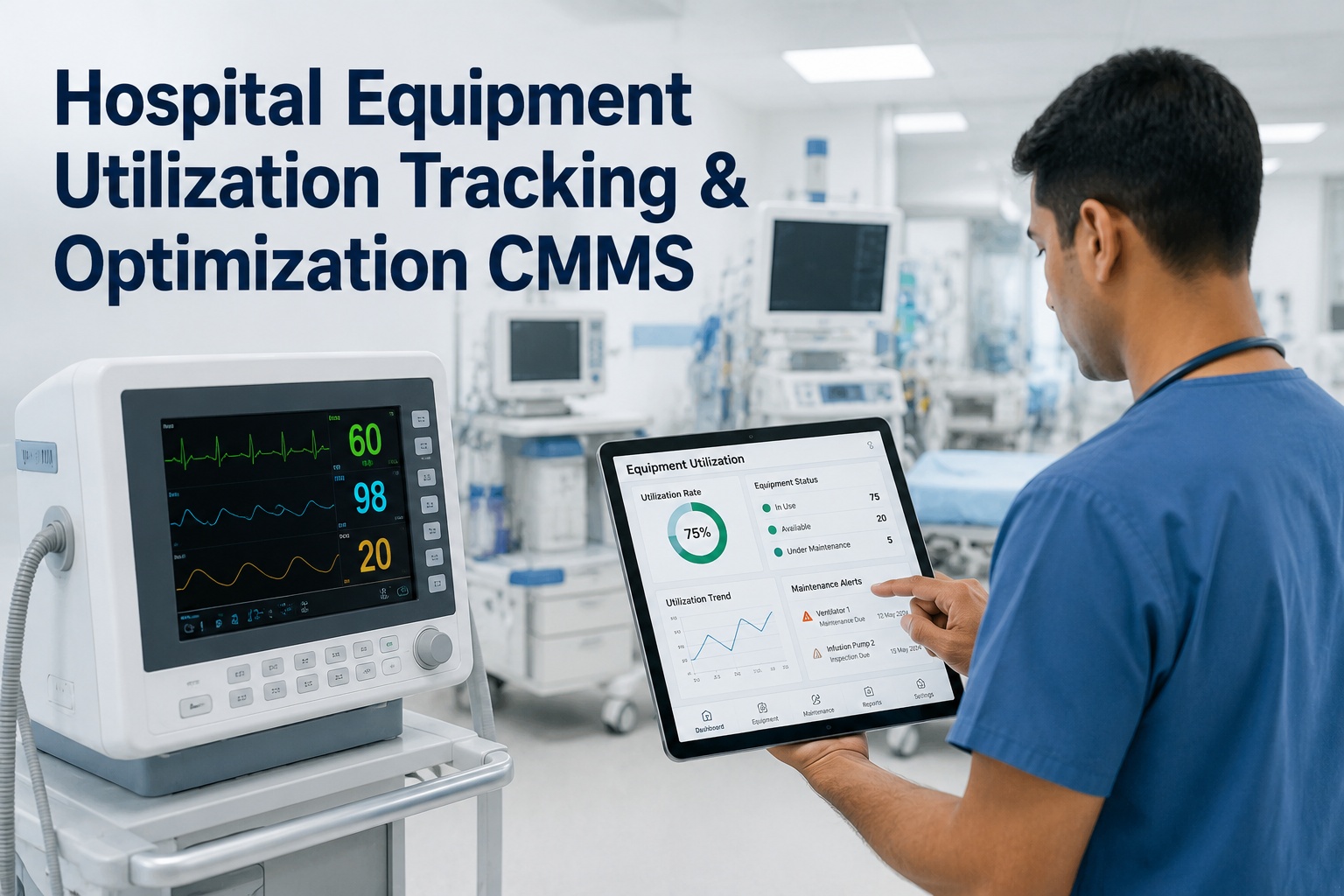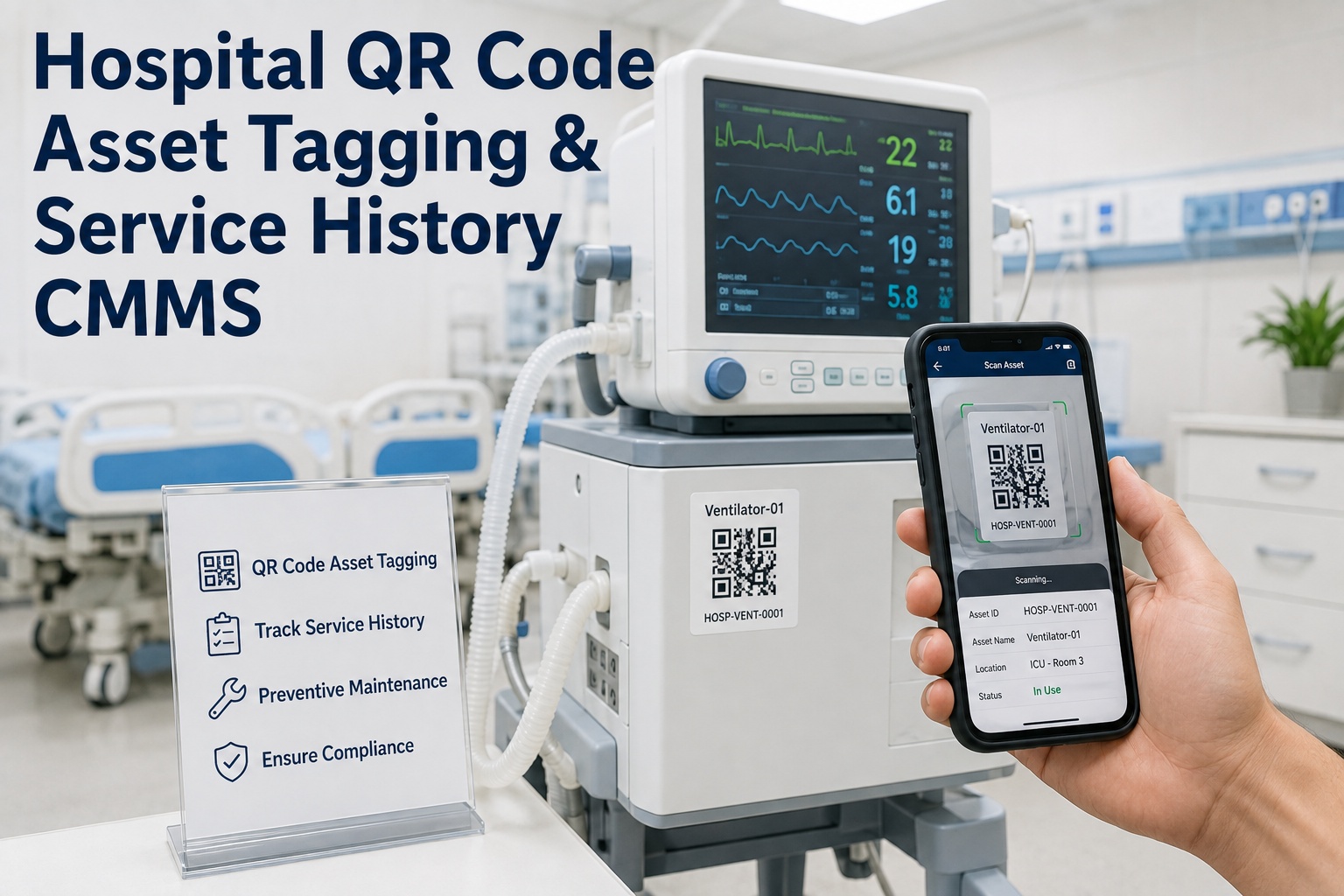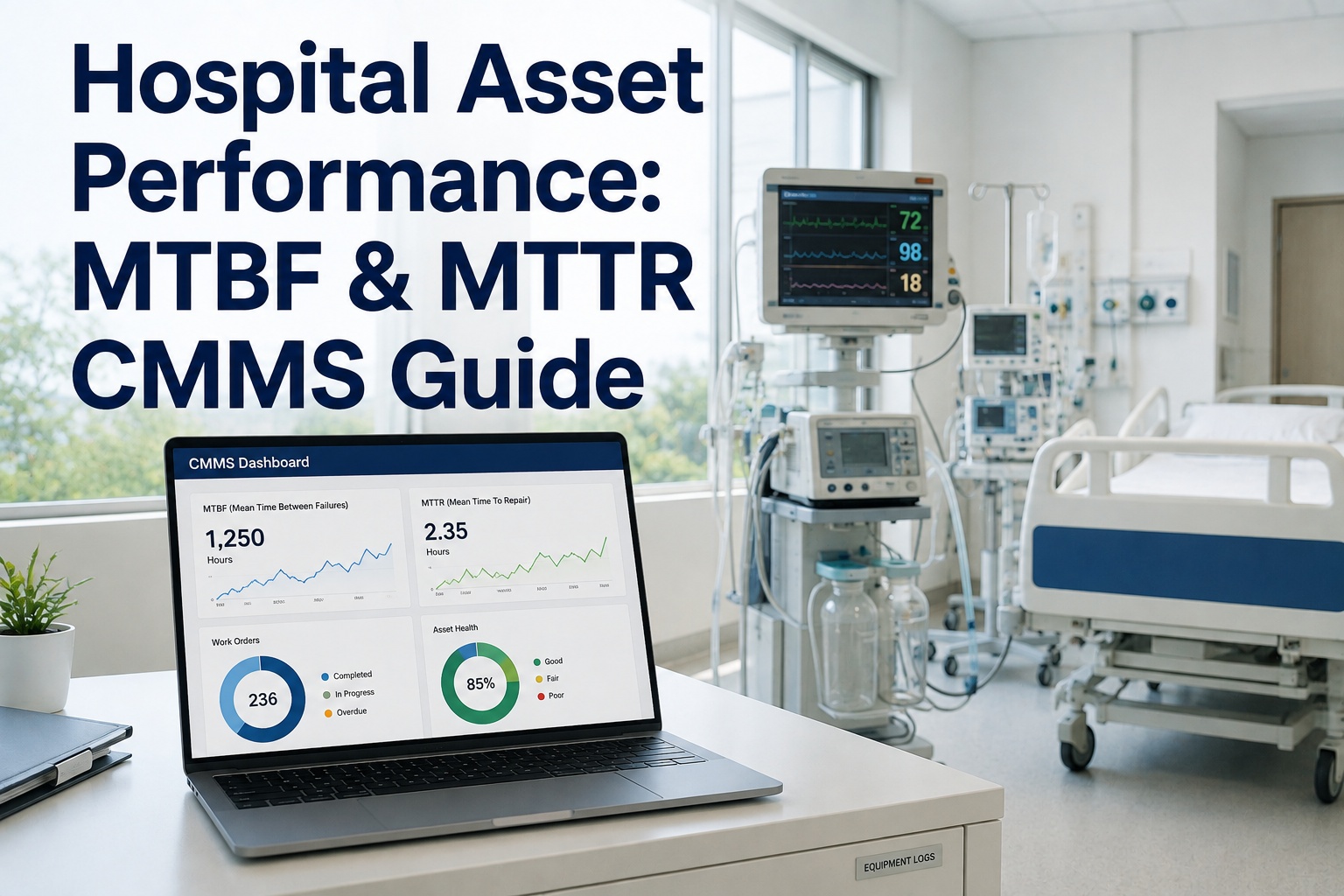
Hospital asset performance lives or dies on two metrics: Mean Time Between Failures (MTBF) and Mean Time To Repair (MTTR). Together, they reveal whether your biomedical engineering team is preventing equipment failures before they disrupt patient care—or simply scrambling after them. This hospital asset performance MTBF and MTTR CMMS guide breaks down measurement methodology, per-device tracking, portfolio benchmarking, and the CMMS reporting that turns raw data into reliability evidence. Ready to move from reactive to predictive? You can Start Free Trial today and see your own numbers improve within weeks.
Is your hospital losing the MTBF & MTTR battle?
Most healthcare facilities track maintenance reactively—logging failures after they impact patient care. When MTBF drops and MTTR climbs, clinical downtime follows. A CMMS flips this by trending asset performance in real time, so your biomedical team can act before a ventilator, infusion pump, or imaging system goes down.
What MTBF and MTTR mean for healthcare reliability tracking
MTBF and MTTR are not abstract engineering terms—they are the two indicators that determine whether a 450-bed hospital runs smoothly or bleeds millions in emergency rentals, delayed procedures, and staff overtime.
Measures how long a medical device operates before failing. A higher MTBF means fewer disruptions to patient care. For a CT scanner running 8,000 hours with 4 failures, MTBF = 2,000 hours.
Measures how fast your team restores equipment to service. A lower MTTR means shorter clinical downtime. If 4 repairs take 120 hours total, MTTR = 30 hours per incident.
Real-world example: A 280-bed regional hospital tracked 1,200 biomedical assets across six device categories. Without a CMMS, their average MTTR for imaging equipment was 42 hours—largely because spare parts were not pre-staged and work orders were paper-based. After implementing OxMaint CMMS with automated spare-parts linking and mobile work orders, imaging MTTR dropped to 19 hours within six months, saving an estimated $310,000 in rental fees and rescheduled procedures.
MTBF and MTTR benchmarks by hospital device category
Not all medical equipment fails the same way. Patient monitors fail differently from MRI scanners. A hospital performance CMMS must track MTBF and MTTR per device category—and benchmark against industry baselines—to prioritise where preventive maintenance investment pays off.
| Device Category | Target MTBF (hrs) | Target MTTR (hrs) | Failure Impact | CMMS Priority |
|---|---|---|---|---|
| MRI / CT Scanners | 2,500+ | < 24 | $8K–$15K per day downtime | Critical |
| Ventilators | 4,000+ | < 8 | Direct patient safety risk | Critical |
| Infusion Pumps | 6,000+ | < 4 | High volume, low severity | High |
| Patient Monitors | 5,500+ | < 6 | Bedside care disruption | High |
| Ultrasound Systems | 3,000+ | < 16 | Departmental scheduling delays | Medium |
| Lab / Analytical Equipment | 3,500+ | < 12 | Sample backlog, reagent waste | Medium |
Benchmarks are indicative ranges based on aggregated healthcare reliability data. Your CMMS should calculate actuals from your own asset history and flag deviations from these targets automatically.
How to track hospital MTBF and MTTR with a CMMS
Turning MTBF and MTTR from academic metrics into biomedical engineering performance evidence requires a structured, CMMS-driven methodology. Here is the five-step path from spreadsheet chaos to performance trending CMMS healthcare teams can trust.
Register every asset with criticality tags
Log each device in the CMMS with category, manufacturer, model, install date, location, and a criticality score (A/B/C). This enables per-device-category MTBF tracking and risk-based PM scheduling.
Capture every failure event via mobile work orders
Every breakdown, service request, and corrective repair flows through a digital work order. The CMMS timestamps the failure report, the repair start, and the return-to-service—automatically building your MTBF and MTTR dataset.
Calculate metrics per asset, category, and portfolio
A healthcare reliability CMMS rolls up MTBF and MTTR at three levels: individual asset (is this ventilator trending worse?), device category (are our infusion pumps underperforming?), and portfolio-wide (is overall reliability improving?).
Trend performance over 3, 6, and 12-month windows
A single MTBF number is a snapshot. A CMMS dashboard trends it over time so you can see whether your preventive maintenance program is actually improving reliability—or whether a device category is silently degrading toward failure.
Generate audit-ready performance evidence
When The Joint Commission or CMS asks for proof of your maintenance program's effectiveness, your CMMS exports MTBF/MTTR trend reports by device category—turning a two-week audit scramble into a five-minute export.
How OxMaint CMMS improves hospital MTBF and MTTR
OxMaint is an AI-powered CMMS and EAM platform built to turn hospital asset performance from reactive guesswork into data-driven reliability. Here is how specific OxMaint capabilities map directly to your MTBF and MTTR outcomes.
AI-driven predictive maintenance
OxMaint analyses work-order history, usage patterns, and failure data to predict which assets are trending toward failure—raising MTBF by catching issues before they become breakdowns. Hospitals using predictive PM scheduling typically cut unplanned downtime 30–50%.
Mobile work orders for faster MTTR
Technicians receive, update, and close work orders from their phone or tablet at the bedside. No more paper delays, no more lost service requests. Real-time status updates and parts-checkout cut average MTTR by 25–40% in the first quarter.
Performance trending dashboards
Live MTBF and MTTR dashboards break down performance by device category, department, and individual asset. Spot a degrading ventilator trend before it fails. Share compliance-ready reports with clinical leadership in one click.
Spare-parts inventory linked to work orders
When a work order triggers, OxMaint checks spare-part availability for that exact asset model and reserves it automatically. No more waiting three days for a replacement board—pre-staged parts mean repairs start immediately, slashing MTTR.
What poor asset performance tracking costs hospitals
Hospitals that rely on spreadsheets or paper logs for healthcare reliability tracking are not just inefficient—they are putting patient care and revenue at risk. Here is what the status quo actually costs.
Worked example: A 600-bed hospital network with 2,800 tracked assets was spending $1.4M annually on emergency equipment rentals and expedited repair parts. After migrating to OxMaint CMMS, predictive PM scheduling and parts pre-staging reduced unplanned downtime by 38% in year one, cutting rental spend by $520K and improving portfolio-wide MTBF by 22%.
See your MTBF rise and MTTR fall—live in OxMaint
Book a 30-minute demo and we will show you exactly how OxMaint trends asset performance by device category, automates PM scheduling, and cuts repair times across your hospital portfolio.
Hospital MTBF and MTTR CMMS: frequently asked questions
What is a good MTBF for hospital medical equipment?
A good MTBF depends on the device category. High-volume, low-complexity devices like infusion pumps should target 6,000+ hours between failures, while complex imaging systems like MRI scanners typically target 2,500+ hours. The key is tracking your actual MTBF in a CMMS and trending it over time—if it is declining, your preventive maintenance program needs adjustment before patient care is affected.
How does a CMMS improve MTTR in healthcare facilities?
A CMMS improves MTTR by eliminating the manual delays that inflate repair time: paper work orders, missing spare parts, and unclear assignment. With OxMaint, technicians receive mobile work orders instantly, the system checks and reserves parts automatically, and managers see real-time status. Hospitals typically see 25–40% MTTR reductions within the first quarter. You can Start Free Trial to measure your own improvement.
How often should hospitals calculate MTBF and MTTR?
Hospitals should calculate MTBF and MTTR continuously through automated CMMS reporting, and review trends monthly at minimum. A single monthly number is less useful than a 3-, 6-, and 12-month trend line. Trending reveals whether reliability is improving or degrading—critical information for biomedical engineering teams managing hundreds or thousands of assets across multiple facilities.
Can OxMaint CMMS track asset performance by device category?
Yes. OxMaint tracks MTBF and MTTR at three levels: individual asset, device category (e.g., ventilators, infusion pumps, imaging), and portfolio-wide. This lets you compare performance across categories, identify which device types are underperforming, and allocate preventive maintenance resources where they have the greatest impact on reliability and patient safety.
How long does it take to switch from spreadsheets to a hospital CMMS?
Most hospital teams are live on OxMaint within 2–4 weeks. The process involves importing your existing asset register, configuring device categories and criticality scores, setting up PM schedules, and training technicians on mobile work orders. OxMaint provides onboarding support throughout, and many teams see measurable MTTR improvement within the first month. Book a Demo to see a tailored implementation plan.
Start trending your hospital asset performance today
Join the biomedical engineering teams using OxMaint to raise MTBF, cut MTTR, and prove maintenance ROI with data. Your free trial includes asset registration, PM scheduling, mobile work orders, and live performance dashboards.
Free 14-day trial · No credit card