Hospital Beds and Mobility Assets Tracking: Onboarding Toolkit for Long-Term Care | Oxmaint CMMS for Healthcare
By Oxmaint on December 18, 2025
Every minute your nursing staff spends searching for a wheelchair is a minute stolen from resident care. Research reveals nurses lose up to 60 minutes per shift hunting for equipment—that's over 1,000 hours annually walking hallways instead of providing care. Meanwhile, 10-20% of mobility assets simply vanish during their useful life. This onboarding toolkit transforms that chaos into control, showing long-term care facilities how to achieve 90%+ reduction in equipment search time within 90 days.
60 min
Lost per shift searching
20%
Assets disappear yearly
40+ hrs
Wasted on audit prep
90%+
Improvement possible
The Real Cost of Equipment Chaos
Before discussing solutions, let's quantify the problem. Most facilities know equipment tracking is inefficient, but few realize the true financial impact. When you add search time, missing assets, overbuying and emergency rentals, the annual cost reaches six figures—money that could fund additional staffing or facility improvements.
Annual Hidden CostsFor a typical 120-bed facility
Staff Search Time1,095 nursing hours lost annually
$32,850
Equipment Losses15% of assets disappear each year
$45,000
Overstock Buffer20% extra inventory to compensate
$60,000
Emergency RentalsCan't find what you already own
$18,000
Total Annual Hidden Cost$155,850
Streamline healthcare response time with connected sensors
Modern asset tracking has evolved beyond expensive proprietary systems. Today's solutions use your existing WiFi infrastructure and low-cost Bluetooth tags to create facility-wide visibility. Staff check a mobile app to see exactly which wheelchairs are available and where—transforming a 15-minute search into a 30-second lookup. Facilities ready to explore this transformation can connect with healthcare specialists who understand long-term care workflows.
How Digital Asset Tracking Works
1
Tag Assets
Attach small Bluetooth tags to beds, wheelchairs, and equipment
2
Connect Network
Uses your existing WiFi—no new infrastructure needed
3
Track Instantly
Staff locate any asset in seconds via mobile app
The Transformation
Before
Find a wheelchair12-25 min
Locate PM records45-90 min
Survey preparation40+ hours
Equipment inventory2-3 days
After
Find a wheelchairUnder 2 min
Locate PM records30 seconds
Survey preparation2-3 hours
Equipment inventoryReal-time
See This Transformation Live
Our specialists will walk through your facility's specific challenges and show how similar organizations achieved 90%+ improvement.
Successful implementations follow a proven progression: foundation, expansion, optimization. Facilities that rush deployment without proper groundwork join the ranks of failed technology projects. Those following this structured roadmap—with guidance from experienced healthcare implementation specialists—consistently achieve full adoption with measurable ROI within 90 days.
Days 1-30Foundation
Asset inventory and taggingPlatform configurationPilot team trainingSingle unit launch
50% search time reduction
Days 31-60Expansion
Facility-wide rolloutPM scheduling activationAutomated alerts setupFull staff training
Making audits painless — a healthcare framework with KPIs
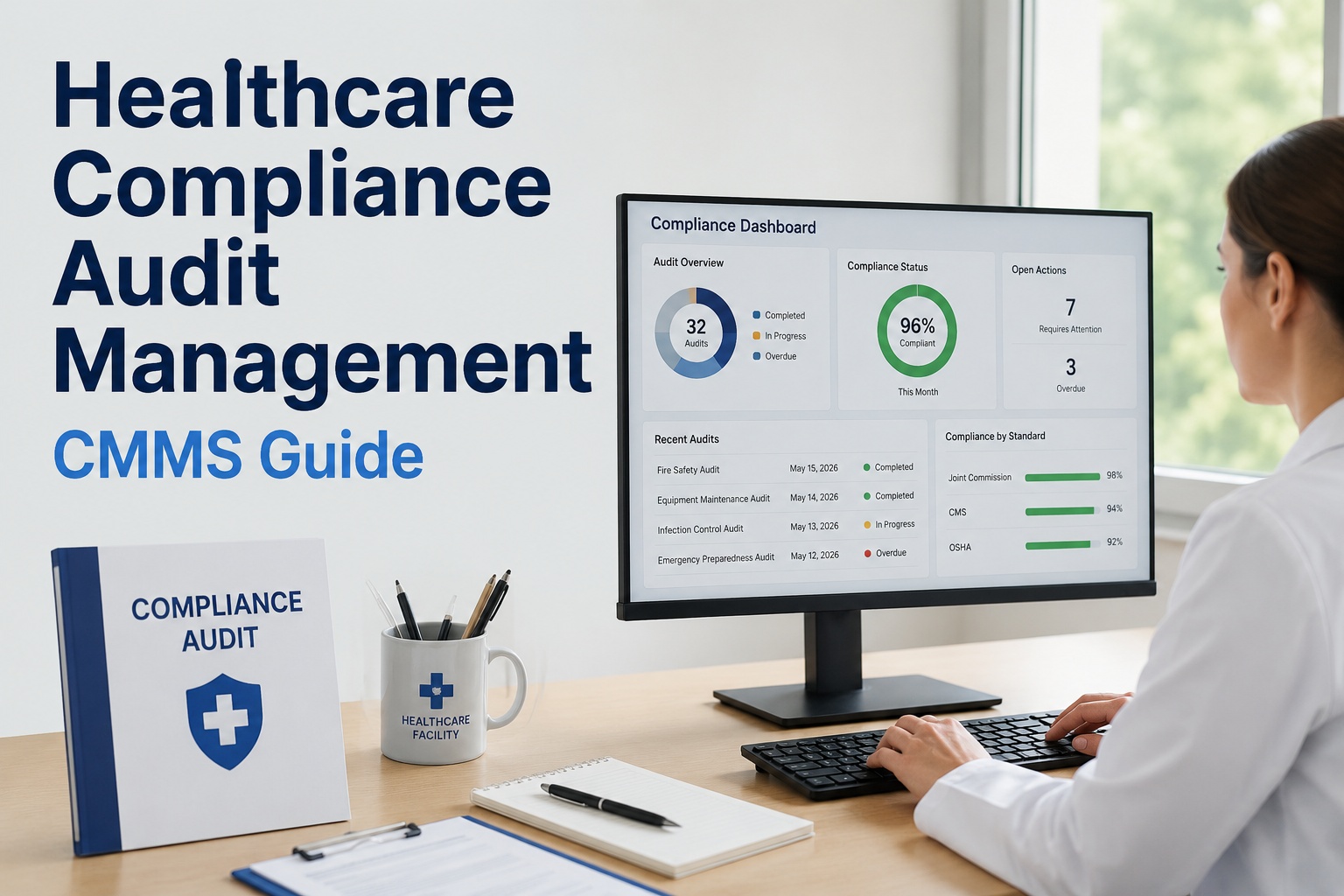
State surveyors don't announce their visits. When they ask for maintenance records on bed #47, you have minutes to respond—not hours. Digital tracking transforms audits from stressful scrambles into confident demonstrations. Facilities using connected asset management report survey prep dropping from 40+ hours to under 3 hours, with equipment deficiencies virtually eliminated. Schedule a demo to see how digital tracking transforms audits from stressful scrambles into confident demonstrations.
Healthcare Asset KPI Framework
98%
Equipment Availability
Target: 98%+
96%
PM Compliance Rate
Target: 95%+
78%
Asset Utilization
Target: 70-85%
3.2h
Mean Time to Repair
Target: Under 4 hours
These metrics matter because they're measurable and actionable. Equipment availability tells you if assets are ready when needed. PM compliance shows whether preventive maintenance happens on schedule. Asset utilization reveals if you're overstocked or understocked. Facilities wanting to build similar real-time dashboards can talk to our healthcare team to learn how connected tracking captures this data automatically—no manual logging required.
Expert Review: Lessons from Successful Implementations
The facilities that fail treat this as an IT project. The facilities that succeed treat it as an operational transformation. When nursing staff see the system saves them time instead of creating more work, adoption happens organically. Start with one unit, prove the value, then let champions spread it naturally.
93%
Success rate with staff champions engaged from day one
47
Average days to positive ROI for LTC facilities
$12K
Annual savings per bed from optimized utilization
Ready to Reclaim Those 60 Minutes?
See Oxmaint in Action for Long-Term Care
Join facilities that eliminated equipment search time, achieved 100% audit readiness, and gave staff back the time to focus on resident care.
The hidden costs of equipment chaos—$155,000+ annually for a typical facility—represent resources that should fund staffing and resident programs. The 60 minutes per shift nurses lose searching represents care time stolen from residents. This toolkit provides the roadmap to transform that reality: structured implementation, measurable KPIs, and audit-ready compliance within 90 days. The technology exists, the ROI is proven, and facilities following this framework consistently achieve results. For organizations ready to begin their transformation, the only question is when to start.
Frequently Asked Questions
What equipment can be tracked with this system?
Any mobile asset using small Bluetooth tags: hospital beds, wheelchairs, stretchers, patient lifts, IV poles, and portable oxygen concentrators. Tags attach to equipment and communicate through existing WiFi to provide real-time location. Most facilities start with high-value or frequently-searched items, then expand.
How long does full implementation take?
Following the 30-60-90 day roadmap, most facilities achieve full deployment within 90 days. Quick wins appear within 30 days as the pilot unit goes live. By day 60, facility-wide rollout is complete with 75%+ search time reduction. Day 90 marks full optimization with KPI dashboards operational.
What infrastructure is required?
Modern tracking leverages existing WiFi networks with Bluetooth capability—most facilities installed in the last 5-7 years have this. No dedicated hardware or construction required. Assets receive battery-powered tags lasting 2-5 years, and staff access via smartphones or tablets.
How does this help with CMS compliance?
Digital tracking creates automatic audit trails for every maintenance activity and equipment movement. Generate comprehensive reports in minutes rather than hours. Timestamps, photo documentation, and equipment histories demonstrate compliance. Survey prep drops from 40+ hours to under 3 hours.
What ROI can we expect?
Documented results include: 90%+ reduction in equipment search time (recovering 1,000+ nursing hours annually), 50-70% reduction in emergency rentals, 15-20% reduction in equipment losses. Combined savings average $12,000 per bed annually, with positive ROI typically achieved within 47 days.



.jpg)