
Long-term care facilities operate in a constant tension between providing compassionate, personalized care and managing the operational realities of equipment-dependent healthcare. Your nursing home's wheelchairs, hospital beds, patient lifts, and walkers aren't just inventory items—they're the physical infrastructure that determines whether Mrs. Johnson gets to the dining room for lunch or stays isolated in her room. When a powered wheelchair battery fails without warning or a hospital bed's positioning motor stops responding, the ripple effects extend far beyond equipment downtime: delayed therapies, increased fall risks, frustrated staff, and anxious families.
The scale of this challenge is significant and growing. The hospital bed management systems market reached $2.17 billion in 2024 and is projected to grow to $3.48 billion by 2029, driven largely by the demands of long-term care facilities managing chronic disease populations. get expert support for healthcare asset management address a common reality: nurses and care staff spend an estimated 6,000 hours per month searching for misplaced equipment, with studies showing staff dedicate 21 to 60 minutes per shift simply locating devices rather than providing direct patient care. When mobile assets disappear—whether lost, borrowed, or simply forgotten in a corner—the financial impact averages $4,000 per hospital bed annually in U.S. facilities. This troubleshooting handbook addresses the systematic approach long-term care facilities need to track, maintain, and repair their most critical mobility assets.
Reimagine healthcare cost control with smart scheduling
The traditional approach to equipment maintenance in long-term care—reactive repairs when something breaks—creates a cascade of operational problems that extend far beyond repair costs. When a hospital bed's motor fails unexpectedly, staff must locate an available replacement, transfer the resident, document the incident, arrange repair services, and track the asset through the repair cycle. Each step consumes time, introduces error potential, and diverts attention from resident care. CMS requirements under 42 CFR Part 483 mandate that facilities maintain equipment in safe operating condition, with surveyor guidance emphasizing documented maintenance programs as evidence of compliance.
| Asset Type | Daily | Weekly | Monthly | Quarterly | Annual |
|---|---|---|---|---|---|
| Hospital Beds (Electric) | Visual check | Function test | Lubrication | Full inspection | Professional service |
| Powered Wheelchairs | Battery level | Tire pressure | Control response | Motor inspection | Certification |
| Manual Wheelchairs | Visual check | Brake test | Wheel alignment | Frame inspection | Full overhaul |
| Patient Lifts | Sling inspection | Battery/hydraulic | Safety locks | Load testing | Professional cert. |
| Walkers/Rollators | — | Tip inspection | Brake/grip check | Frame integrity | Replacement review |
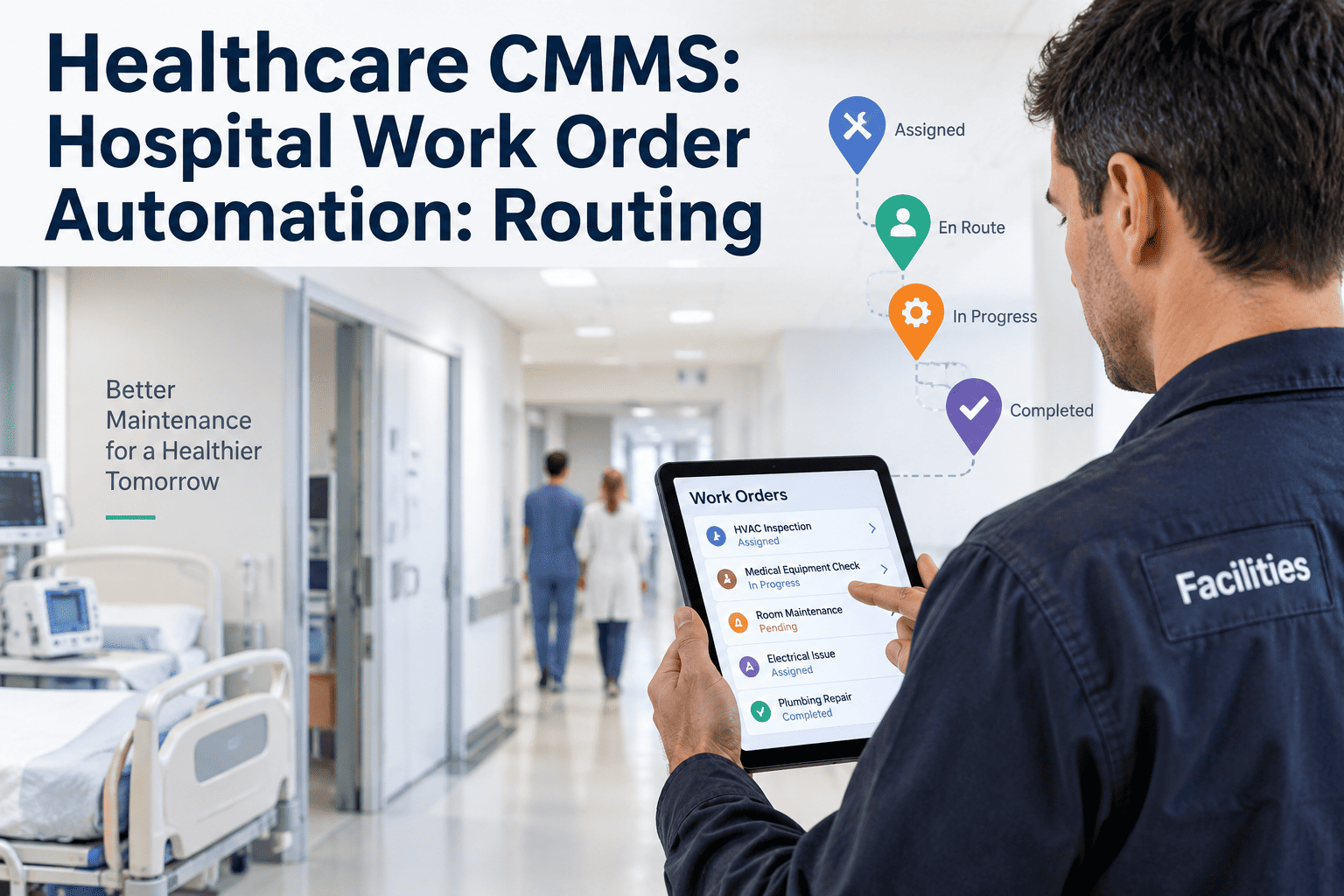
Smart scheduling transforms maintenance from an administrative burden into an automated workflow. Rather than relying on paper logs or staff memory, digital systems track each asset's maintenance history, predict service needs based on usage patterns, and generate work orders automatically. Facilities that schedule a demo for maintenance scheduling tools report significant reductions in emergency repairs and equipment downtime. The key lies in matching inspection frequency to equipment criticality—daily visual checks for high-use items like powered wheelchairs, monthly functional tests for beds, and annual professional servicing for complex electromechanical systems.
Common Troubleshooting Scenarios and Resolution Pathways
Equipment failures in long-term care rarely occur at convenient times. A hospital bed that won't adjust at 2 AM creates an immediate safety concern requiring rapid diagnosis and resolution. Understanding common failure modes and their solutions enables staff to resolve many issues without waiting for external technicians. According to a 2023 clinical engineering survey, approximately 42% of equipment problems stem from user handling rather than mechanical failure—meaning proper troubleshooting can often restore function without replacement parts.
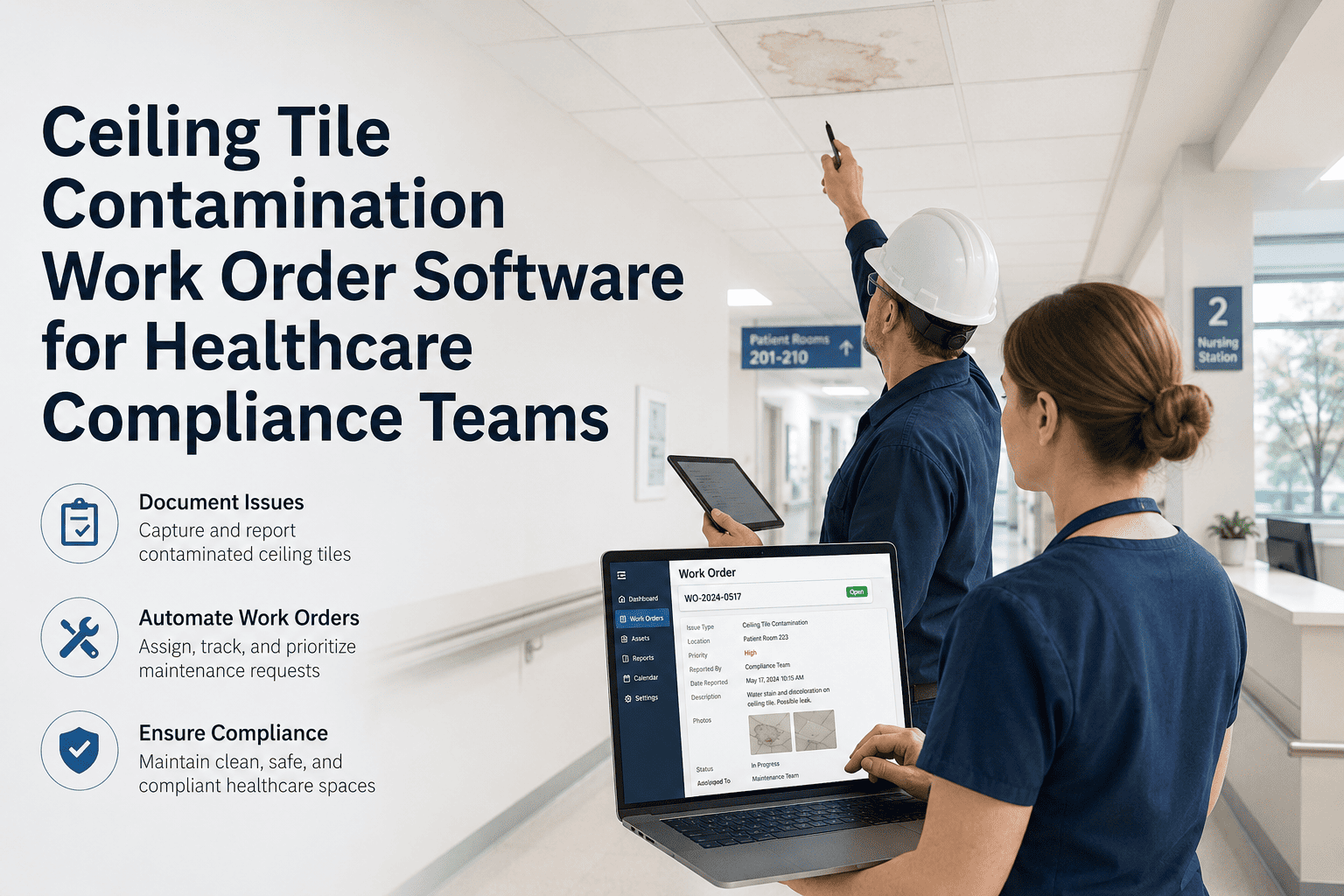
The troubleshooting process should be documented regardless of outcome. When a staff member identifies and resolves a loose connection on a hospital bed, that information creates valuable maintenance intelligence. Pattern recognition across multiple incidents may reveal systematic issues—perhaps beds in a particular wing experience more motor failures due to voltage fluctuations, or wheelchairs used by residents with certain mobility patterns require more frequent brake adjustments. Facilities that contact support for digital work order setup can identify these patterns and shift from reactive repairs to predictive maintenance.
Aligning teams and vendors—a healthcare playbook with IoT
Effective mobility asset management requires coordination across multiple stakeholders: nursing staff who identify problems, maintenance personnel who perform repairs, external vendors who handle specialized servicing, and administrators who manage budgets and compliance documentation. Traditional paper-based systems create communication gaps where work orders get lost, repair status remains unknown, and historical maintenance records become inaccessible. Modern asset tracking integrates these functions into a unified platform accessible from any device.
IoT-enabled tracking takes visibility further by providing continuous location data without manual scanning. Tags attached to wheelchairs, beds, and other mobile equipment transmit their position throughout the facility, eliminating the search time that consumes so many staff hours. Real-time location systems can reduce equipment search time by up to 90% according to industry studies, while simultaneously providing utilization data that informs purchasing decisions. Schedule a demo for healthcare asset tracking to see how the technology investment pays for itself within the first year through reduced equipment losses and improved staff productivity.
Building Your Asset Tracking Foundation
Implementing effective mobility asset tracking doesn't require massive technology investments or facility-wide disruptions. The process begins with accurate inventory—knowing exactly what equipment you have, where it's located, and what condition it's in. Many facilities discover during initial audits that their actual inventory differs significantly from records, with "ghost" assets that were disposed of years ago still appearing in databases and actual equipment that was never properly logged.
The foundation of successful tracking is consistent data entry. When staff scan a wheelchair's QR code before moving it to a different wing, the system maintains accurate location data. When a technician documents repairs with photos and part numbers, future troubleshooting becomes faster. When maintenance schedules generate automatic work orders, inspections don't get forgotten during busy periods. Each interaction builds an increasingly valuable dataset that supports better decision-making about equipment allocation, replacement timing, and vendor performance.
Expert Review: Measuring What Matters in Healthcare Asset Management
The difference between facilities that excel at asset management and those that struggle comes down to measurement. When you can't quantify equipment availability, maintenance costs, or staff time lost to equipment issues, you can't improve them. Digital systems don't just track assets—they generate the data that drives operational excellence.
Conclusion: From Reactive Repairs to Proactive Care
Hospital beds and mobility assets represent both significant capital investments and critical infrastructure for resident care in long-term care facilities. The choice between reactive maintenance—waiting for equipment to fail—and proactive management through systematic tracking, scheduled inspections, and documented troubleshooting has implications far beyond repair costs. CMS surveyors examine maintenance programs as indicators of overall quality commitment. Families evaluate facilities partly on whether equipment appears well-maintained. Staff morale suffers when they spend shifts searching for wheelchairs instead of caring for residents.
The path forward combines technology with process discipline. Digital CMMS platforms provide the infrastructure for asset tracking, maintenance scheduling, and compliance documentation. But technology alone doesn't transform operations—consistent use by trained staff, clear accountability for equipment condition, and management commitment to data-driven decision-making complete the picture. Facilities that invest in these capabilities position themselves for better survey outcomes, lower operating costs, and improved resident satisfaction. The troubleshooting protocols and implementation frameworks in this handbook provide the starting point; sustained execution creates the lasting results.
.jpg)
.jpg)


